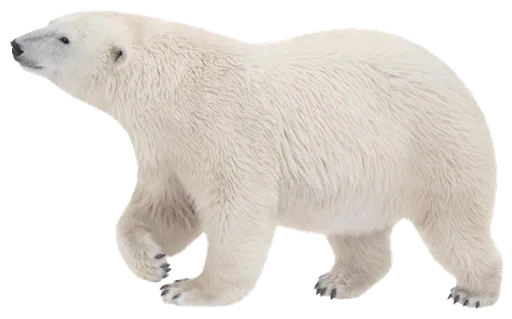

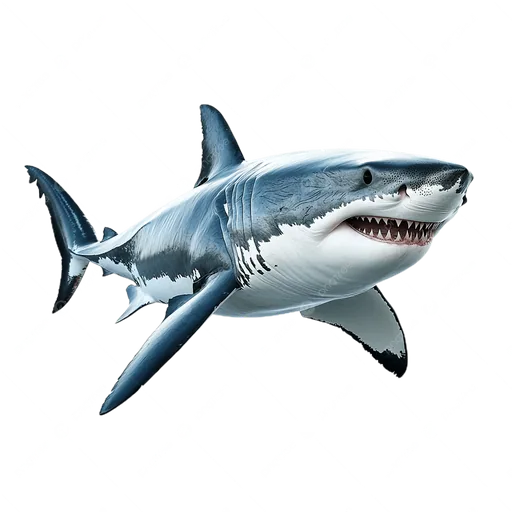
Great White Shark vs Polar Bear
Who would win?
 Great White Shark slight edge
 ATK 78
  DEF 72
  AGI 62
  STA 88
  INT 73
  SPL 77
 | Great White Shark | Polar Bear | |
|---|---|---|
| 79.7 | Power index | 74.9 |
| S | Tier | S |
| #4 | Rank | #7 |
| 900 kg | Weight | 500 kg |
| 5 m | Length | 2.6 m |
| — | Height | 1.4 m |
| 50 km/h | Top speed | 32 km/h |
| — | Bite force | — |
| 70 years | Lifespan | 18 years |
Great White Shark wins this matchup 58% of the time in the Animal Battle Stats model (slight edge). It leads in 4 of 6 battle stats, with the biggest swing coming from attack (88 vs 78). Its power index is 79.7 against 74.9 for the Polar Bear.
Size matters here: a typical adult Great White Shark weighs about 900 kg (1,984 lb), roughly 1.8× the Polar Bear's 500 kg.
The Polar Bear's best chance is its defense (72 vs 68), plus abilities like Icebreaker Ambush and Arctic Amphibious Drive. This one is close enough that terrain, first contact and motivation could flip it.
Reality check: these two would never meet. The Great White Shark lives in water, so this verdict is a neutral "stat fight". In deep water the Great White Shark would hold every advantage; on dry land it could not fight at all.
Who would win, Great White Shark or Polar Bear?
Great White Shark. Great White Shark wins this matchup 58% of the time in the Animal Battle Stats model (slight edge). It leads in 4 of 6 battle stats, with the biggest swing coming from attack (88 vs 78). Its power index is 79.7 against 74.9 for the Polar Bear.
Which is bigger, the Great White Shark or the Polar Bear?
The Great White Shark (900 kg) is heavier than the Polar Bear (500 kg).
Which is faster?
The Great White Shark is faster, with a top speed of 50 km/h.
Odds come from the Animal Battle Stats model: six researched ratings, weighted, compared head to head. How it works