
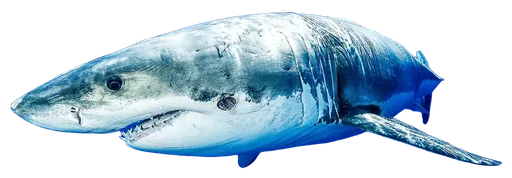
Great White Shark
Carcharodon carchariasS tier · Apex3rd of 51 sea creatures
Size & speed

- Weight
- 900 kg1,984 lb
- Length
- 5 m16.4 ft
- Top speed
- 50 km/h31 mph
As heavy as 13 people
Heavier than 93% of animals2.9× a person's height
Bigger than 94% of animalsFaster than Usain Bolt (44.7 km/h)
Faster than 57% of animalsA five-metre mature female great white is an elite aquatic ambush predator built around a massive serrated cutting bite, high-speed vertical attacks, exceptional sensory coverage and warm-core endurance. Its offense is extreme, but it is not armored and its large body sacrifices some tight-turn agility.
Detailed ratings
Research-backed ratings on one 0–100 scale for all 344 animals (updated 2026-09-27). How ratings work


Card No. 5 of 344. Every animal on Animal Battle Stats has one: its power, tier and archetype on the front; its six battle stats, abilities and signature move on the back.
Special abilities
The ampullae of Lorenzini add electroreceptive information to the shark's visual, olfactory and mechanosensory prey-detection suite, helping orient at close range when visibility is poor.
Regional endothermy keeps important tissues warmer than surrounding seawater, supporting high-performance swimming and foraging across cool-water habitats.
Unique traits
Broad triangular serrated teeth are deployed in an empirically documented oblique/lateral bite that maximizes cutting damage rather than relying on a simple perpendicular clamp.
The shark can exploit depth, countershading and explosive upward acceleration to strike surface prey from below, sometimes carrying the attack into a full breach.
How it fights
Weapons
- The jaws are the decisive weapon. Large serrated triangular teeth slice flesh rather than merely puncturing it, and the shark can combine jaw force with head and body motion. The 2005 Seal Island study showed that predatory bites are often delivered obliquely using anterolateral teeth and a lateral jaw snap. This creates large cutting wounds and makes the weapon system more than a simple clamp.
Struggles vs
- No armor despite great size.
- Gills and eyes are vulnerable soft structures.
- High-speed ambush attacks can overshoot agile prey.
- Large turning radius relative to small aquatic opponents.
- Reproductive life history is extremely slow, though that matters to ecology rather than a single fight.
- Weight
- 900 kg1,984 lb
- Height
- No reliable measurement
- Length
- 5 m16.4 ft
- Top speed
- 50 km/h31 mph
- Bite force
- No reliable measurement
- Lifespan
- 70 years
- Home biome
- Ocean
- Lifestyle
- Mostly solitary
Rated specimen: Healthy, fully mature female, approximately 900.0 kg and 500.0 cm total length.
Fun facts
- Modern ageing work indicates some white sharks can live 70 years or more, far longer than older estimates suggested.
- NOAA examined a 4.6 m female that was still reproductively immature, showing why body size alone is a poor shortcut for adult reproductive status.
- Seal Island researchers recorded more than 2,000 natural predation events, providing one of the richest behavioral datasets for a large marine predator.
- Their seal-hunting success was highest near dawn and declined as ambient light increased in the Seal Island study.
- Satellite-tagged mature females can spend months offshore and repeatedly dive to nearly 1,000 m.
- The famous enormous bite is impressive in absolute terms, but the biomechanical study found its jaw-adductor performance is not exceptional after body mass is considered.
Closest rivals by power. Tap one for the full breakdown, or pick any opponent.
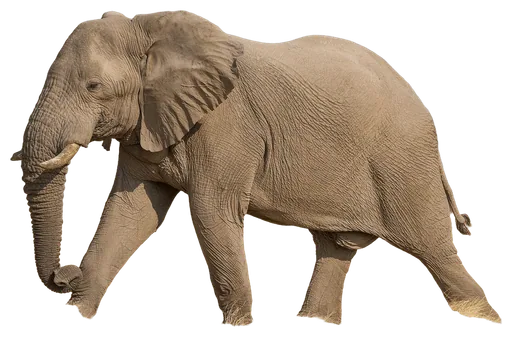
vs Asian ElephantLoses · 58% · Slight edge 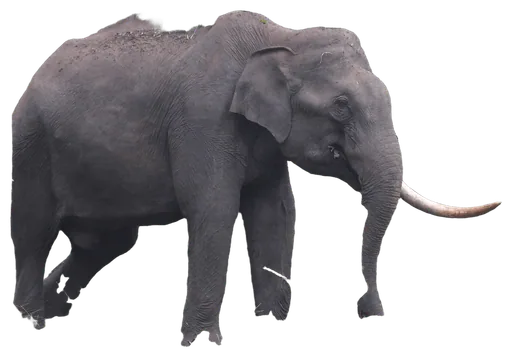 L vs African ElephantLoses · 62% · Slight edge
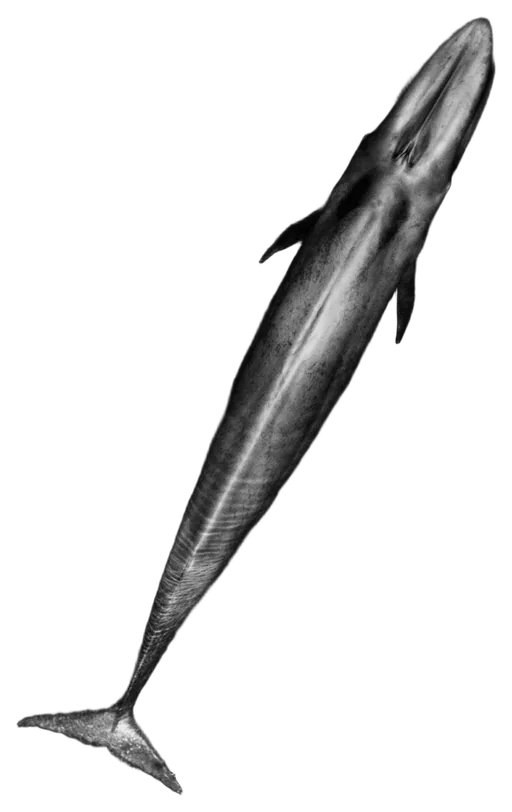
 L vs Blue WhaleLoses · 71% · Clear edge
 L vs Humpback WhaleLoses · 64% · Slight edge
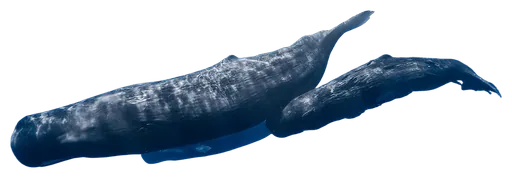
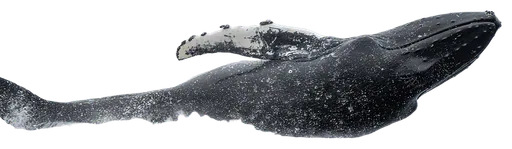 L vs Sperm WhaleLoses · 75% · Clear edge
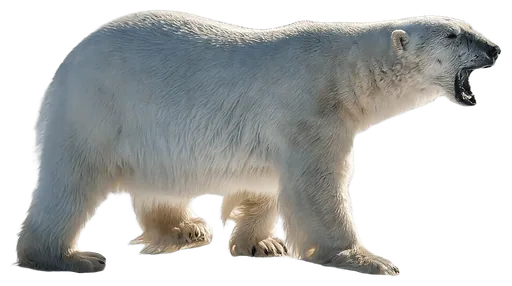
 L vs Polar BearWins · 61% · Slight edge
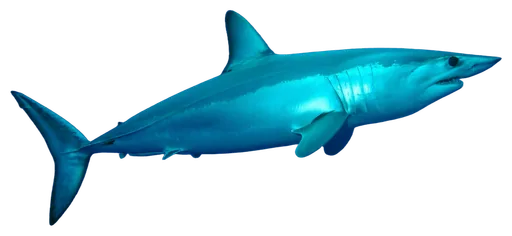
 W vs Mako SharkWins · 67% · Slight edge
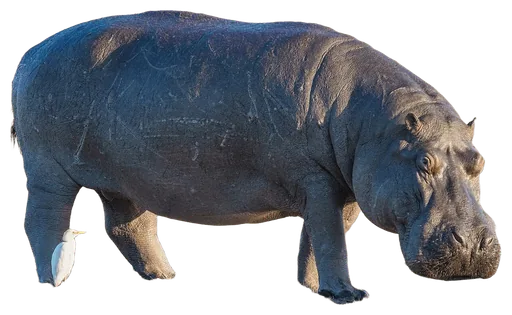
 W vs HippopotamusWins · 55% · Toss-up
 W
Great White Shark battle analysis
The great white's battle profile is best understood as a fast heavy weapons platform, not as an invulnerable movie monster. A representative mature female weighs close to a tonne and can build enough speed to turn an upward attack into a breach. The jaws combine huge absolute force with serrated teeth and a lateral cutting motion documented during natural predation. Against soft-bodied marine opponents, one clean first pass can be fight-changing.
Its strongest advantage is that the weapon system is attached to an unusually complete hunting package. Countershading helps conceal the approach. Vision, smell, lateral-line input and electroreception provide overlapping target information. Regional endothermy supports performance in cool water, and long-distance tracking shows that this is not merely a short-burst animal. Behavioral studies also show learned refinement, spatial search patterns and timing decisions.
The limits matter just as much for ABS calibration. A great white has no shell, osteoderm armor or thick blubber shield. Its gills and eyes are exposed. Five metres of body cannot pivot like a seal or small fish, and a missed high-speed pass costs position. Its bite-force literature is also often misreported: the strongest scientific evidence is a modelled force in newtons/tonnes-force, not a measured 4,000 PSI value. The resulting ABS profile should therefore be elite in Attack, Stamina, Senses and Special, strong but not ceiling-level in Defense, and high rather than extreme in Agility.
Habitat & range
Great white sharks occur broadly in temperate and subtropical seas worldwide, using coastal, neritic and oceanic habitats. NOAA lists U.S. occurrence from Alaska and the West Coast through Pacific Islands, the Southeast and New England/Mid-Atlantic regions. Tracking studies show that large individuals cross ocean basins rather than remaining permanently coastal.
Diet & hunting
Diet changes with size and opportunity. Juveniles emphasize fishes, smaller sharks/rays and squid, while larger sharks increasingly exploit marine mammals and other energy-rich prey. The species is an apex predator whose presence can alter prey behavior around seal colonies.
Social life
Primarily solitary in routine movement, but multiple individuals aggregate at prey-rich sites. Competition can influence attack quality and spatial positioning. This is not equivalent to cooperative pack hunting.
Conservation
CMS reports the species as Vulnerable on the IUCN Red List and lists it on CMS Appendices I and II; international trade is restricted under CITES Appendix II. Principal threats include bycatch, historical targeted fishing/persecution and the species' very slow life history.
Quick answers
How strong is a Great White Shark?
On the Animal Battle Stats scale, the Great White Shark has an attack rating of 88 and a power index of 79.7 out of 100, which ranks it #5 of 344 animals and puts it in S tier (Apex). Its strongest stat is stamina (91).
How much does a Great White Shark weigh?
A typical adult Great White Shark weighs about 900 kg (1,984 lb). Rated specimen: Healthy, fully mature female, approximately 900.0 kg and 500.0 cm total length.
How fast is a Great White Shark?
The Great White Shark's top speed is about 50 km/h (31 mph). Its agility rating is 73 out of 100.
What does a Great White Shark eat?
Diet changes with size and opportunity. Juveniles emphasize fishes, smaller sharks/rays and squid, while larger sharks increasingly exploit marine mammals and other energy-rich prey. The species is an apex predator whose presence can alter prey behavior around seal colonies.
Is the Great White Shark endangered?
The Great White Shark's conservation status is Vulnerable. CMS reports the species as Vulnerable on the IUCN Red List and lists it on CMS Appendices I and II; international trade is restricted under CITES Appendix II. Principal threats include bycatch, historical targeted fishing/persecution and the species' very slow life history.
What animals can beat a Great White Shark?
Among its closest rivals, the Asian Elephant (58%), the African Elephant (62%), the Blue Whale (71%), the Humpback Whale (64%), the Sperm Whale (75%) would be favored against the Great White Shark. It would be favored against the Polar Bear, the Mako Shark, the Hippopotamus.
Researched 2026-09-27. Ratings are editorial judgments built from these sources; measurements describe a healthy adult female.
- NOAA Fisheries, White SharkTaxonomy, maximum size, longevity, maturity, diet
- NOAA Fisheries necropsyFemale maturity uncertainty
- Florida Museum, White SharkLength, maturity, taxonomy, endothermy, behavior
- Wroe et al. 2008, Journal of ZoologyBite mechanics
- Martin et al. 2005, JMBAPredation, bite delivery, learning
- Hammerschlag et al. 2009, Journal of ZoologySpatial hunting tactics
- Smithsonian OceanSpeed
- Bradford et al. 2020, Marine BiologyMovement, sex differences, endurance
- Gaube et al. 2018, Scientific ReportsMature-female oceanic behavior
- Domeier & Nasby-Lucas 2013, Animal BiotelemetryMature-female reproductive movement
- CMS species accountConservation, size, endothermy
- Fishes of TexasDentition/morphology
- Wikimedia Commons, Sharkdiver68Image provenance
- Manny Katz / Nautilus Arts CentreImage discovery comparator
Photo: “La Marca Invisible – Tiburón blanco con mordida de cookie-cutter por Gerardo del Villar.jpg” by Gerardo del Villar, CC BY-SA 4.0, background removed and cropped. Original
Suggest a correction