


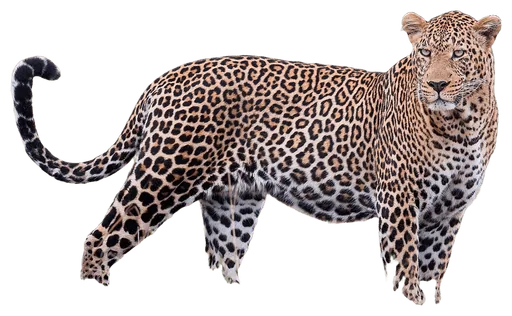
Human vs Leopard
The verdict names the winner. Fight or show the odds first, then read why.
Leopard wins this matchup 72% of the time in the Animal Battle Stats model (clear edge). It leads in 4 of 6 battle stats, with the biggest swing coming from attack (60 vs 32). Its power index is 60.7 against 45.4 for the Human.
Size matters here: a typical adult Human weighs about 80 kg (176 lb), roughly 1.3× the Leopard's 60 kg. Despite that, the Leopard's weapons and fighting stats carry the day.
The Human's best chance is its intelligence (100 vs 68), plus abilities like Haymaker punch and Tackle and grapple. It is a real edge, but not enough to overcome the gap everywhere else.
Who would win, Human or Leopard?
Leopard. Leopard wins this matchup 72% of the time in the Animal Battle Stats model (clear edge). It leads in 4 of 6 battle stats, with the biggest swing coming from attack (60 vs 32). Its power index is 60.7 against 45.4 for the Human.
Which is bigger, the Human or the Leopard?
The Human (80 kg) is heavier than the Leopard (60 kg).
Which is faster?
No reliable top speed exists for both, but the Leopard is more agile (84 vs 40).
Can a human beat a leopard?
Rarely. An unarmed, untrained man beats a leopard only about 28% of the time in the Animal Battle Stats model. The leopard wins on attack, defense, agility, and weighs 60 kg against a man's 80 kg.
How many humans would it take to beat a leopard?
About 3 average men would be favoured to beat one leopard, and about 11 would win 9 times out of 10 (unarmed, fighting together).
Who is the Human in these matchups?
An average adult man, about 80 kg and 1.75 m, unarmed and untrained, rated on the same 0 to 100 scale as the animals: attack 32, defense 30, agility 40, stamina 85, intelligence 100, special 36. Humans are not ranked or listed with the animals.
Odds come from the Animal Battle Stats model: six researched ratings, weighted and compared head to head, plus body size. How it works
 Leopard clear edge
 +10 · bonus if right
 Pick who wins, then watch the fight. Right calls build a streak.