
Leopard
Panthera pardusB tier · Strong38th of 163 mammals
Size & speed

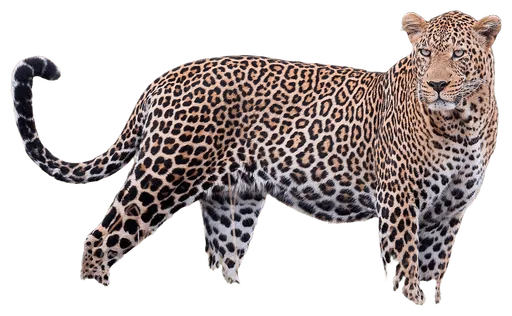
- Weight
- 60 kg132 lb
- Length
- 1.5 m4.9 ft
About as heavy as a person
Heavier than 67% of animalsAbout as long as a person is tall
Bigger than 61% of animalsA 60 kg mature male leopard is an elite ambush-and-grapple predator whose canines, claws, climbing ability and tactical flexibility make it dangerous far beyond a simple sprint statistic. Its strongest ABS advantage is agility and terrain control, while limited armor and a large mass gap against bigger predators keep Defense and absolute Attack below heavyweight carnivores.
Detailed ratings
Research-backed ratings on one 0–100 scale for all 344 animals (updated 2026-09-27). How ratings work


Card No. 66 of 344. Every animal on Animal Battle Stats has one: its power, tier and archetype on the front; its six battle stats, abilities and signature move on the back.
Special abilities
Powerful climbing, retractile claws and flexible limb mechanics let a leopard reposition vertically, escape ground-bound threats and secure prey in trees.
Concealment, low-light senses and controlled stalking let the leopard compress engagement distance before an explosive pounce, reducing an opponent's reaction window.
Unique traits
Disruptive rosette patterning breaks up the body outline across woodland, forest and broken light, improving approach and avoidance without being treated as invisibility.
One animal combines broad prey choice, habitat flexibility, caching and independent territorial hunting without needing pack coordination.
How it fights
Weapons
- The leopard is an ambush-and-grapple predator. ADW describes a low stalk to roughly 3–10 m followed by a pounce; after capture it uses neck/throat control and a killing bite. Claws and forelimbs stabilize prey while the jaws deliver concentrated damage. The system is dangerous and repeatable but requires close contact.
- Weight
- 60 kg132 lb
- Height
- 65 cm25.6 in
- Length
- 1.5 m4.9 ft
- Top speed
- No reliable measurement
- Bite force
- No reliable measurement
- Lifespan
- 12 years
- Home biome
- Savanna
- Lifestyle
- Mostly solitary, nocturnal
Rated specimen: The canonical profile is therefore a representative large adult male, not a claim that all male leopards are 60 kg.
Fun facts
- Leopards can descend trees head-first, unusual among large cats.
- The species has one of the broadest geographic and habitat distributions of any wild cat.
- ADW describes stalking to only about 3–10 m before the pounce.
- CatSG reports a species-wide body-length range of 91–191 cm plus a 51–101 cm tail.
- GPS work shows leopard space use changes dramatically with prey, habitat, competitors and human density.
Closest rivals by power. Tap one for the full breakdown, or pick any opponent.
vs Sloth BearLoses · 54% · Toss-up 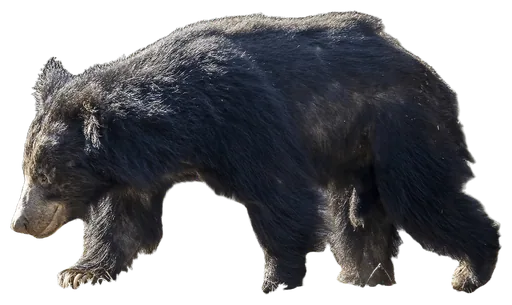 L vs Mountain GoatLoses · 54% · Toss-up
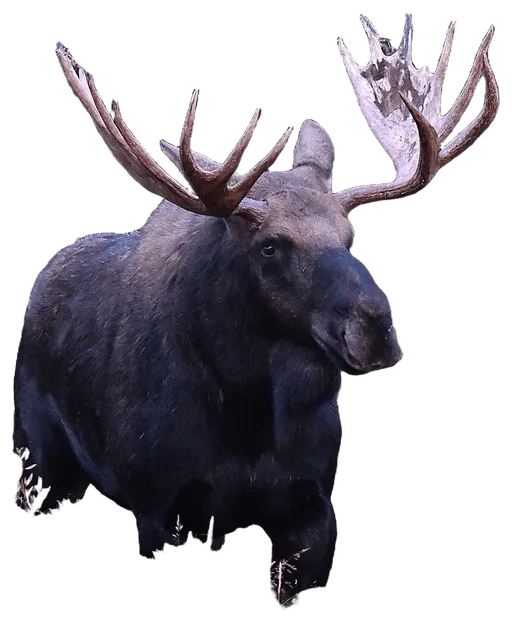
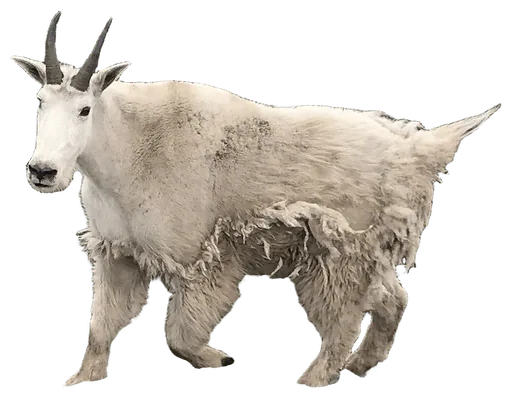 L vs MooseLoses · 63% · Slight edge
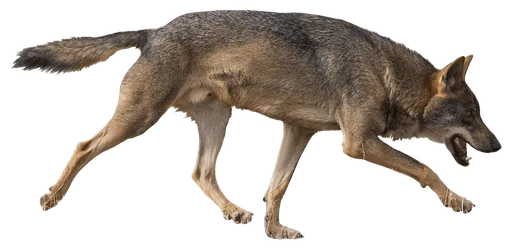
 L vs Gray WolfWins · 51% · Toss-up
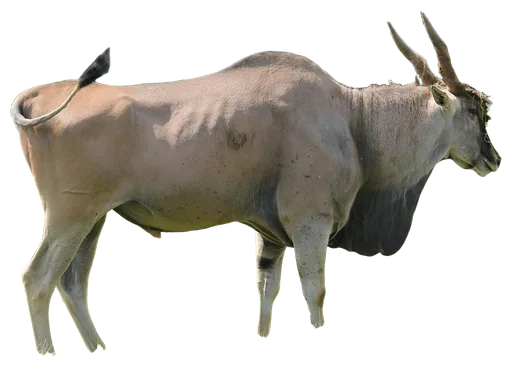
 W vs Common ElandLoses · 64% · Slight edge
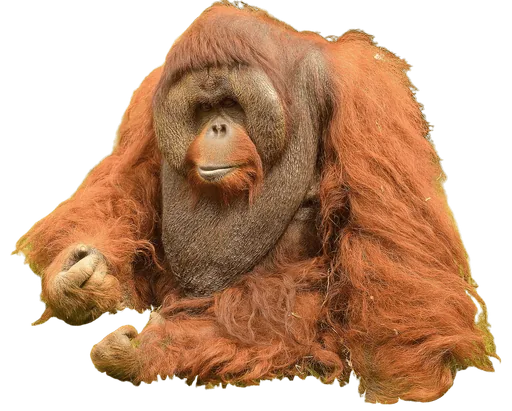
 L vs OrangutanLoses · 53% · Toss-up
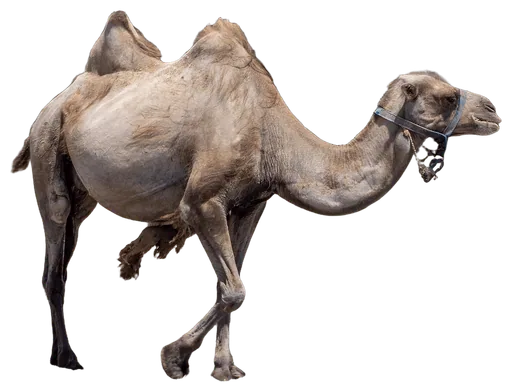
 L vs Bactrian CamelLoses · 62% · Slight edge
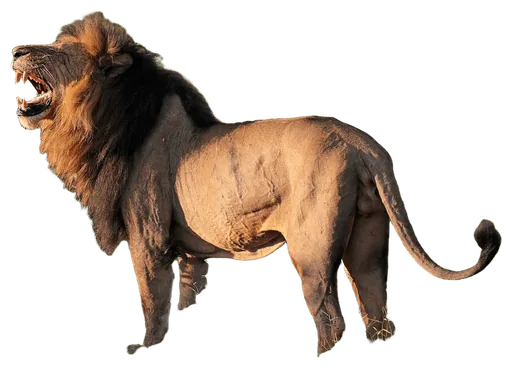
 L vs African LionLoses · 56% · Toss-up
 L
Leopard battle analysis
The leopard wins by controlling when and where contact happens. It stalks through cover, uses darkness and terrain to close distance, then converts a short explosive pounce into a grapple where claws stabilize the target and the jaws can reach the neck. Unlike a cursorial pursuit specialist, it does not need a long chase to be effective. Trees add an entire vertical dimension to its toolkit, providing observation, escape and food security. That versatility explains why leopards persist from rainforest to dry country and even near dense human settlement.
That flexibility should not be confused with heavyweight durability. A representative male is around 60 kg, lacks armor and cannot trade frontal damage efficiently with lions, tigers, large bears or megafauna. ABS therefore gives the leopard elite Agility and strong tactics while keeping its Attack and Defense anchored to absolute body scale.
Habitat & range
Leopards occupy sub-Saharan Africa and a fragmented Asian range extending through parts of Arabia, southwest and South Asia, Indochina, China and the Russian Far East. They use rainforest, woodland, savanna, mountains, semiarid landscapes and some human-modified environments. CatSG recognizes major subspecific and geographic structure.
Diet & hunting
They primarily take small-to-medium ungulates but also consume primates, pigs, rodents, birds, reptiles, fish, arthropods and carrion. Diet shifts with prey availability. Their broad niche and ability to cache food help them coexist with larger competitors, although lions, tigers and hyenas can displace or kill them.
Social life
Leopards are predominantly solitary. Adults communicate through scent, scrapes and vocalizations. ADW reports year-round breeding, usually 2–3 cubs, approximately 96-day gestation and independence around 13–18 months. Females provide parental care and juveniles undergo extended learning before independence.
Conservation
The IUCN SSC Cat Specialist Group lists Panthera pardus as Vulnerable, citing habitat loss, prey depletion, persecution, illegal wildlife trade, medicinal/ceremonial exploitation and poorly managed hunting. Leopards can persist near people, but livestock predation and fear can produce severe conflict.
Quick answers
How strong is a Leopard?
On the Animal Battle Stats scale, the Leopard has an attack rating of 60 and a power index of 60.7 out of 100, which ranks it #66 of 344 animals and puts it in B tier (Strong). Its strongest stat is agility (84).
How much does a Leopard weigh?
A typical adult Leopard weighs about 60 kg (132 lb). Rated specimen: The canonical profile is therefore a representative large adult male, not a claim that all male leopards are 60 kg.
How fast is a Leopard?
There is no reliable measured top speed for the Leopard, so we do not publish one. Its agility rating, which covers acceleration, reflexes and evasion, is 84 out of 100.
What does a Leopard eat?
They primarily take small-to-medium ungulates but also consume primates, pigs, rodents, birds, reptiles, fish, arthropods and carrion. Diet shifts with prey availability. Their broad niche and ability to cache food help them coexist with larger competitors, although lions, tigers and hyenas can displace or kill them.
Is the Leopard endangered?
The Leopard's conservation status is Vulnerable. The IUCN SSC Cat Specialist Group lists Panthera pardus as Vulnerable, citing habitat loss, prey depletion, persecution, illegal wildlife trade, medicinal/ceremonial exploitation and poorly managed hunting. Leopards can persist near people, but livestock predation and fear can produce severe conflict.
What animals can beat a Leopard?
Among its closest rivals, the Sloth Bear (54%), the Mountain Goat (54%), the Moose (63%), the Common Eland (64%), the Orangutan (53%), the Bactrian Camel (62%), the African Lion (56%) would be favored against the Leopard. It would be favored against the Gray Wolf.
Researched 2026-09-27. Ratings are editorial judgments built from these sources; measurements describe a healthy adult male.
- IUCN SSC Cat Specialist Group, Leopardtaxonomy, dimensions, range, conservation
- Animal Diversity Web, Panthera pardussex dimorphism, mass, length, lifespan, behavior, diet, reproduction
- Stein & Hayssen 2013, Mammalian Speciestaxonomy, ecology, versatility
- Snider et al. 2021, Journal of Mammalogyspace use / behavioral flexibility
- Journal of Mammalogy 2023 home-range synthesismovement/endurance context
- Farhadinia et al. 2018, Journal of Mammalogypredation / kill rate
- Current Zoology feeding studyprey-size context
- Wikimedia Commons / Bernard DUPONTimage provenance
Photo: “Male leopard - Mara.jpg” by Sumeet Moghe, CC BY-SA 4.0, background removed and cropped. Original
Suggest a correction