
Yak
Bos grunniensA tier · Elite31st of 163 mammals
Size & speed

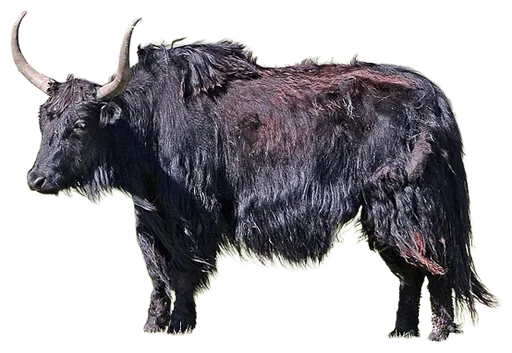
- Weight
- 450 kg992 lb
- Length
- 1.6 m5.2 ft
As heavy as 6.4 people
Heavier than 89% of animalsAbout as long as a person is tall
Bigger than 64% of animalsThe domestic yak is a 450 kg high-altitude ox with sweeping horns, a ground-length coat and a heart and lungs built for thin air. Bulls charge head-down in the rut and herds bunch against wolves, but domestic yaks are usually docile, slow to turn and badly suited to heat.
Detailed ratings
Research-backed ratings on one 0–100 scale for all 344 animals (updated 2026-09-28). How ratings work


Card No. 52 of 344. Every animal on Animal Battle Stats has one: its power, tier and archetype on the front; its six battle stats, abilities and signature move on the back.
Special abilities
A large chest, large lungs, a heart about 1.5 times the mass of local cattle hearts and oxygen-hungry hemoglobin let the yak work hard where the air holds about a third less oxygen than at sea level.
Bulls charge with heads down and spar with long, outward-sweeping horns, putting 450 kg behind the impact.
Unique traits
Long outer hair hangs below the belly, sometimes to the ground, over a dense winter undercoat and thick fat, protecting the yak in temperatures down to −40 °C.
Yaks grunt instead of lowing like cattle, which gave the domestic yak its scientific name grunniens, "grunting."
How it fights
Weapons
- The yak fights like other wild cattle: head down, horns forward, mass behind. During the rut bulls bellow, scrape the ground with their horns, and compete directly by charging each other with lowered heads and sparring with their horns (Wikipedia). A 450 kg bull with 50–100 cm horns can gore and knock down medium predators. Domestic yaks, however, are bred for tractability and often avoid conflict; many Mongolian yaks have no horns at all.
Struggles vs
- Poor heat tolerance; performance drops above about 15 °C.
- Domestic yaks are often docile or polled.
- Not fast; limited agility for its mass.
- No armor on the neck and belly beneath the hair.
- Weight
- 450 kg992 lb
- Height
- 1.3 m4.3 ft
- Length
- 1.6 m5.2 ft
- Top speed
- No reliable measurement
- Bite force
- No reliable measurement
- Lifespan
- 20 years
- Home biome
- Mountains
- Lifestyle
- Social
Rated specimen: Healthy mature adult male (domestic bull), 450.0 kg, 130.0 cm at the withers and 160.0 cm body length (FAO trunk-length convention; see below).
Fun facts
- Bos grunniens means "grunting ox": yaks grunt rather than moo.
- Przewalski named the wild yak Bos mutus, "mute ox," thinking it made no sound, but it does.
- A Zhongdian yak's heart averages about 1.3 kg, half again as heavy as a local cow's.
- Yaks start to overheat at about 16 °C.
- Yaks normally live as high as about 5,500 m.
- Wild yak bulls can weigh about a tonne, roughly one and a half times a domestic bull from the same area.
Closest rivals by power. Tap one for the full breakdown, or pick any opponent.
vs PronghornWins · 62% · Slight edge 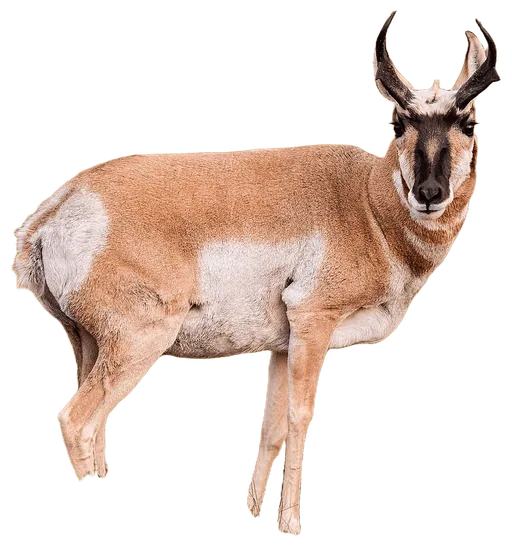 W vs Musk OxWins · 52% · Toss-up
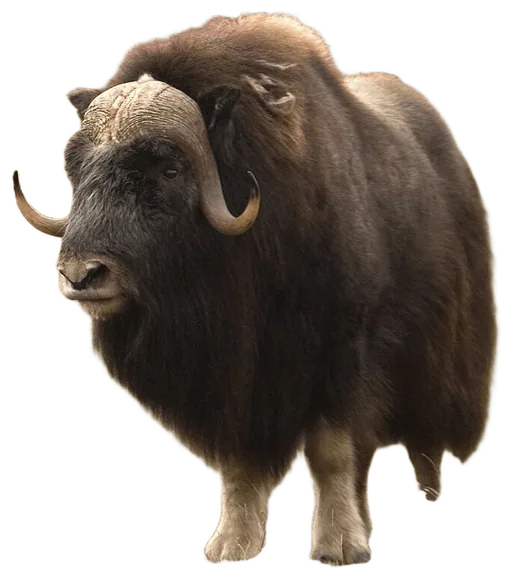 W vs ReindeerWins · 57% · Toss-up
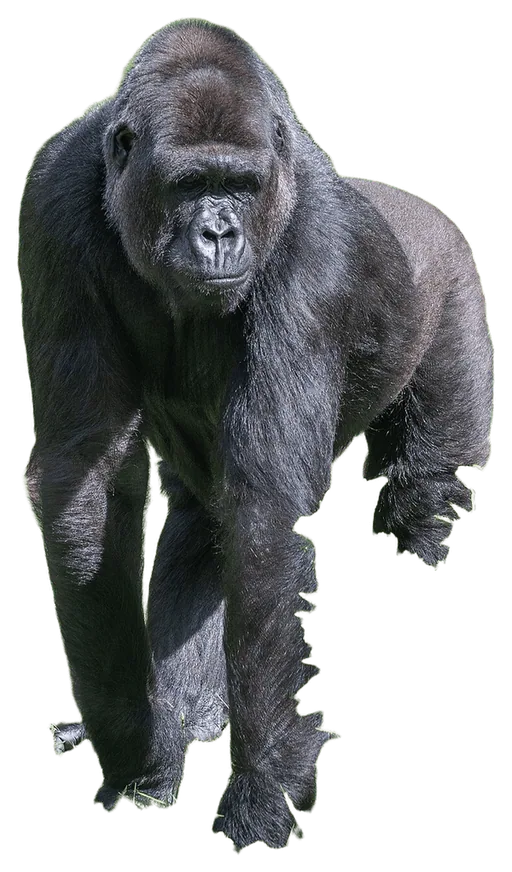
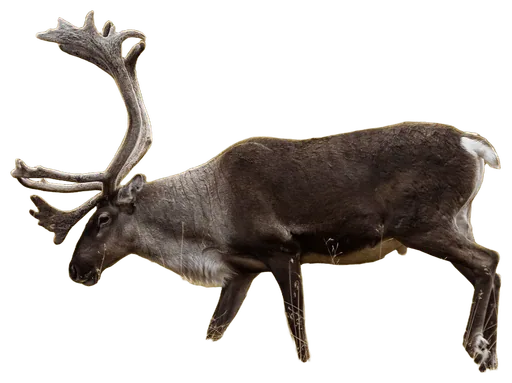 W vs GorillaWins · 56% · Toss-up
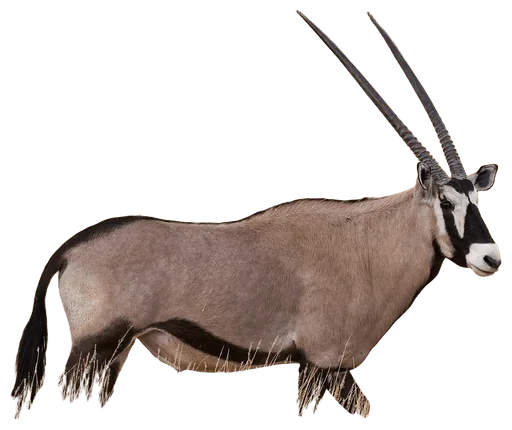
 W vs OryxWins · 52% · Toss-up
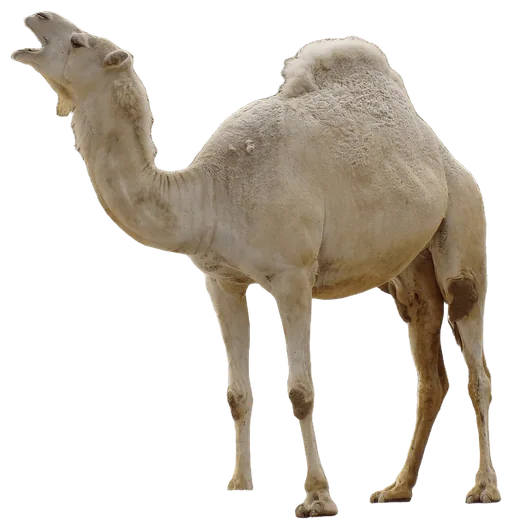
 W vs CamelLoses · 54% · Toss-up
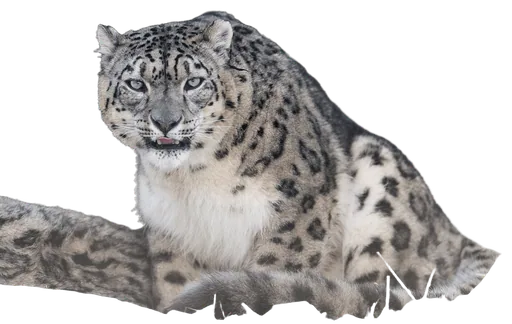
 L vs Snow LeopardWins · 60% · Slight edge
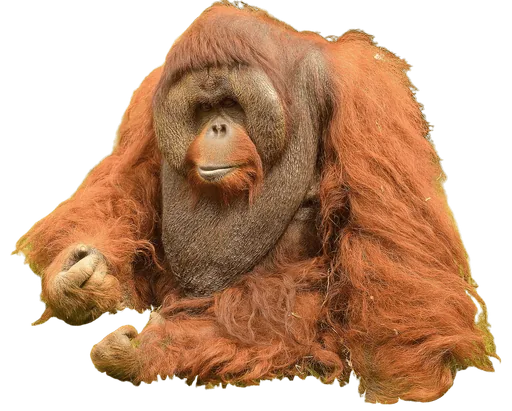
 W vs OrangutanWins · 62% · Slight edge
 W
Yak battle analysis
The yak is the cattle of the roof of the world. A domestic bull stands about 130 cm at the withers and weighs around 450 kg, with a hump over the shoulders, long horns sweeping outward and back, and a coat so long that it hangs in a skirt below the belly. Beneath the hair lies a dense undercoat and a thick layer of fat, and inside is an oversized heart and pair of lungs suited to air that holds a third less oxygen than at sea level.
As a fighter, the domestic yak is capable but not eager. Bulls charge and spar with lowered horns during the rut, and a 450 kg charge is dangerous to any wolf-sized predator. But domestic breeding has made most yaks tractable, many Mongolian yaks carry no horns at all, and their first response to danger is to bunch together or run. Their wild relatives are another matter: wild yak bulls weigh about a tonne, carry horns averaging over 75 cm and will attack intruders when cornered.
The yak's real advantage is where it lives. At 4,000 to 5,500 m, in temperatures that fall to −40 °C, it keeps working when lowland cattle struggle to breathe, which is why it scores high in Stamina and Special. Take it down to warm lowlands and it begins to overheat at 16 °C. On the absolute scale it sits among heavy hoofed animals like the musk ox and fighting bull, below the tonne-class bison, buffalo and gaur.
Habitat & range
Domestic yaks live across the Himalayan region, the Tibetan Plateau, the Pamirs, Tajikistan, Mongolia and southern Siberia, mostly above 3,000 m in cold, semi-arid to semi-humid uplands; the further north, the lower the altitude at which they live. Small herds are kept in North America, Europe and New Zealand. Wild yaks survive on treeless uplands of the Tibetan Plateau between about 3,000 and 5,500 m, especially alpine tundra with grasses and sedges.
Diet & hunting
Grazers of grasses and sedges, with herbs, dwarf shrubs, lichens and mosses. In snow they break through the cover to reach wilted grass. Yaks have a large rumen for fermenting poor forage. Wild yaks are an important prey species for wolves.
Social life
Wild yaks live in large female-and-young herds and smaller bull groups; bulls wander alone outside the rut. Domestic herds are managed by herders, with bulls kept for breeding and steers for work.
Conservation
Domesticated; the domestic yak is common across its range. The wild yak (Bos mutus) is Vulnerable on the IUCN Red List, with the 2008 assessment suggesting no more than 10,000 mature individuals. Poaching is its most serious threat, followed by interbreeding and disease risk from domestic herds. A 2015 study found female wild yaks now depend on winter snow patches 20 times more than males, and use steeper terrain than in the past.
Quick answers
How strong is a Yak?
On the Animal Battle Stats scale, the Yak has an attack rating of 62 and a power index of 62.6 out of 100, which ranks it #52 of 344 animals and puts it in A tier (Elite). Its strongest stat is stamina (80).
How much does a Yak weigh?
A typical adult Yak weighs about 450 kg (992 lb). Rated specimen: healthy mature adult male (domestic bull), 450.0 kg, 130.0 cm at the withers and 160.0 cm body length (FAO trunk-length convention; see below).
How fast is a Yak?
There is no reliable measured top speed for the Yak, so we do not publish one. Its agility rating, which covers acceleration, reflexes and evasion, is 55 out of 100.
What does a Yak eat?
Grazers of grasses and sedges, with herbs, dwarf shrubs, lichens and mosses. In snow they break through the cover to reach wilted grass. Yaks have a large rumen for fermenting poor forage. Wild yaks are an important prey species for wolves.
Is the Yak endangered?
The Yak's conservation status is Domesticated. Domesticated; the domestic yak is common across its range. The wild yak (Bos mutus) is Vulnerable on the IUCN Red List, with the 2008 assessment suggesting no more than 10,000 mature individuals. Poaching is its most serious threat, followed by interbreeding and disease risk from domestic herds. A 2015 study found female wild yaks now depend on winter snow patches 20 times more than males, and use
What animals can beat a Yak?
Among its closest rivals, the Camel (54%) would be favored against the Yak. It would be favored against the Pronghorn, the Musk Ox, the Reindeer, the Gorilla, the Oryx, the Snow Leopard, the Orangutan.
Researched 2026-09-28. Ratings are editorial judgments built from these sources; measurements describe a healthy adult male.
- Wikipedia, Yakdomestic mass, height, horns, physiology, rut behavior, reproduction, lifespan, uses
- Wikipedia, Wild yakwild yak size, habitat, predators, status
- Animal Diversity Web, Bos grunnienswild and domestic mass, lungs and blood, lifespan, wolves
- FAO, The Yak (2nd ed., 2003), contentsoverall reference
- FAO, The Yak, chapter 1wild yak size, horns, temperament
- FAO, The Yak, chapter 2breed body measurements
- FAO, The Yak, chapter 4cold, altitude and heat physiology, herd defense
- FAO, The Yak, draught overviewwork endurance
- Qiu et al. 2012, Nature Geneticsgenome, hypoxia
- Berger et al. 2015, Scientific Reportswild yak ecology
- Wikimedia Commons, Yak in Khövsgöl 02image source
Photo: “File:Yak in Khövsgöl 02.jpg” by Bernard Gagnon, CC0, background removed. Original
Suggest a correction