
Wombat
Vombatus ursinusC tier · Capable130th of 163 mammals
Size & speed

- Weight
- 28 kg62 lb
- Length
- 1 m3.3 ft
- Top speed
- 40 km/h25 mph
As heavy as 6.2 house cats
Heavier than 58% of animalsAbout 3.3 rulers long
Bigger than 44% of animalsFaster than most people can sprint
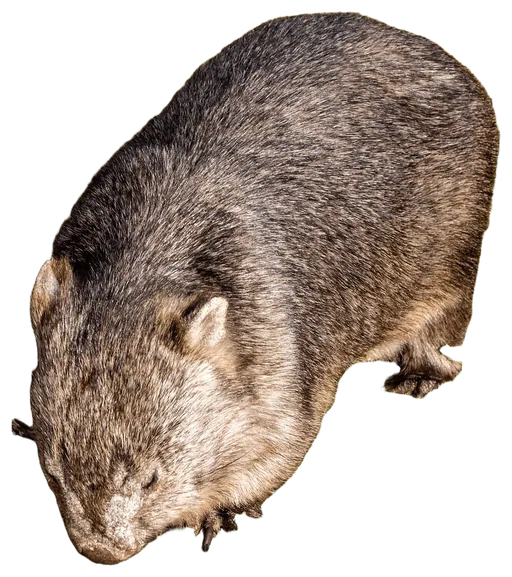
Faster than 41% of animalsThe common wombat is a 28 kg burrowing marsupial with ever-growing teeth, powerful digging claws and a cartilage-backed rump it uses to plug its tunnel against predators. It can sprint over 40 km/h and bite hard, but away from its burrow it is a slow, unarmored herbivore.
Detailed ratings
Research-backed ratings on one 0–100 scale for all 344 animals (updated 2026-09-28). How ratings work


Card No. 238 of 344. Every animal on Animal Battle Stats has one: its power, tier and archetype on the front; its six battle stats, abilities and signature move on the back.
Special abilities
The wombat dives into its tunnel and blocks it with a cartilage-backed rump under toughened hide, leaving a pursuer facing a hard, almost tailless wall that is difficult to bite. Crushing an attacker against the tunnel roof is reported by some sources but not confirmed.
Powerful claws and short, strong limbs dig tunnel systems 2–20 m long with several entrances and side tunnels, giving the wombat a network of refuges across its range.
Unique traits
The common wombat produces cube-shaped droppings; dissections show the cubes form in the last 17% of the intestine, where varying intestinal wall stiffness shapes the corners.
The only marsupial whose teeth grow continuously, with a single pair of upper and lower incisors and self-sharpening molars.
How it fights
Weapons
- The wombat is a herbivore, so its offense is defensive. Chisel-like, ever-growing incisors driven by very large jaw muscles give a strong bite, the long digging claws can puncture skin, and a startled wombat will charge and bowl a person over, risking broken bones from the fall (Wikipedia). A 2010 report described a Victorian man needing hospital treatment for cuts and bite wounds after a wombat attack. None of these tools is a dedicated killing weapon.
Struggles vs
- Slow over distance; far from a burrow it must rely on a short sprint and a bite.
- Low absolute mass and no dedicated killing weapons.
- Head, neck and belly are exposed if flipped or caught in the open.
- Sarcoptic mange weakens many animals.
- Weight
- 28 kg62 lb
- Height
- No reliable measurement
- Length
- 1 m3.3 ft
- Top speed
- 40 km/h25 mph
- Bite force
- No reliable measurement
- Lifespan
- 12 years
- Home biome
- Forest
- Lifestyle
- Social
Rated specimen: Healthy mature adult male of the mainland subspecies, 28.0 kg and 100.0 cm head-body length.
Fun facts
- Wombat droppings are cube-shaped, and the physics of how they form won an Ig Nobel Prize in 2019.
- The cubes form within the last 17% of the intestine.
- A wombat can run at over 40 km/h in short bursts.
- Wombats switch the burrow they sleep in every 1–9 days.
- The common wombat is the only marsupial whose teeth grow throughout life.
- Many small animals use wombat burrows, and these burrows stayed activity hotspots after the Black Summer fires.
Closest rivals by power. Tap one for the full breakdown, or pick any opponent.
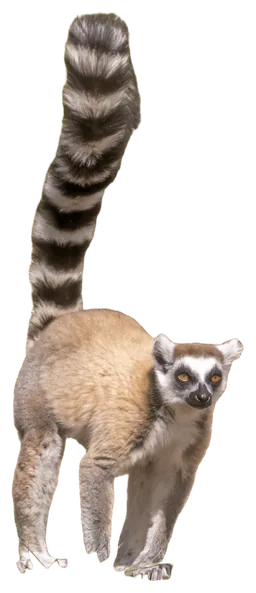
vs SkunkWins · 60% · Slight edge 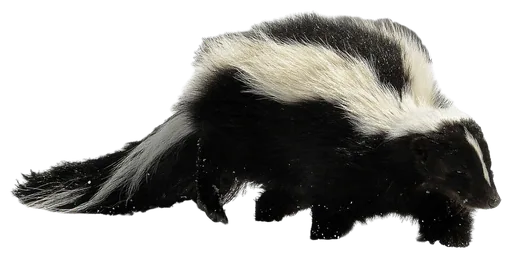 W vs Ring-tailed LemurWins · 64% · Slight edge
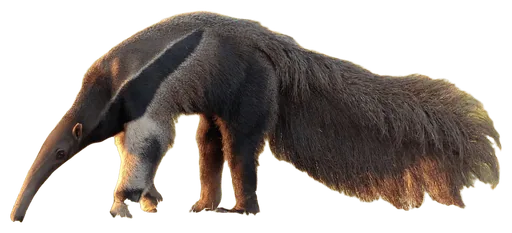
 W vs AnteaterLoses · 53% · Toss-up
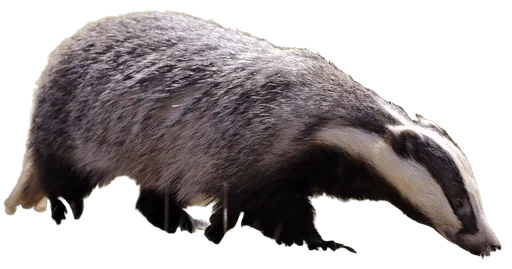
 L vs BadgerWins · 53% · Toss-up
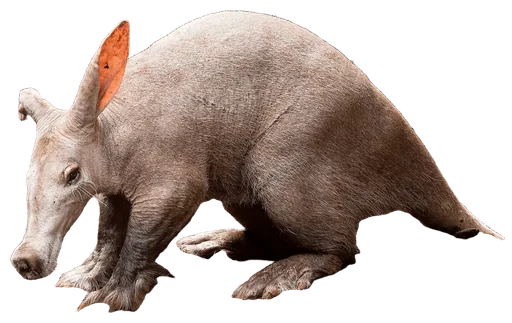
 W vs AardvarkLoses · 54% · Toss-up
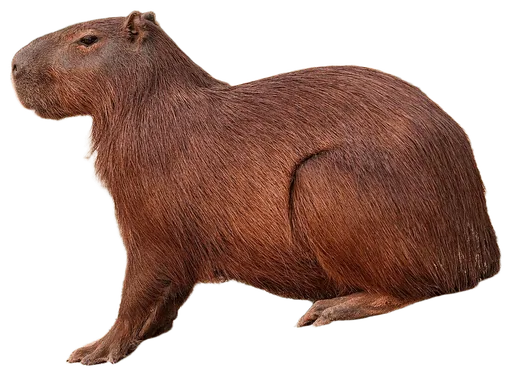
 L vs CapybaraLoses · 52% · Toss-up
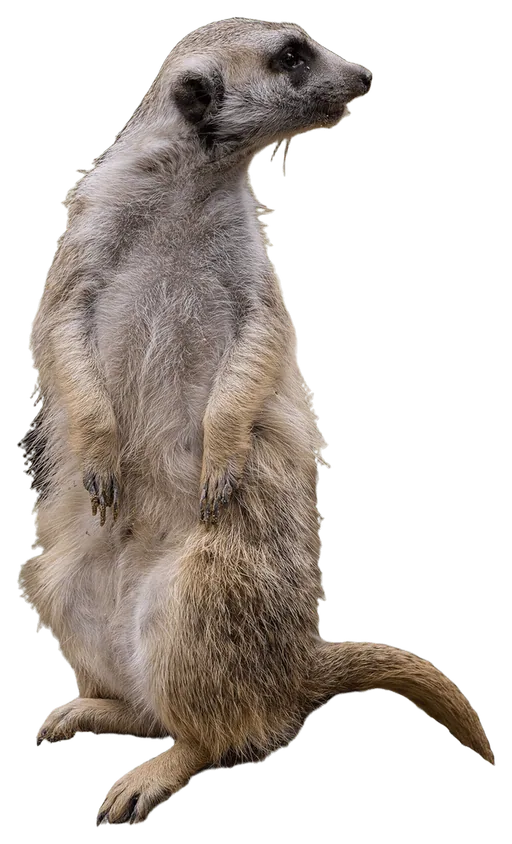
 L vs MeerkatWins · 68% · Slight edge
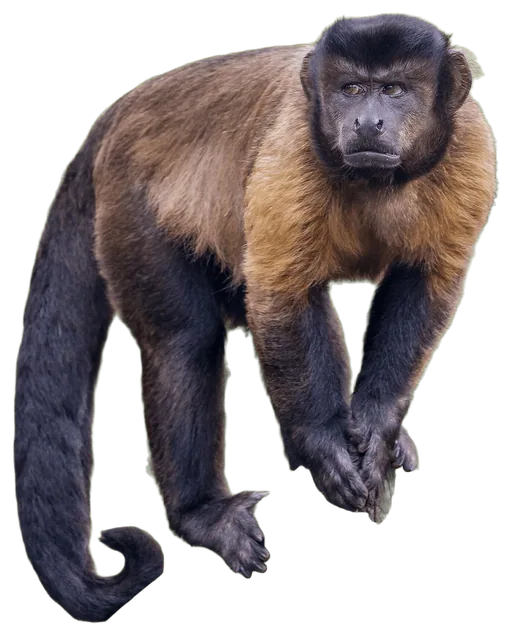
 W vs Capuchin MonkeyWins · 59% · Slight edge
 W
Wombat battle analysis
The common wombat is a low, barrel-shaped digger about a metre long and near 28 kg, built around its burrow. Short, heavy legs with long claws excavate tunnels up to 20 m long, and a single pair of chisel-like incisors backed by unusually large jaw muscles crops tough grasses. Every tooth keeps growing throughout life, a feature no other marsupial shares.
Its best-known defense faces backwards. Most of the wombat's rear is cartilage covered by toughened hide, and it has almost no tail, so when a dingo, fox or devil follows it underground the attacker meets a hard wall that is difficult to bite. Some sources describe wombats crushing an intruder's skull against the tunnel roof; others call that a tall tale, so it is not counted here. In the open the wombat can sprint over 40 km/h for a short distance and will bite, claw or charge when cornered.
On the absolute roster scale the wombat is a small defender rather than a fighter. Its Attack stays low because its weapons are defensive and it weighs under 30 kg, its Defense is boosted by the rump shield, and its Special score reflects how much the burrow-and-plug strategy changes fights against pursuing predators. Away from cover, against a large carnivore, it has few answers.
Habitat & range
Temperate forests, woodlands, heath and grassy areas of southeastern Australia with soil suitable for burrowing. At European settlement it ranged from southeastern Queensland along the Great Dividing Range of New South Wales to most of Victoria (Australian Museum); it also lives in Tasmania and on Flinders Island, with an introduced population on Maria Island. Wombats often live in riparian areas because they prefer to dig burrows there (ADW).
Diet & hunting
A grazer of mainly native grasses. Its efficient digestion lets it spend much of its time in burrows. Common wombats are ecosystem engineers: their burrows turn over soil and shelter many other species. A camera-trap study in southeastern Australia found small mammals and birds more active at burrow sites, and those associations persisted or strengthened in areas burned by the 2019–20 Black Summer fires.
Social life
Solitary, with overlapping home ranges and occasional burrow sharing. Wombats use several burrows and switch sleeping burrows every 1–9 days.
Conservation
Least Concern on the IUCN Red List. Sarcoptic mange is the most serious problem, along with roadkill and habitat loss. Spotlight surveys estimated about 71,800 wombats on Flinders Island in 2020, with densities of 0.42 per hectare there and 0.11 per hectare on mainland Tasmania; both populations grew over the 19-year survey period. A Victorian bounty paid from 1926 to 1966 treated wombats as agricultural pests.
Quick answers
How strong is a Wombat?
On the Animal Battle Stats scale, the Wombat has an attack rating of 33 and a power index of 44.5 out of 100, which ranks it #238 of 344 animals and puts it in C tier (Capable). Its strongest stat is special (63).
How much does a Wombat weigh?
A typical adult Wombat weighs about 28 kg (62 lb). Rated specimen: healthy mature adult male of the mainland subspecies, 28.0 kg and 100.0 cm head-body length.
How fast is a Wombat?
The Wombat's top speed is about 40 km/h (25 mph). Its agility rating is 44 out of 100.
What does a Wombat eat?
A grazer of mainly native grasses. Its efficient digestion lets it spend much of its time in burrows. Common wombats are ecosystem engineers: their burrows turn over soil and shelter many other species. A camera-trap study in southeastern Australia found small mammals and birds more active at burrow sites, and those associations persisted or strengthened in areas burned by the 2019–20 Black Summer fires.
Is the Wombat endangered?
No. The Wombat is listed as Least Concern. Least Concern on the IUCN Red List. Sarcoptic mange is the most serious problem, along with roadkill and habitat loss. Spotlight surveys estimated about 71,800 wombats on Flinders Island in 2020, with densities of 0.42 per hectare there and 0.11 per hectare on mainland Tasmania; both populations grew over the 19-year survey period. A Victorian bounty paid from 1926 to 1966 treated wombats as agric
What animals can beat a Wombat?
Among its closest rivals, the Anteater (53%), the Aardvark (54%), the Capybara (52%) would be favored against the Wombat. It would be favored against the Skunk, the Ring-tailed Lemur, the Badger, the Meerkat, the Capuchin Monkey.
Researched 2026-09-28. Ratings are editorial judgments built from these sources; measurements describe a healthy adult male.
- Australian Museum, Bare-nosed Wombatmass, length, speed, lifespan, burrow time, predators, rump defense
- Wikipedia, Common wombatsubspecies size, teeth, burrows, lifespan, predators, threats
- Wikipedia, Wombatrump anatomy, attacks on humans, cube scat, skull-crushing claim
- Animal Diversity Web, Vombatus ursinusmass, lifespan, home range, burrow defense
- Sharp & Trusler 2015, PLoS ONEjaw muscles, teeth, mass
- Sharp 2015, Journal of Morphologyskull mechanics
- Yang et al. 2021, Soft Mattercube scat
- Linley et al. 2024, Journal of Mammalogyburrows as refuges
- Knoblauch et al. 2023, Ecology and Evolutionpopulation
- Leary et al. 2025, PLoS ONEmange management, burrow use
- Wikimedia Commons, Wilsons Promontory wombatimage source
Photo: “Wilsons Promontory National Park (AU), Tidal River (village), Wombat -- 2019 -- 1602.jpg” by Dietmar Rabich, CC BY-SA 4.0, background removed and cropped. Original
Suggest a correction