
Wildebeest
Connochaetes taurinusB tier · Strong51st of 163 mammals
Size & speed

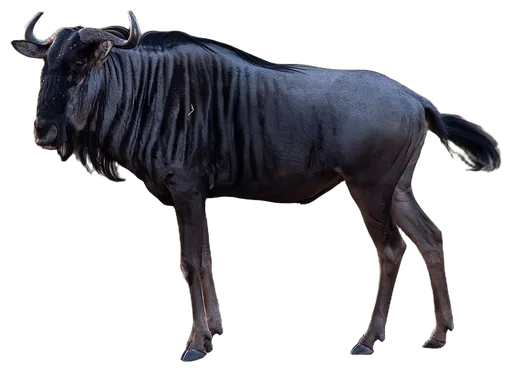
- Weight
- 250 kg551 lb
- Length
- 2.2 m7.2 ft
As heavy as 3.6 people
Heavier than 83% of animalsAbout as long as a person is tall
Bigger than 76% of animalsThe blue wildebeest is a 250 kg horned antelope built for distance. Bulls clash on their knees with hooked horns and herds mob lone predators, but its real edge is endurance: highly efficient muscle lets it walk for days without water. Lions and hyena clans still kill adults, and it has no armor.
Detailed ratings
Research-backed ratings on one 0–100 scale for all 344 animals (updated 2026-09-28). How ratings work


Card No. 81 of 344. Every animal on Animal Battle Stats has one: its power, tier and archetype on the front; its six battle stats, abilities and signature move on the back.
Special abilities
Bulls drop to their knees and drive their parenthesis-shaped horns into a rival or threat, and herds trail and mob predators to push them away. Most useful against lone mid-sized hunters.
Forelimb muscle that turns energy into work at about 62.6% efficiency lets wildebeest walk up to 80 km over five days without drinking, outlasting opponents in long, hot contests.
Unique traits
Three long-distance migrations survive (Serengeti, Tarangire and Kafue), timed to the rains and grass growth; migratory populations grow far larger than resident ones because they reach nutrient-rich calving plains.
80–90% of calves are born within about three weeks, and calves stand within minutes of birth, flooding predators with more newborns than they can take.
How it fights
Weapons
- The wildebeest's weapon is its horned head driven by heavy forequarters. Territorial bulls face each other with bent knees and exchange horn thrusts, grunt, paw the ground and dig their horns into the soil in display. Against predators the horns are used in short threat charges; ADW notes that wildebeest often trail or follow predators to drive them off, and that mothers often defend calves successfully against individual hyenas or cheetahs. The horns hook sideways and upward rather than stabbing forward like an oryx's, so their penetrating power is moderate.
Struggles vs
- Horns hook rather than stab, and the neck and legs are exposed.
- No armor; lions and hyena clans kill adults.
- River crossings and fences cause mass deaths.
- A lone animal loses the herd's vigilance and confusion effect.
- Weight
- 250 kg551 lb
- Height
- 1.4 m4.6 ft
- Length
- 2.2 m7.2 ft
- Top speed
- No reliable measurement
- Bite force
- No reliable measurement
- Lifespan
- 15 years
- Home biome
- Savanna
- Lifestyle
- Social
Rated specimen: Healthy mature territorial adult male (bull), 250.0 kg, 140.0 cm at the shoulder and 220.0 cm head-body length, horns up to about 83 cm.
Fun facts
- Blue wildebeest in Botswana walked up to 80 km in five days without drinking.
- Wildebeest muscle converts energy to work at about 62.6% efficiency, far above cattle muscle (41.8%).
- A territorial bull may neither eat nor rest while a female is in his territory.
- Newborn calves weigh about 19 kg and can stand within minutes.
- At high density, one square kilometre of plain can hold 270 territorial bulls.
- The species name taurinus comes from the Greek word for bull.
Closest rivals by power. Tap one for the full breakdown, or pick any opponent.
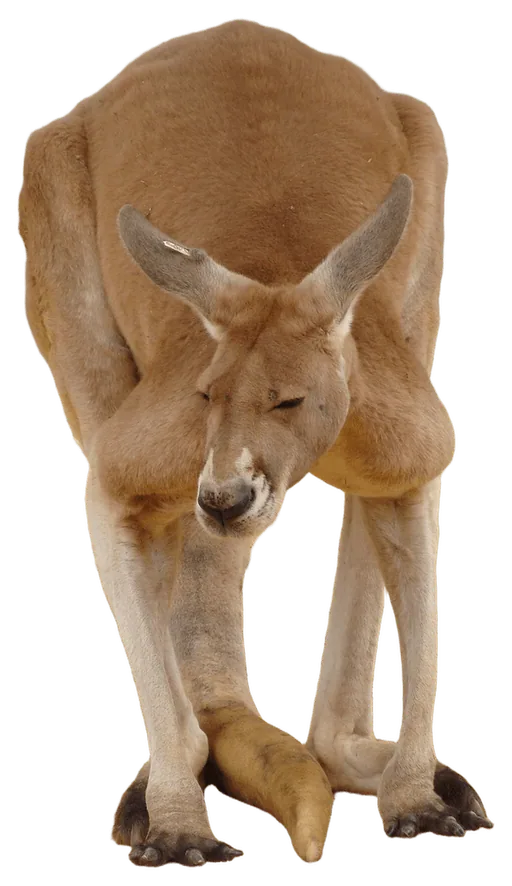
vs Black BearWins · 54% · Toss-up 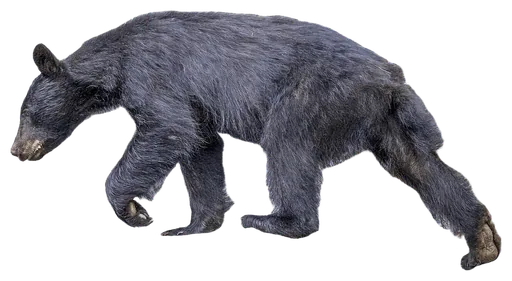 W vs KangarooWins · 56% · Toss-up
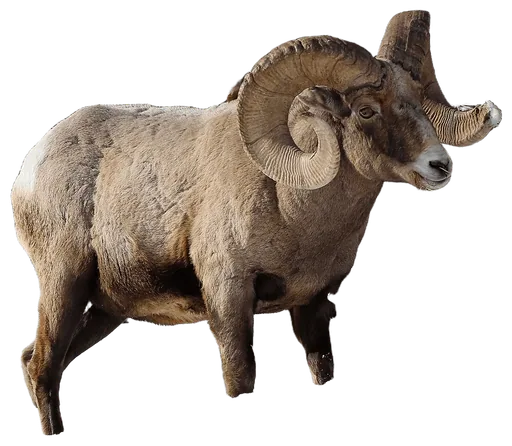
 W vs Bighorn SheepWins · 54% · Toss-up
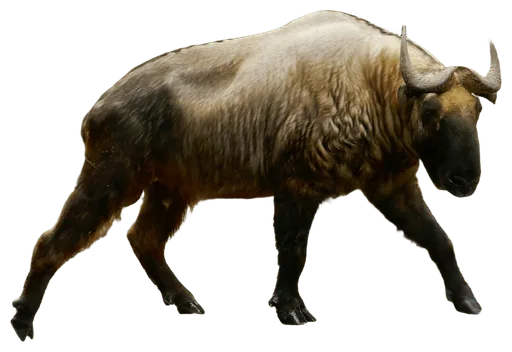
 W vs TakinLoses · 52% · Toss-up
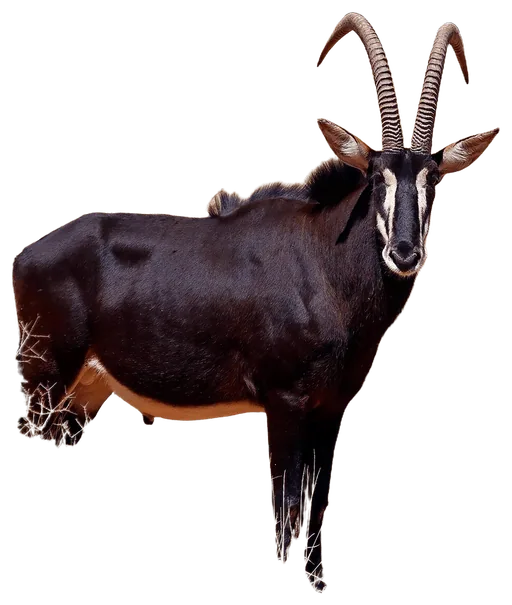
 L vs Sable AntelopeDraw · 50-50 · Dead even
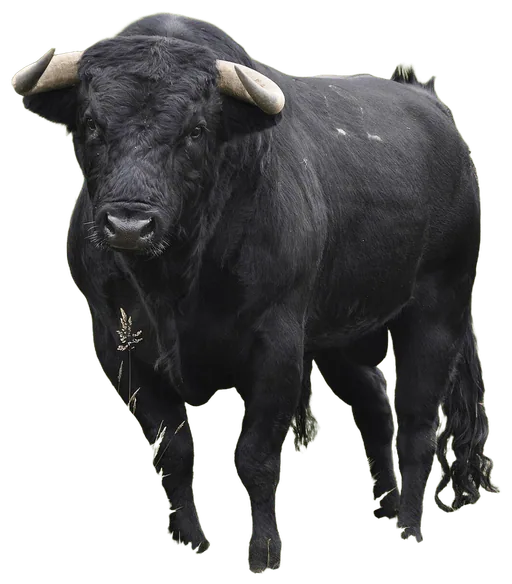
 D vs Fighting BullLoses · 55% · Toss-up
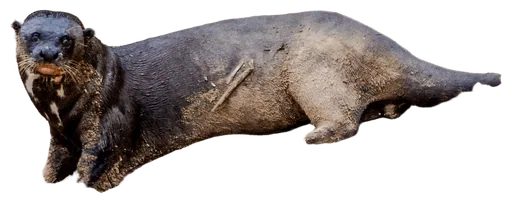
 L vs Giant OtterWins · 63% · Slight edge
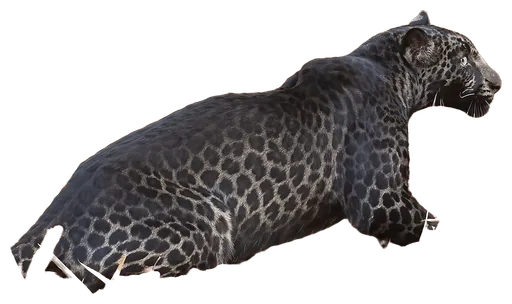
 W vs Black PantherWins · 57% · Toss-up
 W
Wildebeest battle analysis
The blue wildebeest looks assembled from spare parts, with the forequarters of an ox, the legs of an antelope and the tail of a horse, but every part serves travel. A mature bull weighs about 250 kg, carries a pair of smooth horns that sweep out and up like brackets, and spends much of the year either defending a small patch of plain or walking toward the next rains.
Its fighting style is modest for its size. Rival bulls kneel and push, and a bull or a mother will charge and chase a lone hyena, cheetah or wild dog. Hooked horns and 250 kg of forequarters can injure a medium predator, but they do not stab like an oryx's horns, and nothing protects the neck and legs from lions or a hyena clan. Predation, not starvation, is what usually kills adult wildebeest.
Endurance is where it stands out on the roster. GPS collars in Botswana recorded animals walking up to 80 km in five days without drinking, and muscle biopsies found the most efficient mammalian muscle contraction measured in that comparison. Add mass migration, synchronized calving and shared vigilance with zebras, and the wildebeest becomes an animal that survives by outlasting and outnumbering danger rather than by beating it.
Habitat & range
Short- and medium-grass savannas, open woodland edges and floodplains of eastern and southern Africa, from Kenya and Tanzania to Zambia, Botswana, Namibia, Zimbabwe, Mozambique and South Africa. Wildebeest avoid dense forest and depend on access to water and grazing.
Diet & hunting
A grazer of short grasses, following rainfall and new growth. Wildebeest are a keystone prey species: a 2026 analysis of Mara predation networks found the wildebeest to be the most influential species across most metrics. In drought, water-dependent grazers such as wildebeest and zebra may decline or move away while drought-tolerant gazelles and impala hold on.
Social life
Herds of females and young, bachelor herds and territorial bulls. Nursery herds are often around eight females and their calves in resident populations (ADW), merging into huge aggregations during migration. Transient cows may be driven out by territorial bulls.
Conservation
Least Concern on the IUCN Red List, with around 1.5 million animals and a stable overall trend. Many migrations have been lost; only the Serengeti, Tarangire and Kafue systems remain among the long-distance ones listed by Wikipedia. Fences that cut migration routes have caused mass die-offs, and the Maasai Mara population fell by about 80% between 1977 and the late 1990s. Modelling for the Greater Mara found 39–54% connectivity gains from removing 15–140 km of fences.
Quick answers
How strong is a Wildebeest?
On the Animal Battle Stats scale, the Wildebeest has an attack rating of 55 and a power index of 59.2 out of 100, which ranks it #81 of 344 animals and puts it in B tier (Strong). Its strongest stat is stamina (87).
How much does a Wildebeest weigh?
A typical adult Wildebeest weighs about 250 kg (551 lb). Rated specimen: healthy mature territorial adult male (bull), 250.0 kg, 140.0 cm at the shoulder and 220.0 cm head-body length, horns up to about 83 cm.
How fast is a Wildebeest?
There is no reliable measured top speed for the Wildebeest, so we do not publish one. Its agility rating, which covers acceleration, reflexes and evasion, is 68 out of 100.
What does a Wildebeest eat?
A grazer of short grasses, following rainfall and new growth. Wildebeest are a keystone prey species: a 2026 analysis of Mara predation networks found the wildebeest to be the most influential species across most metrics. In drought, water-dependent grazers such as wildebeest and zebra may decline or move away while drought-tolerant gazelles and impala hold on.
Is the Wildebeest endangered?
No. The Wildebeest is listed as Least Concern. Least Concern on the IUCN Red List, with around 1.5 million animals and a stable overall trend. Many migrations have been lost; only the Serengeti, Tarangire and Kafue systems remain among the long-distance ones listed by Wikipedia. Fences that cut migration routes have caused mass die-offs, and the Maasai Mara population fell by about 80% between 1977 and the late 1990s. Modelling for the Greater
What animals can beat a Wildebeest?
Among its closest rivals, the Takin (52%), the Fighting Bull (55%) would be favored against the Wildebeest. It would be favored against the Black Bear, the Kangaroo, the Bighorn Sheep, the Giant Otter, the Black Panther. It is dead even with the Sable Antelope: a draw.
Researched 2026-09-28. Ratings are editorial judgments built from these sources; measurements describe a healthy adult male.
- Wikipedia, Blue wildebeestmass, height, length, tail, horns, speed claim, territoriality, predators, migration, status
- Animal Diversity Web, Connochaetes taurinusmass, lifespan, territory size, movement, predator defense
- Curtin et al. 2018, Natureendurance, muscle efficiency, body mass
- Watson et al. 2022, Ecology and Evolutionsurvival, predation, lifespan
- Schwandner et al. 2025, Ecological Applicationsmigration, fences
- Batista-Nunes et al. 2026, Journal of Animal Ecologyecological role
- Bartzke et al. 2025, Ecology and Evolutiondrought response
- Dunham 2026, Ecology and Evolutionpopulation trends
- Naidoo et al. 2014, Oryxmigration comparison
- Wikimedia Commons, Makalali Game Reserve Gnuimage source
Photo: “Makalali Game Reserve (ZA), Gnu -- 2024 -- 1777.jpg” by Dietmar Rabich, CC BY-SA 4.0, background removed and cropped. Original
Suggest a correction