

Wedge-tailed Eagle
Aquila audax
 #149 of 341
  Desert Sky Hunter Least Concern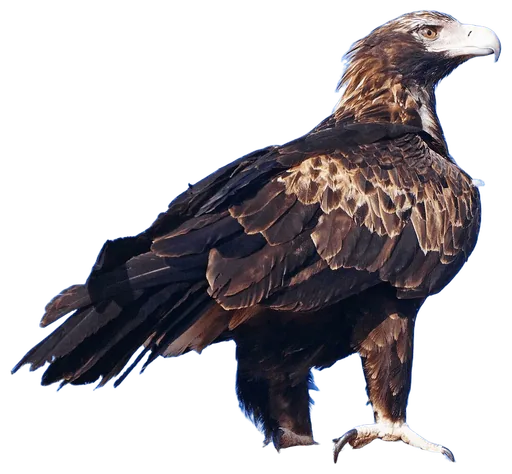
 Fight
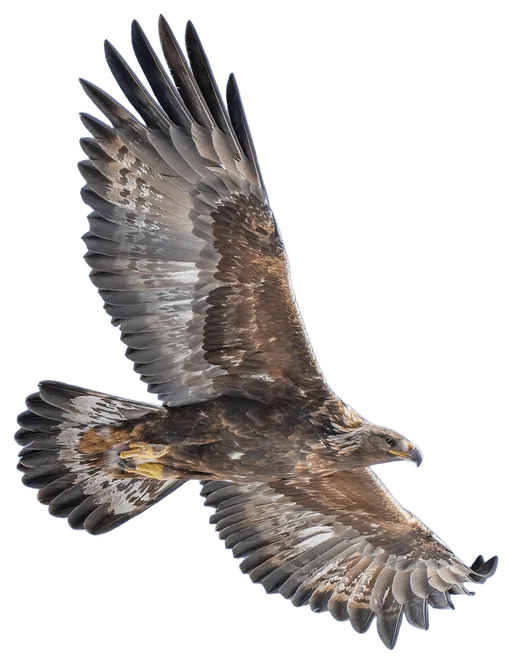
FightPhoto: JJ Harrison ( https://www.jjharrison.com.au/ ) · CC BY-SA 3.0
The Wedge-tailed Eagle is Australia's largest bird of prey. The canonical female weighs about 4.2 kg and spans about 2.2 m. It has some of the sharpest measured vision of any animal and hunts rabbits, hares and wallabies, while pairs and groups can bring down adult kangaroos. Alone, its light build and modest talons keep it below the golden eagle in raw killing power.
 Attack38
  Defense20
  Agility83
  Stamina80.5
  Intelligence68
  Special74
 Detailed ratings
Research-backed ratings on one 0–100 scale for all 341 animals (updated 2026-09-28). How ratings work
Special abilities
Ability 1Tag-Team Kangaroo HuntPairs and groups hunt together: one eagle distracts or drives the prey while another strikes, and in large group hunts fresh pairs replace tired chasers. Together they can kill adult kangaroos that no single eagle could handle.
 Ability 2Record-Resolution Vision
Behavioural tests measured acuity of 132–143 cycles per degree, matching the limit of its deep fovea. It can spot prey and threats from far beyond the range at which they can see the eagle.
Unique traits
 TraitWidest Verified Eagle Wingspan
A Tasmanian female measured 284 cm, the largest verified wingspan for any eagle, and the long wedge-shaped tail is unique among large Australian raptors.
TraitGlider ChallengerIt is the only bird with a reputation for frequently attacking hang gliders and paragliders, and it also attacks drones.
How it fights
Weapons
- The feet and talons are the killing tools. The hallux claw (about 4.5–4.6 cm in mainland females) is somewhat smaller than a golden eagle's, but it is very sharp, and the whole foot is feathered to the toes. The bill tears carcasses and kills. Rabbits and hares are the most important live prey, and the species also takes macropods (kangaroos and wallabies), lizards such as bearded dragons, birds over about 100 g and mammals usually over 500 g. It also eats a lot of carrion, including roadkill. It kills lambs occasionally, but lambs are a small part of the diet.
- Its most striking offensive behavior is cooperative. Australian Museum and BirdLife Australia both state that a group of eagles working together can kill animals as large as adult kangaroos. In one Central Australian study, about a third of 89 observed hunts were cooperative. One record describes 15 eagles hunting kangaroos, with two chasing at a time and fresh pairs taking over from the circling group.
 Struggles vs
- About 4.2 kg in absolute mass.
- Smaller talons than golden or Verreaux's eagles.
- No armor; light skeleton.
- Gorged birds on the ground can struggle to take off.
- Heavy reliance on carrion exposes it to lead poisoning and roadkill collisions.
- Weight
- 4.2 kg9 lb
- Height
- No reliable measurement
- Length
- 1 m3.3 ft
- Top speed
- No reliable measurement
- Bite force
- No reliable measurement
- Lifespan
- 5.9 years
- Home biome
- Desert
- Lifestyle
- Mostly solitary
Rated specimen: Healthy mature adult female, 4.2 kg, 100.0 cm total length, about 2.2 m wingspan.
Fun facts
- A Tasmanian female had a verified wingspan of 284 cm, the largest measured for any eagle.
- Its visual acuity was measured at 132–143 cycles per degree, close to the limit set by the optics of its eye.
- Groups of wedge-tailed eagles can kill adult kangaroos.
- Old nests can weigh around 400 kg.
- Its scientific name audax means "bold".
- It is famous for attacking hang gliders and paragliders, and eagles once knocked nine of a mining company's drones out of the sky.
Closest rivals by power. Tap one for the full breakdown, or pick any opponent.
vs Harpy EagleLoses · 50% · Toss-up  L vs Red-tailed HawkWins · 50% · Toss-up
  W vs Emperor PenguinLoses · 51% · Toss-up
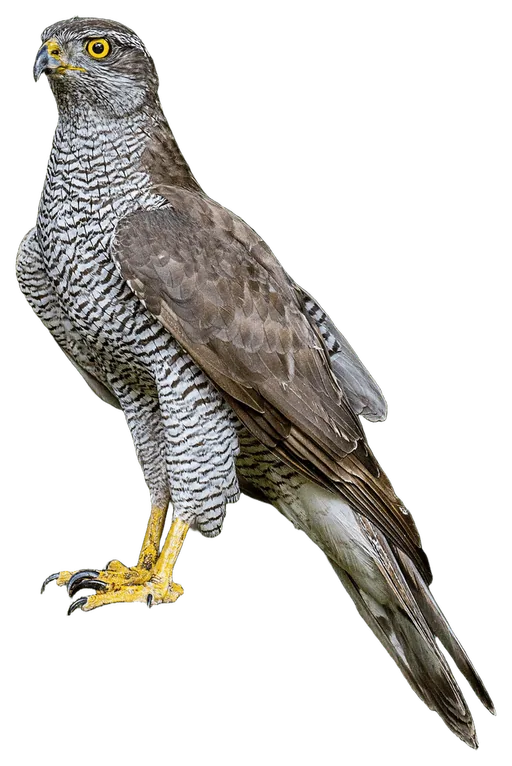
  L vs Northern GoshawkWins · 51% · Toss-up
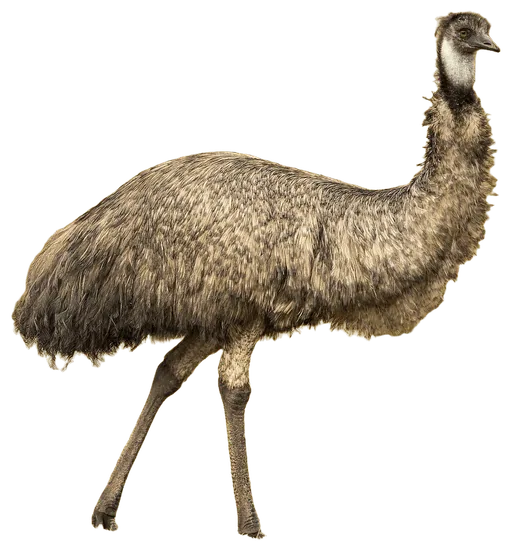
  W vs EmuWins · 51% · Toss-up
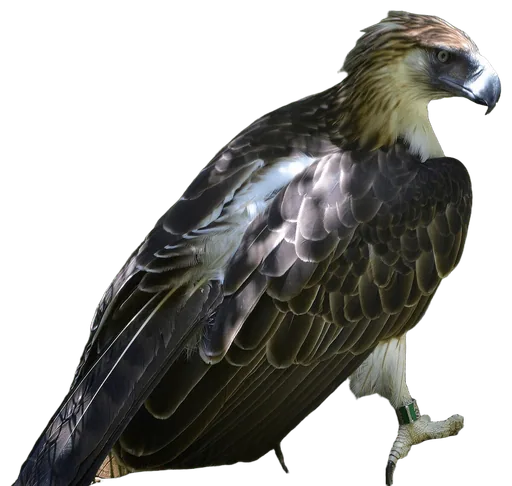
  W vs Philippine EagleWins · 51% · Toss-up
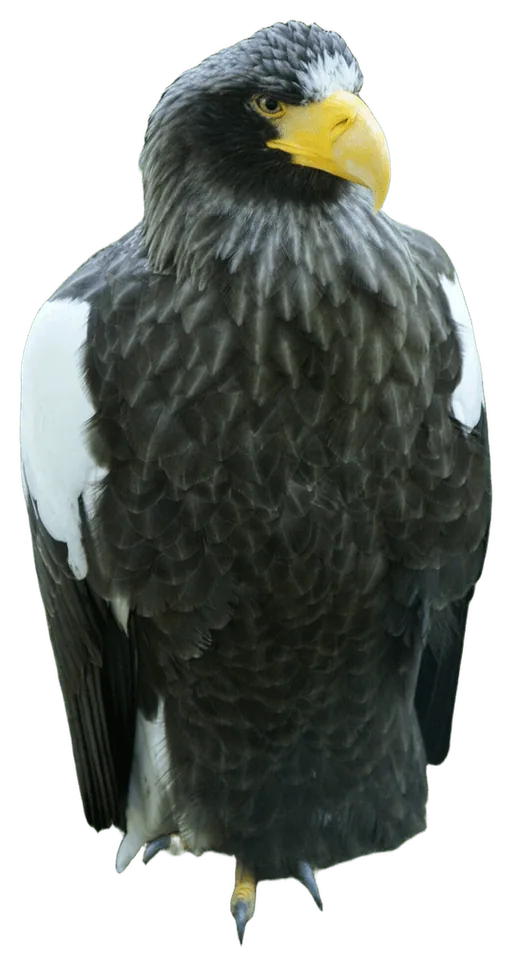
  W vs Steller's Sea EagleWins · 51% · Toss-up
  W vs Golden EagleLoses · 51% · Toss-up
  L
L  Pick any opponent
 Wedge-tailed Eagle battle analysis
The wedge-tailed eagle is built for wide country. Its long wings and long, wedge-shaped tail let it ride thermals to 2 km or more over the Australian interior. From there, eyes measured at 132–143 cycles per degree, close to the physical limit for a vertebrate eye, pick out rabbits, hares, lizards and carcasses far below.
Much of its daily food is ordinary: rabbits, roadkill and whatever is plentiful. What makes it stand out is cooperation. Pairs hunt in tandem, one bird drawing attention while the other strikes. Groups have been seen running down kangaroos in relays, with fresh eagles dropping in to replace tired chasers. In the Strzelecki Desert, eagles on the side of the dingo fence where kangaroos are abundant ate far more of them.
Alone in an absolute matchup, it is a 4.2 kg bird with talons a little smaller than a golden eagle's and no armor. It wins with vision, surprise and, when it has help, numbers. Against a heavy grappler that survives the first strike, one eagle has little left to use.
Habitat & range
The wedge-tailed eagle is found throughout mainland Australia and Tasmania and on many offshore islands. It uses more habitat types than perhaps any other Aquila eagle, from deserts and arid shrubland to farmland, open woodland and mountain forest with an open understory. It is common across the arid interior wherever prey and nest trees or cliffs are available.
Diet & hunting
It is a generalist predator and a major scavenger. Rabbits and hares are the most important live prey; macropods, lizards, birds and other mammals are also taken, and carrion, including roadkill kangaroos, makes up a large part of the diet. In the Strzelecki Desert, where dingoes are rare, eagles ate more kangaroos and bearded dragons and a wider range of species than on the other side of the dingo fence. By eating rabbits, it helps limit an invasive pest.
Social life
Breeding adults live as long-term territorial pairs. Around each defended nest territory is a larger home range that overlaps with neighbors and non-breeding birds. Pairs, and sometimes larger groups, hunt together.
Conservation
The species is listed as Least Concern globally. Persecution was heavy in the past because of supposed lamb killing, but numbers recovered strongly, helped by rabbits and roadkill. The Tasmanian subspecies is listed federally as Endangered. Current threats include lead poisoning from ammunition in carcasses: lead was detected in 84% of 62 mainland eagle bones, at severe levels in 4.8%. Rodenticide exposure (residues in 74% of 50 Tasmanian carcasses) and collisions with vehicles while feeding on roadkill are also threats.
Quick answers
How strong is a Wedge-tailed Eagle?
On the Animal Battle Stats scale, the Wedge-tailed Eagle has an attack rating of 38 and a power index of 52.4 out of 100, which ranks it #149 of 341 animals and puts it in B tier (Strong). Its strongest stat is agility (83).
How much does a Wedge-tailed Eagle weigh?
A typical adult Wedge-tailed Eagle weighs about 4.2 kg (9 lb). Rated specimen: healthy mature adult female, 4.2 kg, 100.0 cm total length, about 2.2 m wingspan.
How fast is a Wedge-tailed Eagle?
There is no reliable measured top speed for the Wedge-tailed Eagle, so we do not publish one. Its agility rating, which covers acceleration, reflexes and evasion, is 83 out of 100.
What does a Wedge-tailed Eagle eat?
It is a generalist predator and a major scavenger. Rabbits and hares are the most important live prey; macropods, lizards, birds and other mammals are also taken, and carrion, including roadkill kangaroos, makes up a large part of the diet. In the Strzelecki Desert, where dingoes are rare, eagles ate more kangaroos and bearded dragons and a wider range of species than on the other side of the dingo fence. By eating rabbits, it helps limit an invasive pest.
Is the Wedge-tailed Eagle endangered?
No. The Wedge-tailed Eagle is listed as Least Concern. The species is listed as Least Concern globally. Persecution was heavy in the past because of supposed lamb killing, but numbers recovered strongly, helped by rabbits and roadkill. The Tasmanian subspecies is listed federally as Endangered. Current threats include lead poisoning from ammunition in carcasses: lead was detected in 84% of 62 mainland eagle bones, at severe levels in 4.8%. Rodenticide
What animals can beat a Wedge-tailed Eagle?
Among its closest rivals, the Harpy Eagle (50%), the Emperor Penguin (51%), the Golden Eagle (51%) would be favored against the Wedge-tailed Eagle. It would be favored against the Red-tailed Hawk, the Northern Goshawk, the Emu, the Philippine Eagle, the Steller's Sea Eagle.
Researched 2026-09-28. Ratings are editorial judgments built from these sources; measurements describe a healthy adult female.
- Australian Museum, Wedge-tailed Eaglemass, wingspan, altitude, diet, group kills, lift, nest size, dispersal
- BirdLife Australia, Wedge-tailed Eaglemass, status, hunting, territory
- Animal Diversity Web, Aquila audaxmass, length, lifespan, territory
- Wikipedia, Wedge-tailed eaglesex samples, wingspan record, hallux, tarsus, cooperative hunts, glider attacks
- Spatial visual acuity study 1985, Vision Researchvision
- Strzelecki Desert eagle diet study 2022, Die Naturwissenschaftendiet flexibility
- Lead exposure of mainland wedge-tailed eagles 2023, Environmental Pollutionthreats, scavenging
- Tasmanian wedge-tailed eagle lead study 2021, Environmental Toxicology and ChemistryTasmanian subspecies status
- Anticoagulant rodenticide exposure study 2021, Science of the Total Environmentthreats
- Commons, Wedge-tailed Eagleimage candidate
Photo: “Aquila audax - Captain's Flat.jpg” by JJ Harrison ( https://www.jjharrison.com.au/ ), CC BY-SA 3.0, background removed and cropped. Original
Suggest a correction