
Warthog
Phacochoerus africanusC tier · Capable106th of 163 mammals
Size & speed

- Weight
- 85 kg187 lb
- Length
- 1.3 m4.3 ft
- Top speed
- 48 km/h30 mph
About as heavy as a person
Heavier than 70% of animalsAbout 4.3 rulers long
Bigger than 56% of animalsFaster than Usain Bolt (44.7 km/h)
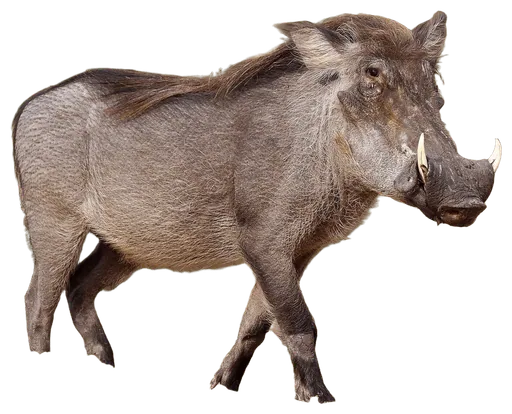
Faster than 53% of animalsThe common warthog is an 85 kg African pig with long curved tusks, razor-edged lower tusks and padded facial warts. It is a fast sprinter that dives into burrows backwards and bursts out tusks-first, dangerous when cornered but still regular prey for lions, leopards and hyenas.
Detailed ratings
Research-backed ratings on one 0–100 scale for all 344 animals (updated 2026-09-28). How ratings work


Card No. 182 of 344. Every animal on Animal Battle Stats has one: its power, tier and archetype on the front; its six battle stats, abilities and signature move on the back.
Special abilities
Reverses into aardvark burrows with its head toward the opening, then bursts out at full speed with tusks forward if a predator waits outside.
The short lower tusks are honed to a cutting edge against the uppers and inflict severe wounds on predators while the long uppers push and strike.
Unique traits
Thick cartilage "warts" on the face, the suborbital pair up to 15 cm long in boars, pad the blows of head-to-head fights so injuries are rare.
Calloused, padded wrists let it graze short grass on its knees and even shuffle forward in that position.
How it fights
Weapons
- The warthog has two tusk pairs. The long, curved upper tusks are blunt and used for pushing and striking with the head in fights between boars. The lower tusks are shorter but honed to a sharp edge against the uppers, and are used to slash predators. San Diego Zoo describes warthogs as "not afraid to fight", slashing with the lower tusks while squealing loudly. A warthog cornered in or near its burrow bursts out head first with its tusks forward. It never attacks animals as prey: it is a grazer and rooter, and all its fighting is defensive or between rivals.
Struggles vs
- Poor eyesight.
- Short-range sprinter with little stamina for long chases.
- No armor; sparse hair on the body.
- Vulnerable when kneeling to graze.
- Mid-sized prey for all of Africa's large carnivores.
- Weight
- 85 kg187 lb
- Height
- 75 cm29.5 in
- Length
- 1.3 m4.3 ft
- Top speed
- 48 km/h30 mph
- Bite force
- No reliable measurement
- Lifespan
- 9 years
- Home biome
- Savanna
- Lifestyle
- Social
Rated specimen: Healthy adult boar of about 85 kg, 75 cm at the shoulder and 130 cm head-body length, with upper tusks of about 25 cm.
Fun facts
- Warthogs back into their burrows so their tusks face any intruder.
- Their "warts" are not warts at all but cartilage pads that cushion blows.
- Warthogs often kneel to graze, on calloused wrist pads.
- They run with their tails straight up like a flag.
- Banded mongooses and vervet monkeys groom ticks off warthogs.
- Warthogs rarely dig their own homes, preferring old aardvark burrows.
Closest rivals by power. Tap one for the full breakdown, or pick any opponent.
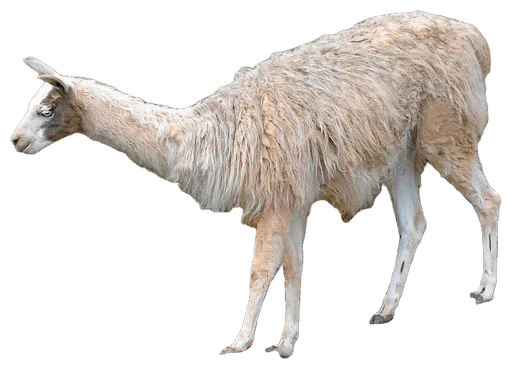
vs GibbonWins · 64% · Slight edge 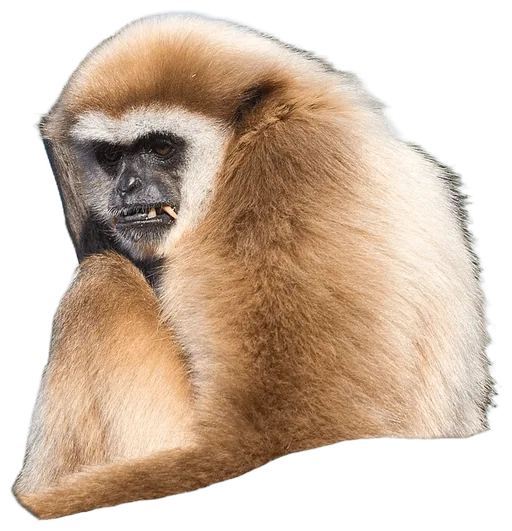 W vs LlamaLoses · 53% · Toss-up
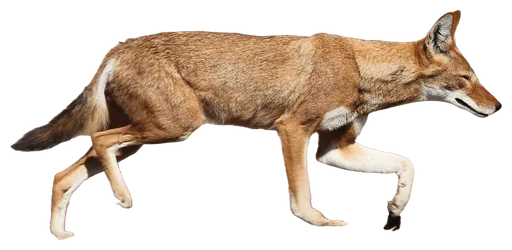
 L vs Ethiopian WolfWins · 59% · Slight edge
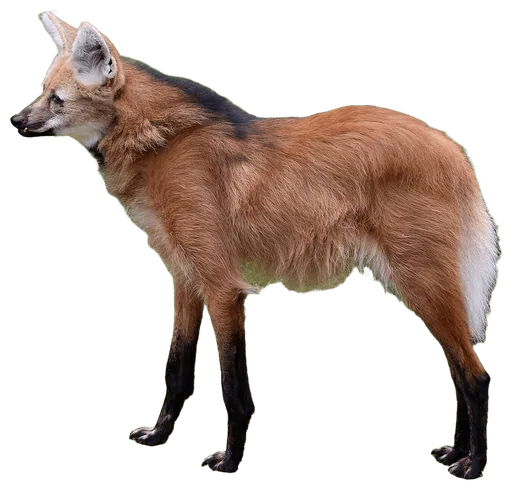
 W vs Maned WolfWins · 57% · Toss-up
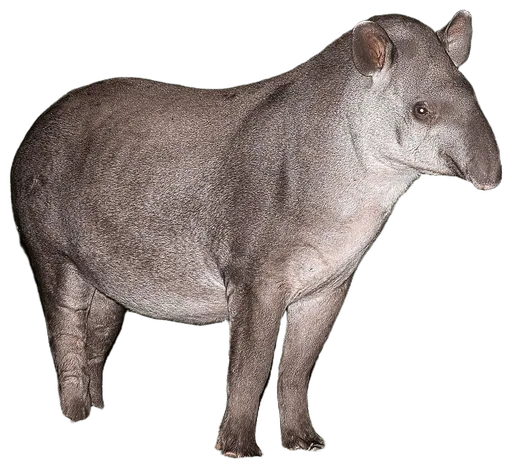
 W vs TapirLoses · 56% · Toss-up
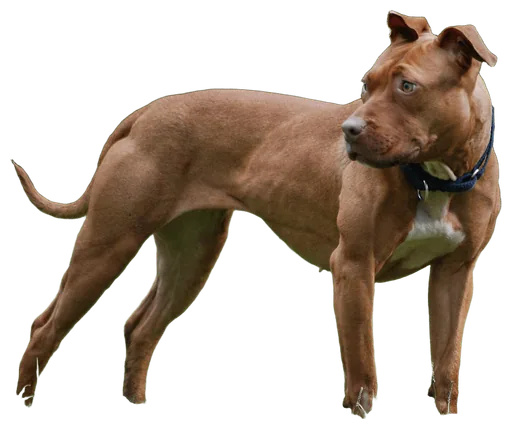
 L vs American Pit Bull TerrierWins · 58% · Slight edge
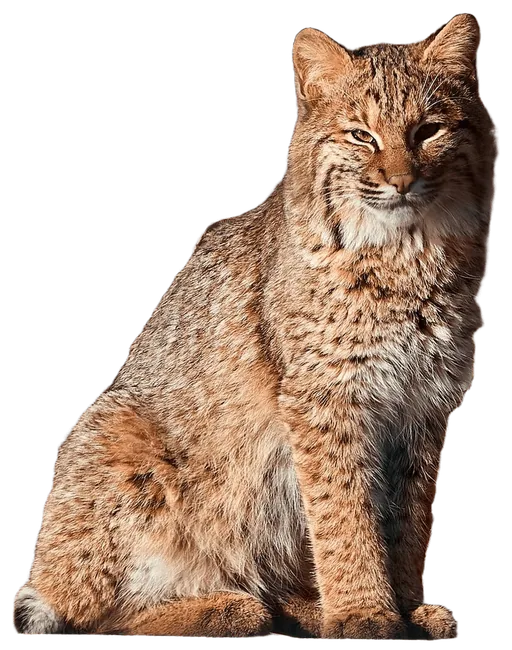
 W vs BobcatWins · 62% · Slight edge
 W vs ServalWins · 60% · Slight edge
 W
Warthog battle analysis
A warthog boar looks built for trouble: a broad, flat head with two long upper tusks curving out of the snout, a pair of shorter lower tusks sharpened like knives, big cartilage warts on its face, and a bristly mane down its back. At about 85 kg and 75 cm at the shoulder, it is longer-legged than most pigs and can outrun many threats over a short distance, tail held high.
Its survival strategy is built around the burrow. Warthogs sleep, give birth and hide in abandoned aardvark holes, always reversing in so their tusks face the entrance, and they leave at a run in case a predator is waiting. In the open they graze on their knees, dig for roots in the dry season and keep an ear and nose out for danger, since their eyesight is poor. Boars fight each other with head blows and the blunt upper tusks, cushioned by their warts, saving the razor-edged lower tusks for predators.
On the ABS scale the warthog is a mid-weight scrapper. It is better armed than most antelope of similar size, and a cornered warthog fights back with its sharp lower tusks, but it remains a staple prey species for lions, hyenas and wild dogs. Its Attack and Defense sit well below the giant forest hog and the big predators, while its Agility and burrow tactics give it a real chance to escape.
Habitat & range
Sub-Saharan Africa, from West Africa through East Africa to southern Africa, in savanna, open woodland and grassland, often near waterholes and marshy ground. It is widespread in parks such as Kruger in South Africa, where its range tracks open woodland savanna. A genome study of 35 common warthogs from throughout the range found that the species interbred with the desert warthog in eastern Africa.
Diet & hunting
Mainly a grazer of short grasses, switching in the dry season to digging up bulbs, tubers, rhizomes and roots with its snout and tusks. Warthogs wallow in mud at waterholes and rely on burrows dug by aardvarks and others. The soft ticks in their burrows and the warthogs themselves maintain African swine fever virus in a sylvatic cycle in eastern and southern Africa.
Social life
Sounders of sows and their young, sometimes several females together; adult boars live apart and join sounders only to mate. Sows are much more social than boars. Home ranges are about 0.6–3.3 km².
Conservation
Least Concern on the IUCN Red List. Warthogs are hunted for meat and trophies and killed for raiding crops. In Gonarezhou National Park, Zimbabwe, warthog and other herbivores under 140 kg declined after 2013, probably because of predation.
Quick answers
How strong is a Warthog?
On the Animal Battle Stats scale, the Warthog has an attack rating of 47 and a power index of 50.2 out of 100, which ranks it #182 of 344 animals and puts it in C tier (Capable). Its strongest stat is agility (60).
How much does a Warthog weigh?
A typical adult Warthog weighs about 85 kg (187 lb). Rated specimen: healthy adult boar of about 85 kg, 75 cm at the shoulder and 130 cm head-body length, with upper tusks of about 25 cm.
How fast is a Warthog?
The Warthog's top speed is about 48 km/h (30 mph). Its agility rating is 60 out of 100.
What does a Warthog eat?
Mainly a grazer of short grasses, switching in the dry season to digging up bulbs, tubers, rhizomes and roots with its snout and tusks. Warthogs wallow in mud at waterholes and rely on burrows dug by aardvarks and others. The soft ticks in their burrows and the warthogs themselves maintain African swine fever virus in a sylvatic cycle in eastern and southern Africa.
Is the Warthog endangered?
No. The Warthog is listed as Least Concern. Least Concern on the IUCN Red List. Warthogs are hunted for meat and trophies and killed for raiding crops. In Gonarezhou National Park, Zimbabwe, warthog and other herbivores under 140 kg declined after 2013, probably because of predation.
What animals can beat a Warthog?
Among its closest rivals, the Llama (53%), the Tapir (56%) would be favored against the Warthog. It would be favored against the Gibbon, the Ethiopian Wolf, the Maned Wolf, the American Pit Bull Terrier, the Bobcat, the Serval.
Researched 2026-09-28. Ratings are editorial judgments built from these sources; measurements describe a healthy adult male.
- Wikipedia, Common warthogsize, tusks, speed, burrows, predators, sociality, lifespan, grooming
- Animal Diversity Web, Phacochoerus africanusmass, tusks, warts, fighting, senses, home range, lifespan, predators
- San Diego Zoo Wildlife Alliance, Warthogspeed, fighting, warts, burrows, kneeling
- African Wildlife Foundation, Warthogmass, tusks, lifespan, kneeling, crop raiding
- Kruger National Park guide, Warthogregional mass, speed, tusks, predators
- Hayward and Kerley 2005, Journal of Zoologylion predation
- Hayward et al. 2006, Journal of Zoologyleopard predation
- Estimating carnivoran diets from carcasses and scats, Journal of Zoology 2012lion diet
- Fear of large carnivores and ungulate habitat use, Scientific Reports 2021risk perception
- Epidemiology of African swine fever in Africa today, Transboundary and Emerging Diseases 2019disease ecology
- Large herbivore trends in Gonarezhou, Ecology and Evolution 2026population, predation
- Warthog genomes, Molecular Biology and Evolution 2022range, taxonomy
- Quality characteristics of warthog meat, Meat Science 2018human use
Photo: “Nolan warthog (Phacochoerus africanus africanus).jpg” by Charles J. Sharp, CC BY-SA 4.0, background removed and cropped. Original
Suggest a correction