
Wallaby
Wallabia bicolorD tier · Underdog143rd of 163 mammals
Size & speed

- Weight
- 17 kg37 lb
- Length
- 1.52 m5 ft
As heavy as 3.8 house cats
Heavier than 52% of animalsAbout as long as a person is tall
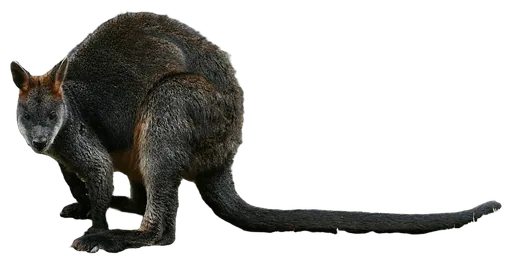
Bigger than 64% of animalsThe swamp wallaby is a 17 kg, dark-furred browser of eastern Australian undergrowth that hops with its head low and its tail straight out. It eats plants poisonous to many animals and finds food by smell, but with weak kicks, no armor and a strong preference for fleeing, it is easy prey for dingoes and dogs.
Detailed ratings
Research-backed ratings on one 0–100 scale for all 344 animals (updated 2026-09-28). How ratings work


Card No. 269 of 344. Every animal on Animal Battle Stats has one: its power, tier and archetype on the front; its six battle stats, abilities and signature move on the back.
Special abilities
Hops fast with its head held low and tail straight out, a posture suited to bursting through ferns and thick scrub where larger animals cannot follow easily.
Finds hidden seedlings by leaf odour alone, a skill grazing kangaroos lack; in a battle this means strong awareness at close range rather than extra damage.
Unique traits
Females mate and form a new embryo one to two days before giving birth, so they carry two pregnancies at once and stay pregnant and lactating throughout their reproductive life.
Browses shrubs and ferns and tolerates plants poisonous to many animals, including bracken, hemlock and lantana.
How it fights
Weapons
- The swamp wallaby is a browsing herbivore with no specialized weapons. Its only real striking tools are its long hind feet, which in macropods can deliver kicks, but at 17 kg any such blow is far weaker than a large kangaroo's. Its skull is built for chewing leaves, not for biting hard. It is not known to attack other animals, and its whole defensive strategy is to avoid being seen and to bolt.
Struggles vs
- Small absolute size and weak kicks and bite.
- No armor or dangerous weapon.
- Low willingness to fight.
- Vulnerable to dogs and dingoes in the open.
- Often killed on roads.
- Weight
- 17 kg37 lb
- Height
- No reliable measurement
- Length
- 1.52 m5 ft
- Top speed
- No reliable measurement
- Bite force
- No reliable measurement
- Lifespan
- 12 years
- Home biome
- Desert
- Lifestyle
- Social
Rated specimen: Healthy adult male of about 17 kg, 76 cm head-body length and a tail of about the same length.
Fun facts
- Female swamp wallabies are pregnant almost continuously, carrying a new embryo while still pregnant with a full-term fetus.
- Males have two different Y chromosomes.
- Swamp wallabies can eat bracken, hemlock and lantana, plants that poison many animals.
- They can find hidden seedlings using smell alone.
- A rare golden form lives on Stradbroke Island.
- It is sometimes called the "stinker" because of its swampy odour.
Closest rivals by power. Tap one for the full breakdown, or pick any opponent.
vs Arctic FoxWins · 58% · Slight edge  W vs Flying SquirrelWins · 74% · Clear edge
 W vs BinturongDraw · 50-50 · Dead even
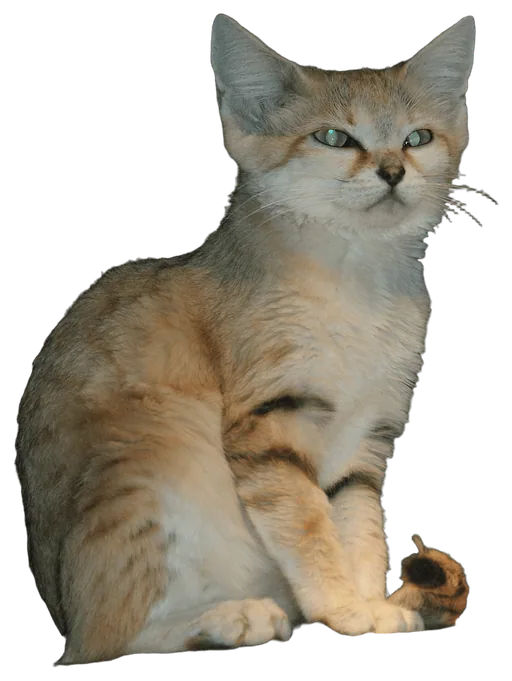
 D vs Sand CatWins · 61% · Slight edge
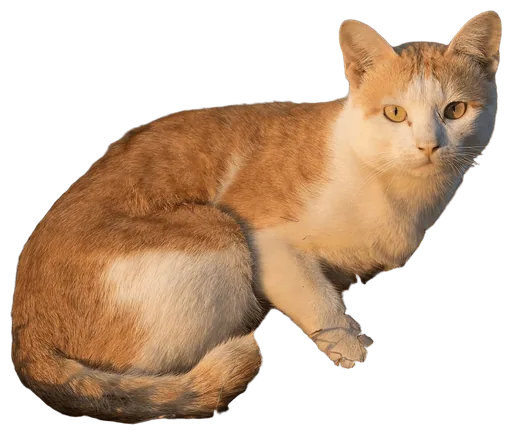
 W vs House CatWins · 56% · Toss-up
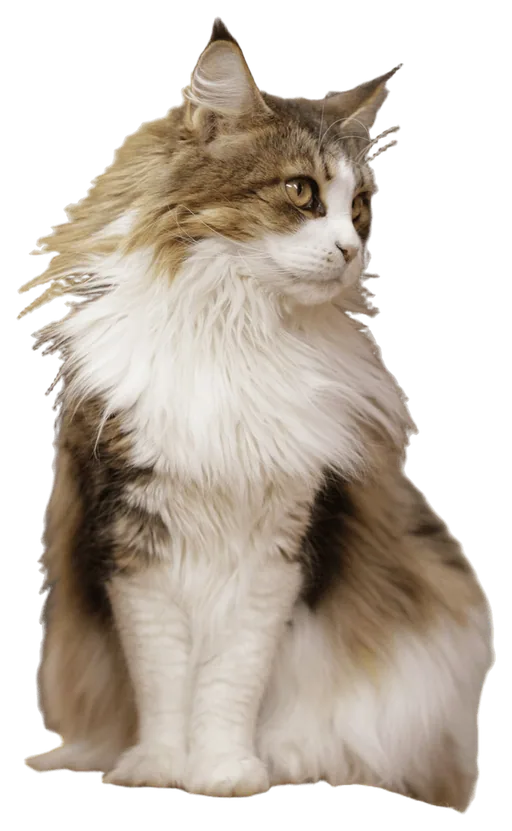
 W vs Maine CoonWins · 53% · Toss-up
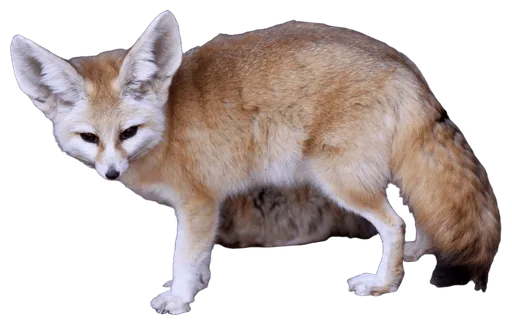
 W vs Fennec FoxWins · 62% · Slight edge
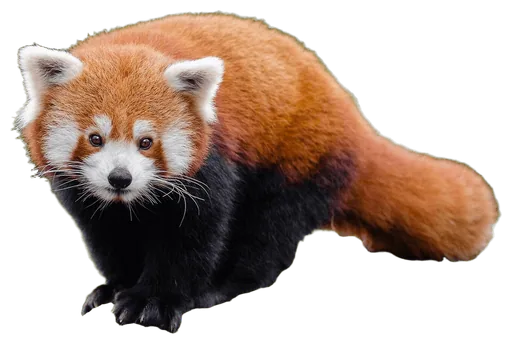
 W vs Red PandaWins · 55% · Toss-up
 W
Wallaby battle analysis
The swamp wallaby is a stocky, dark wallaby of about 17 kg in an adult male, with a rusty chest, a pale cheek stripe and a long tail often tipped white. It is the only living member of its genus and moves unlike other wallabies, bounding through ferns and scrub with its head low and tail held stiffly behind it.
It is a browser, feeding on shrubs, ferns and fungi, and it tolerates plants such as bracken, hemlock and lantana that poison many other herbivores. It finds seedlings by their leaf odour, a skill grazing kangaroos lack, and spends the day hidden in thick cover before moving out at night, even into farmland and suburbs. Its reproduction has been described as unique among mammals: a female forms a new embryo while still pregnant with a full-term fetus, so she is pregnant and suckling young throughout her adult life.
In a fight the swamp wallaby has little to offer. It can kick and push like other macropods, but at 17 kg its blows are light, its skull is built for leaves, and it has no armor. Dingoes and wild dogs eat it regularly. Its ABS profile therefore has low Attack and Defense, with good Agility for escape through dense undergrowth.
Habitat & range
Eastern Australia, from the tip of Cape York Peninsula in Queensland down the east coast to western Victoria and south-eastern South Australia, where its range has expanded greatly in recent decades. It lives in thick forest and woodland undergrowth, fern gullies, swamps and sandstone heath, and also uses farmland, mallee and sand hills; brigalow scrub in Queensland is a favoured habitat. It has been introduced to New Zealand.
Diet & hunting
A browser rather than a grazer: shrubs, ferns, pasture plants, crops and native and introduced vegetation, including plants toxic to many other animals. It also eats fungi and disperses the spores of mycorrhizal fungi, which live in partnership with trees, hundreds of metres through the forest. It browses palatable tree seedlings such as blackbutt eucalypts, finding them by smell.
Social life
Solitary and mainly nocturnal. Unrelated animals may gather at shared food without territorial behavior.
Conservation
Least Concern on the IUCN Red List (2016). It is common and has expanded its range, but many are killed on roads, and dingoes, wild dogs and eagles prey on it.
Quick answers
How strong is a Wallaby?
On the Animal Battle Stats scale, the Wallaby has an attack rating of 24 and a power index of 41.5 out of 100, which ranks it #269 of 344 animals and puts it in D tier (Underdog). Its strongest stat is agility (76).
How much does a Wallaby weigh?
A typical adult Wallaby weighs about 17 kg (37 lb). Rated specimen: healthy adult male of about 17 kg, 76 cm head-body length and a tail of about the same length.
How fast is a Wallaby?
There is no reliable measured top speed for the Wallaby, so we do not publish one. Its agility rating, which covers acceleration, reflexes and evasion, is 76 out of 100.
What does a Wallaby eat?
A browser rather than a grazer: shrubs, ferns, pasture plants, crops and native and introduced vegetation, including plants toxic to many other animals. It also eats fungi and disperses the spores of mycorrhizal fungi, which live in partnership with trees, hundreds of metres through the forest. It browses palatable tree seedlings such as blackbutt eucalypts, finding them by smell.
Is the Wallaby endangered?
No. The Wallaby is listed as Least Concern. Least Concern on the IUCN Red List (2016). It is common and has expanded its range, but many are killed on roads, and dingoes, wild dogs and eagles prey on it.
What animals can beat a Wallaby?
The Wallaby is favored against its other closest rivals, including the Arctic Fox, the Flying Squirrel, the Sand Cat, the House Cat, the Maine Coon, the Fennec Fox, the Red Panda. It is dead even with the Binturong: a draw.
Researched 2026-09-28. Ratings are editorial judgments built from these sources; measurements describe a healthy adult male.
- Wikipedia, Swamp wallabysize, gait, range, diet, reproduction, chromosomes, predators, status
- Animal Diversity Web, Wallabia bicolormass, length, lifespan, behavior
- Australian Museum, Swamp Wallabysize, habitat, range, reproduction, status
- Unique reproductive strategy in the swamp wallaby, PNAS 2020reproduction
- Diets of dingoes/wild dogs and red foxes in Victoria, PLoS One 2015predation
- Leaf odour as a foraging cue for mammalian herbivores, Oecologia 2016senses
- Modelling fungal spore dispersal by the swamp wallaby, Ecology and Evolution 2020movement, ecology
- Circadian resource selection by swamp wallabies, Ecology and Evolution 2019tactics, habitat use
- Livestock guardian dogs and wildlife, Ecology and Evolution 2016predator avoidance
- Cranial performance of four herbivorous marsupials, Journal of Morphology 2015bite, skull
Photo: “Wallabia bicolor Jenolan Caves.jpg” by Toby Hudson, CC BY-SA 3.0, background removed and cropped. Original
Suggest a correction