
Tiger Shark
Galeocerdo cuvierS tier · Apex7th of 51 sea creatures
Size & speed

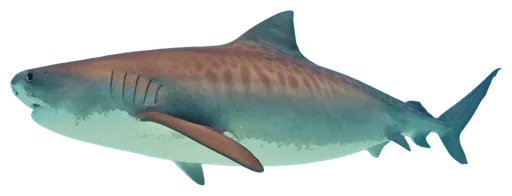
- Weight
- 500 kg1,102 lb
- Length
- 4 m13.1 ft
As heavy as 7.1 people
Heavier than 90% of animals2.3× a person's height
Bigger than 90% of animalsThe tiger shark is a 4 m, 500 kg generalist predator with serrated, sideways-hooked teeth that saw through sea-turtle shells. A stealthy, persistent hunter that eats almost anything, it ranks second only to the white shark in attacks on people, though it lacks the speed of lamnid sharks and is outclassed by orcas.
Detailed ratings
Research-backed ratings on one 0–100 scale for all 344 animals (updated 2026-09-28). How ratings work


Card No. 17 of 344. Every animal on Animal Battle Stats has one: its power, tier and archetype on the front; its six battle stats, abilities and signature move on the back.
Special abilities
Broad, serrated teeth with a sideways hook, set in a heavily calcified jaw and worked by side-to-side head shaking, slice through sea-turtle shells and carve chunks from animals far larger than the shark.
A dark striped back hides the shark against dark water or reef; it approaches slowly, then bursts in, and keeps striking after misses until it connects.
Unique traits
The widest food spectrum of any shark, from crustaceans, fish and seabirds to sea turtles, dolphins, dugongs and whale carcasses, plus inedible objects such as cans and sacks.
Bold bars and spots on young sharks fade with age on a body that commonly reaches 3.3–4.3 m and 385–635 kg.
How it fights
Weapons
- The tiger shark's weapon is a broad, heavy jaw lined with serrated, hook-cusped teeth. It can bite through the shells of large sea turtles and remove chunks from large animals by shaking its head. Adults regularly eat sea turtles (found in up to 20.8% of stomachs in some studies), dolphins, dugongs, seals, seabirds, rays and other sharks, and they scavenge whale carcasses. Wikipedia describes its food spectrum as the widest of any shark.
- In a matchup, this combination of mass, bite and cutting teeth is enough to maim or kill most marine animals short of great whales and orcas. It is below the great white in size and bite specialization but above the bull, mako and oceanic whitetip in weight and hard-prey cutting ability.
Struggles vs
- No armor; gills, eyes and belly are vulnerable.
- Relatively slow and not built for long high-speed chases.
- Cannot match orcas, great whales or the largest crocodilians in mass and power.
- Weight
- 500 kg1,102 lb
- Height
- No reliable measurement
- Length
- 4 m13.1 ft
- Top speed
- No reliable measurement
- Bite force
- No reliable measurement
- Lifespan
- No reliable measurement
- Home biome
- Ocean
- Lifestyle
- Mostly solitary, nocturnal
Rated specimen: Healthy mature adult female, 4.0 m total length and about 500 kg.
Fun facts
- Tiger sharks have been found with cans, plastic bottles and burlap sacks in their stomachs.
- Adult sea turtles have made up as much as 20.8% of stomach contents in some tiger shark studies.
- At Kure Atoll, tiger sharks arrive at albatross colonies about four weeks before peak fledging, when young birds are most vulnerable.
- Their stripes fade as they grow, so the oldest tiger sharks are often the least striped.
- Tagged tiger sharks swim continuously, rising and diving through the water column in a yo-yo pattern.
- Tiger sharks have been recorded at depths approaching 900 m.
Closest rivals by power. Tap one for the full breakdown, or pick any opponent.
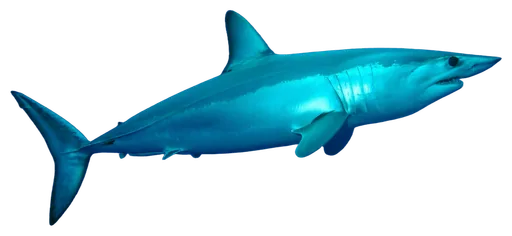
vs Hammerhead SharkWins · 54% · Toss-up 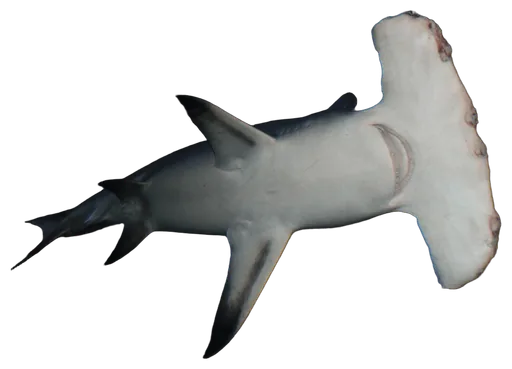 W vs Mako SharkWins · 52% · Toss-up
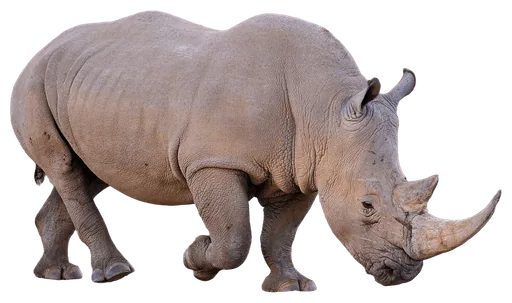
 W vs RhinocerosLoses · 59% · Slight edge
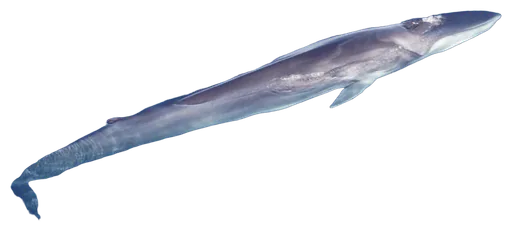
 L vs Fin WhaleLoses · 74% · Clear edge
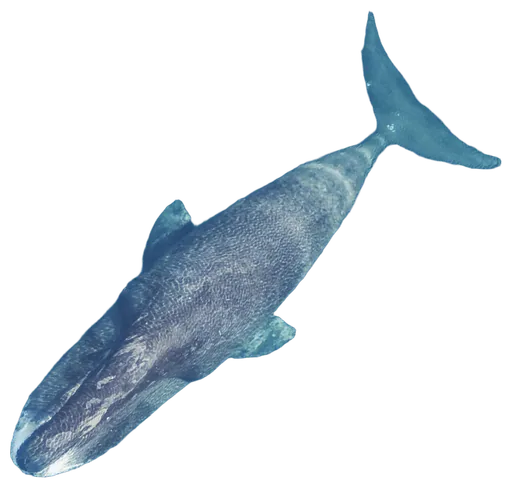
 L vs Bowhead WhaleLoses · 77% · Clear edge
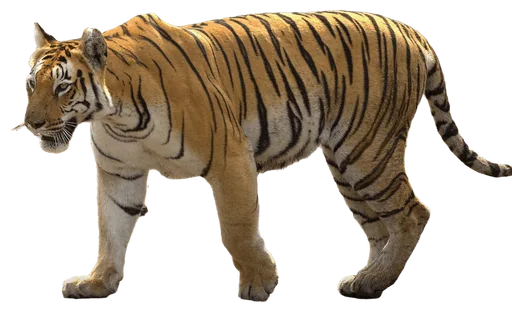
 L vs Bengal TigerWins · 56% · Toss-up
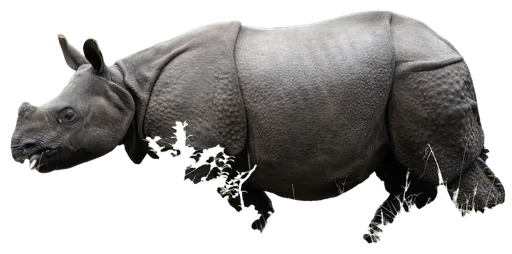
 W vs Indian RhinocerosLoses · 57% · Toss-up
 L vs Saltwater CrocodileLoses · 51% · Toss-up
 L
Tiger Shark battle analysis
The tiger shark is the ocean's great generalist. A mature female commonly reaches around 4 m and 500 kg, and she will eat almost anything: fish, rays, seabirds, dolphins, dugongs, other sharks, whale carcasses and, most famously, sea turtles. The key is her teeth. Each is broad, finely serrated and hooked to one side, and a shake of the head turns a row of them into a saw that cuts through shell and bone.
Tiger sharks hunt by patience rather than raw speed. Tagged sharks swim continuously, rising and falling through the water column in a yo-yo pattern that researchers read as a search strategy. The dark striped back blends with deep water or reef, letting the shark close in slowly before a short burst. When it misses, it tries again: at albatross colonies in Hawaii, strike efficiency is low, but repeated attacks make predation successful overall. Tiger sharks also time their movements to seasonal food, arriving at fledging colonies ahead of peak numbers and gathering in diffuse aggregations during the mating season.
In a matchup, the tiger shark brings mass, cutting teeth and persistence. It is heavier than the bull and mako sharks and better equipped to cut hard prey, but it is less agile than lamnid sharks and smaller and less specialized than the great white. Orcas and the largest marine mammals remain out of its reach. On the absolute roster scale it sits in the elite marine-predator tier, just below the white shark in Attack and above most other sharks.
Habitat & range
Tropical and warm-temperate seas worldwide, especially coastal waters, reefs, lagoons, seagrass beds and river mouths, with regular trips into open ocean and deep water. Fuvahmulah Island in the Maldives hosts the largest known aggregation of tiger sharks.
Diet & hunting
A generalist apex predator and scavenger. Prey includes sea turtles, rays, other sharks, bony fishes, seabirds, dolphins, dugongs, seals, squid, crustaceans and carrion. Juveniles take smaller prey; the diet broadens sharply at about 2.3 m. Dolphins and dugongs shift their habitat use when tiger sharks are abundant, so the shark shapes the behavior of its prey.
Social life
Mostly solitary, but tiger sharks gather at predictable food pulses and at mating aggregations. Mature females at Fuvahmulah form a size-based dominance hierarchy.
Conservation
Near Threatened on the IUCN Red List, mainly because of fishing and finning pressure.
Quick answers
How strong is a Tiger Shark?
On the Animal Battle Stats scale, the Tiger Shark has an attack rating of 83 and a power index of 72.5 out of 100, which ranks it #17 of 344 animals and puts it in S tier (Apex). Its strongest stat is stamina (84).
How much does a Tiger Shark weigh?
A typical adult Tiger Shark weighs about 500 kg (1,102 lb). Rated specimen: healthy mature adult female, 4.0 m total length and about 500 kg.
How fast is a Tiger Shark?
There is no reliable measured top speed for the Tiger Shark, so we do not publish one. Its agility rating, which covers acceleration, reflexes and evasion, is 62 out of 100.
What does a Tiger Shark eat?
A generalist apex predator and scavenger. Prey includes sea turtles, rays, other sharks, bony fishes, seabirds, dolphins, dugongs, seals, squid, crustaceans and carrion. Juveniles take smaller prey; the diet broadens sharply at about 2.3 m. Dolphins and dugongs shift their habitat use when tiger sharks are abundant, so the shark shapes the behavior of its prey.
Is the Tiger Shark endangered?
The Tiger Shark's conservation status is Near Threatened. Near Threatened on the IUCN Red List, mainly because of fishing and finning pressure.
What animals can beat a Tiger Shark?
Among its closest rivals, the Rhinoceros (59%), the Fin Whale (74%), the Bowhead Whale (77%), the Indian Rhinoceros (57%), the Saltwater Crocodile (51%) would be favored against the Tiger Shark. It would be favored against the Hammerhead Shark, the Mako Shark, the Bengal Tiger.
Researched 2026-09-28. Ratings are editorial judgments built from these sources; measurements describe a healthy adult female.
- Wikipedia, Tiger sharksize ranges, diet breadth, senses, depth, predators, status
- Florida Museum, Galeocerdo cuvier profilecommon size, maturity, teeth, diet, hunting style
- International Shark Attack File, species implicatedattacks on humans
- Nakamura et al. (2011), Marine Ecology Progress Seriesswimming speed and search behavior
- Natanson et al. (2023), Fishery Bulletinmaturity size and age
- Kure Atoll albatross predation study (2026), Ecology and Evolutionhunting tactics and timing
- Hawaiian mating aggregation telemetry (2025), Scientific Reportsmovements and social behavior
- Bahamas ontogenetic space-use study (2025), PLoS ONEmovements
- Fuvahmulah social behavior study (2025), Behavioural Processessocial hierarchy
- Wikimedia Commons file pagelive photo
Photo: “Tigershark2.jpg” by albert kok, CC BY-SA 4.0, background removed and cropped. Original
Suggest a correction