
Tarantula Hawk
Pepsis grossaD tier · Underdog13th of 30 bugs & spiders
Size & speed
- Weight
- 1 g0 oz
- Length
- 4.5 cm1.8 in
As heavy as 1 paperclips
Heavier than 2% of animalsAbout 1.9 coins long
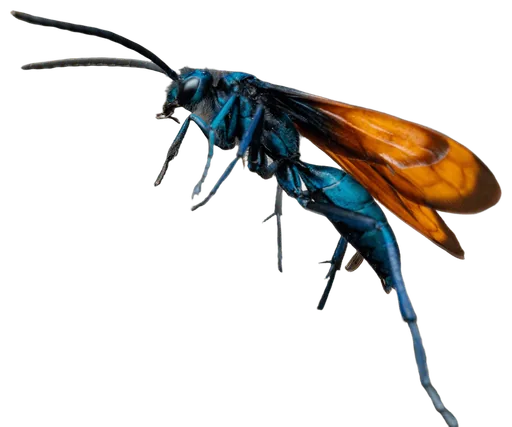
Bigger than 3% of animalsThe tarantula hawk is a 1 g spider wasp whose female hunts tarantulas many times her size, paralyzing them with a precise sting to feed her larva. Its sting ranks among the most painful of any insect but is barely toxic to vertebrates, so it dominates arthropod matchups and deters predators while doing little real damage to large animals.
Detailed ratings
Research-backed ratings on one 0–100 scale for all 344 animals (updated 2026-09-28). How ratings work


Card No. 305 of 344. Every animal on Animal Battle Stats has one: its power, tier and archetype on the front; its six battle stats, abilities and signature move on the back.
Special abilities
The female drives her long sting through the soft membrane between a spider's sternum and first leg (over 80% of recorded stings in P. thisbe), producing paralysis that can last months. Against arthropods this ends the fight in one strike.
A sting rated 4 of 4 on the Schmidt pain index that incapacitates people for minutes while carrying very low lethality (mouse LD50 65–120 mg/kg). Against vertebrates it is a deterrent that can force a disengagement, not a killing weapon.
Unique traits
Each female hunts and paralyzes tarantulas to feed a single larva, routinely overpowering an armed spider far heavier than herself.
Metallic blue-black body, bright orange wings and a strong odor advertise the sting so well that few animals eat tarantula hawks, and many harmless insects mimic them.
How it fights
Weapons
- The primary weapon is the female sting: a long, curved lancet (7–14 mm in published measurements) backed by a large venom supply. Against arthropods, especially tarantulas, the venom is a precision paralytic. Punzo (1994) found that more than 80% of stings on P. thisbe prey went through the soft membrane between the sternum and the base of the first leg, straight toward the spider's central nerve mass. The result is paralysis that can last months, which is decisive in any arthropod matchup.
- Against vertebrates the same sting is a pain weapon rather than a killing weapon. Its lethality to mice (65–120 mg/kg) is among the lowest of all stinging insects, so a 1 g wasp cannot deliver a toxic dose to a large animal. What it can deliver is some of the most intense pain recorded for any insect. The mandibles and hooked claws grapple and drag prey but have negligible absolute force.
Struggles vs
- About 1 g of body mass: negligible absolute force against any vertebrate.
- Venom has very low vertebrate toxicity; a large animal suffers pain, not disablement.
- A clean bite, peck or crush ends the fight.
- Males are unarmed.
- Activity drops in extreme heat and in cold.
- Weight
- 1 g0 oz
- Height
- No reliable measurement
- Length
- 4.5 cm1.8 in
- Top speed
- No reliable measurement
- Bite force
- No reliable measurement
- Lifespan
- No reliable measurement
- Home biome
- Desert
- Lifestyle
- Social
Rated specimen: Healthy adult female P. grossa, about 4.5 cm body length and about 1 g.
Fun facts
- The tarantula hawk's sting is rated 4 on the Schmidt pain index, level with the bullet ant, yet its venom is roughly 45 to 65 times less lethal to mice (LD50 65–90 versus 1.4 mg/kg).
- Entomologist Justin Schmidt described the pain as "blinding, fierce, shockingly electric".
- One Pepsis sting dissected in a 2018 study measured 14.33 mm, the longest actual sting of 39 non-velvet-ant wasps measured.
- Tarantulas paralyzed by large spider wasps have survived eight months of paralysis.
- Only females sting; males spend their days guarding hilltop perches.
- The greater roadrunner is one of the few animals that eats them, beating each wasp against the ground first.
Closest rivals by power. Tap one for the full breakdown, or pick any opponent.
vs Deathstalker ScorpionLoses · 53% · Toss-up 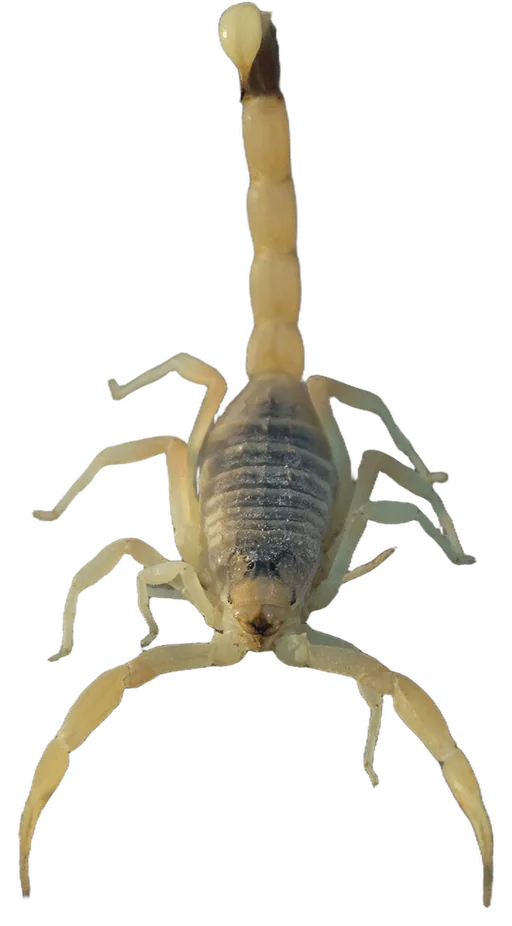 L vs Sydney Funnel-web SpiderLoses · 53% · Toss-up
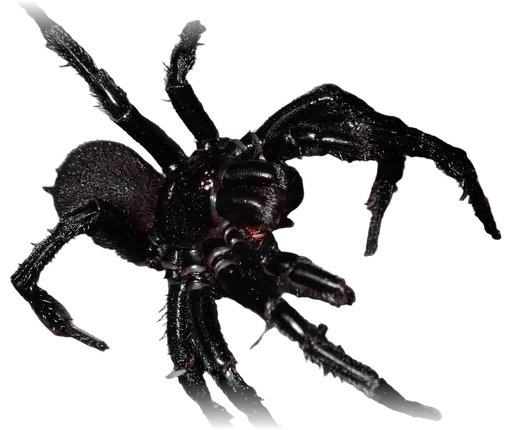 L vs Goliath BirdeaterLoses · 75% · Clear edge
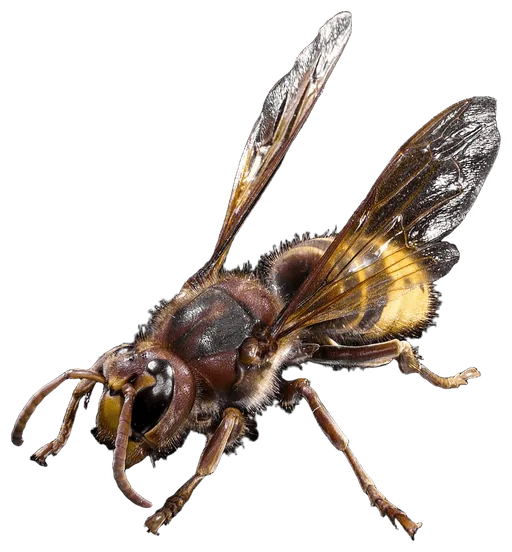
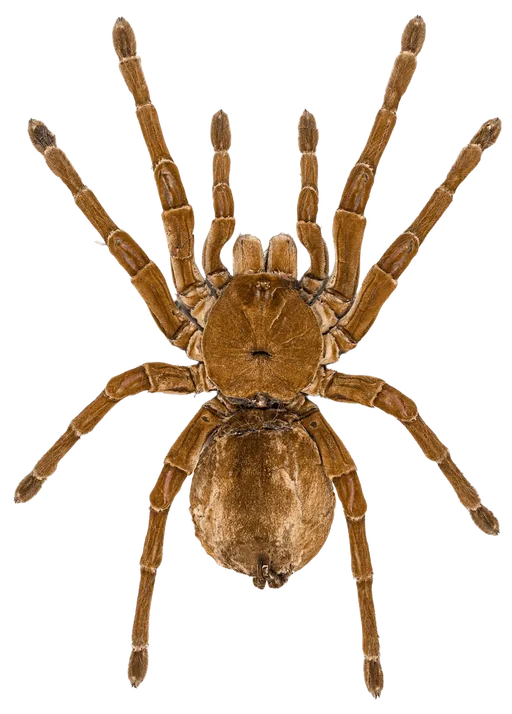 L vs HornetWins · 54% · Toss-up
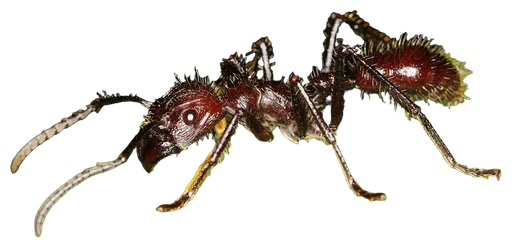
 W vs Bullet AntLoses · 51% · Toss-up
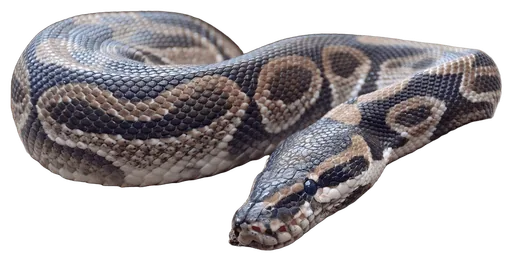
 L vs Ball PythonLoses · 84% · Clear edge
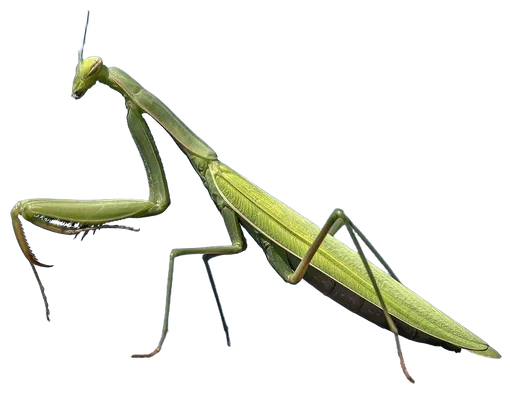
 L vs Praying MantisLoses · 63% · Slight edge
 L vs RabbitLoses · 85% · Decisive
 L
Tarantula Hawk battle analysis
The tarantula hawk is a specialist built around one weapon. A female Pepsis grossa is about 4.5 cm long and weighs roughly a gram, yet her whole life's work is hunting tarantulas that can outweigh her many times over. She finds an occupied burrow by sight or scent, drives or provokes the spider into the open, and makes it rear into its threat posture. Then she seizes a leg and slips her long sting into the soft membrane beside the first leg, the route taken in more than eight of ten recorded attacks. The spider may stay paralyzed for months while her single larva feeds on it.
That precision is why the wasp tops the roster's small-animal Special tier. In an arthropod matchup, one clean sting ends the contest, and field work shows that experienced females complete the approach and paralysis faster than novices. The same sting doubles as a defensive shield. Justin Schmidt rated its pain at the top of his scale, and he found that the pain alone gives the wasp near-complete immunity from vertebrate predators: bright warning colors, a strong smell and a crowd of mimics reinforce the message.
The limits are just as clear. The venom is among the least lethal of all stinging insects, with mouse LD50 values of 65–120 mg/kg, and a 1 g body cannot overpower anything that is not an arthropod. A lizard, bird or mammal that ignores the pain can crush the wasp in one bite. On the absolute roster scale the tarantula hawk therefore keeps a very low Attack and Defense, capable Agility, and one of the highest Special scores among tiny animals.
Habitat & range
Pepsis is confined to the Americas, from Utah and Kansas south to Argentina, with at least 250 species in South America. In the United States tarantula hawks are most common in the southwestern deserts. P. grossa ranges from the southern United States through Mexico, Central America and the Caribbean to northern South America. Tarantula hawks as a group (including Hemipepsis) occur on every continent except Europe and Antarctica.
Diet & hunting
Adults drink nectar. In Big Bend Ranch State Park, Texas, four plants supplied 73.6% of adult P. grossa feeding: two milkweeds, Mexican buckeye and honey mesquite, and the wasps are important milkweed pollinators. Larvae are carnivorous parasitoids: each develops on a single paralyzed tarantula, feeding while avoiding vital organs for as long as possible. In Texas the preferred prey of P. grossa is Aphonopelma hentzi.
Social life
Solitary hunters. Males defend hilltop perches to meet females, and P. grossa forms mixed-species, mixed-sex aggregations that appear defensive and may help in finding resources and mates.
Conservation
No IUCN Red List assessment of P. grossa was located, so it is treated here as Not Evaluated. The species is widespread and common in parts of its range. Its prey tarantulas and its nectar plants are its main ecological dependencies.
Quick answers
How strong is a Tarantula Hawk?
On the Animal Battle Stats scale, the Tarantula Hawk has an attack rating of 14 and a power index of 34.3 out of 100, which ranks it #305 of 344 animals and puts it in D tier (Underdog). Its strongest stat is special (88).
How much does a Tarantula Hawk weigh?
A typical adult Tarantula Hawk weighs about 1 g (0 oz). Rated specimen: healthy adult female P. grossa, about 4.5 cm body length and about 1 g.
How fast is a Tarantula Hawk?
There is no reliable measured top speed for the Tarantula Hawk, so we do not publish one. Its agility rating, which covers acceleration, reflexes and evasion, is 73 out of 100.
What does a Tarantula Hawk eat?
Adults drink nectar. In Big Bend Ranch State Park, Texas, four plants supplied 73.6% of adult P. grossa feeding: two milkweeds, Mexican buckeye and honey mesquite, and the wasps are important milkweed pollinators. Larvae are carnivorous parasitoids: each develops on a single paralyzed tarantula, feeding while avoiding vital organs for as long as possible. In Texas the preferred prey of P. grossa is Aphonopelma hentzi.
Is the Tarantula Hawk endangered?
The Tarantula Hawk's conservation status is Not Evaluated. No IUCN Red List assessment of P. grossa was located, so it is treated here as Not Evaluated. The species is widespread and common in parts of its range. Its prey tarantulas and its nectar plants are its main ecological dependencies.
What animals can beat a Tarantula Hawk?
Among its closest rivals, the Deathstalker Scorpion (53%), the Sydney Funnel-web Spider (53%), the Goliath Birdeater (75%), the Bullet Ant (51%), the Ball Python (84%), the Praying Mantis (63%), the Rabbit (85%) would be favored against the Tarantula Hawk. It would be favored against the Hornet.
Researched 2026-09-28. Ratings are editorial judgments built from these sources; measurements describe a healthy adult female.
- Wikipedia, Tarantula hawkgenus range, size, sting pain, predators, mimicry, state insect
- Wikipedia, Pepsis grossataxonomy, dimorphism, hunting sequence, nectar plants, predators, LD50
- NPS Grand Canyon, Tarantula Hawksize, sex differences, sting length, behavior
- Schmidt (2004), Journal of the Kansas Entomological Societyvenom lethality, pain as defense, predator immunity, aggregations, long adult life
- Schmidt (2019), Toxinspain level and lethality table
- Wilson et al. (2018), PeerJsting length
- Short review of spider wasp venoms (2021), Toxinsparalysis duration, venom research
- Godfrey et al. (2021), Proceedings Bbody mass
- Punzo (1994), Psyche, part Idevelopment time, humidity limits, wasp-host size
- Punzo (1994), Psyche, part IIactivity pattern, sting placement, learning
- White (2016), Toxicon (Hemipepsis ustulata milking)venom volume in a related tarantula hawk
- Wikimedia Commons file pagelive photo
Photo: “Avispa cazadora de tarantulas, genero Pepsis.jpg” by Rodrigomacrophoto, CC BY-SA 4.0, background removed and cropped. Original
Suggest a correction