
Tapir
Tapirus terrestrisC tier · Capable103rd of 163 mammals
Size & speed

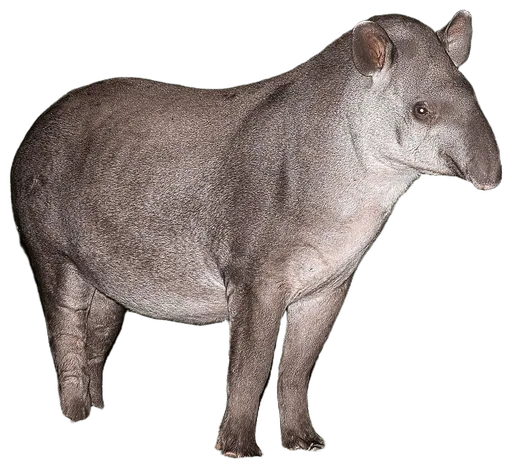
- Weight
- 230 kg507 lb
- Length
- 2 m6.6 ft
As heavy as 3.3 people
Heavier than 81% of animalsAbout as long as a person is tall
Bigger than 71% of animalsThe lowland tapir is a 230-kilogram forest browser that prefers running to fighting. It crashes through undergrowth, swims and dives well and can breathe through its trunk while hiding underwater. When cornered its bite can be deadly, as a fatal 2005 attack in Brazil showed, but it has no horns, tusks or claws and jaguars can still bring it down.
Detailed ratings
Research-backed ratings on one 0–100 scale for all 344 animals (updated 2026-09-28). How ratings work


Card No. 179 of 344. Every animal on Animal Battle Stats has one: its power, tier and archetype on the front; its six battle stats, abilities and signature move on the back.
Special abilities
Flees into rivers and swamps, swims and dives well, and can breathe through its raised trunk while the body stays submerged, leaving land predators on the bank.
When trapped, bites hard and repeatedly with chisel-like incisors; a provoked lowland tapir caused fatal bite wounds to a farmer in Brazil.
Unique traits
A short, flexible trunk formed from the nose and upper lip, made of soft tissue, used to grab branches, pluck fruit and sample scents.
The largest native land mammal of the Amazon, with females outweighing the other sex and adults averaging around 225 kg.
How it fights
Weapons
- The tapir is a browsing herbivore with one weapon: a strong bite backed by a 230 kg body. It uses it when cornered. In 2005 a farmer in south-eastern Brazil surprised and stabbed a lowland tapir in his corn plantation; the tapir inflicted deep bites to his thighs, neck and cervical region and he died of haemorrhage, the first recorded fatal tapir attack (Haddad et al. 2005). Wikipedia adds that the tapir, a female of about 180 kg, also died of its wounds. Males competing for a receptive female bite each other on the feet (ADW). The tapir also has shoving mass, but no horns, tusks or claws.
Struggles vs
- Only one weapon, the bite, with no reach.
- Poor eyesight.
- No armor beyond thick skin.
- Prefers flight to fighting; low willingness to press an attack.
- Weight
- 230 kg507 lb
- Height
- 95 cm37.4 in
- Length
- 2 m6.6 ft
- Top speed
- No reliable measurement
- Bite force
- No reliable measurement
- Lifespan
- 20 years
- Home biome
- Jungle
- Lifestyle
- Mostly solitary, nocturnal
Rated specimen: Healthy adult female, 230.0 kg, about 95 cm at the shoulder and 200 cm head-body.
Fun facts
- A tapir's trunk is made from its nose and upper lip and works as a snorkel.
- It can explore a circle of ground about 30 cm across with its trunk without moving its head.
- Tapir calves are born with white spots and stripes, like a watermelon.
- Pregnancy lasts about 13 months (390–395 days), and a female usually raises one calf every two years.
- Competing tapirs bite at each other's feet.
- The name "tapir" comes from a Tupi word linked to "thick", after its tough hide.
Closest rivals by power. Tap one for the full breakdown, or pick any opponent.
vs Ethiopian WolfWins · 65% · Slight edge  W vs Maned WolfWins · 63% · Slight edge
 W vs GibbonWins · 70% · Clear edge
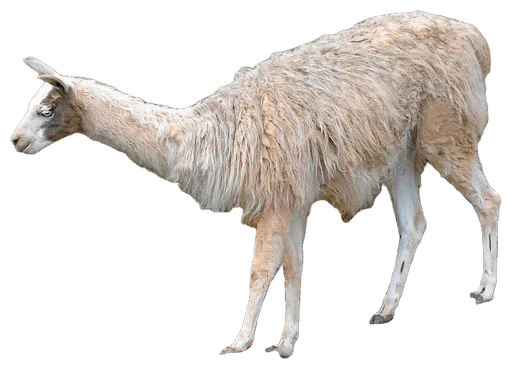
 W vs LlamaWins · 53% · Toss-up
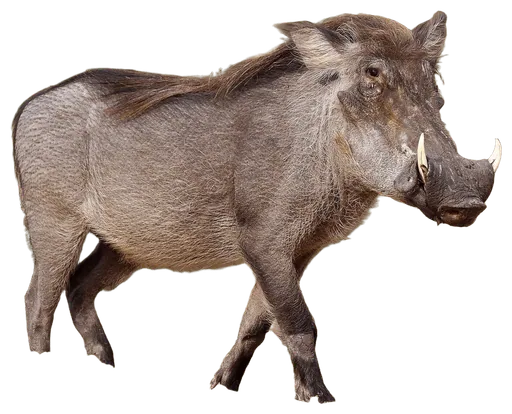
 W vs WarthogWins · 56% · Toss-up
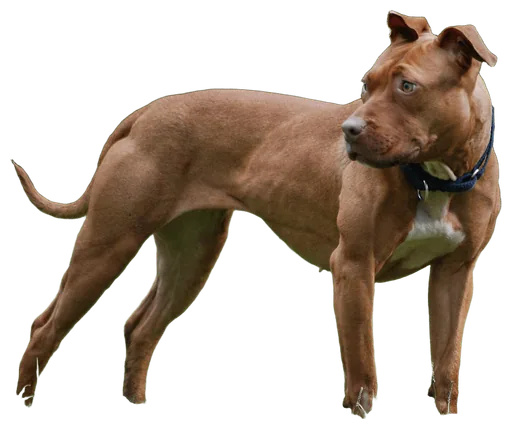
 W vs American Pit Bull TerrierWins · 63% · Slight edge
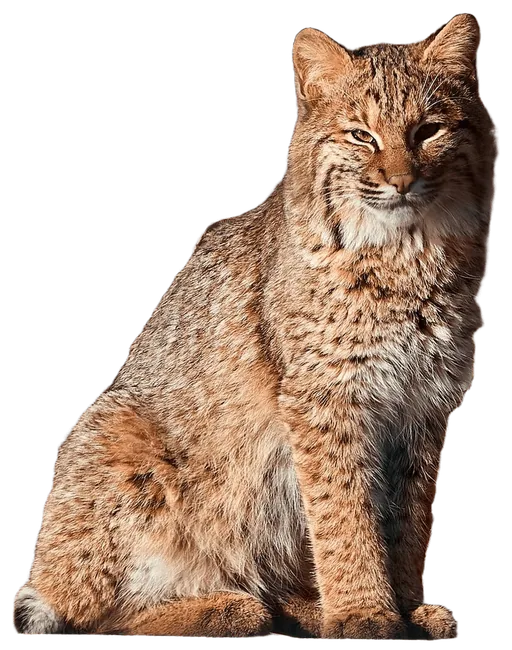
 W vs BobcatWins · 68% · Slight edge
 W vs ServalWins · 65% · Slight edge
 W
Tapir battle analysis
The lowland tapir is the largest native land mammal of the Amazon, a heavy, rounded browser with a short trunk made from its nose and upper lip. It looks slow, but it moves quickly through dense forest, climbs steep ground and is an excellent swimmer and diver. Its body tapers at the front, letting it push through tangled undergrowth that slows pursuers.
Its strategy against predators is to leave. At the first sign of danger a tapir bolts into thick cover or plunges into water, where it can stay submerged with just the tip of its trunk above the surface. Thick skin on the back of the neck gives some protection against a jaguar's bite, the classic attack on a tapir resting on a riverbank at night.
When there is nowhere to run, the tapir fights with its teeth. In 2005 a Brazilian farmer who stabbed a tapir in his cornfield was bitten repeatedly on the legs and neck and died. That shows real defensive danger, but the tapir remains a single-weapon herbivore: no horns, tusks or claws, poor eyesight and a strong preference for avoiding conflict. On the absolute scale it sits in the moderate middle, with Defense a little above Attack.
Habitat & range
Tropical forests, swamps and river margins of South America east of the Andes, from Venezuela, Colombia and the Guianas south through Brazil to Paraguay, Bolivia and northern Argentina, and west to Peru and Ecuador. It is most common in dense forest near water and less common in open pasture. ADW records the species from sea level to high elevations and describes it as an adept climber. In 2024 it was seen in Rio de Janeiro state for the first time since 1914.
Diet & hunting
A generalist browser of leaves, buds, shoots, small branches, fruit, grasses and aquatic plants, using its trunk to pull food to its mouth. DNA metabarcoding of dung from 31 latrines in Brazil's Atlantic Forest found 61 plant species from 46 families, chosen across a wide home range rather than from the most common local plants (Lautenschlager et al. 2026). Tapirs swallow and spread large numbers of seeds, making them important seed dispersers.
Social life
Largely solitary and mainly nocturnal. Mothers and calves stay together, and pairs meet to breed. Social behaviour in the wild is still poorly studied.
Conservation
Listed as Vulnerable on the IUCN Red List. Habitat loss and fragmentation are the main threats highlighted by recent field studies, which find tapirs depend on dense forest and water networks (Alviz et al. 2025). Lautenschlager et al. (2026) describe Atlantic Forest tapirs as threatened megafauna whose broad diet helps maintain forest plant diversity.
Quick answers
How strong is a Tapir?
On the Animal Battle Stats scale, the Tapir has an attack rating of 45 and a power index of 50.3 out of 100, which ranks it #179 of 344 animals and puts it in C tier (Capable). Its strongest stat is stamina (60).
How much does a Tapir weigh?
A typical adult Tapir weighs about 230 kg (507 lb). Rated specimen: healthy adult female, 230.0 kg, about 95 cm at the shoulder and 200 cm head-body.
How fast is a Tapir?
There is no reliable measured top speed for the Tapir, so we do not publish one. Its agility rating, which covers acceleration, reflexes and evasion, is 52 out of 100.
What does a Tapir eat?
A generalist browser of leaves, buds, shoots, small branches, fruit, grasses and aquatic plants, using its trunk to pull food to its mouth. DNA metabarcoding of dung from 31 latrines in Brazil's Atlantic Forest found 61 plant species from 46 families, chosen across a wide home range rather than from the most common local plants (Lautenschlager et al. 2026). Tapirs swallow and spread large numbers of seeds, making them important seed dispersers.
Is the Tapir endangered?
The Tapir's conservation status is Vulnerable. Listed as Vulnerable on the IUCN Red List. Habitat loss and fragmentation are the main threats highlighted by recent field studies, which find tapirs depend on dense forest and water networks (Alviz et al. 2025). Lautenschlager et al. (2026) describe Atlantic Forest tapirs as threatened megafauna whose broad diet helps maintain forest plant diversity.
What animals can beat a Tapir?
The Tapir is favored against all of its closest rivals, including the Ethiopian Wolf, the Maned Wolf, the Gibbon, the Llama, the Warthog, the American Pit Bull Terrier, the Bobcat, the Serval.
Researched 2026-09-28. Ratings are editorial judgments built from these sources; measurements describe a healthy adult female.
- Wikipedia, South American tapirmass, length, height, lifespan, predators, fatal attack, reproduction, range
- Wikipedia, Tapirhide, senses, dentition, attacks on people
- Animal Diversity Web, Tapirus terrestrismass, dimensions, dimorphism, dentition, male foot-biting
- San Diego Zoo Wildlife Alliance, Tapirproboscis, predator defense, lifespan, food intake
- Haddad et al. 2005, Wilderness & Environmental Medicinebite as weapon
- Haddad 2022, Revista da Sociedade Brasileira de Medicina Tropicalbite danger context
- Mezzini et al. 2025, Movement Ecologymovement and range size
- Lautenschlager et al. 2026, Ecology and Evolutiondiet
- Alviz et al. 2025, Ecology and Evolutionhabitat use
- Wikimedia Commons, Tapirus terrestris por Luiz Alves (05).jpgimage provenance
Photo: “Tapirus terrestris por Luiz Alves (05).jpg” by @LuizAlves1990, CC BY-SA 4.0, background removed and cropped. Original
Suggest a correction