

Sydney Funnel-web Spider
Atrax robustus
 #241 of 273
  Forest Assassin Not Evaluated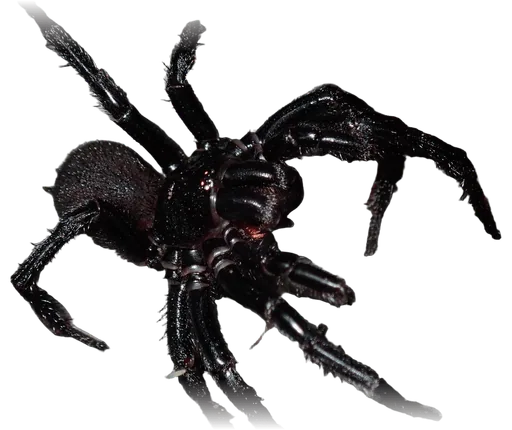
 Fight
FightPhoto: thebeachcomber · CC BY 4.0
The Sydney funnel-web is a burrowing Australian spider whose wandering males carry one of the few spider venoms known to kill healthy adult humans. Its δ-hexatoxin makes nerves fire uncontrollably, and it bites repeatedly from a rearing stance. At about 2 g it is physically tiny, and many non-primate animals resist its venom far better than people do.
 Attack25
  Defense6
  Agility58
  Stamina33
  Intelligence27
  Special95
 Detailed ratings
Research-backed ratings on one 0–100 scale for all 273 animals (updated 2026-09-28). How ratings work
Special abilities
Ability 1Primate-Killer ToxinΔ-hexatoxin-Ar1a slows sodium-channel inactivation so nerves fire uncontrollably. Primates are exquisitely sensitive, which makes this one of the few spider venoms that has killed healthy adult humans, although many non-primates are far less affected.
 Ability 2Rear-and-Grip Strike
The spider rears onto its hind legs with fangs raised, then drives its downward-striking fangs in, holds on and bites repeatedly. This converts a small venom dose into multiple injections.
Unique traits
 TraitDeadlier Wandering Male
The smaller male's venom is 4–6 times more toxic than the female's, and every sex-identified fatal bite came from a male. Males leave their burrows for good to search for mates at night.
TraitSilk-Lined Burrow AmbusherFemales spend their whole lives in one silk-lined burrow among logs, rocks or garden soil, using the entrance silk to detect prey and threats.
How it fights
Weapons
- Large downward-striking fangs deliver venom containing δ-hexatoxin-Ar1a. The toxin keeps sodium channels open for longer, so nerves fire uncontrollably. The gene for the lethal toxin has been sequenced and is intronless. In primates this can cause severe envenoming; in other animals the effect is weaker, which makes the weapon partly target-specific.
 Beats
Beats
- Insects and other small ground-active animals.
- Primates small enough to be seriously affected before they can crush the spider.
 Struggles vs
- Birds, reptiles and non-primate mammals that are less sensitive to the venom and much larger.
- Armoured or thick-coated animals that block the fangs.
- Opponents that attack from range or from above.
- Weight
- 2 g0.1 oz
- Height
- No reliable measurement
- Length
- 2.5 cm1 in
- Top speed
- No reliable measurement
- Bite force
- No reliable measurement
- Lifespan
- 5 years
- Home biome
- Forest
- Lifestyle
- Mostly solitary, nocturnal
Rated specimen: Healthy mature adult male, about 2.5 cm body length, estimated about 2 g live mass, with fangs about 6 mm long.
Fun facts
- Male venom is 4–6 times more toxic than female venom.
- No one has died from a funnel-web bite since antivenom arrived in 1981.
- In a review of confirmed funnel-web bites, antivenom produced a complete response in 97% of cases.
- Tracked males moved to a new spot on about half of daily checks, walking in zigzags at night.
- The gene for the lethal toxin has no introns, a finding that made the title of the study that sequenced it.
- In 2023 scientists split the "Sydney funnel-web" into three species.
Closest rivals by power. Tap one for the full breakdown, or pick any opponent.
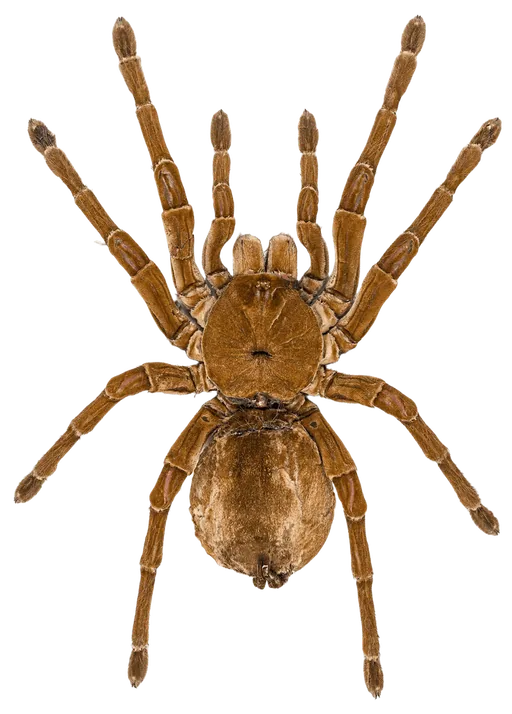
vs Deathstalker ScorpionLoses · 50% · Toss-up 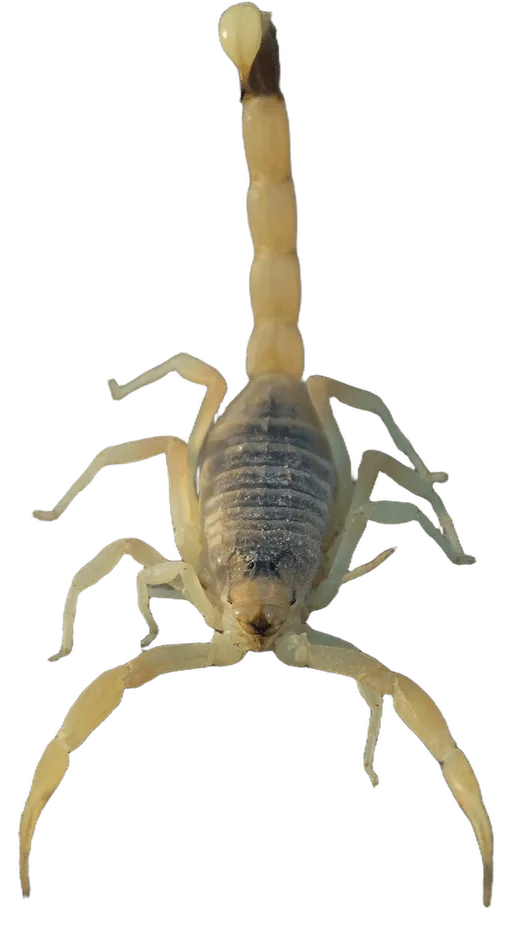 L vs Goliath BirdeaterWins · 51% · Toss-up
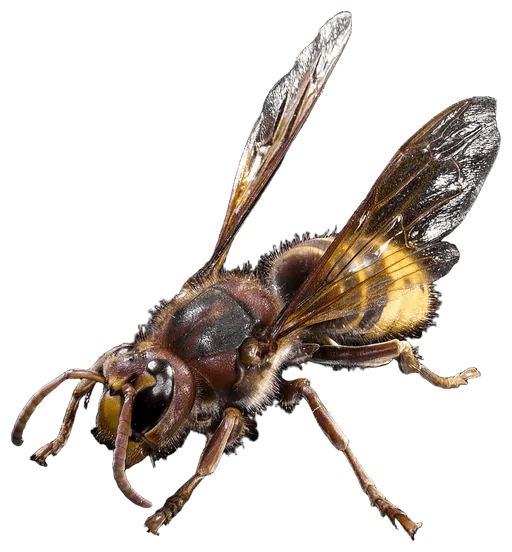
  W vs HornetWins · 52% · Toss-up
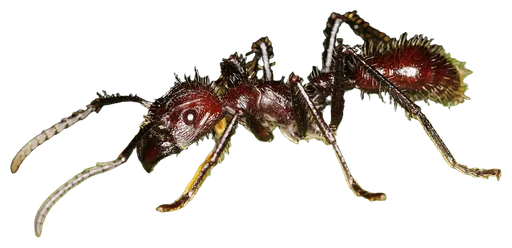
  W vs Bullet AntWins · 52% · Toss-up
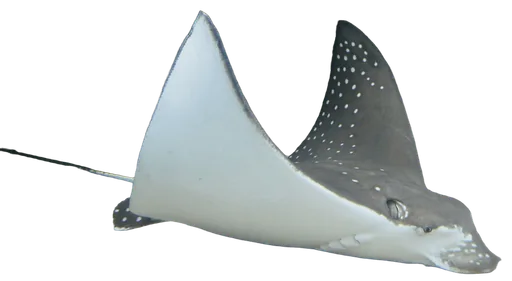
  W vs StingrayWins · 51% · Toss-up
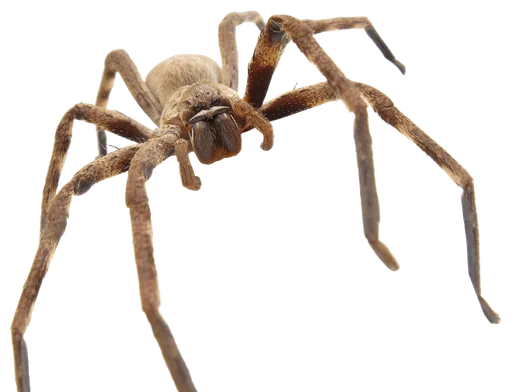
  W vs Huntsman SpiderWins · 53% · Toss-up
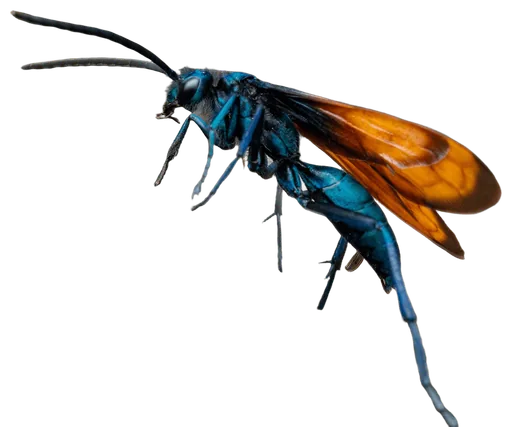
  W vs Tarantula HawkWins · 54% · Toss-up
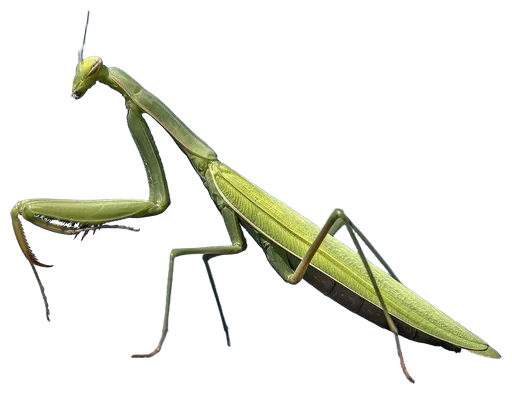
  W vs Praying MantisLoses · 54% · Toss-up
  L
L  Pick any opponent
 Sydney Funnel-web Spider battle analysis
The Sydney funnel-web is a spider whose danger is aimed, almost by accident, at primates. Its lethal toxin, δ-hexatoxin-Ar1a, holds sodium channels open so that nerves fire over and over. Humans and other primates are exquisitely sensitive to this; many other animals are much less so. Before antivenom arrived in 1981, thirteen deaths were attributed to funnel-web bites, and in every case where the spider was sexed, it was a male.
That detail shapes the canonical fighter. Adult females are bigger but sedentary, spending years in a silk-lined burrow. Males mature in about their fifth year, leave their burrows for good, and spend the warm months walking at night in search of females, sometimes into gardens and houses. Their venom is several times more toxic than the female's, and their fangs, about 6 mm long, strike downward like picks. When cornered the spider rears up, shows its fangs, and once it bites, it holds on and bites again.
On an absolute roster the funnel-web is still a 2 g animal. It cannot absorb a blow, has poor eyesight and is slow compared with hunting spiders. Most confirmed bites of this species were not severe, and against birds, reptiles or non-primate mammals its venom is far less decisive. The profile therefore pairs a very high Special with low Attack and minimal Defense: a specialist weapon whose lethality depends heavily on who it bites.
Habitat & range
A. robustus lives in the Sydney region of New South Wales, Australia, in moist forest, bushland and suburban gardens. Burrows are lined with silk and placed in sheltered, damp ground. Wandering males are the ones people meet most often, during the warmer months (November to April).
Diet & hunting
An ambush predator of ground-active arthropods and other small animals that touch the silk around its burrow entrance. It spends daylight inside the burrow and hunts at night. A species-level diet study was not located in this research pass.
Social life
Solitary. Females are highly sedentary and are thought to spend their entire lives in a single burrow. Mature males abandon their burrows permanently to search for females. A wild tracking study found males moved at night, often in zigzag paths, and were in new locations on about half of daily resightings.
Conservation
No IUCN Red List assessment of A. robustus was found in this research pass, so its status is treated as Not Evaluated. It remains common around Sydney. The 2023 split into three species means older records need re-checking before they are applied to A. robustus in the narrow sense.
Quick answers
How strong is a Sydney Funnel-web Spider?
On the Animal Battle Stats scale, the Sydney Funnel-web Spider has an attack rating of 25 and a power index of 33.8 out of 100, which ranks it #241 of 273 animals and puts it in D tier (Underdog). Its strongest stat is special (95).
How much does a Sydney Funnel-web Spider weigh?
A typical adult Sydney Funnel-web Spider weighs about 2 g (0.1 oz). Rated specimen: healthy mature adult male, about 2.5 cm body length, estimated about 2 g live mass, with fangs about 6 mm long.
How fast is a Sydney Funnel-web Spider?
There is no reliable measured top speed for the Sydney Funnel-web Spider, so we do not publish one. Its agility rating, which covers acceleration, reflexes and evasion, is 58 out of 100.
What does a Sydney Funnel-web Spider eat?
An ambush predator of ground-active arthropods and other small animals that touch the silk around its burrow entrance. It spends daylight inside the burrow and hunts at night. A species-level diet study was not located in this research pass.
Is the Sydney Funnel-web Spider endangered?
The Sydney Funnel-web Spider's conservation status is Not Evaluated. No IUCN Red List assessment of A. robustus was found in this research pass, so its status is treated as Not Evaluated. It remains common around Sydney. The 2023 split into three species means older records need re-checking before they are applied to A. robustus in the narrow sense.
What animals can beat a Sydney Funnel-web Spider?
Among its closest rivals, the Deathstalker Scorpion (50%), the Praying Mantis (54%) would be favored against the Sydney Funnel-web Spider. It would be favored against the Goliath Birdeater, the Hornet, the Bullet Ant, the Stingray, the Huntsman Spider, the Tarantula Hawk.
Researched 2026-09-28. Ratings are editorial judgments built from these sources; measurements describe a healthy adult male.
- Australian Museum, Sydney Funnel-web Spideridentity, size, dimorphism, habitat
- Australian Museum, Australian Funnel-web Spidersmale wandering season, deaths, antivenom
- Australian Museum media release, species splittaxonomy
- Australian Museum, Newcastle Funnel-webtaxonomy
- Animal Diversity Web, Atrax robustusfangs, behaviour, sex difference
- INCHEM Poison Information Monograph 049venom yield, toxicity, clinical context
- Venom yield in captivity study (PubMed)venom yield primary source
- Isbister et al. 2005, Medical Journal of Australiaclinical severity, antivenom response
- StatPearls, Funnel-Web Spider Toxicitylethal toxin, primate sensitivity
- Lethal toxin gene study (PMC)toxin genetics
- Wikipedia, Delta atracotoxintoxin mechanism
- Behaviour across contexts study, ScienceDirect (2022)defensive behaviour
- Mate-searching of wild males, Animal Behaviour (2025)male movement, lifespan background
- Mate-searching preprint, bioRxivmaturity and female longevity
- Mating behaviour study, Journal of Zoology (2023)courtship
- Wikipedia, Sydney funnel-web spiderbody length, leg length, rearing and repeated biting
- Wikipedia, Mygalomorphaefang orientation
- Better Planet Education, funnel-web factsheetpopular lifespan claims
Photo: “Atrax robustus male frontal.jpeg” by thebeachcomber, CC BY 4.0, background removed and cropped. Original
Suggest a correction