

Sun Conure
Aratinga solstitialis
 #285 of 344
  Jungle Scout Endangered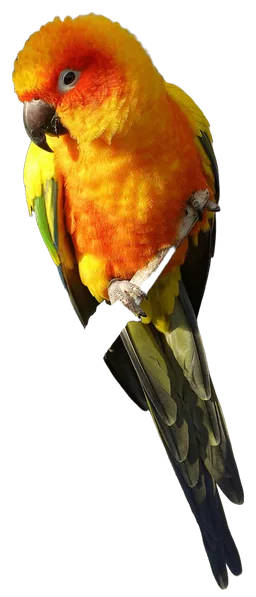
 Fight
FightPhoto: Daderot · CC0
The Sun Conure is a 120 g golden parakeet from the edge of the Guiana Shield forests, loud, fast and highly social. Its hooked bill gives a sharp bite for its size and it flies and climbs nimbly, but it has no armor and little mass. It is now Endangered in the wild because of trapping for the pet trade.
 Attack11
  Defense9
  Agility85
  Stamina62
  Intelligence78
  Special53
 Detailed ratings
Research-backed ratings on one 0–100 scale for all 344 animals (updated 2026-09-28). How ratings work
Special abilities
Ability 1Hookbill NipA short, deep hooked bill gives a sharp, painful bite far stronger than a songbird of the same size could manage, used to defend the nest and deter handlers.
 Ability 2Flock Siren
Flocks fly in with loud screeching calls, and a separated bird's high-pitched screams carry for hundreds of metres, keeping the flock together and warning of danger.
Unique traits
 TraitGolden Plumage
Adults are golden-yellow with orange face and belly, but juveniles are mostly green and take up to two years to colour up; feeding flocks blend in against red and yellow flowers.
TraitCooperative NestersWild nests have been found holding several adults and chicks of different ages, a sign that sun conures may raise young cooperatively.
How it fights
Weapons
- The hooked bill is the only weapon. Parrots of this size bite far harder than other birds of similar mass; a related 85 g parakeet in the same genus measured about 54 N (Harrison et al. 2025). A sun conure can deliver a painful, bleeding bite to a hand, and hand-reared birds can be aggressive towards strangers (Wikipedia). But this is a 120 g bird that eats fruit, seeds, flowers and some insects, and its bite is a defensive tool, not a way to kill.
 Struggles vs
- About 120 g in absolute mass.
- No armor, fragile flying body.
- Small bill with no measured force.
- Heavily trapped; wild numbers are now very small.
- Weight
- 120 g4.2 oz
- Height
- No reliable measurement
- Length
- 30 cm11.8 in
- Top speed
- No reliable measurement
- Bite force
- No reliable measurement
- Lifespan
- 25 years
- Home biome
- Jungle
- Lifestyle
- Social
Rated specimen: Healthy mature adult male, 0.12 kg, 30.0 cm total length.
Fun facts
- Far more sun conures now live as pets than in the wild, where fewer than 2,500 mature birds remain.
- Young sun conures are mostly green and take up to two years to turn gold.
- A lost sun conure's screams can carry for hundreds of metres to find its flock.
- Feeding flocks almost disappear against red and yellow monkey-brush flowers.
- More than 20,000 were reportedly exported to Singapore in just 2005–2006.
- Wild nests sometimes hold several adults and chicks of different ages.
Closest rivals by power. Tap one for the full breakdown, or pick any opponent.
vs Barn OwlLoses · 51% · Toss-up  L vs KookaburraWins · 51% · Toss-up
  W vs CockatielWins · 51% · Toss-up
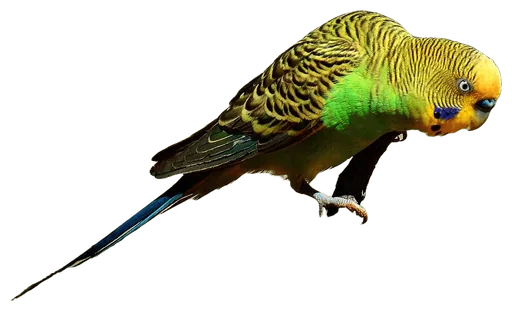
  W vs BudgerigarWins · 52% · Toss-up
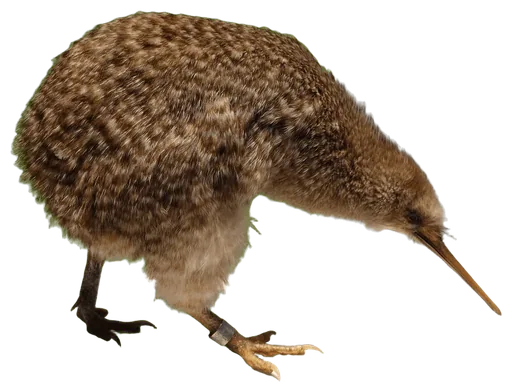
  W vs KiwiLoses · 53% · Toss-up
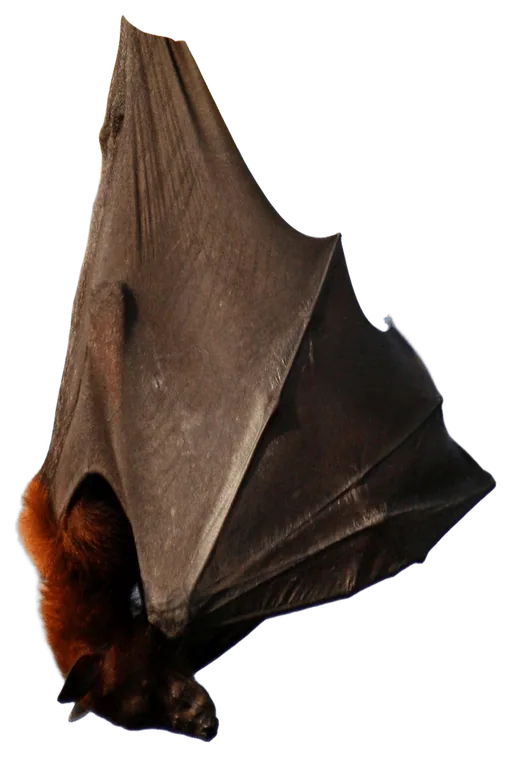
  L vs Flying FoxLoses · 50% · Toss-up
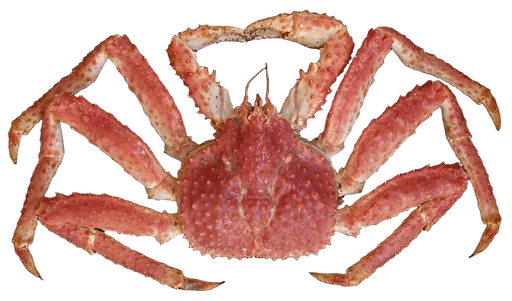
  L vs King CrabWins · 50% · Toss-up
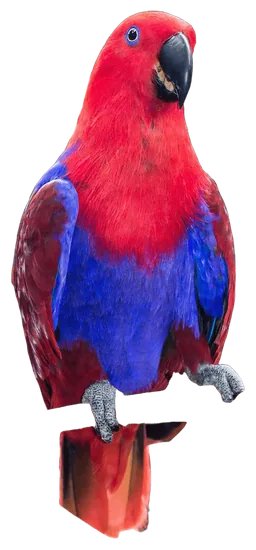
  W vs Eclectus ParrotLoses · 53% · Toss-up
  L
L  Pick any opponent
 Sun Conure battle analysis
The sun conure is a bright yellow and orange parakeet that lives in flocks along forest edges and palm groves in northern Brazil and Guyana. Flocks are quiet and hard to see while feeding, sometimes blending into red and yellow flowers, but explode into screeching as they take off. Birds climb through branches using the bill as a hook, hold food in their feet, and fly fast and straight between patches of forest, sometimes covering many miles in a day.
Its beauty nearly destroyed it. Tens of thousands were exported for the pet trade, and the wild population has fallen to perhaps 1,000–2,500 mature birds, while captive-bred sun conures fill homes around the world. Wild behavior is still poorly studied: nests with several adults and chicks of different ages hint at cooperative breeding, but much of its ecology is unknown.
In an absolute matchup the sun conure is a small, light bird whose best defenses are flight, its flock and loud alarm calls. Its bite is strong for its size and painful to a person, but against anything larger that can catch it, it has no protection and very little power.
Habitat & range
The sun conure lives in a small area of north-eastern South America: northern Roraima in Brazil, southern Guyana, and possibly southern Suriname and French Guiana, with unconfirmed reports from south-eastern Venezuela. It is found mostly below 1,200 m at the edges of humid foothill forest on the Guiana Shield, in palm groves and fruiting trees, crossing open savanna mainly when moving between forest patches. Birds once reported along the Amazon are now known to be the sulphur-breasted parakeet.
Diet & hunting
It eats fruit, flowers, berries, blossoms, seeds, nuts and insects, including red cactus fruit, Malpighia berries and legume pods (WPT; Wikipedia). Flocks near Karasabai often feed on monkey-brush flowers. It sometimes raids crops.
Social life
Very social, usually in flocks of about 15–30 birds, larger where fruit is plentiful (WPT). Birds rest, feed each other, preen and bathe together through the day. Pairs are monogamous.
Conservation
The sun conure is listed as Endangered by the IUCN and on CITES Appendix II. WPT gives a world population of about 1,000–2,499 mature birds and decreasing. Trapping for the pet trade caused the collapse: more than 20,000 birds were reportedly exported to Singapore alone in 2005–2006 (Wikipedia, citing BirdLife), and numbers in Roraima fell by 50–79% over three generations. Guyana and Suriname are the only Neotropical countries that still allow capture and trade of native parrots (Romero-Vidal et al. 2022). In its Guyana stronghold, easing trapping pressure has allowed early signs of recovery.
Quick answers
How strong is a Sun Conure?
On the Animal Battle Stats scale, the Sun Conure has an attack rating of 11 and a power index of 38.4 out of 100, which ranks it #285 of 344 animals and puts it in D tier (Underdog). Its strongest stat is agility (85).
How much does a Sun Conure weigh?
A typical adult Sun Conure weighs about 120 g (4.2 oz). Rated specimen: healthy mature adult male, 0.12 kg, 30.0 cm total length.
How fast is a Sun Conure?
There is no reliable measured top speed for the Sun Conure, so we do not publish one. Its agility rating, which covers acceleration, reflexes and evasion, is 85 out of 100.
What does a Sun Conure eat?
It eats fruit, flowers, berries, blossoms, seeds, nuts and insects, including red cactus fruit, Malpighia berries and legume pods (WPT; Wikipedia). Flocks near Karasabai often feed on monkey-brush flowers. It sometimes raids crops.
Is the Sun Conure endangered?
The Sun Conure's conservation status is Endangered. The sun conure is listed as Endangered by the IUCN and on CITES Appendix II. WPT gives a world population of about 1,000–2,499 mature birds and decreasing. Trapping for the pet trade caused the collapse: more than 20,000 birds were reportedly exported to Singapore alone in 2005–2006 (Wikipedia, citing BirdLife), and numbers in Roraima fell by 50–79% over three generations. Guyana and Suriname are
What animals can beat a Sun Conure?
Among its closest rivals, the Barn Owl (51%), the Kiwi (53%), the Flying Fox (50%), the Eclectus Parrot (53%) would be favored against the Sun Conure. It would be favored against the Kookaburra, the Cockatiel, the Budgerigar, the King Crab.
Researched 2026-09-28. Ratings are editorial judgments built from these sources; measurements describe a healthy adult male.
- World Parrot Trust encyclopedia, Sun Conuresize, mass, longevity, population, status, threats, habitat, diet, flocks, clutch
- Animal Diversity Web, Aratinga solstitialismass, length, wing, bill, dimorphism, habitat
- Wikipedia, Sun parakeetbehavior, diet, reproduction, lifespan, trade, captivity
- Harrison et al. 2025, Journal of Anatomyrelated bite-force context
- Wancham et al. 2024, Veterinary Worldsexual monomorphism
- Romero-Vidal et al. 2022, Animalstrade law context
- Silveira et al. 2005, The Auktaxonomy
- Dickinson et al. 2024, Royal Society Open Sciencebill-assisted climbing in parrots
- Wikimedia Commons, captive sun conuresimage candidate
Photo: “Aratinga solstitialis - Wilhelma Zoo - Stuttgart, Germany - DSC02174.jpg” by Daderot, CC0, background removed and cropped. Original
Suggest a correction