
Sugar Glider
Petaurus brevicepsD tier · Underdog145th of 163 mammals
Size & speed
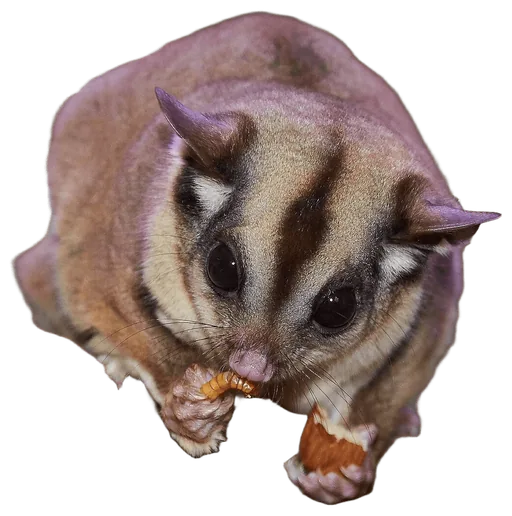
- Weight
- 140 g4.9 oz
- Length
- 17 cm6.7 in
About as heavy as a smartphone
Heavier than 10% of animalsAbout 2 credit cards long
Bigger than 9% of animalsA 140-gram gliding possum that wins by leaving: the sugar glider can steer a 50-metre glide between trees, sees ultraviolet light at night and can drop into torpor to wait out storms. It is a real hunter of insects, lizards and nesting birds, but in a straight fight almost any larger animal overwhelms it.
Detailed ratings
Research-backed ratings on one 0–100 scale for all 344 animals (updated 2026-09-28). How ratings work


Card No. 275 of 344. Every animal on Animal Battle Stats has one: its power, tier and archetype on the front; its six battle stats, abilities and signature move on the back.
Special abilities
Spreads the furred membranes between wrists and ankles to glide 50 m or more between trees, steering with its limbs and tail. Against ground or trunk-bound opponents it simply leaves the fight.
Drops its body temperature and metabolism for hours at a time; wild gliders used deep torpor to sit out a cyclone-strength storm and all survived. It turns bad conditions into a waiting game rather than a crisis.
Unique traits
Lives in nest-sharing clans of up to seven adults; dominant males mark group members and territory with forehead and chest glands, and clans defend their patch noisily against outsiders.
A rod-dominated retina that still supports trichromatic colour vision with ultraviolet sensitivity, uncommon among nocturnal mammals.
How it fights
Weapons
- The sugar glider's only real weapons are sharp incisors and small claws on a 140 g body. It is a more active predator than its sweet-food name suggests: in summer it is mainly insectivorous, and it opportunistically takes lizards, small birds and eggs. In Tasmania, where gliders were introduced, they kill nesting swift parrot females and their clutches in tree hollows, and this predation has skewed the parrot's adult sex ratio (Wright 2019, summarising Heinsohn et al.). Under the 2021 split those Tasmanian gliders are treated as Krefft's glider, but the behaviour shows what this body plan can do to a trapped, smaller animal at night. Against anything larger than a small bird, the glider's absolute damage is close to nil.
Struggles vs
- Extremely low mass, power and durability.
- Weapons are only small incisors and claws.
- No armor; any solid bite from a medium predator is lethal.
- Heavily dependent on trees for its main advantage.
- Weight
- 140 g4.9 oz
- Height
- No reliable measurement
- Length
- 17 cm6.7 in
- Top speed
- No reliable measurement
- Bite force
- No reliable measurement
- Lifespan
- 9 years
- Home biome
- Forest
- Lifestyle
- Social
Rated specimen: Healthy adult male, 0.14 kg, about 17 cm head-body with a tail of similar length, gliding membranes fully developed.
Fun facts
- The Latin name Petaurus breviceps translates roughly as "short-headed rope-dancer", a nod to its canopy acrobatics.
- A single glide can cover 50 m or more.
- In a storm with cyclone-strength winds, wild gliders switched to deep torpor and all survived.
- Its heart beats 200–300 times a minute.
- Behavioural tests show it can see ultraviolet light as well as three colour channels, at night.
- Pet "sugar gliders" in Europe and the US turn out to be New Guinean gliders, a different species from the eastern Australian P. breviceps under the 2021 split.
Closest rivals by power. Tap one for the full breakdown, or pick any opponent.
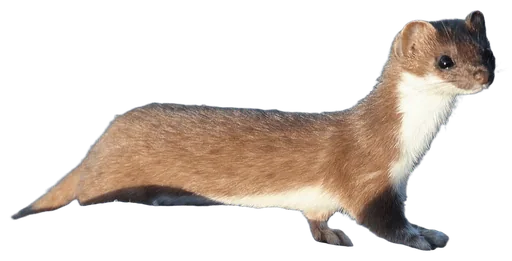
vs Black-footed CatLoses · 64% · Slight edge 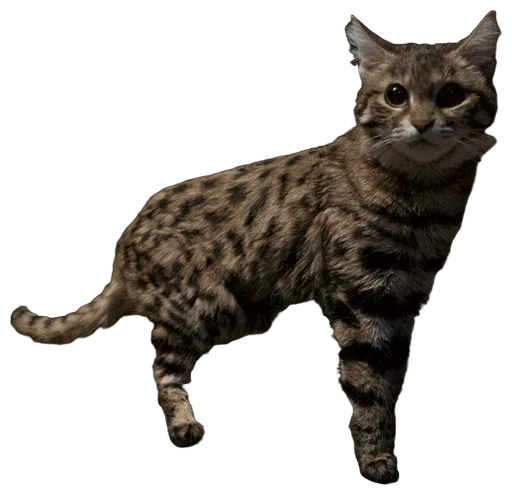 L vs StoatLoses · 53% · Toss-up
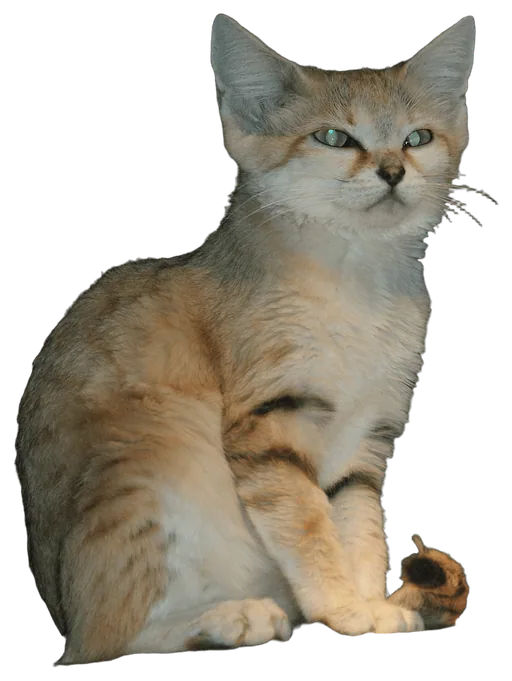
 L vs Sand CatLoses · 68% · Slight edge
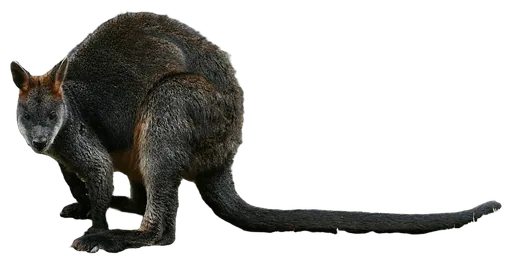
 L vs WallabyLoses · 77% · Clear edge
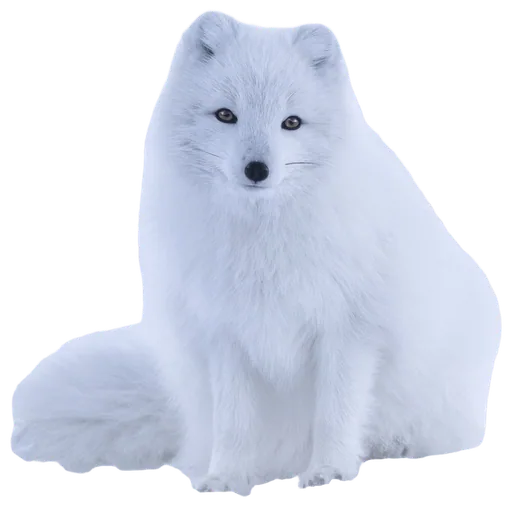
 L vs Arctic FoxLoses · 70% · Clear edge
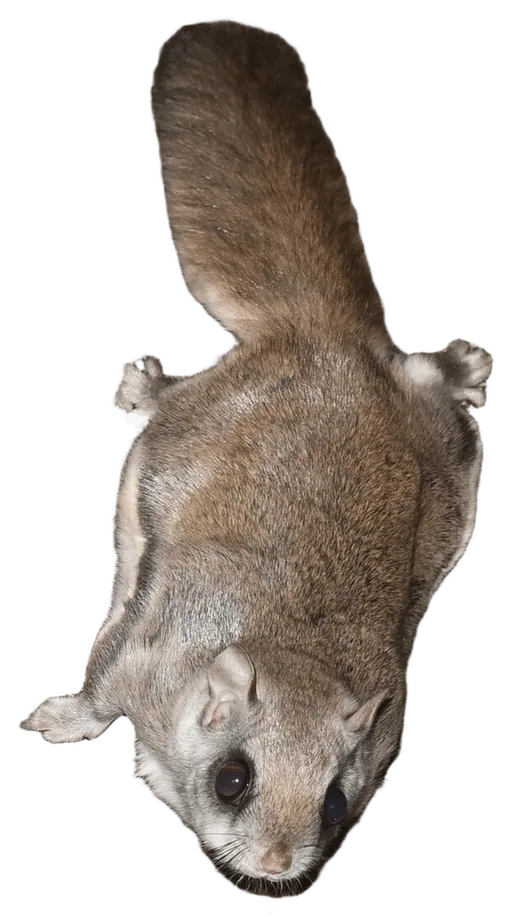
 L vs Flying SquirrelLoses · 53% · Toss-up
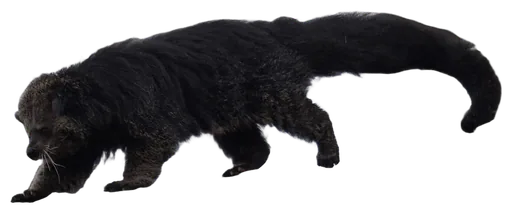
 L vs BinturongLoses · 77% · Clear edge
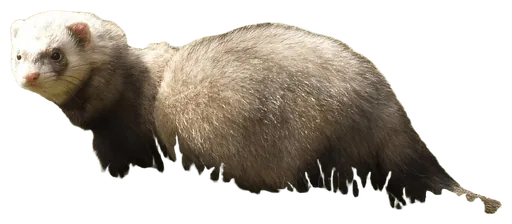
 L vs FerretLoses · 61% · Slight edge
 L
Sugar Glider battle analysis
The sugar glider is a pocket-sized specialist of the forest canopy. Weighing around 140 g, it has no meaningful armor, strength or reach, and on the absolute roster scale its Attack and Defense sit near the floor with other tiny mammals. What it does have is a furred membrane stretched from wrist to ankle. From a high trunk it can launch, hold its limbs out at right angles and steer a glide of 50 metres or more, adjusting its body angle through small limb movements that high-speed filming has captured in detail.
That mobility makes the glider very hard to pin down in the right habitat. An opponent on the ground or on a single trunk may never get a second chance at contact, because the glider has already crossed to the next tree. Its senses support the same strategy: large eyes, swivelling ears and, unusually for a nocturnal mammal, colour vision that reaches into the ultraviolet. At rest it shares a leaf-lined hollow with a clan of up to seven adults, and dominant males mark the group and territory with scent.
Its diet is broader and fiercer than its name. Gum and sap carry it through winter, but in summer it hunts insects, and it will kill lizards and small birds and raid eggs. Introduced gliders in Tasmania prey so heavily on nesting swift parrots that they threaten that species. Away from trees, though, the glider has few answers: owls, snakes, quolls and cats all take it, and any medium-sized opponent that catches it ends the contest immediately. In a battle ranking it is a textbook example of elite Agility and Special paired with near-minimum Attack and Defense.
Habitat & range
Sugar gliders live in forests and woodlands, nesting in tree hollows lined with leaves. Under the 2021 split, P. breviceps in the strict sense occurs only in coastal south-east Queensland and New South Wales east of the Great Dividing Range, up to about 2,000 m in the eastern ranges. Krefft's glider and the savanna glider cover much of the rest of eastern and northern Australia, and further glider populations occur in New Guinea and nearby islands. Captive and pet populations are kept worldwide.
Diet & hunting
A seasonal omnivore. In summer it eats mainly insects and other arthropods; in winter it relies on plant exudates such as acacia gum, eucalyptus sap, manna, honeydew and lerp, stripping bark or boring holes with its teeth to reach them. Nectar, pollen, acacia seeds, fungi, fruit, bird eggs, lizards and small birds are taken when available. Heavy pollen feeding makes it a likely pollinator of Banksia. It shares forests with squirrel gliders and yellow-bellied gliders by using food resources differently.
Social life
Groups of up to seven adults and their young share a nest as a clan. Within the clan they are playful and social; toward other clans and intruders they are territorial. Dominant males scent-mark clan members and the nest area.
Conservation
The broad, pre-split species was assessed as Least Concern by the IUCN in 2016. The narrowly defined P. breviceps has a much smaller range, and Wikipedia notes it is sensitive to disasters such as the 2019–20 Australian bushfires; a formal reassessment of the split species is still needed.
Quick answers
How strong is a Sugar Glider?
On the Animal Battle Stats scale, the Sugar Glider has an attack rating of 10 and a power index of 40.3 out of 100, which ranks it #275 of 344 animals and puts it in D tier (Underdog). Its strongest stat is agility (93).
How much does a Sugar Glider weigh?
A typical adult Sugar Glider weighs about 140 g (4.9 oz). Rated specimen: healthy adult male, 0.14 kg, about 17 cm head-body with a tail of similar length, gliding membranes fully developed.
How fast is a Sugar Glider?
There is no reliable measured top speed for the Sugar Glider, so we do not publish one. Its agility rating, which covers acceleration, reflexes and evasion, is 93 out of 100.
What does a Sugar Glider eat?
A seasonal omnivore. In summer it eats mainly insects and other arthropods; in winter it relies on plant exudates such as acacia gum, eucalyptus sap, manna, honeydew and lerp, stripping bark or boring holes with its teeth to reach them. Nectar, pollen, acacia seeds, fungi, fruit, bird eggs, lizards and small birds are taken when available. Heavy pollen feeding makes it a likely pollinator of Banksia. It shares forests with squirrel gliders and yellow-bellied gliders by using food resources differently.
Is the Sugar Glider endangered?
No. The Sugar Glider is listed as Least Concern. The broad, pre-split species was assessed as Least Concern by the IUCN in 2016. The narrowly defined P. breviceps has a much smaller range, and Wikipedia notes it is sensitive to disasters such as the 2019–20 Australian bushfires; a formal reassessment of the split species is still needed.
What animals can beat a Sugar Glider?
Among its closest rivals, the Black-footed Cat (64%), the Stoat (53%), the Sand Cat (68%), the Wallaby (77%), the Arctic Fox (70%), the Flying Squirrel (53%), the Binturong (77%), the Ferret (61%) would be favored against the Sugar Glider. It would be favored against none of them.
Researched 2026-09-28. Ratings are editorial judgments built from these sources; measurements describe a healthy adult male.
- Wikipedia, Sugar glidermass, lifespan, diet, torpor, predators, home range, taxonomy
- Animal Diversity Web, Petaurus brevicepsmass, dimensions, captive longevity
- Australian Museum, Sugar Glidertaxonomy split, size, glide distance, clan behaviour, twins
- Bishop 2007, Journal of Experimental Biologyglide mechanics
- Nowack et al. 2015, Scientific Reportstorpor under extreme weather
- Nielsen et al. 2025, Scientific Reportsvision
- Wright 2019, Journal of Animal Ecologypredation on birds
- Mulko et al. 2025, Scientific Reportsidentity of captive stock
- Wikimedia Commons, Petaurus breviceps (sugar glider).jpgimage provenance
Photo: “Petaurus breviceps (sugar glider).jpg” by Inconnu(e), CC0, background removed and cropped. Original
Suggest a correction