

Steller's Sea Eagle
Haliaeetus pelagicus
 #133 of 273
  Arctic Sky Hunter Vulnerable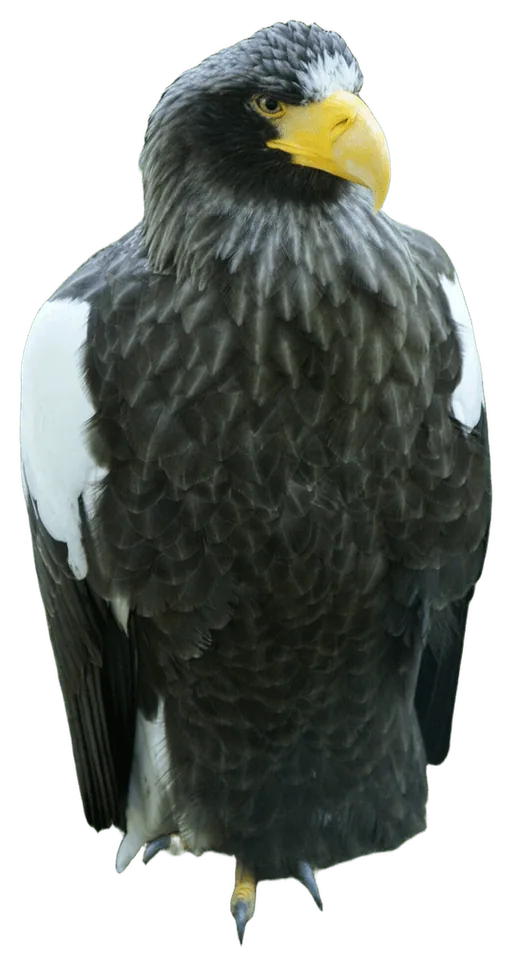
 Fight
FightPhoto: JPD115 · CC BY-SA 4.0
Steller's Sea Eagle is the heaviest eagle in the world: about 9 kg in the canonical female, with a wingspan often over 2 m and an enormous arched yellow bill. It hunts salmon, seabirds and even foxes along the cold coasts of the Sea of Okhotsk and steals fish from smaller raptors. It is powerful for a bird, but its heavy build limits agility and it has no armor.
 Attack43
  Defense24
  Agility75
  Stamina76
  Intelligence64
  Special64
 Detailed ratings
Research-backed ratings on one 0–100 scale for all 273 animals (updated 2026-09-28). How ratings work
Special abilities
Ability 1Great Arched BeakAn enormous, strongly arched yellow bill, one of the most distinctive features of any eagle, tears apart fish, birds and mammal carcasses. In a fight it adds a powerful secondary tearing weapon to the talons.
 Ability 2Salmon-River Piracy
Steller's sea eagles steal fish from smaller raptors and gather in large numbers at productive salmon rivers. This size-backed piracy lets it win food contests without a costly kill.
Unique traits
 TraitHeaviest Eagle
Usually the heaviest eagle in the world, with females averaging about 9 kg.
TraitOkhotsk Winter GathererOutside the breeding season, up to about 3,500 birds winter on Kamchatka and around 2,000 on Hokkaido, often concentrating where fish are available.
How it fights
Weapons
- The feet and talons seize prey and the enormous arched bill tears it apart. Salmon are the base of the diet in many places, but the species also takes birds (ducks, gulls, ptarmigans, capercaillies), mammals (hares, young seals, and carnivores including sable, American mink, Arctic fox and red fox) and carrion. In the northern Sea of Okhotsk, birds dominated the diet of coastal pairs (73%) and especially pairs nesting near seabird colonies (91%). Along the Amur River, summer diet was about 80% fish, 10% birds and 5% mammals. In autumn, salmon that have died after spawning become a major food for eagles wintering on inland rivers that stay unfrozen.
- This record shows a large raptor able to kill foxes and seabirds, but most of its food is fish, birds and carrion, not large mammals. Attack is therefore set below the harpy eagle's specialized mammal-killing system despite the Steller's greater mass.
 Struggles vs
- No armor; still a light-boned bird on an absolute roster.
- Heavy build and long wings reduce agility in tight spaces.
- Diet dependent on fish, especially salmon and walleye pollock, which makes it vulnerable to food shortages.
- Loses its advantage on the ground against larger terrestrial grapplers.
- Weight
- 9 kg20 lb
- Height
- No reliable measurement
- Length
- 1.05 m3.4 ft
- Top speed
- No reliable measurement
- Bite force
- No reliable measurement
- Lifespan
- 30 years
- Home biome
- Arctic
- Lifestyle
- Mostly solitary
Rated specimen: Healthy mature adult female, 9.0 kg, 105.0 cm total length and about 2.2 m wingspan.
Fun facts
- It is usually the heaviest eagle in the world; females average about 9 kg.
- The largest recorded wingspan is about 287 cm.
- It steals fish from smaller raptors.
- Near seabird colonies, birds made up about 91% of the diet of nesting pairs.
- Mammal prey has included Arctic foxes, red foxes, sable and American mink.
- Up to about 3,500 birds may winter on Kamchatka alone.
Closest rivals by power. Tap one for the full breakdown, or pick any opponent.
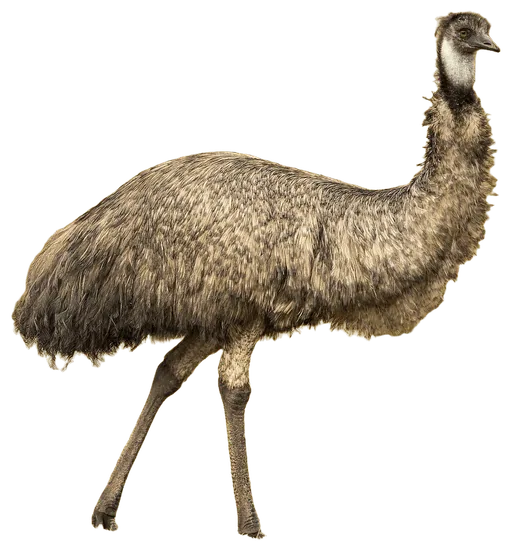
vs Philippine EagleLoses · 50% · Toss-up 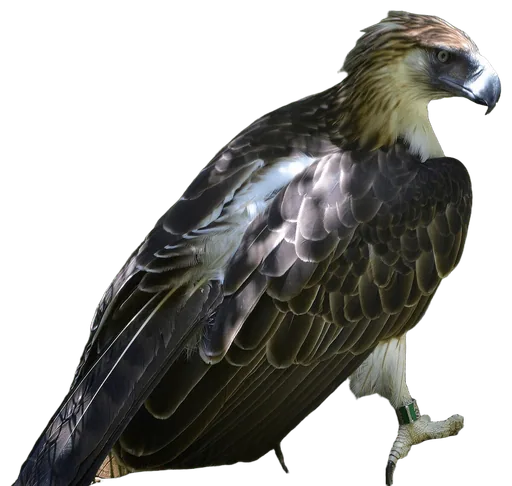 L vs EmuLoses · 50% · Toss-up
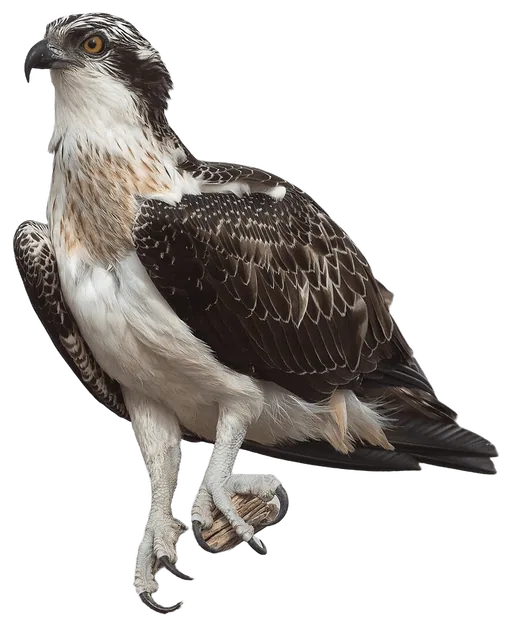
  L vs OspreyWins · 51% · Toss-up
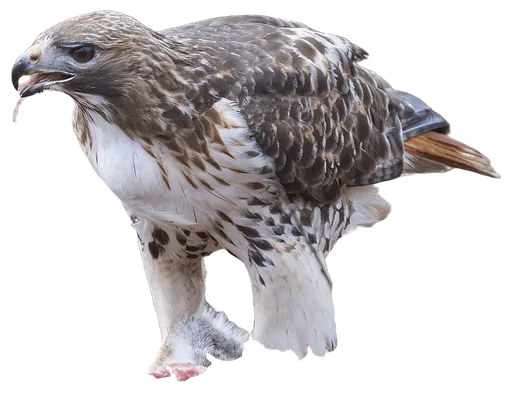
  W vs Red-tailed HawkLoses · 51% · Toss-up
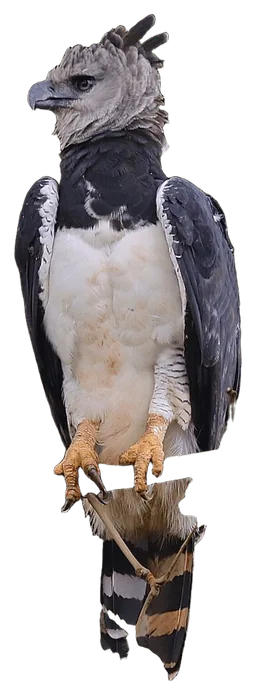
  L vs Harpy EagleLoses · 52% · Toss-up
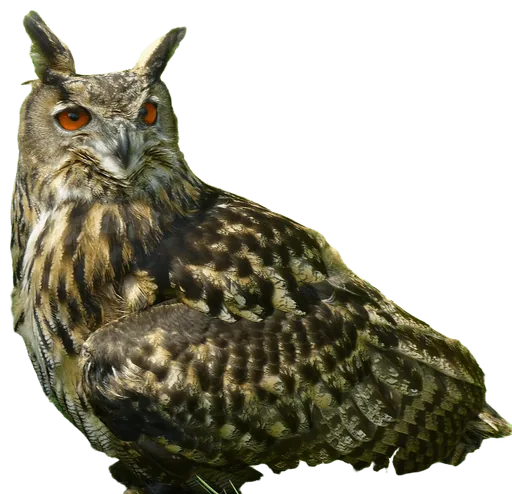
  L vs Eurasian Eagle-OwlWins · 52% · Toss-up
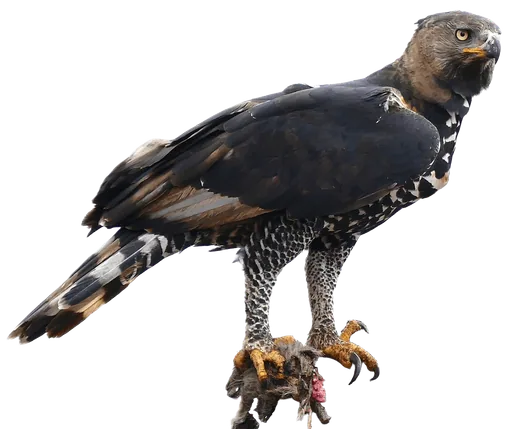
  W vs Crowned EagleWins · 52% · Toss-up
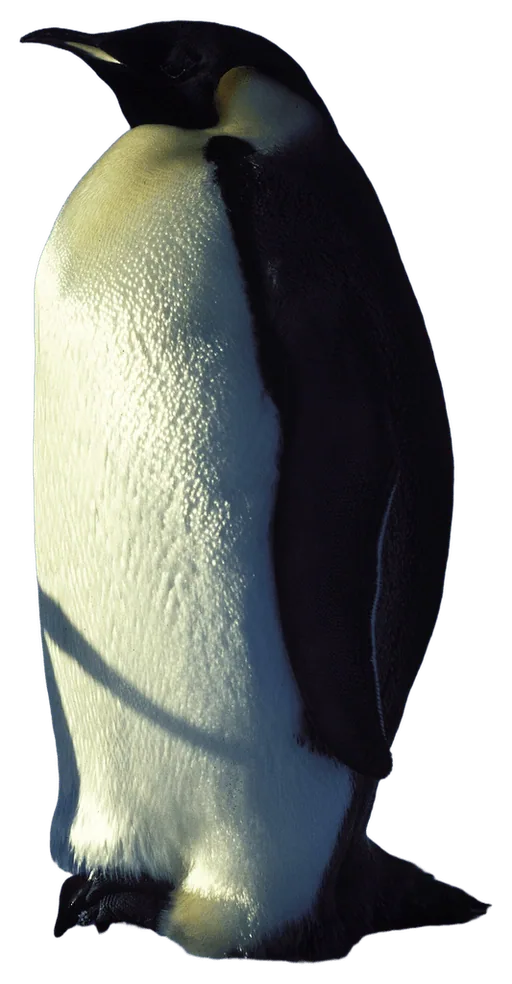
  W vs Emperor PenguinLoses · 52% · Toss-up
  L
L  Pick any opponent
 Steller's Sea Eagle battle analysis
Steller's Sea Eagle is a heavyweight of the northern Pacific coast. Females average around 9 kg and carry a bill so large and arched it dominates the bird's silhouette. The species eats what its cold coastline provides: salmon on their spawning runs, walleye pollock, gulls, ducks and seabirds from colonies, hares, young seals, and occasionally carnivores as capable as foxes and sable.
Its combat style reflects that life. It is less a precision forest ambusher than a powerful, opportunistic coastal predator that can kill, scavenge and steal. On a salmon river its size lets it take fish from smaller raptors, and its long wings carry it between breeding coasts and wintering grounds in Kamchatka and Hokkaido.
On the absolute roster it remains a bird. Its mass gives it an edge over other eagles in food contests and a little extra durability, but it has no armor, a light skeleton and heavy, less nimble flight. Against large mammals it relies on staying out of reach. Its best matchups are over water and open coast, against prey and competitors smaller than itself.
Habitat & range
The species breeds along coasts and river valleys around the Sea of Okhotsk, on the Kamchatka Peninsula and along the lower Amur and Sakhalin. In the northern Sea of Okhotsk, about 70% of nests were found along sea coasts and the rest along rivers. In winter many birds move to Kamchatka and south to Hokkaido, with smaller numbers reaching Korea and China.
Diet & hunting
It is a top avian predator and scavenger of northern Pacific coasts. The diet centers on fish, especially Pacific salmon and walleye pollock, plus birds, mammals and carrion. The balance shifts by place and season: coastal pairs near seabird colonies eat mostly birds; Amur pairs eat mostly fish in summer; in Kamchatka, ducks and gulls can make up 50–70% of nestling food before salmon arrive; and dead salmon after spawning feed many wintering birds.
Social life
Adults are solitary and territorial when breeding but gather in large numbers where food is concentrated, especially on salmon rivers and in winter.
Conservation
The species is listed as Vulnerable, with a decreasing population. Published estimates put mature individuals at roughly 3,500–4,670 (about 4,600–7,000 birds in total). Threats include coastal, oil and gas, and hydroelectric development; pesticides; competition with fisheries (walleye pollock stocks have been reduced by overfishing); felling of tall nest trees; direct persecution; and lead poisoning after scavenging deer carcasses shot with lead ammunition in Japan. It is protected in Russia, Japan, South Korea and China.
Quick answers
How strong is a Steller's Sea Eagle?
On the Animal Battle Stats scale, the Steller's Sea Eagle has an attack rating of 43 and a power index of 51.6 out of 100, which ranks it #133 of 273 animals and puts it in C tier (Capable). Its strongest stat is stamina (76).
How much does a Steller's Sea Eagle weigh?
A typical adult Steller's Sea Eagle weighs about 9 kg (20 lb). Rated specimen: healthy mature adult female, 9.0 kg, 105.0 cm total length and about 2.2 m wingspan.
How fast is a Steller's Sea Eagle?
There is no reliable measured top speed for the Steller's Sea Eagle, so we do not publish one. Its agility rating, which covers acceleration, reflexes and evasion, is 75 out of 100.
What does a Steller's Sea Eagle eat?
It is a top avian predator and scavenger of northern Pacific coasts. The diet centers on fish, especially Pacific salmon and walleye pollock, plus birds, mammals and carrion. The balance shifts by place and season: coastal pairs near seabird colonies eat mostly birds; Amur pairs eat mostly fish in summer; in Kamchatka, ducks and gulls can make up 50–70% of nestling food before salmon arrive; and dead salmon after spawning feed many wintering birds.
Is the Steller's Sea Eagle endangered?
The Steller's Sea Eagle's conservation status is Vulnerable. The species is listed as Vulnerable, with a decreasing population. Published estimates put mature individuals at roughly 3,500–4,670 (about 4,600–7,000 birds in total). Threats include coastal, oil and gas, and hydroelectric development; pesticides; competition with fisheries (walleye pollock stocks have been reduced by overfishing); felling of tall nest trees; direct persecution; and lead poisoni
What animals can beat a Steller's Sea Eagle?
Among its closest rivals, the Philippine Eagle (50%), the Emu (50%), the Red-tailed Hawk (51%), the Harpy Eagle (52%), the Emperor Penguin (52%) would be favored against the Steller's Sea Eagle. It would be favored against the Osprey, the Eurasian Eagle-Owl, the Crowned Eagle.
Researched 2026-09-28. Ratings are editorial judgments built from these sources; measurements describe a healthy adult female.
- Animal Diversity Web, Haliaeetus pelagicusmass, plumage, range, behavior, protection
- San Diego Zoo Wildlife Alliance, Steller's sea-eaglesize ranking, bill, kleptoparasitism
- BirdLife DataZone factsheetstatus, population, threats
- Wild Bird Society of Japan, diet of Steller's sea eagle in the northern Sea of Okhotskdiet composition
- Steller's sea eagle monitoring, northern Sea of Okhotsk (Potapov, Utekhina et al.)nesting habitat, productivity
- Utekhina 1994, Journal of Raptor Research abstractproductivity
- Saito, lead poisoning of Steller's sea-eagle (Peregrine Fund conference paper)lead poisoning threat
- Foraging habitats of Steller's sea-eagles during winter, Journal of Raptor Researchwintering ecology
- Wikipedia, Steller's sea eaglesex-specific mass, wingspan, wintering counts, mammal prey, productivity decline
- National Geographic, Steller's sea eaglegeneral profile
- National Wildlife Federation, The Secret Lives of Sea Eaglesgeneral ecology
- Commons, Steller's sea eagle side viewimage candidate
Photo: “Pygargue empereur.jpg” by JPD115, CC BY-SA 4.0, background removed and cropped. Original
Suggest a correction