
Stag Beetle
Lucanus cervusF tier · Snack29th of 30 bugs & spiders
Size & speed
- Weight
- 2.5 g0.1 oz
- Length
- 6 cm2.4 in
As heavy as 2.5 paperclips
Heavier than 3% of animalsAbout 0.7 credit cards long
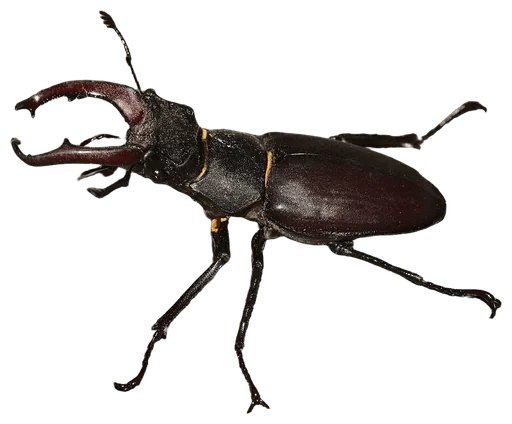
Bigger than 4% of animalsEurope's largest beetle, the stag beetle is famous for the male's antler-like mandibles, used to lift rivals and throw them off branches. It spends years underground as a larva and only weeks as an adult, and at about 2.5 g its fighting power is negligible outside the insect world.
Detailed ratings
Research-backed ratings on one 0–100 scale for all 344 animals (updated 2026-09-28). How ratings work


Card No. 343 of 344. Every animal on Animal Battle Stats has one: its power, tier and archetype on the front; its six battle stats, abilities and signature move on the back.
Special abilities
Males seize a rival with their enlarged mandibles, lift it off the bark and drop or throw it off the branch, winning without needing to wound.
The elytra flex with a snap-through that absorbs impact energy and springs back, and resist a needle puncture of about 1.8 N, protecting the beetle during fights and falls.
Unique traits
It spends three to seven years as a blind, C-shaped larva eating rotting wood below ground, then only a few weeks as a winged adult.
Small males with modest mandibles and large males with huge ones follow different strategies: big males win ground fights, while small males win more often in mid-air mating swarms.
How it fights
Weapons
- The male's weapons are its mandibles, used almost only against other males. Fighting males grab a rival with the mandibles, lift it and throw it off the log or branch (Wikipedia; Redolfi De Zan et al.). Measured bites average 6.39 N with a maximum of 20.19 N, strong for a 2.5 g insect but tiny in absolute terms. Wikipedia notes that the male's mandibles are too weak to harm a person, while females can give a painful bite.
Struggles vs
- Negligible absolute mass and power.
- Adults cannot refuel on solid food.
- Slow, clumsy flight and exposed ground behaviour make it easy prey for crows, magpies, cats, foxes and badgers.
- The exoskeleton protects against small pinches and punctures, not against a bird's beak or a mammal's bite.
- Weight
- 2.5 g0.1 oz
- Height
- No reliable measurement
- Length
- 6 cm2.4 in
- Top speed
- No reliable measurement
- Bite force
- No reliable measurement
- Lifespan
- 4 years
- Home biome
- Forest
- Lifestyle
- Social
Rated specimen: Healthy adult major male, 6.0 cm long including its antler-like mandibles and about 2.5 g, in the upper half of the 35–75 mm male range.
Fun facts
- Both the scientific name cervus ("deer") and the common name come from the male's antler-like mandibles.
- A fully grown larva can be 11 cm long, longer than the adult beetle.
- Small males catch females in mid-air in swarms of 10–30 males flying up to 16 m above the ground.
- Female stag beetles, with their small jaws, give a more painful bite than the big-jawed males.
- Males warm their flight muscles above 30 °C before take-off.
- Larvae "talk" by rubbing combs on their legs.
Closest rivals by power. Tap one for the full breakdown, or pick any opponent.
vs Army AntWins · 78% · Clear edge  W vs Titan BeetleLoses · 66% · Slight edge
 L vs MosquitoWins · 83% · Clear edge
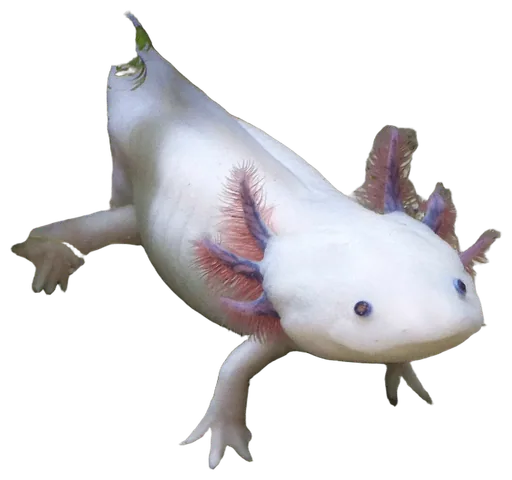
 W vs AxolotlLoses · 74% · Clear edge
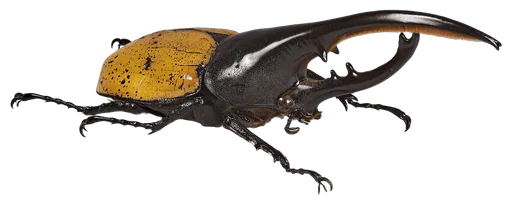
 L vs Hercules BeetleLoses · 69% · Slight edge
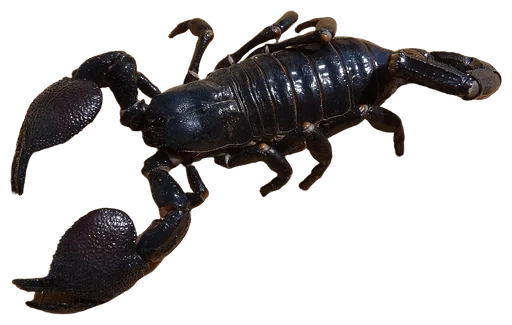
 L vs Emperor ScorpionLoses · 72% · Clear edge
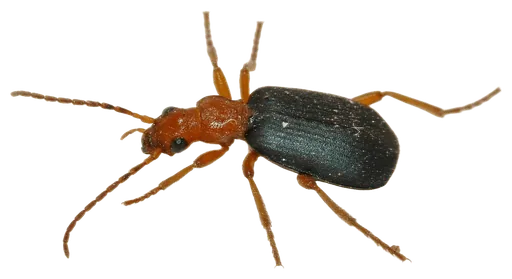
 L vs Bombardier BeetleWins · 68% · Slight edge
 W vs Guinea PigLoses · 84% · Clear edge
 L
Stag Beetle battle analysis
The European stag beetle lives most of its life out of sight. For three to seven years it is a fat, cream-coloured grub chewing rotting wood underground, growing to 11 cm. Then, in a fist-sized chamber in the soil, it turns into the beetle everyone recognises: glossy black and chestnut, with the male's huge reddish jaws branching like a deer's antlers.
Adult life is short and busy. On warm summer evenings males warm up their flight muscles and take off on slow, buzzing flights in search of females. Where females gather, big males wrestle on logs, gripping rivals in their jaws, lifting them and throwing them off, while small males often do better by catching females in mid-air swarms. The contests are mostly shows of strength: males size each other up and the weaker one usually backs off before anyone is hurt.
In an Animal Battle Stats matchup, the stag beetle is an impressive insect wrestler but a tiny animal. Its bite of a few newtons cannot hurt a person, its armor protects it only against other insects, and crows, magpies, cats and foxes eat it readily. It belongs near the floor of the roster, alongside the other large beetles.
Habitat & range
Widespread across Europe, absent from Ireland, and found east to the Caucasus, Asia Minor, Syria and western Kazakhstan. In Britain it is mostly confined to south-east England. It lives in old broadleaf woodland, parks, hedgerows and gardens with rotting wood, especially oak, and is linked with lime, beech, willow, poplar, ash, horse chestnut, cherry and walnut.
Diet & hunting
Larvae eat decaying wood below ground, in stumps, old trees, fence posts, compost heaps and leaf mould. Adults drink sap, nectar and juice from fallen fruit and otherwise live on fat stored as larvae. It is a flagship species for dead-wood conservation, since its larvae depend on buried, rotting broadleaf wood.
Social life
Adults are not social, but males gather around females in small fighting groups on the ground or in flying swarms. Males are more active flyers than females; genetic data suggest that longer-term dispersal is mainly by females.
Conservation
Listed as Near Threatened in the IUCN Red List European assessment (2010), because it is declining in the north and centre of its range. It is on Annex II of the EU Habitats Directive, Appendix III of the Bern Convention and Schedule 5 of the UK Wildlife and Countryside Act. It has disappeared from Latvia, vanished from Denmark around 1970 and was reintroduced there in 2013. Main threats are the tidying away of dead wood and stumps, loss of old trees and road traffic.
Quick answers
How strong is a Stag Beetle?
On the Animal Battle Stats scale, the Stag Beetle has an attack rating of 6 and a power index of 20.7 out of 100, which ranks it #343 of 344 animals and puts it in F tier (Snack). Its strongest stat is special (50).
How much does a Stag Beetle weigh?
A typical adult Stag Beetle weighs about 2.5 g (0.1 oz). Rated specimen: healthy adult major male, 6.0 cm long including its antler-like mandibles and about 2.5 g, in the upper half of the 35–75 mm male range.
How fast is a Stag Beetle?
There is no reliable measured top speed for the Stag Beetle, so we do not publish one. Its agility rating, which covers acceleration, reflexes and evasion, is 40 out of 100.
What does a Stag Beetle eat?
Larvae eat decaying wood below ground, in stumps, old trees, fence posts, compost heaps and leaf mould. Adults drink sap, nectar and juice from fallen fruit and otherwise live on fat stored as larvae. It is a flagship species for dead-wood conservation, since its larvae depend on buried, rotting broadleaf wood.
Is the Stag Beetle endangered?
The Stag Beetle's conservation status is Near Threatened. Listed as Near Threatened in the IUCN Red List European assessment (2010), because it is declining in the north and centre of its range. It is on Annex II of the EU Habitats Directive, Appendix III of the Bern Convention and Schedule 5 of the UK Wildlife and Countryside Act. It has disappeared from Latvia, vanished from Denmark around 1970 and was reintroduced there in 2013. Main threats are the t
What animals can beat a Stag Beetle?
Among its closest rivals, the Titan Beetle (66%), the Axolotl (74%), the Hercules Beetle (69%), the Emperor Scorpion (72%), the Guinea Pig (84%) would be favored against the Stag Beetle. It would be favored against the Army Ant, the Mosquito, the Bombardier Beetle.
Researched 2026-09-28. Ratings are editorial judgments built from these sources; measurements describe a healthy adult male.
- Wikipedia, Lucanus cervussize, dimorphism, bite to humans, range, life cycle, fighting, predators, conservation
- Wikipedia (German), Hirschkäfersize, larval duration, egg numbers, pupal chamber, Insect of the Year
- People's Trust for Endangered Species, stag beetleslength, larva size, life cycle, adult diet
- Giannetti et al. 2024, Scientific Reportsfighting, flight swarms, bite vs mandible size
- Redolfi De Zan, Carpaneto and Romiti, Research Square preprintbite and grip strength, contest behaviour
- Kundanati, Guarino and Pugno 2019, Insectsarmor mechanics
- Passive thermal responses in beetles, Journal of Experimental Biology 2026body mass, elytra thickness
- Giannetti et al. 2026, Journal of Insect Physiologyflight warm-up, activity time
- Romiti et al. 2015, Journal of Morphologymale forms, survival, predation
- Cox et al. 2020, Ecology and Evolutiondispersal
- Goyens et al. 2015, Journal of the Royal Society Interfacecontext for weapon costs
Photo: “20200529 Lucanus cervus 02.jpg” by Flocci Nivis, CC BY 4.0, background removed and cropped. Original
Suggest a correction