

Sperm Whale
Physeter macrocephalus
 #3 of 273
  Ocean Titan Vulnerable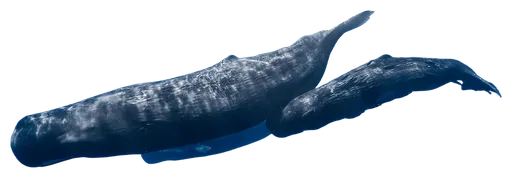
 Fight
FightPhoto: Gabriel Barathieu · CC BY-SA 2.0
The largest toothed predator alive, a bull sperm whale combines a 35-tonne body, a battering-ram forehead and the loudest biosonar on Earth. It hunts squid in the dark a kilometre down on hour-long dives, but its slow routine swimming and narrow grasping jaw make it more of an unstoppable heavyweight than a fast killer.
 Attack90
  Defense90
  Agility47
  Stamina94
  Intelligence86
  Special94
 Detailed ratings
Research-backed ratings on one 0–100 scale for all 273 animals (updated 2026-09-28). How ratings work
Special abilities
Ability 1Abyssal Sonar ClickClicks of up to 236 dB re 1 µPa (rms), the loudest biological sound recorded, scan the dark water through about 81% of every dive and shift into a rapid buzz to lock onto prey. In a battle it finds and tracks opponents in complete darkness at long range.
 Ability 2Battering-Ram Forehead
The spermaceti organ and junk make up to a quarter of body mass, and internal partitions reduce skull stress on impact. A charging bull turns tens of tonnes of momentum into a head strike built to absorb its own recoil.
Unique traits
 TraitHour-Long Deep Diver
Average 45-minute foraging dives to several hundred metres to about a kilometre, with only 9-minute breaks, repeated through most of the day.
TraitClan Coda CultureSperm whales belong to vocal clans marked by distinct click-pattern dialects that act as symbolic identity signals, and family units close ranks into a defensive rosette under attack.
How it fights
Weapons
- The sperm whale has two distinct offensive systems. The first is its mass and forehead: a 35-tonne bull whose head holds up to a quarter of its body mass in the spermaceti organ and junk. Panagiotopoulou et al. (2016) modelled the forehead and found that its internal connective-tissue partitions reduce skull stress on impact, supporting the long-standing idea that males ram each other. The second is the lower jaw, a long narrow bar with 18–28 conical teeth per side that closes into sockets in the toothless upper jaw. That jaw is built to seize squid, fish, sharks and skates, not to shear chunks from large animals the way an orca or great white shark does.
- In practice this makes the sperm whale devastating in collision and dangerous at the jaw, but less efficient at killing a large, mobile opponent than the roster's specialist macropredators. Its weapons are powerful but slow to deliver.
 Struggles vs
- Must surface to breathe; a long engagement at the surface removes its depth advantage.
- Slow routine swimming and a very large turning radius.
- Narrow lower-jaw bite is poor for cutting large opponents.
- Coordinated pack attack can isolate and wear down an individual, as orcas have shown.
- Useless in any shallow-water or land setting; strandings are often fatal.
- Weight
- 35 t38.6 US tons
- Height
- No reliable measurement
- Length
- 15 m49.2 ft
- Top speed
- No reliable measurement
- Bite force
- No reliable measurement
- Lifespan
- 60 years
- Home biome
- Ocean
- Lifestyle
- Social
Rated specimen: Healthy mature adult male, 35,000 kg and 15.0 m long, representing a large bull below NOAA's stated male maximum of 52 ft (15.9 m) and 45 tons (40,823 kg).
Fun facts
- Their clicks reach up to 236 dB re 1 µPa, the loudest sound measured from any animal.
- The forehead oil compartments can make up about a quarter of the whole whale's mass.
- A typical foraging dive lasts about 45 minutes, with only about 9 minutes at the surface in between.
- Sperm whales spend more than 72% of their time in foraging dive cycles.
- Different clans use different click-pattern "dialects", and clans exaggerate the differences where they meet.
- Males are about three times heavier than females: up to 45 tons against 15 tons.
Closest rivals by power. Tap one for the full breakdown, or pick any opponent.
vs African ElephantWins · 55% · Toss-up 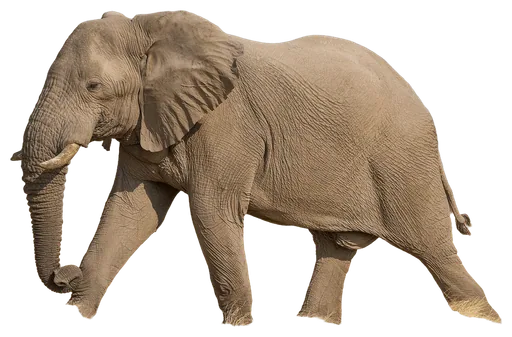 W vs MegalodonLoses · 55% · Toss-up
 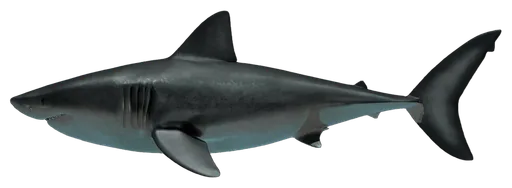 L vs Asian ElephantWins · 58% · Slight edge
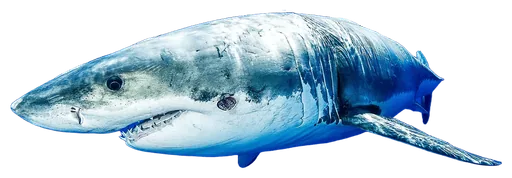
 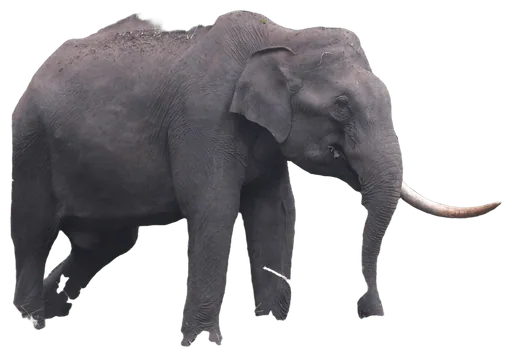 W vs Great White SharkWins · 57% · Toss-up
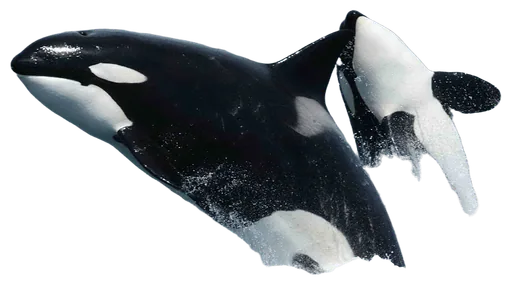
  W vs OrcaLoses · 57% · Toss-up
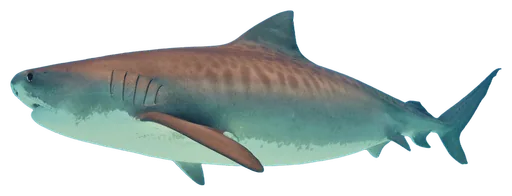
  L vs Tiger SharkWins · 60% · Slight edge
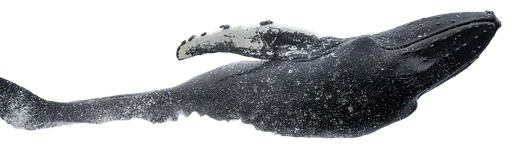
  W vs Humpback WhaleWins · 63% · Slight edge
  W vs Polar BearWins · 64% · Slight edge
  W
W  Pick any opponent
 Sperm Whale battle analysis
The sperm whale is built around the deep. A mature bull weighs tens of tonnes and a large part of that mass sits in its enormous square head, which holds the spermaceti organ and junk. Those oil-filled compartments shape and focus the whale's clicks into a beam of sound so intense that no recorded animal matches it. With that beam the whale searches black water hundreds of metres down, then accelerates into a rapid buzz as it closes on a squid.
In a battle, those same traits make it a heavyweight with strange strengths. The head is not only an acoustic lens: modelling shows its internal partitions reduce the stress of an impact, fitting reports and theory that males ram one another. A charging bull brings a mass several times greater than any orca and a skull built to take its own hit. Its jaw, lined with heavy conical teeth, can seize and hold but is not designed to carve up large prey, and its routine swimming is slow. Against a small, fast opponent it may struggle to land its strike; against anything that has to absorb one, the outcome is grim.
Its deepest advantage is endurance. Where most air-breathing hunters manage a few minutes underwater, the sperm whale repeats 45-minute dives through most of the day. Add large-brained clan cultures, coordinated defense against orcas and a sensory system that works in total darkness, and it becomes one of the most complete giants in the ocean: formidable in almost any open-water matchup, vulnerable mainly to coordinated packs and to any setting that removes the deep.
Habitat & range
Sperm whales live in deep water in every ocean, typically beyond the continental shelf and along slopes and canyons where deep squid concentrate. Females and young stay mainly in warmer tropical and subtropical waters; mature males range much farther toward polar seas and return to lower latitudes to breed.
Diet & hunting
The diet is dominated by deep-water squid, including giant and colossal squid, with sharks, skates and fish also taken (NOAA). An adult eats about 3–3.5% of its body mass per day. Sperm whales are major predators of the deep sea, and their stomach contents have been one of the main sources of knowledge about giant squid, whose beaks accumulate inside them.
Social life
Females and young form long-lasting social units that babysit calves at the surface while mothers dive. Units belong to larger vocal clans defined by shared coda dialects, a form of culture documented across the Pacific (Hersh et al. 2022). Mature males leave the family units and live alone or in small bachelor groups.
Conservation
The sperm whale is listed as Vulnerable on the IUCN Red List (Taylor et al. 2019 assessment). Commercial whaling removed very large numbers historically; current threats include ship strikes, entanglement, ocean noise, pollution and ingestion of marine debris. It is protected under the US Endangered Species Act and Marine Mammal Protection Act (NOAA).
Quick answers
How strong is a Sperm Whale?
On the Animal Battle Stats scale, the Sperm Whale has an attack rating of 90 and a power index of 83.8 out of 100, which ranks it #3 of 273 animals and puts it in S tier (Apex). Its strongest stat is stamina (94).
How much does a Sperm Whale weigh?
A typical adult Sperm Whale weighs about 35 t (38.6 US tons). Rated specimen: healthy mature adult male, 35,000 kg and 15.0 m long, representing a large bull below NOAA's stated male maximum of 52 ft (15.9 m) and 45 tons (40,823 kg).
How fast is a Sperm Whale?
There is no reliable measured top speed for the Sperm Whale, so we do not publish one. Its agility rating, which covers acceleration, reflexes and evasion, is 47 out of 100.
What does a Sperm Whale eat?
The diet is dominated by deep-water squid, including giant and colossal squid, with sharks, skates and fish also taken (NOAA). An adult eats about 3–3.5% of its body mass per day. Sperm whales are major predators of the deep sea, and their stomach contents have been one of the main sources of knowledge about giant squid, whose beaks accumulate inside them.
Is the Sperm Whale endangered?
The Sperm Whale's conservation status is Vulnerable. The sperm whale is listed as Vulnerable on the IUCN Red List (Taylor et al. 2019 assessment). Commercial whaling removed very large numbers historically; current threats include ship strikes, entanglement, ocean noise, pollution and ingestion of marine debris. It is protected under the US Endangered Species Act and Marine Mammal Protection Act (NOAA).
What animals can beat a Sperm Whale?
Among its closest rivals, the Megalodon (55%), the Orca (57%) would be favored against the Sperm Whale. It would be favored against the African Elephant, the Asian Elephant, the Great White Shark, the Tiger Shark, the Humpback Whale, the Polar Bear.
Researched 2026-09-28. Ratings are editorial judgments built from these sources; measurements describe a healthy adult male.
- NOAA Fisheries, Sperm Whale species pagemass, length, dimorphism, diet, maturity, protection
- NOAA Fisheries, Sperm Whale science pagelifespan context
- Animal Diversity Web, Physeter catodondentition
- UWI Online Guide to the Animals of Trinidad and Tobago, sperm whalebrain mass
- Watwood et al. 2006, Journal of Animal Ecologyendurance, dive depth, click use
- Irvine et al. 2017, Ecology and Evolutionlong-duration dive records
- Aoki et al. 2007, Measurement of swimming speed in sperm whalesroutine speed
- Aoki et al., Active hunting by deep-diving sperm whalesburst swimming and turning
- Fais et al. 2016, Scientific Reportshunting mechanics
- Møhl et al. 2003, JASAbiosonar power
- Panagiotopoulou et al. 2016, PeerJforehead as ram
- Pitman et al. 2001, Marine Mammal Scienceorca predation and group defense
- LAJAM, sperm whale harassment by killer whales, western South Atlanticorca interactions elsewhere
- Hersh et al. 2022, PNASclan culture, symbolic codas
- Oregon State University news on clan codasclan culture summary
- IUCN SSC Cetacean Specialist Groupconservation status
Photo: “Sperm whale pod.jpg” by Gabriel Barathieu, CC BY-SA 2.0, background removed and cropped. Original
Suggest a correction