
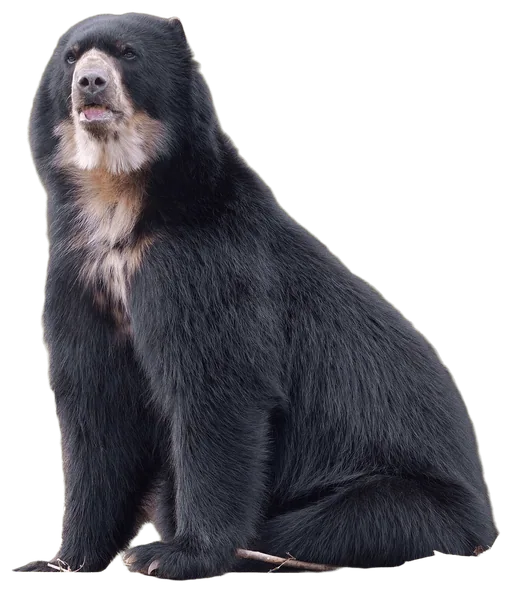
Spectacled Bear
Tremarctos ornatusB tier · Strong43rd of 163 mammals
Size & speed

- Weight
- 115 kg254 lb
- Length
- 1.65 m5.4 ft
As heavy as 1.6 people
Heavier than 74% of animalsAbout as long as a person is tall
Bigger than 66% of animalsThe spectacled bear is a strongly dimorphic Andean ursid whose prime males average around 115 kg. Curved claws, a robust skull and plant-processing jaws make it dangerous at close range, while unusually strong climbing ability lets it exploit steep forest and trees better than most bears. Its ABS profile emphasizes balanced ursid strength and terrain mobility rather than exaggerated predator ferocity.
Detailed ratings
Research-backed ratings on one 0–100 scale for all 344 animals (updated 2026-09-27). How ratings work


Card No. 72 of 344. Every animal on Animal Battle Stats has one: its power, tier and archetype on the front; its six battle stats, abilities and signature move on the back.
Special abilities
Powerful forelimbs, curved claws, ankle mobility and strong climbing behavior let a large male reposition vertically and exploit steep substrates.
A wide dense skull, enlarged molars and relatively large zygomaticomandibularis support tough-plant processing and a stout close-range bite, grounded in the 607.52 N canine-tip force rather than fabricated PSI.
Unique traits
The bear breaks and arranges branches into arboreal feeding/resting platforms.
Cream facial, throat and chest markings vary strongly among individuals; some bears lack a complete eye-ring pattern.
How it fights
Weapons
- The close-range system is forelimb/claw control plus biting. A 115 kg male can grapple, rake or swat with powerful forequarters and curved claws, then bite at clinch distance. The measured/modelled canine-tip force is meaningful but moderate for a bear. This is not a pursuit predator, so the same musculature used to climb and tear fibrous plants should not be mistaken for specialized macropredatory killing performance.
Struggles vs
- Moderate size by bear standards.
- No armor, venom, chemical weapon or exceptional verified sprint system.
- Bite is not exceptional among bears.
- Mostly herbivorous ecology means less routine killing practice than large felids.
- Climbing skill must not be double-counted as raw power.
- Weight
- 115 kg254 lb
- Height
- 80 cm31.5 in
- Length
- 1.65 m5.4 ft
- Top speed
- No reliable measurement
- Bite force
- No reliable measurement
- Lifespan
- 20 years
- Home biome
- Mountains
- Lifestyle
- Social
Rated specimen: Cuvier, 1825), Ursidae - Living/extinct: Living - Canonical fighter: healthy prime adult male, 115.
Fun facts
- It is the only living bear species native to South America.
- It is the sole living species of the genus Tremarctos.
- Facial markings can help distinguish individuals.
- Some individuals do not have complete "spectacles."
- Bears build branch platforms in trees for feeding and resting.
- The species occurs above 4,000 m.
Closest rivals by power. Tap one for the full breakdown, or pick any opponent.
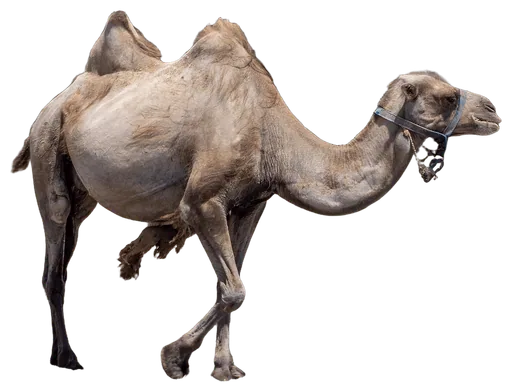
vs Black PantherWins · 54% · Toss-up 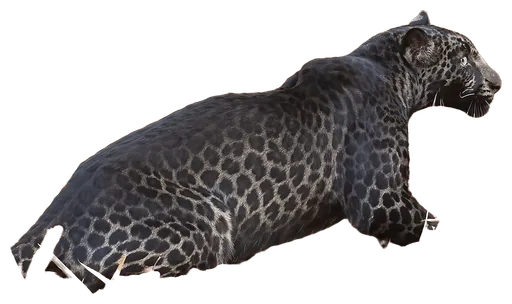 W vs Bactrian CamelLoses · 60% · Slight edge
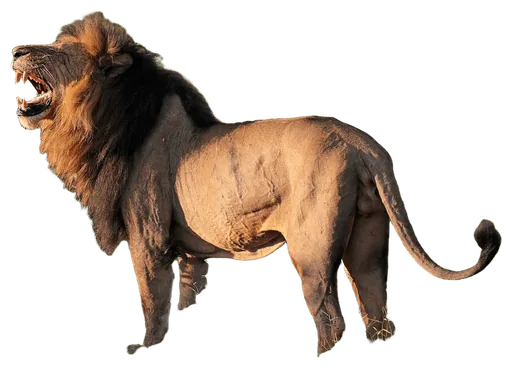
 L vs African LionLoses · 53% · Toss-up
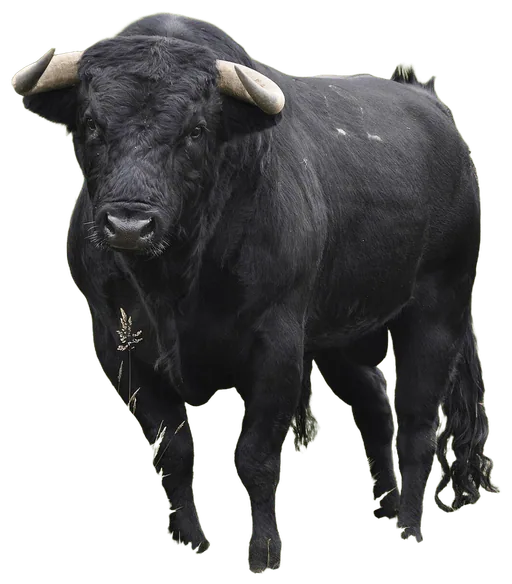
 L vs Fighting BullLoses · 58% · Slight edge
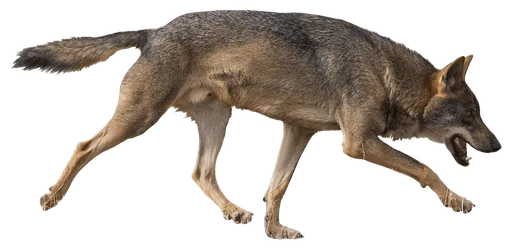
 L vs Gray WolfWins · 54% · Toss-up
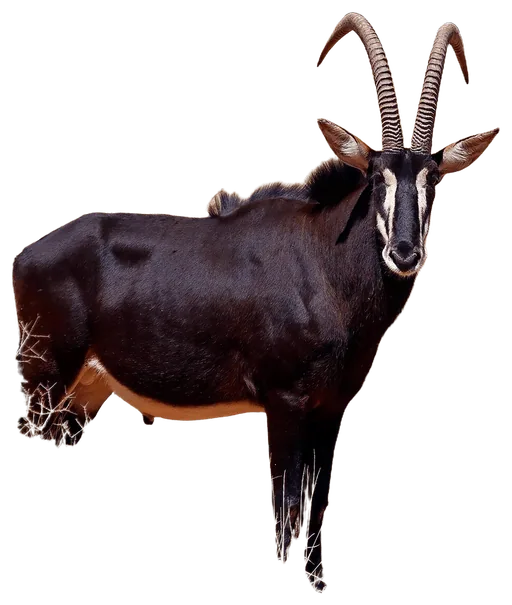
 W vs Sable AntelopeLoses · 53% · Toss-up
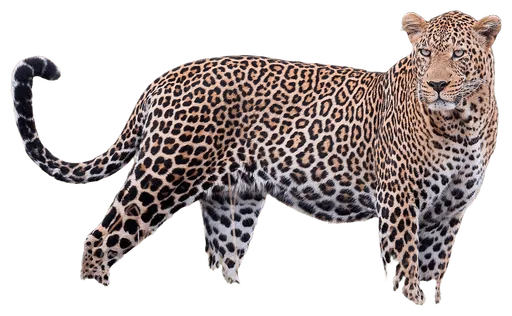
 L vs LeopardWins · 53% · Toss-up
 W vs Sloth BearLoses · 51% · Toss-up
 L
Spectacled Bear battle analysis
A spectacled bear is best understood as a mountain-climbing generalist, not a miniature brown bear and not a giant herbivore. Its combat package begins with enough mass to dominate many medium animals, then adds the leverage and grip of bear forequarters. The same curved claws used to climb trunks and dismantle bromeliads can rake or hold an opponent. A stout skull and broad chewing apparatus provide a credible bite, but the available biomechanical value is force in newtons, not PSI.
Terrain changes the matchup. On open ground, a 115 kg male has no verified exceptional sprint speed. In steep forest or trees, it becomes harder to pursue and can use climbing routes unavailable to many similarly sized opponents. This vertical competence raises Agility, while Attack remains well below dedicated large-prey killers.
The mostly vegetarian diet also matters for calibration. Powerful jaws do not automatically imply high predatory Attack. Jaw anatomy is substantially geared toward fibrous plant foods. Likewise, shy behavior is not weakness: a cornered bear remains dangerous, but normal ecology does not justify inflated Ferocity.
Habitat & range
The Andean bear is the only living bear native to South America. The 2021 Mammalian Species synthesis places it across the tropical Andes of Venezuela, Colombia, Ecuador, Peru, Bolivia and northern Argentina. It uses dry scrub, coastal dry forest, montane humid forest, cloud forest, elfin forest, oak forest, páramo and high-altitude grassland. Reported elevations extend roughly from 200 to 4,170 m.
Diet & hunting
It is among the most plant-oriented bears. The International Association for Bear Research and Management summarizes plant matter at up to about 90% of diet, with bromeliads and palms especially important and fruit used seasonally. It also consumes invertebrates, small vertebrates, carrion and occasional livestock. Smithsonian lists fruits, bromeliads, berries, grasses, bulbs, cactus flowers and small animals.
Social life
Adults are predominantly solitary except females with cubs and temporary mating associations. Aggregations can occur at concentrated food sources. Home ranges overlap. Published estimates vary greatly by site and method, including male ranges around 6.6-7.4 km² in Bolivia and much larger values in Ecuador. These should not be collapsed into one universal home-range value.
Conservation
The modern species synthesis records the Andean bear as Vulnerable, with a decreasing population. Major threats are habitat loss and fragmentation, illegal killing and human-bear conflict. The species is listed in CITES Appendix I.
Quick answers
How strong is a Spectacled Bear?
On the Animal Battle Stats scale, the Spectacled Bear has an attack rating of 62 and a power index of 60.1 out of 100, which ranks it #72 of 344 animals and puts it in B tier (Strong). Its strongest stat is agility (64).
How much does a Spectacled Bear weigh?
A typical adult Spectacled Bear weighs about 115 kg (254 lb). Rated specimen: Cuvier, 1825), Ursidae - Living/extinct: Living - Canonical fighter: healthy prime adult male, 115.
How fast is a Spectacled Bear?
There is no reliable measured top speed for the Spectacled Bear, so we do not publish one. Its agility rating, which covers acceleration, reflexes and evasion, is 64 out of 100.
What does a Spectacled Bear eat?
It is among the most plant-oriented bears. The International Association for Bear Research and Management summarizes plant matter at up to about 90% of diet, with bromeliads and palms especially important and fruit used seasonally. It also consumes invertebrates, small vertebrates, carrion and occasional livestock. Smithsonian lists fruits, bromeliads, berries, grasses, bulbs, cactus flowers and small animals.
Is the Spectacled Bear endangered?
The Spectacled Bear's conservation status is Vulnerable. The modern species synthesis records the Andean bear as Vulnerable, with a decreasing population. Major threats are habitat loss and fragmentation, illegal killing and human-bear conflict. The species is listed in CITES Appendix I.
What animals can beat a Spectacled Bear?
Among its closest rivals, the Bactrian Camel (60%), the African Lion (53%), the Fighting Bull (58%), the Sable Antelope (53%), the Sloth Bear (51%) would be favored against the Spectacled Bear. It would be favored against the Black Panther, the Gray Wolf, the Leopard.
Researched 2026-09-27. Ratings are editorial judgments built from these sources; measurements describe a healthy adult male.
- Vela-Vargas et al. 2021, Mammalian SpeciesTaxonomy, morphology, 119-174 cm length, habitat, skull, 607.52 ± 143.77 N canine-tip force, conservation
- International Association for Bear Research and ManagementDiet up to ~90% plants, home ranges, movement, conflict
- Smithsonian National ZooHabitat, diet, climbing, platforms, longevity
- Animal Diversity WebSolitary behavior, olfaction, diet, ~20 y wild estimate, 36.7 y captive record
- SIB Argentina / Parques NacionalesTaxonomy, 120-180 cm, 65-175 kg, robust legs/claws
- Commons, Sarah Stierch maleExact species, male, 3000×2250, CC0
- Commons, wild Chingaza bearExact species, wild location, 3456×5184, CC BY 4.0
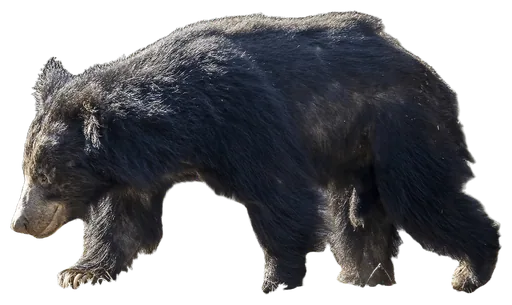
Photo: “Tremarctos ornatus in Jardim Zoológico de Curitiba.jpg” by Wilfredor, CC0, background removed and cropped. Original
Suggest a correction