
Snapping Turtle
Chelydra serpentinaC tier · Capable25th of 39 reptiles
Size & speed

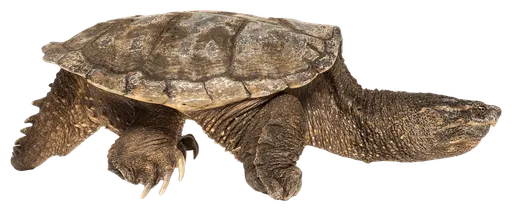
- Weight
- 12 kg26 lb
- Length
- 65 cm25.6 in
As heavy as 2.7 house cats
Heavier than 48% of animalsAbout 2.2 rulers long
Bigger than 31% of animalsThe common snapping turtle is a heavily built freshwater ambush predator whose real danger comes from a rapid long-necked beak strike backed by partial shell armor. A large adult male is tough at close range but far from invulnerable: its reduced plastron leaves the limbs and underside exposed, and its whole-body land movement is slow. Direct experiments measured bite force in newtons, so sensational PSI figures are unnecessary.
Detailed ratings
Research-backed ratings on one 0–100 scale for all 344 animals (updated 2026-09-27). How ratings work


Card No. 200 of 344. Every animal on Animal Battle Stats has one: its power, tier and archetype on the front; its six battle stats, abilities and signature move on the back.
Special abilities
The long neck launches the hooked beak beyond the shell margin in a rapid defensive or predatory strike, making apparently safe close approaches dangerous.
The turtle can settle into mud or shallow substrate with eyes and nostrils exposed, reducing its visual profile and enabling sudden attacks on passing prey.
Unique traits
The small lower shell leaves limbs and underside unusually exposed for a turtle, exchanging full withdrawal protection for a more mobile, large-headed body plan.
A long tail, approximately carapace-length, carries conspicuous dorsal tubercles and provides a distinctive stabilizing posterior structure.
How it fights
Weapons
- The snapper's practical weapon is not an exaggerated thousand-PSI crusher. It is a rapid, well-aimed beak strike from a long neck. The hooked cutting surfaces concentrate the measured force onto a small edge and can cause serious laceration. In feeding, the animal combines ambush, neck extension and jaw closure rather than chasing fast prey for long distances. USGS video at a fish-passage culvert documented snapping turtles attacking migratory river herring on 79% of approaches, with a 15% capture rate, showing opportunistic ambush behavior in a real ecological setting.
Struggles vs
- Reduced plastron and exposed limbs/neck/tail.
- Slow terrestrial repositioning despite fast local strike delivery.
- No long-reach projectile, venom or grappling apparatus.
- Ectothermic sustained-output limits.
- Bite is dangerous but far below large crocodilian absolute force.
- Weight
- 12 kg26 lb
- Height
- No reliable measurement
- Length
- 65 cm25.6 in
- Top speed
- No reliable measurement
- Bite force
- No reliable measurement
- Lifespan
- 50 years
- Home biome
- Wetlands
- Lifestyle
- Social
Rated specimen: Healthy prime mature male, 12.0 kg, approximately 32 cm straight carapace length and 65 cm approximate snout-to-tail-tip total length.
Fun facts
- Direct experimental work measured snapping-turtle bite force rather than merely estimating it from skull shape.
- A snapping turtle's tail can be about as long as its carapace.
- Long-term Canadian work suggests some wild individuals can exceed a century of age.
- The shell does not allow complete withdrawal because the plastron is unusually small.
- USGS researchers filmed snapping turtles exploiting fish concentrated at a road-stream culvert.
- In that study, migratory river herring were attacked on 79% of approaches, but only 15% of approaches resulted in capture.
Closest rivals by power. Tap one for the full breakdown, or pick any opponent.
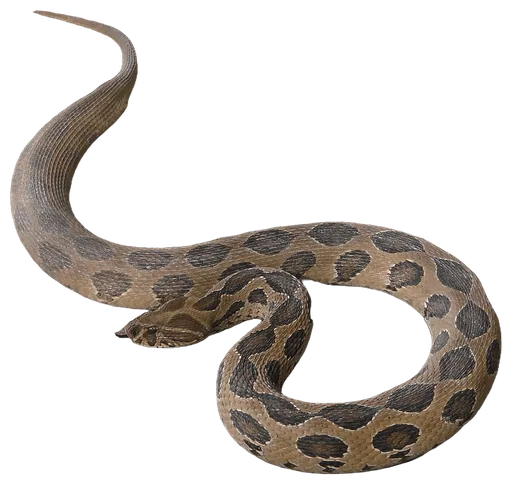
vs BushmasterWins · 55% · Toss-up 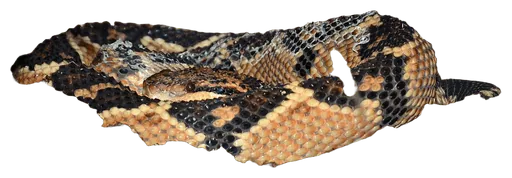 W vs Russell's ViperWins · 61% · Slight edge
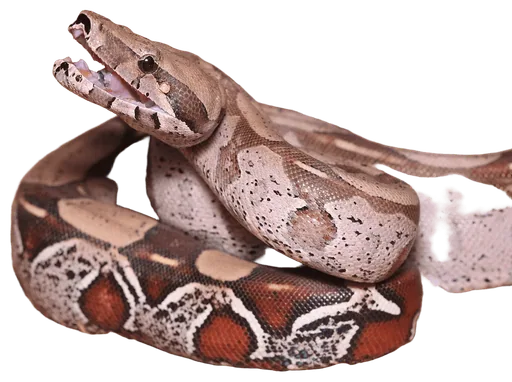
 W vs Boa ConstrictorLoses · 52% · Toss-up
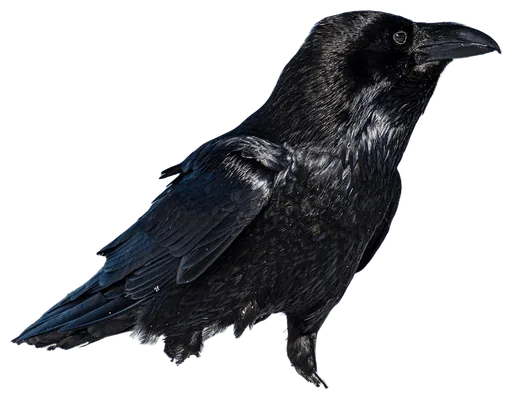
 L vs RavenWins · 63% · Slight edge
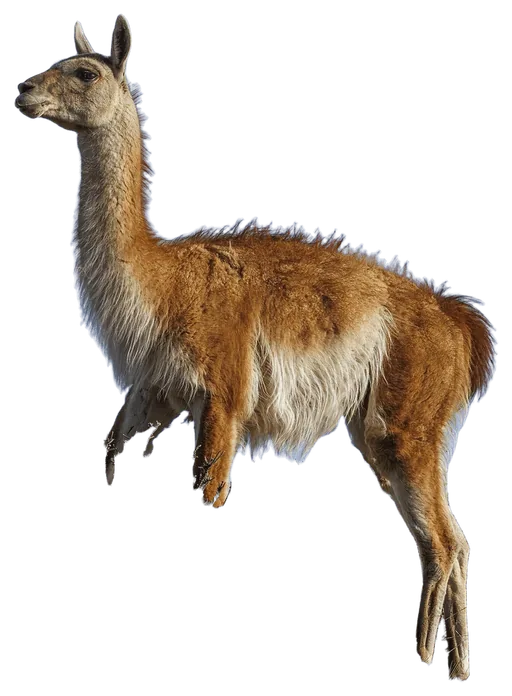
 W vs GuanacoLoses · 63% · Slight edge
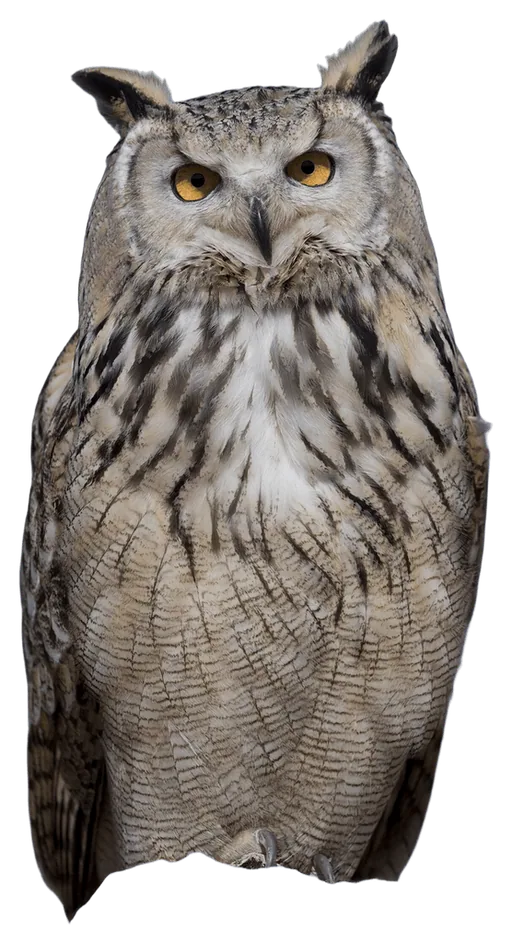
 L vs Great Horned OwlWins · 61% · Slight edge
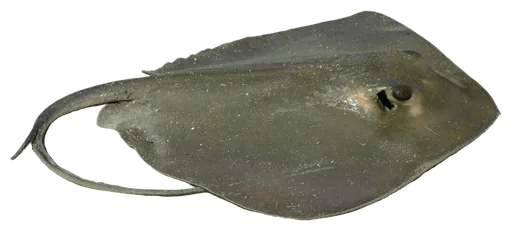
 W vs StingrayLoses · 56% · Toss-up
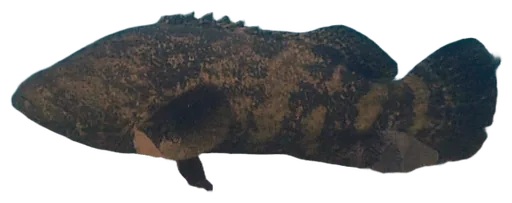
 L vs Goliath GrouperLoses · 64% · Slight edge
 L
Snapping Turtle battle analysis
A snapping turtle is best understood as a close-range defensive specialist, not a miniature crocodile. Its carapace protects the most important dorsal trunk area, but the small plastron prevents the complete armored withdrawal used by many other turtles. Instead, Chelydra serpentina keeps a large head, long neck and strong limbs exposed and answers danger with reach. The hooked beak can launch well beyond the shell edge, which makes grabbing the front half of the animal a serious mistake.
In water the turtle's battle plan is quieter. It can settle into muddy substrate, expose little more than its eyes and nostrils, and wait. Field video has shown that this strategy can be opportunistically paired with landscape structure: turtles used a culvert where migratory fish became concentrated and repeatedly attacked passing herring. This is not evidence of complex planning, but it is strong evidence that real snapping-turtle predation depends on position, concealment and timing rather than chase speed.
ABS normalization should preserve both sides of that biology. The animal deserves meaningful Protection and Ferocity because a 12 kg adult with a hard carapace and rapid beak strike is a difficult close target. It should not inherit exaggerated legacy values such as 1,000 PSI, elite agility, or near-impenetrable defense. The underside and limbs remain vulnerable, large predators dwarf it in absolute force, and ectothermy limits prolonged high-output combat.
Habitat & range
Native across a broad portion of eastern and central North America, from southern Canada through much of the United States. It occupies ponds, lakes, marshes, swamps, rivers, streams and other fresh or occasionally brackish waters, especially habitats with muddy substrate and vegetation.
Diet & hunting
A broad omnivore and scavenger. Animal prey includes fish, amphibians, invertebrates, reptiles, birds and small mammals, while aquatic vegetation can form a meaningful part of the diet. This flexibility makes the species both predator and recycler of carrion.
Social life
Primarily solitary. Social contact is concentrated around mating and aggressive encounters, especially among males. Local densities can still be high where food and habitat are favorable.
Conservation
Globally widespread and generally secure, but regional populations face wetland loss, road mortality, harvest and pollution. NatureServe currently ranks the species globally G4G5/G4, while Canadian assessments emphasize the vulnerability created by delayed maturity and long adult lifespan.
Quick answers
How strong is a Snapping Turtle?
On the Animal Battle Stats scale, the Snapping Turtle has an attack rating of 47 and a power index of 49 out of 100, which ranks it #200 of 344 animals and puts it in C tier (Capable). Its strongest stat is defense (55).
How much does a Snapping Turtle weigh?
A typical adult Snapping Turtle weighs about 12 kg (26 lb). Rated specimen: healthy prime mature male, 12.0 kg, approximately 32 cm straight carapace length and 65 cm approximate snout-to-tail-tip total length.
How fast is a Snapping Turtle?
There is no reliable measured top speed for the Snapping Turtle, so we do not publish one. Its agility rating, which covers acceleration, reflexes and evasion, is 42 out of 100.
What does a Snapping Turtle eat?
A broad omnivore and scavenger. Animal prey includes fish, amphibians, invertebrates, reptiles, birds and small mammals, while aquatic vegetation can form a meaningful part of the diet. This flexibility makes the species both predator and recycler of carrion.
What animals can beat a Snapping Turtle?
Among its closest rivals, the Boa Constrictor (52%), the Guanaco (63%), the Stingray (56%), the Goliath Grouper (64%) would be favored against the Snapping Turtle. It would be favored against the Bushmaster, the Russell's Viper, the Raven, the Great Horned Owl.
Researched 2026-09-27. Ratings are editorial judgments built from these sources; measurements describe a healthy adult male.
- Animal Diversity Webtaxonomy, mass, shell size, habitat, behavior, diet, senses
- Virginia Herpetological Societydimorphism and adult measurements
- Herrel et al., Journal of Evolutionary Biology (2002)direct bite-force measurement
- USGS / Biology Lettersambush predation
- Purdue University thesismovement/endurance
- Government of Canada COSEWIClongevity, maturity, life history
- Congdon et al., demographic studysurvival/maturity
- NatureServe Explorerconservation
- Commons / USFWS Sam Stukel white-background maleimage provenance
- Commons / USFWS mature-male walkalternate image audit
Photo: “Common Snapping Turtle white background (2).jpg” by USFWS Mountain Prairie, Public domain, background removed and cropped. Original
Suggest a correction