
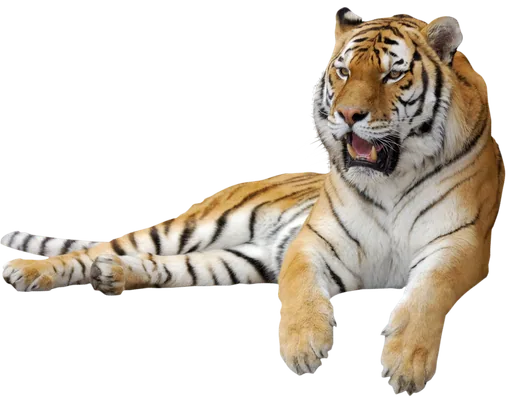
Siberian Tiger
Panthera tigris altaicaA tier · Elite13th of 163 mammals
Size & speed

- Weight
- 190 kg419 lb
- Length
- 2.9 m9.5 ft
- Top speed
- 60 km/h37 mph
As heavy as 2.7 people
Heavier than 78% of animals1.7× a person's height
Bigger than 85% of animalsFaster than Usain Bolt (44.7 km/h)
Faster than 79% of animalsThe Amur tiger is a cold-hardy, solitary heavyweight cat built around stealth, explosive acceleration and close-range control. A prime male combines roughly 190 kg of muscle with retractile claws, powerful forelimbs and a neck-targeting bite. Its attack and agility are elite among terrestrial predators, but lack of armor and burst-oriented hunting keep Defense and Stamina below the roster’s heaviest and most endurance-specialized animals.
Detailed ratings
Research-backed ratings on one 0–100 scale for all 344 animals (updated 2026-09-27). How ratings work


Card No. 21 of 344. Every animal on Animal Battle Stats has one: its power, tier and archetype on the front; its six battle stats, abilities and signature move on the back.
Special abilities
Disruptive striping, padded feet, careful stalking and strong low-light senses let the tiger close distance quietly before committing its explosive grapple. Cover and twilight materially increase first-strike probability.
Massive forelimbs, broad paws, retractile claws and dewclaws can hook and hold prey while the jaws reposition for a neck or throat bite, allowing multiple weapons to function as one control system.
Unique traits
The Amur population combines very large felid body size with thick seasonal fur, flank/belly fat and paw insulation suited to subzero forest conditions.
One animal independently locates, approaches, controls and kills prey commonly around the size of a human or larger, without pack assistance.
How it fights
Weapons
- The Amur tiger is a large grappling ambush predator. A successful attack combines explosive acceleration, a body-weight collision, forelimb hooks, retractile claws and a killing bite. Broad shoulders and forelimbs help arrest and turn ungulate prey while the hindquarters continue driving the body forward. The bite is then directed toward the throat or neck when anatomy and prey position permit.
- This combination matters more than any single internet “bite PSI” number. A tiger can repeatedly reposition its bite while maintaining contact with claws and forelimbs, giving it a multi-weapon close-range system.
Struggles vs
- No armor against tusks, horns, massive bites or crushing impacts.
- Killing system is close-range, requiring the tiger to enter the opponent’s weapon envelope.
- Burst acceleration is stronger than prolonged chase output.
- Solitary tactics offer no cooperative rescue or flanking support in the one-animal ABS baseline.
- Weight
- 190 kg419 lb
- Height
- 1.05 m3.4 ft
- Length
- 2.9 m9.5 ft
- Top speed
- 60 km/h37 mph
- Bite force
- No reliable measurement
- Lifespan
- 14 years
- Home biome
- Arctic
- Lifestyle
- Mostly solitary, nocturnal
Rated specimen: Healthy prime adult male, 190.0 kg, about 290.0 cm total nose-to-tail length and about 105.0 cm shoulder height.
Fun facts
- Amur tigers now occupy a much smaller, more easterly range than the old name “Siberian tiger” suggests.
- Individual stripe patterns are distinctive enough to aid photographic identification.
- Tigers readily swim, unlike the common stereotype that cats universally avoid water.
- Russian Far East studies repeatedly identify wild boar and deer as key prey.
- Male Amur home ranges can become enormous where prey density is low.
- The population recovered from an extremely small twentieth-century remnant after legal protection and anti-poaching work.
Closest rivals by power. Tap one for the full breakdown, or pick any opponent.
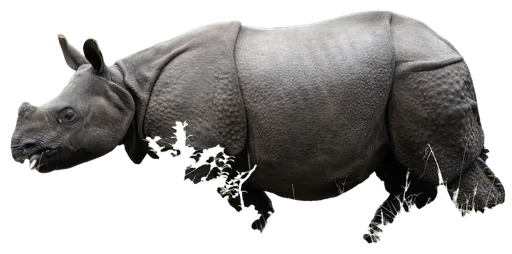
vs Bengal TigerLoses · 51% · Toss-up 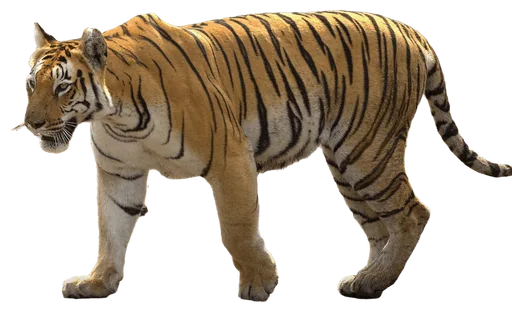 L vs Indian RhinocerosLoses · 64% · Slight edge
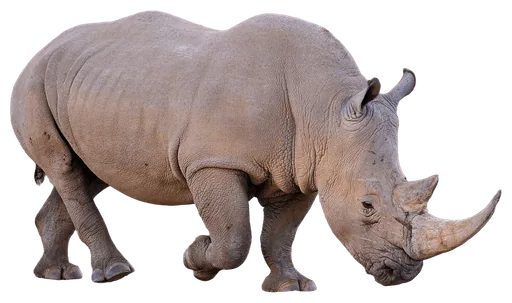
 L vs RhinocerosLoses · 65% · Slight edge
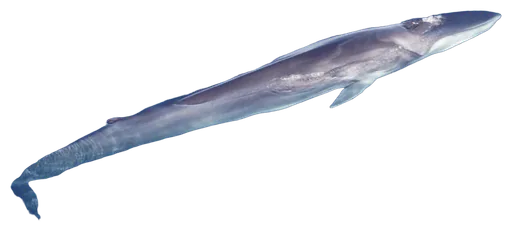
 L vs Fin WhaleLoses · 79% · Clear edge
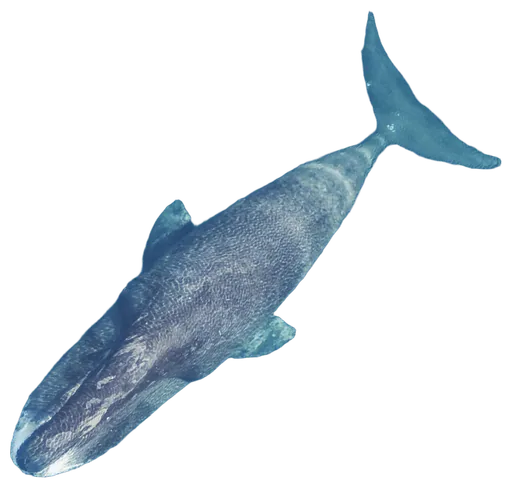
 L vs Bowhead WhaleLoses · 82% · Clear edge
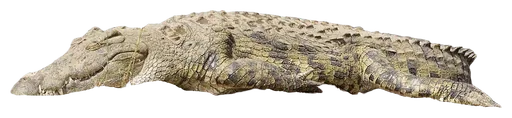
 L vs Nile CrocodileLoses · 54% · Toss-up
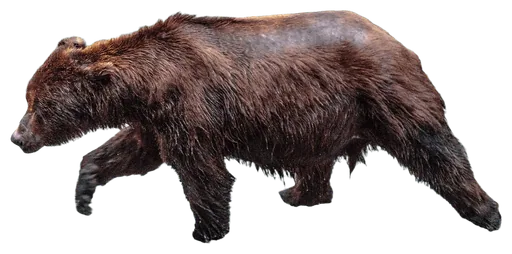
 L vs Kodiak BearLoses · 52% · Toss-up
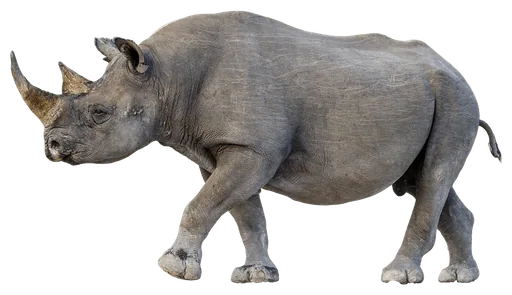
 L vs Black RhinocerosLoses · 57% · Toss-up
 L
Siberian Tiger battle analysis
An Amur tiger wins by deciding when contact begins. In broken forest it advances quietly on padded feet, using vegetation, shadow and its striped coat to reduce detection. The final attack is not simply a bite. The hindquarters accelerate nearly 200 kg of cat into the target, the forelimbs catch and destabilize it, claws preserve purchase, and the jaws search for a neck or throat position. This integration of stealth, impact, grappling and bite delivery makes the tiger much more dangerous than any one isolated measurement implies.
Its weaknesses are equally important to ABS normalization. The tiger is not armored. It must get close enough to horns, tusks, jaws or claws to use its own best weapons, and it cannot sprint indefinitely. Against smaller unarmored terrestrial opponents, that trade usually favors the tiger. Against a saltwater crocodile, rhinoceros, hippopotamus, elephant or other opponent whose armor, reach or mass changes the geometry of contact, the tiger’s superb pound-for-pound athleticism cannot erase the absolute gap.
Habitat & range
The Amur population occupies temperate forests of the Russian Far East and northeast China, especially the Sikhote-Alin region and cross-border landscapes. Its habitat includes mixed broadleaf/conifer forest, mountainous terrain and severe snowy winters. WCS reports recent growth in northeast China, while Russian and Chinese cross-border monitoring continues to refine abundance estimates.
Diet & hunting
Large ungulates are the ecological core of the diet. Wild boar, red deer, sika deer and roe deer dominate major studies. Smaller mammals and occasional bears broaden the diet, but should not distract from the central fact that viable tiger populations require abundant medium-to-large prey.
Social life
Adults are mainly solitary. Females raise cubs alone; male ranges can overlap several females. Scent marking, scratches and vocal/chemical communication reduce unnecessary encounters while maintaining territorial spacing.
Conservation
The tiger species is Endangered on the IUCN Red List. The Amur population suffered a severe twentieth-century bottleneck but recovered substantially under protection. Current estimates vary with geography, year and method. WCS reports 70 tigers within Northeast China Tiger and Leopard National Park in 2024, including animals whose territories overlap Russia. A 2025 winter-track study estimated 43–46 adults/subadults plus 12 cubs in one 5,400 km² southwest Primorye survey unit. These are regional figures, not interchangeable global totals.
Quick answers
How strong is a Siberian Tiger?
On the Animal Battle Stats scale, the Siberian Tiger has an attack rating of 84 and a power index of 71.6 out of 100, which ranks it #21 of 344 animals and puts it in A tier (Elite). Its strongest stat is attack (84).
How much does a Siberian Tiger weigh?
A typical adult Siberian Tiger weighs about 190 kg (419 lb). Rated specimen: healthy prime adult male, 190.0 kg, about 290.0 cm total nose-to-tail length and about 105.0 cm shoulder height.
How fast is a Siberian Tiger?
The Siberian Tiger's top speed is about 60 km/h (37 mph). Its agility rating is 84 out of 100.
What does a Siberian Tiger eat?
Large ungulates are the ecological core of the diet. Wild boar, red deer, sika deer and roe deer dominate major studies. Smaller mammals and occasional bears broaden the diet, but should not distract from the central fact that viable tiger populations require abundant medium-to-large prey.
Is the Siberian Tiger endangered?
The Siberian Tiger's conservation status is Endangered. The tiger species is Endangered on the IUCN Red List. The Amur population suffered a severe twentieth-century bottleneck but recovered substantially under protection. Current estimates vary with geography, year and method. WCS reports 70 tigers within Northeast China Tiger and Leopard National Park in 2024, including animals whose territories overlap Russia. A 2025 winter-track study estimated 43–
What animals can beat a Siberian Tiger?
Among its closest rivals, the Bengal Tiger (51%), the Indian Rhinoceros (64%), the Rhinoceros (65%), the Fin Whale (79%), the Bowhead Whale (82%), the Nile Crocodile (54%), the Kodiak Bear (52%), the Black Rhinoceros (57%) would be favored against the Siberian Tiger. It would be favored against none of them.
Researched 2026-09-27. Ratings are editorial judgments built from these sources; measurements describe a healthy adult male.
- IUCN SSC Cat Specialist Group, Tigertaxonomy, conservation
- Kitchener et al. 2017, CCTFtaxonomy
- Marwell Zoo, Amur Tigermale/female dimensions, ecology, range
- Smithsonian National Zoo, Tigerlifespan, range, sex dimorphism
- Oregon Zoo, Amur tigersenses, range, lifespan
- Kerley et al. 2015, Integrative Zoologydiet
- Dou et al. 2019, Wildlife Biologyprey selection
- Petrunenko et al. 2016, Oikosprey/habitat use
- Hartstone-Rose et al. 2012, Anatomical Recordbite mechanics
- SeaWorld/United Parks tiger anatomyclaws, feet
- Baku Zoo, Amur Tigerspeed
- WCS China, Amur Tigercurrent China population/ecology
- Darman & Matiukhina 2025, Wildlife Letters summaryrecent regional abundance
- Wikimedia Commons / Mathias Appelimage provenance