
Sawfish
Pristis pristisA tier · Elite12th of 51 sea creatures
Size & speed

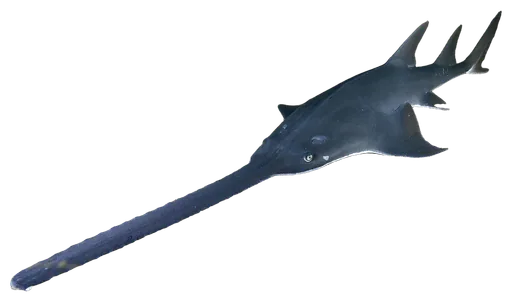
- Weight
- 300 kg661 lb
- Length
- 5 m16.4 ft
As heavy as 4.3 people
Heavier than 85% of animals2.9× a person's height
Bigger than 94% of animalsThe Largetooth Sawfish is a giant tropical ray armed with a metre-scale toothed rostrum that doubles as an electroreceptive prey detector. A representative 5 m adult combines hundreds of kilograms of body mass with long-range lateral slashes, excellent close-range sensing and the unusual ability to move between rivers, estuaries and the sea.
Detailed ratings
Research-backed ratings on one 0–100 scale for all 344 animals (updated 2026-09-27). How ratings work


Card No. 32 of 344. Every animal on Animal Battle Stats has one: its power, tier and archetype on the front; its six battle stats, abilities and signature move on the back.
Special abilities
Ampullary electroreceptors distributed around the rostrum detect prey-generated electric fields, allowing targeting in turbid water and near the substrate when vision is poor.
The toothed rostrum is swept side-to-side to stun, injure or impale prey; CFD research indicates sawfish rostra generate little turbulent disturbance during these swipes, reducing hydrodynamic warning to prey.
Unique traits
P. pristis uses freshwater river systems heavily when young and shifts toward estuarine/coastal marine habitat as it matures, an unusual euryhaline life history for a giant ray.
The species can reach at least 705 cm total length, making it one of the largest living rays, although the canonical ABS specimen is deliberately smaller than this maximum.
How it fights
Weapons
- The rostrum is a long, flattened extension of the skull edged by 14-24 large rostral teeth on each side. It is both weapon and sensory platform. NOAA documents lateral slashing through fish schools to impale or stun prey. Computational-fluid-dynamics work on sawfish rostra found negligible turbulent flow during lateral swipes, supporting a stealthy strike that is less likely to warn teleost prey through their lateral-line system before contact.
- The saw is formidable but not a chainsaw: the teeth do not rotate, and damage depends on lateral acceleration, contact geometry and repeated swipes. The weapon is long and exposed, so confined spaces or an opponent that gets past the rostral arc reduce its leverage.
Struggles vs
- land or prolonged stranding is catastrophic
- cramped structure can interfere with the long rostrum's swing arc
- gillnets and entangling structures exploit the saw's projections, a major real-world vulnerability
- no heavy armor against comparably massive macropredators
- slow life history and low reproductive output are conservation weaknesses, not direct combat weaknesses
- Weight
- 300 kg661 lb
- Height
- No reliable measurement
- Length
- 5 m16.4 ft
- Top speed
- No reliable measurement
- Bite force
- No reliable measurement
- Lifespan
- 36 years
- Home biome
- Ocean
- Lifestyle
- Social
Rated specimen: Healthy large mature adult female, 300.0 kg and 500.0 cm total length.
Fun facts
- Sawfish are rays, not sharks, despite their shark-like body shape.
- A newborn already has a fully developed saw, temporarily covered by a soft sheath that protects the mother during birth.
- Juveniles can live far upriver in freshwater, while adults increasingly use coastal marine habitat.
- The species can reach at least 7.05 m total length.
- Its rostral tooth count varies geographically and between sexes.
- The saw is also a sensory antenna packed with electroreceptive capability.
Closest rivals by power. Tap one for the full breakdown, or pick any opponent.
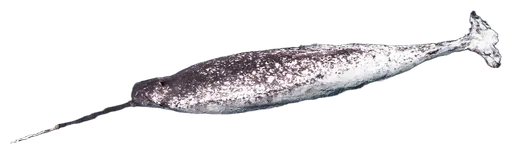
vs Oceanic Whitetip SharkWins · 54% · Toss-up 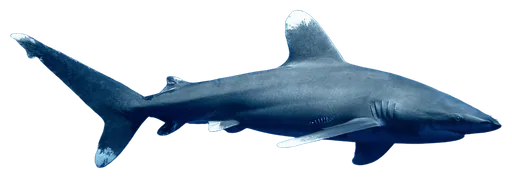 W vs NarwhalLoses · 58% · Slight edge
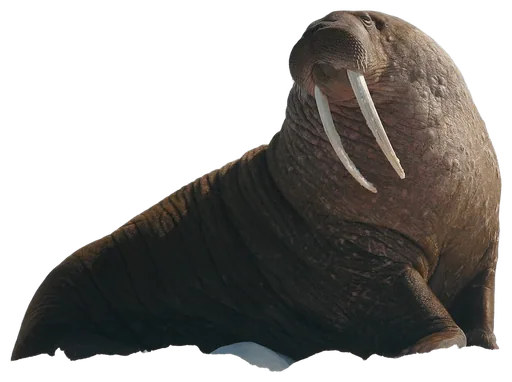
 L vs WalrusLoses · 59% · Slight edge
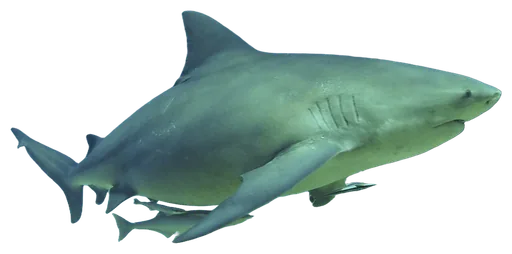
 L vs Bull SharkWins · 56% · Toss-up
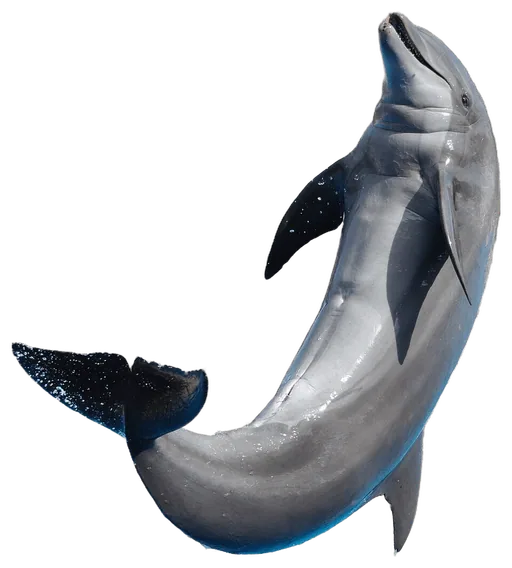
 W vs Bottlenose DolphinLoses · 51% · Toss-up
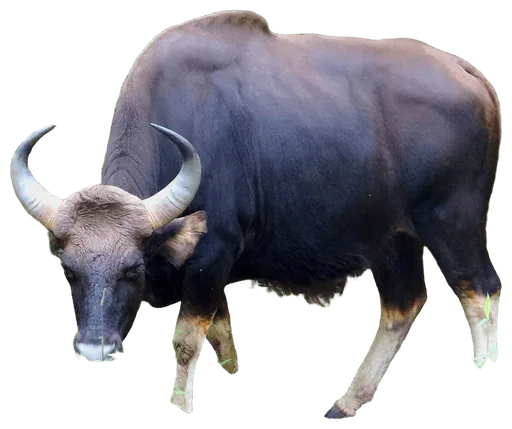
 L vs GaurLoses · 57% · Toss-up
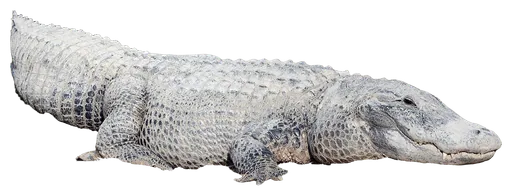
 L vs AlligatorWins · 53% · Toss-up
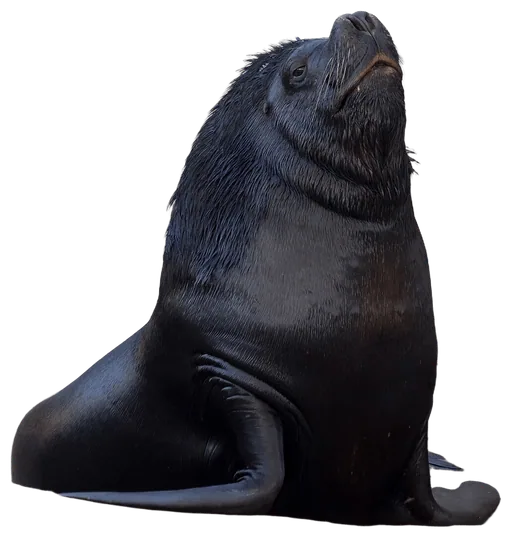
 W vs Sea LionWins · 53% · Toss-up
 W
Sawfish battle analysis
The sawfish's battle identity is distance control. Before another animal reaches its head or body, it must cross the arc of a long rigid rostrum carrying rows of hard lateral teeth. That weapon is not merely passive. Sawfish actively swing it through prey, and fluid-dynamics research indicates the rostrum can move with little hydrodynamic warning. At the same time, electroreceptors help reveal living targets even when mud, darkness or turbidity make vision unreliable.
That combination justifies high Attack and especially high Special, but not invulnerability. The animal has no heavy shell and no crocodilian crushing bite. Its 5 m body and long saw require room to turn and sweep, and the projections that make the weapon effective also make the species disastrously susceptible to fishing nets. ABS therefore treats it as a large aquatic specialist with elite sensory weaponry, not as generic marine megafauna.
Habitat & range
Historically P. pristis had an enormous tropical and subtropical distribution across Atlantic, eastern Pacific and Indo-West Pacific systems. It inhabits shallow bays, estuaries, coastal waters and rivers. Northern Australia remains a major stronghold, while many former populations are extirpated or extremely rare.
Diet & hunting
Diet is primarily fish with crustaceans and molluscs also consumed. The saw combines prey detection and prey manipulation. Juveniles use shallow freshwater habitats as nurseries, where large marine predators are reduced; older animals expand into estuarine and coastal marine environments.
Social life
Evidence points to a mostly solitary animal rather than a coordinated social hunter. Aggregation can occur where habitat or resources concentrate individuals, but no pack-style combat bonus is assigned.
Conservation
The largetooth sawfish is Critically Endangered and protected under CITES Appendix I. NOAA lists it as endangered under the U.S. Endangered Species Act throughout its foreign range. Major threats include gillnet/trawl bycatch, deliberate retention, habitat loss and river alteration. Its saw makes entanglement particularly dangerous.
Quick answers
How strong is a Sawfish?
On the Animal Battle Stats scale, the Sawfish has an attack rating of 76 and a power index of 67.2 out of 100, which ranks it #32 of 344 animals and puts it in A tier (Elite). Its strongest stat is special (88).
How much does a Sawfish weigh?
A typical adult Sawfish weighs about 300 kg (661 lb). Rated specimen: healthy large mature adult female, 300.0 kg and 500.0 cm total length.
How fast is a Sawfish?
There is no reliable measured top speed for the Sawfish, so we do not publish one. Its agility rating, which covers acceleration, reflexes and evasion, is 61 out of 100.
What does a Sawfish eat?
Diet is primarily fish with crustaceans and molluscs also consumed. The saw combines prey detection and prey manipulation. Juveniles use shallow freshwater habitats as nurseries, where large marine predators are reduced; older animals expand into estuarine and coastal marine environments.
Is the Sawfish endangered?
The Sawfish's conservation status is Critically Endangered. The largetooth sawfish is Critically Endangered and protected under CITES Appendix I. NOAA lists it as endangered under the U.S. Endangered Species Act throughout its foreign range. Major threats include gillnet/trawl bycatch, deliberate retention, habitat loss and river alteration. Its saw makes entanglement particularly dangerous.
What animals can beat a Sawfish?
Among its closest rivals, the Narwhal (58%), the Walrus (59%), the Bottlenose Dolphin (51%), the Gaur (57%) would be favored against the Sawfish. It would be favored against the Oceanic Whitetip Shark, the Bull Shark, the Alligator, the Sea Lion.
Researched 2026-09-27. Ratings are editorial judgments built from these sources; measurements describe a healthy adult female.
- NOAA Fisheries, Largetooth Sawfishtaxonomy, maximum length, lifespan range, teeth, diet, electroreception, habitat, reproduction, threats
- Morgan et al., Endangered Species Research 2021life history
- Fishes of Australia, Pristis prististaxonomy, habitat, Australian biology/conservation
- Smithsonian Tropical Research Institute Shorefishesmorphology and maximum size
- Florida Museum, Largetooth Sawfishsize/weight context, diet, taxonomy
- Sawfish Conservation Society, Largetooth Sawfishrostrum morphology, regional/sex variation, growth conflicts
- Wueringer et al., sawfish CFD / PubMedrostral strike mechanics
- Wikimedia Commons, Townsville P. pristisimage provenance
Photo: “Pristis pristis townsville.jpg” by Simon Fraser University - University Communications, CC BY 2.0, background removed and cropped. Original
Suggest a correction