
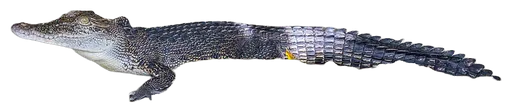
Saltwater Crocodile
Crocodylus porosusS tier · Apex1st of 39 reptiles
Size & speed

- Weight
- 500 kg1,102 lb
- Length
- 5 m16.4 ft
As heavy as 7.1 people
Heavier than 90% of animals2.9× a person's height
Bigger than 94% of animalsThe saltwater crocodile is the largest living crocodilian and an elite shoreline ambush predator. A representative 500 kg adult male combines a directly measured record-class bite, gripping teeth, armored dorsal skin, explosive tail propulsion and death-roll leverage. Its greatest advantage is environmental control at the water’s edge; its main limitations are ectothermic sustained-output capacity and reduced dry-land maneuverability.
Detailed ratings
Research-backed ratings on one 0–100 scale for all 344 animals (updated 2026-09-27). How ratings work


Card No. 13 of 344. Every animal on Animal Battle Stats has one: its power, tier and archetype on the front; its six battle stats, abilities and signature move on the back.
Special abilities
After securing a jaw hold, the crocodile can rotate its entire body to tear tissue, destabilize prey and convert body mass into torsional damage, especially efficiently in water.
Adult saltwater crocodiles behaviorally time long-distance travel to favorable surface currents; telemetry documented hundreds of kilometers of purposeful movement while minimizing locomotor cost.
Unique traits
Specialized tongue glands excrete sodium and chloride. Experimental work shows saltwater acclimation increases gland secretory capacity, enabling broad euryhalinity from fresh water into hypersaline conditions.
A low, massive body with dorsal osteoderms, top-mounted eyes/nostrils and powerful tail allows most of the animal to remain concealed and protected while sensory systems monitor the surface.
How it fights
Weapons
- The jaws are the central weapon. Direct measurement demonstrates extreme closing force, while large conical teeth provide puncture and retention. A successful bite can transition immediately into dragging, drowning or rotational tearing.
Struggles vs
- Softer ventral surfaces, eyes and limb joints.
- Short limbs and modest terrestrial pursuit ability.
- Offense depends heavily on achieving a jaw hold.
- Ectothermic physiology limits sustained maximal exercise.
- Extreme body size reduces fine terrestrial turning compared with smaller predators.
- Weight
- 500 kg1,102 lb
- Height
- No reliable measurement
- Length
- 5 m16.4 ft
- Top speed
- No reliable measurement
- Bite force
- No reliable measurement
- Lifespan
- 70 years
- Home biome
- Wetlands
- Lifestyle
- Mostly solitary, nocturnal
Rated specimen: Healthy prime adult male, 500.0 kg, 500.0 cm total length.
Fun facts
- A 4.59 m saltwater crocodile produced 16,414 N at the rear bite point in direct testing, the highest bite force measured in a living animal in that experiment.
- Satellite telemetry documented a translocated large male traveling more than 400 km in 20 days while returning toward its original capture area.
- Another tracked adult moved at least 590 km in 25 days, using favorable surface currents.
- The tongue contains functional salt-secreting glands whose capacity changes with saltwater acclimation.
- The species can occupy fresh water, estuaries and open coastal water rather than being restricted to the sea despite its common name.
Closest rivals by power. Tap one for the full breakdown, or pick any opponent.
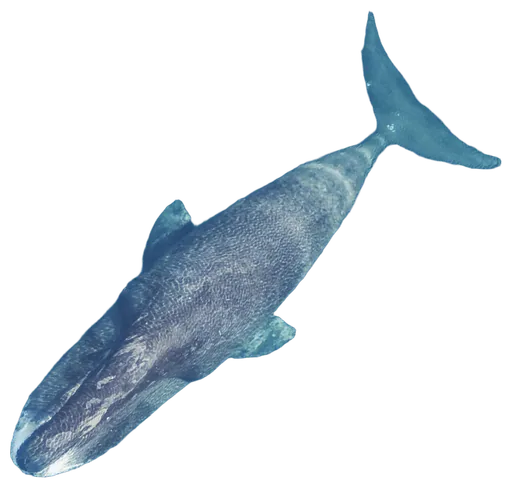
vs Mako SharkWins · 54% · Toss-up 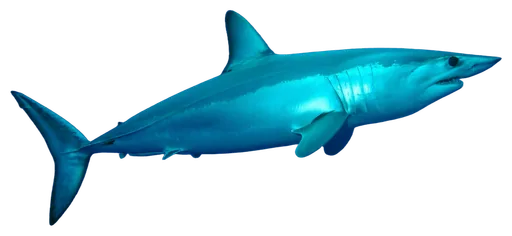 W vs Bowhead WhaleLoses · 76% · Clear edge
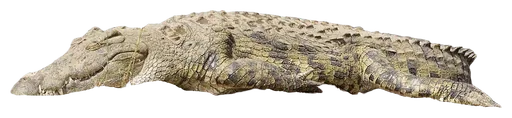
 L vs Nile CrocodileWins · 54% · Toss-up
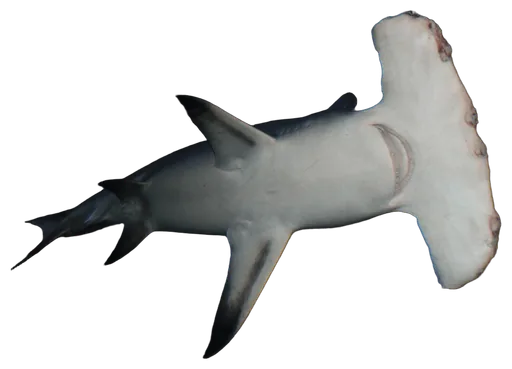
 W vs Hammerhead SharkWins · 55% · Toss-up
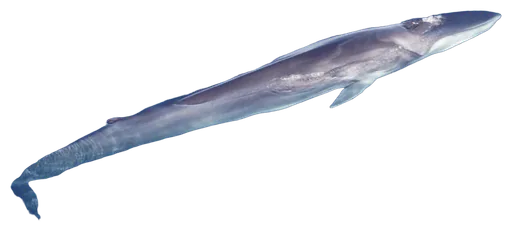
 W vs Fin WhaleLoses · 73% · Clear edge
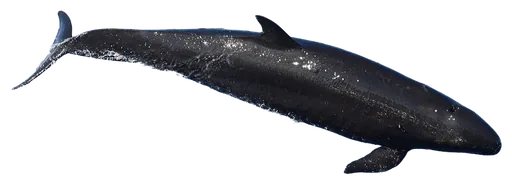
 L vs False Killer WhaleLoses · 57% · Toss-up
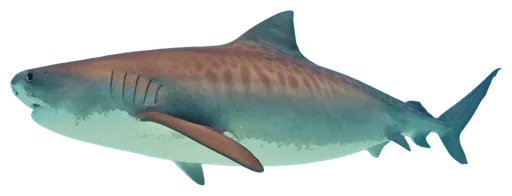
 L vs Tiger SharkWins · 51% · Toss-up
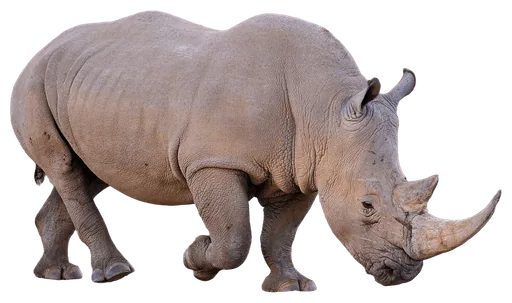
 W vs RhinocerosLoses · 57% · Toss-up
 L
Saltwater Crocodile battle analysis
A large male Crocodylus porosus is built around decisive first contact. It waits with almost its entire body submerged, using top-mounted sensory structures and water-disturbance detection to minimize exposure. When a target enters range, the crocodile converts tail thrust and a half-tonne body into a short lunge. The jaws then become the center of the fight: direct experiments show living-animal bite forces at a scale few extant predators approach. If the target remains mobile, dragging and axial rotation turn the environment itself into a weapon.
That power does not make the animal universally dominant. On dry open ground, a saltwater crocodile cannot sustain mammalian pursuit output and has less fine maneuverability than cats or canids. Its underside, eyes and limb joints remain vulnerable. The strongest ABS interpretation is therefore not “maximum everything,” but a highly asymmetric specialist: elite Attack and Defense, moderate Agility and Stamina, competent Intelligence, and high Special driven by marine tolerance, sensory biology and current-assisted dispersal.
Habitat & range
Saltwater crocodiles occupy rivers, floodplains, mangrove swamps, estuaries, brackish systems and coastal waters across the Indo-Pacific, from eastern India and Sri Lanka through Southeast Asia and Indonesia to northern Australia and western Pacific islands. Their distribution is unusually broad for a crocodilian because adults can cross substantial marine barriers.
Diet & hunting
Juveniles take insects, crustaceans, amphibians and small fish. Prey size expands dramatically with growth. Large adults are apex predators capable of taking turtles, large fish, other reptiles, birds, wild pigs, deer, livestock and buffalo-sized mammals. Cannibalism and predation on smaller crocodilians can occur.
Social life
Adults are mostly solitary outside concentrations at productive habitat and breeding interactions. Large males defend access to favorable areas and females. Communication includes visual posturing, water disturbance and vocal signals.
Conservation
The species is globally assessed as Least Concern, but local status varies. Northern Australia supports major managed populations. The Northern Territory’s 2024–2034 management program explicitly balances conservation, sustainable use and public-safety risk.
Quick answers
How strong is a Saltwater Crocodile?
On the Animal Battle Stats scale, the Saltwater Crocodile has an attack rating of 92 and a power index of 73.3 out of 100, which ranks it #13 of 344 animals and puts it in S tier (Apex). Its strongest stat is attack (92).
How much does a Saltwater Crocodile weigh?
A typical adult Saltwater Crocodile weighs about 500 kg (1,102 lb). Rated specimen: healthy prime adult male, 500.0 kg, 500.0 cm total length.
How fast is a Saltwater Crocodile?
There is no reliable measured top speed for the Saltwater Crocodile, so we do not publish one. Its agility rating, which covers acceleration, reflexes and evasion, is 52 out of 100.
What does a Saltwater Crocodile eat?
Juveniles take insects, crustaceans, amphibians and small fish. Prey size expands dramatically with growth. Large adults are apex predators capable of taking turtles, large fish, other reptiles, birds, wild pigs, deer, livestock and buffalo-sized mammals. Cannibalism and predation on smaller crocodilians can occur.
Is the Saltwater Crocodile endangered?
No. The Saltwater Crocodile is listed as Least Concern. The species is globally assessed as Least Concern, but local status varies. Northern Australia supports major managed populations. The Northern Territory’s 2024–2034 management program explicitly balances conservation, sustainable use and public-safety risk.
What animals can beat a Saltwater Crocodile?
Among its closest rivals, the Bowhead Whale (76%), the Fin Whale (73%), the False Killer Whale (57%), the Rhinoceros (57%) would be favored against the Saltwater Crocodile. It would be favored against the Mako Shark, the Nile Crocodile, the Hammerhead Shark, the Tiger Shark.
Researched 2026-09-27. Ratings are editorial judgments built from these sources; measurements describe a healthy adult male.
- Erickson et al., PLOS ONE, “Insights into the Ecology and Evolutionary Success of Crocodilians Revealed through Bite-Force and Tooth-Pressure Experimentation”83 sexually mature crocodilians tested; saltwater crocodile 16,414 N; force scales with body size; tooth-pressure methodology
- Florida State University research summary3,700 lbf-class bite and localized tooth-pressure context; adult testing methodology
- Guinness World Records, molariform bite16,414 N from 4.59 m saltwater crocodile
- Guinness World Records, caniniform bite11,216 N caniniform force from 4.59 m saltwater crocodile
- National Geographic species account~17 ft / 1,000 lb average male, ~70 y wild lifespan, range, ambush predation
- Campbell et al. 2010, Journal of Animal Ecologycurrent-assisted travel, >10 km/day directional journeys, 590 km/25 d case, limited sustained exercise context
- Read et al. 2007, PLOS ONEthree translocated adult males, 56/99/411 km translocations, >400 km/20 d homing, 10–30 km daily movements
- Cramp et al., Journal of Experimental Biologylingual salt glands, 0 to >60‰ salinity context, increased secretory capacity after saltwater acclimation
- Animal Diversity Webreproduction, sexual maturity, parental behavior, general natural history
- NT Government 2024–2034 management programmanagement, conservation, sustainable use and human-safety context
Photo: “File:Saltwater crocodile (Crocodylus porosus) juvenile Rock Islands.jpg” by Charles J. Sharp, CC BY-SA 4.0, background removed. Original
Suggest a correction