
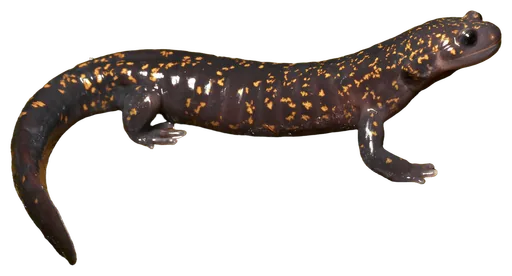
Photo: Hisanori Okamiya, Hirotaka Sugawara, Masahiro Nagano, Nikolay A. Poyarkov · CC BY-SA 4.0
Salamander
Ambystoma tigrinumF tier · Snack5th of 6 amphibians
Size & speed
- Weight
- 125 g4.4 oz
- Length
- 25 cm9.8 in
About as heavy as a smartphone
Heavier than 10% of animalsAbout 2.9 credit cards long
Bigger than 12% of animalsThe Eastern Tiger Salamander is a stout 125 g burrowing amphibian whose direct combat power is tiny on the ABS roster scale. Its real advantages are unusual biology: adhesive neuroactive skin secretion, flexible feeding on land and in water, and the ability to regenerate major tissues after survivable injury. Those traits give it high Special and Recovery without inflating Attack or Defense.
Detailed ratings
Research-backed ratings on one 0–100 scale for all 344 animals (updated 2026-09-27). How ratings work


Card No. 329 of 344. Every animal on Animal Battle Stats has one: its power, tier and archetype on the front; its six battle stats, abilities and signature move on the back.
Special abilities
Granular skin glands produce a sticky secretion with experimentally demonstrated neuroactive components, potentially making a predator's mouth contact unpleasant or disruptive. It is a defensive secretion, not injected venom, and lethality is not assumed.
Post-metamorphic tiger salamanders retain the ability to rebuild lost tail and limb tissue over long time scales. This strongly improves recovery from survivable injury but provides essentially no instantaneous healing during a battle.
Unique traits
Adults spend most of the year underground, sometimes more than 60 cm deep, using humid refuges to avoid surface temperature and moisture extremes.
Metamorphosed adults can use terrestrial tongue/jaw prey capture and switch feeding kinematics when feeding in water, preserving predatory function across land and aquatic breeding contexts.
How it fights
Weapons
- The tiger salamander is an opportunistic small-prey carnivore. Its broad head, jaws and tongue system capture earthworms, arthropods and other small vertebrate prey. On land, tongue projection and jaw prehension bring prey into the mouth; in water, metamorphosed adults can use oropharyngeal suction. Against another animal of comparable size, the bite can grip soft tissue, but absolute tissue damage is tiny on the full ABS roster scale.
- Weight
- 125 g4.4 oz
- Height
- No reliable measurement
- Length
- 25 cm9.8 in
- Top speed
- No reliable measurement
- Bite force
- No reliable measurement
- Lifespan
- 16 years
- Home biome
- Wetlands
- Lifestyle
- Social
Rated specimen: Healthy prime post-metamorphic adult male, 0.125 kg, 25.0 cm total length.
Fun facts
- USGS telemetry found tracked adults underground during roughly 85% of relocations.
- Adults can switch from terrestrial tongue/jaw prey capture to suction-based feeding when in water.
- Tiger-salamander skin secretion is not merely slippery: laboratory work identified both adhesive and neuroactive properties.
- Post-metamorphic adults can regenerate limbs, but the process is much slower than the popular image of instant salamander regeneration.
- Modern taxonomic treatments split many western “tiger salamanders” into Ambystoma mavortium, so older A. tigrinum studies require geographic/taxonomic care.
- A recent USFWS photograph shows the species' entire compact body and tail particularly clearly against a simple pale background, making it a strong future cutout candidate once adulthood is independently established.
Closest rivals by power. Tap one for the full breakdown, or pick any opponent.
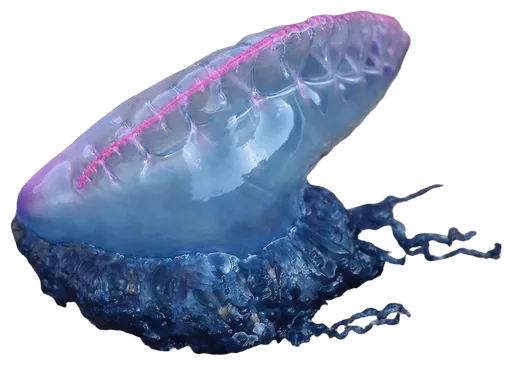
vs BullfrogLoses · 60% · Slight edge 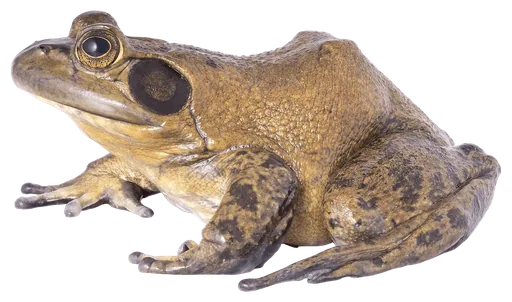 L vs Portuguese Man o' WarLoses · 53% · Toss-up
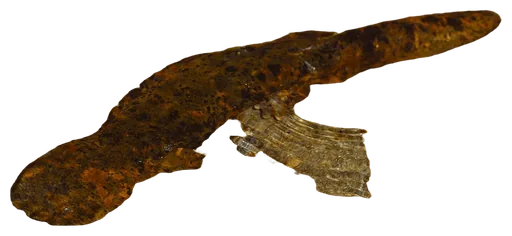
 L vs HellbenderLoses · 65% · Slight edge
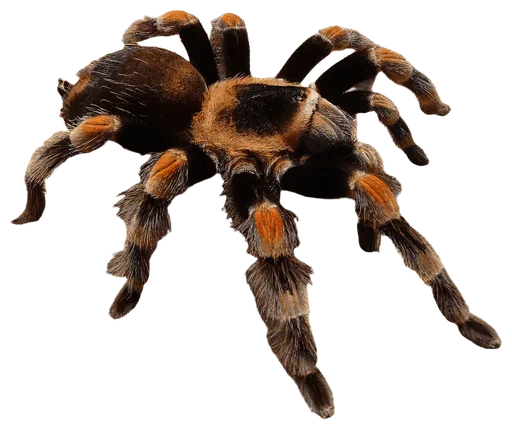
 L vs Mexican Red-knee TarantulaWins · 63% · Slight edge
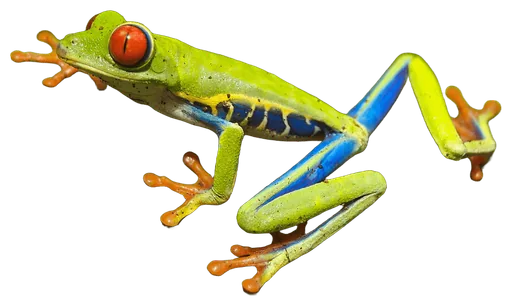
 W vs Red-Eyed Tree FrogWins · 59% · Slight edge
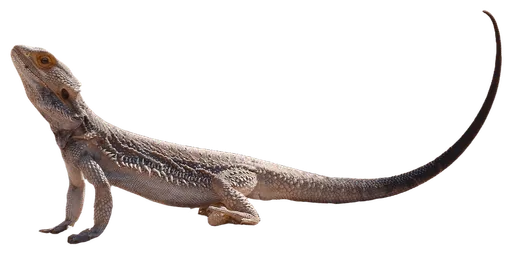
 W vs Bearded DragonLoses · 58% · Slight edge
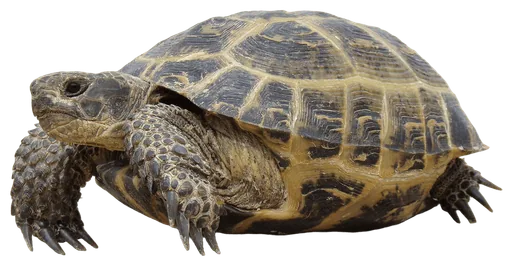
 L vs Russian TortoiseLoses · 61% · Slight edge
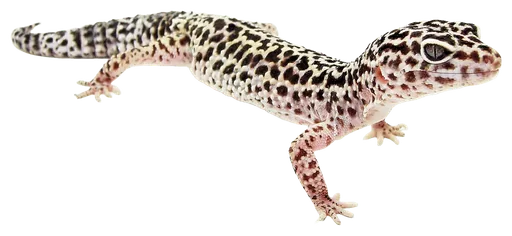
 L vs Leopard GeckoWins · 57% · Toss-up
 W
Salamander battle analysis
The generic “Salamander” slot needs a real organism behind it. This report uses the eastern tiger salamander, one of North America's largest and best-studied terrestrial salamanders, rather than pretending the entire order Caudata shares one body size and combat profile. A representative adult is only around a quarter-meter long and roughly an eighth of a kilogram, so absolute battle scaling immediately places its raw power far below mammals, large reptiles and even many birds.
Its biology is nevertheless specialized. Adults spend most of their lives hidden underground and emerge under favorable moisture conditions, especially for breeding migrations. That refuge strategy is a better defense than trying to absorb attacks. If seized, granular skin secretions add a chemically and mechanically unusual deterrent: experiments found adhesive proteins and neuroactive components. The evidence supports a meaningful chemical defense, but not internet-style claims of a quantified lethal toxin.
Tiger salamanders also show why Recovery and Defense must remain separate. They can regenerate lost appendage tissue after metamorphosis, yet adult regeneration takes months and can be imperfect. It cannot rescue an animal from catastrophic trauma in the moment. ABS therefore gives the species an unusually high Recovery/Special profile while keeping Defense low.
Feeding is similarly flexible rather than powerful. On land, adults use tongue and jaw prehension; in water they can switch to suction-based capture. This is a genuine dual-medium predatory system, but it is optimized for worms, arthropods and small vertebrates. Against a fox, hawk or even a modest mammalian predator, the salamander's best strategy remains not to be caught.
Habitat & range
Eastern tiger salamanders occupy much of eastern and central North America in habitats with suitable loose soil, underground refuges and access to breeding wetlands. They tolerate grassland, agricultural mosaics and other relatively open habitats better than many woodland salamanders, but successful reproduction depends on appropriate ponds or temporary waters.
Diet & hunting
Adults are carnivorous generalists taking earthworms, insects and other invertebrates plus suitably small vertebrates, including frogs and salamanders. During aquatic breeding periods, metamorphosed adults can consume substantial aquatic invertebrate prey by suction. They are predators at the soil/litter and pond-edge scale and prey for larger vertebrates.
Social life
Adults are primarily solitary outside the breeding season. During breeding migrations they aggregate in wetlands. Males generally arrive earlier and court females using nudging and spermatophore deposition rather than parental care or coordinated group behavior.
Conservation
The eastern tiger salamander is globally secure/Least Concern in broad assessments, but status varies sharply by region. NatureServe lists the species G5, while Canada documents the Carolinian population as Extirpated and historically assessed Prairie populations separately. Habitat loss, road mortality, wetland alteration and fish introduction can cause local declines.
Quick answers
How strong is a Salamander?
On the Animal Battle Stats scale, the Salamander has an attack rating of 7 and a power index of 29 out of 100, which ranks it #329 of 344 animals and puts it in F tier (Snack). Its strongest stat is special (74).
How much does a Salamander weigh?
A typical adult Salamander weighs about 125 g (4.4 oz). Rated specimen: healthy prime post-metamorphic adult male, 0.125 kg, 25.0 cm total length.
How fast is a Salamander?
There is no reliable measured top speed for the Salamander, so we do not publish one. Its agility rating, which covers acceleration, reflexes and evasion, is 50 out of 100.
What does a Salamander eat?
Adults are carnivorous generalists taking earthworms, insects and other invertebrates plus suitably small vertebrates, including frogs and salamanders. During aquatic breeding periods, metamorphosed adults can consume substantial aquatic invertebrate prey by suction. They are predators at the soil/litter and pond-edge scale and prey for larger vertebrates.
Is the Salamander endangered?
No. The Salamander is listed as Least Concern. The eastern tiger salamander is globally secure/Least Concern in broad assessments, but status varies sharply by region. NatureServe lists the species G5, while Canada documents the Carolinian population as Extirpated and historically assessed Prairie populations separately. Habitat loss, road mortality, wetland alteration and fish introduction can cause local declines.
What animals can beat a Salamander?
Among its closest rivals, the Bullfrog (60%), the Portuguese Man o' War (53%), the Hellbender (65%), the Bearded Dragon (58%), the Russian Tortoise (61%) would be favored against the Salamander. It would be favored against the Mexican Red-knee Tarantula, the Red-Eyed Tree Frog, the Leopard Gecko.
Researched 2026-09-27. Ratings are editorial judgments built from these sources; measurements describe a healthy adult male.
- Animal Diversity Web, Ambystoma tigrinumadult length, morphology, fossorial behavior, longevity, reproduction
- National Geographic, Tiger Salamandermass, length, wild lifespan, diet
- USGS, Bartelt et al. 2023terrestrial movement/endurance/refuge
- Hamning, Yanites & Peterson, Copeia 2000skin defense
- Bothe & Fröbisch, Anatomical Record 2026limb regeneration
- Young, Bailey & Dalley 1983adult limb regeneration
- Bothe & Fröbisch, Acta Zoologica 2024tail regeneration
- Deban/Shaffer tiger-salamander feeding kinematicsterrestrial tongue mechanics
- Miller & Larsen 1986aquatic feeding
- NatureServe Explorertaxonomy/conservation
- Canada COSEWIC 2023regional conservation/taxonomy
- Wikimedia Commons / USFWSimage provenance
- Jake M. Scott Flickradult-male image verification reference
Photo: “Hynobius fossigenus.png” by Hisanori Okamiya, Hirotaka Sugawara, Masahiro Nagano, Nikolay A. Poyarkov, CC BY-SA 4.0, background removed and cropped. Original
Suggest a correction