
Sable Antelope
Hippotragus nigerB tier · Strong46th of 163 mammals
Size & speed

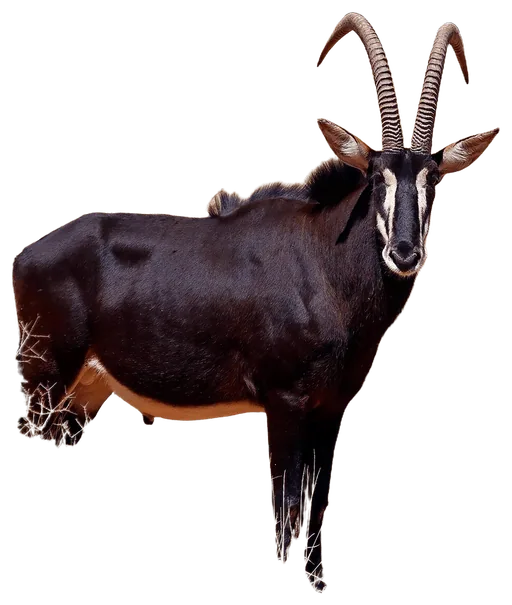
- Weight
- 235 kg518 lb
- Length
- 2.3 m7.5 ft
As heavy as 3.4 people
Heavier than 82% of animalsAbout as long as a person is tall
Bigger than 78% of animalsA powerful 235 kg African antelope built around one exceptional weapon system: long, backward-curving horns. A sable bull combines reach, speed and enough body mass to make frontal engagement genuinely dangerous, but it lacks armor and remains far below megafauna in absolute durability and power.
Detailed ratings
Research-backed ratings on one 0–100 scale for all 344 animals (updated 2026-09-27). How ratings work


Card No. 76 of 344. Every animal on Animal Battle Stats has one: its power, tier and archetype on the front; its six battle stats, abilities and signature move on the back.
Special abilities
A bull's roughly 122 cm representative backward-curving horns create a long piercing/fencing arc that makes a frontal predator approach dangerous and allows powerful counter-thrusts.
Bulls can lower themselves during intraspecific contests and engage the horns in controlled close fencing, a specialized fighting posture that improves leverage and weapon alignment against another sable.
Unique traits
Males progressively darken with maturity, producing the characteristic near-black adult-bull coat while females and younger animals remain browner; coloration is an age/sex signal rather than armor.
Herd movement changes through the dry season and includes repeated journeys to water, reflecting a tightly coupled forage-water strategy in seasonal savanna woodland.
How it fights
Weapons
- The paired scimitar-shaped horns are the dominant weapons. Their rearward curve gives a bull a long, rigid stabbing/fencing structure that can be deployed by head swings, upward thrusts and close horn engagement. A roughly 122 cm representative horn length is extraordinary for a 235 kg terrestrial mammal. Hooves and body checks are secondary tools, but should not be treated as equivalent to the horns.
- Weight
- 235 kg518 lb
- Height
- 1.4 m4.6 ft
- Length
- 2.3 m7.5 ft
- Top speed
- No reliable measurement
- Bite force
- No reliable measurement
- Lifespan
- 16 years
- Home biome
- Savanna
- Lifestyle
- Social
Rated specimen: Use a healthy prime adult male because males are the primary territorial fighters, are heavier, and carry markedly larger horns.
Fun facts
- Both sexes have horns, but mature female horns average substantially shorter than bull horns in quantitative datasets.
- A peer-reviewed comparative dataset places male sable horn length around 122 cm at about 235 kg body mass, an extreme weapon-to-body combination in bovids.
- Mature bulls become much darker than females and young animals.
- GPS-collared Kruger herds increased displacement during the dry season and made water journeys on roughly 3-4 day cycles.
- Bull contests can include kneeling while the animals engage their horns.
- The giant sable is a conservation-distinct population and should not be treated as a generic oversized sable for game statistics.
Closest rivals by power. Tap one for the full breakdown, or pick any opponent.
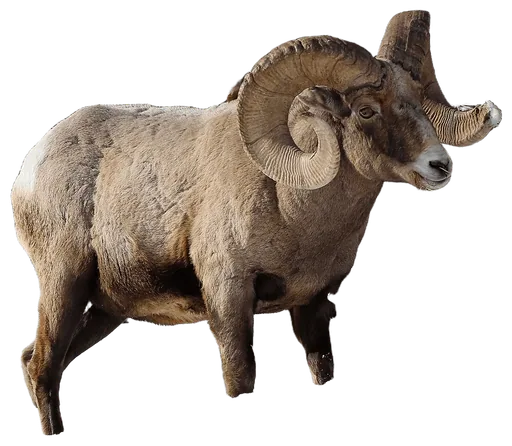
vs Fighting BullLoses · 55% · Toss-up 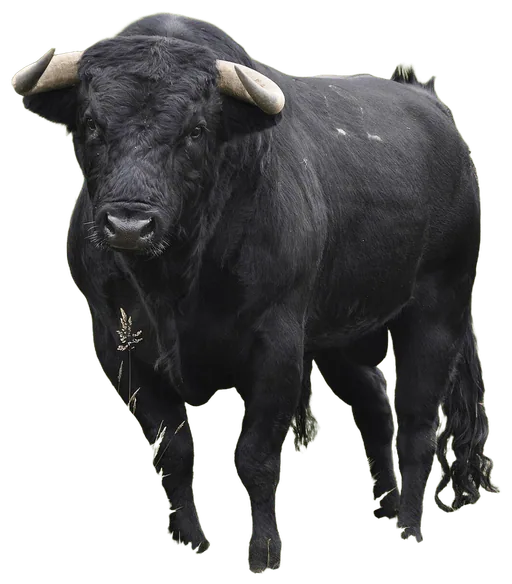 L vs Bighorn SheepWins · 55% · Toss-up
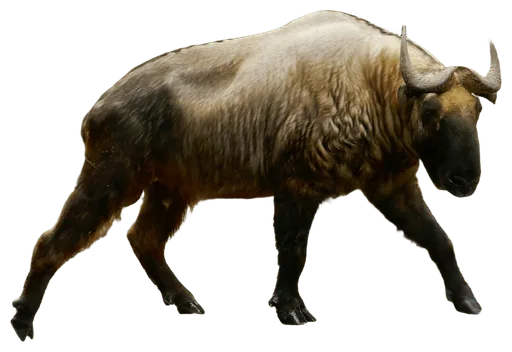
 W vs TakinLoses · 51% · Toss-up
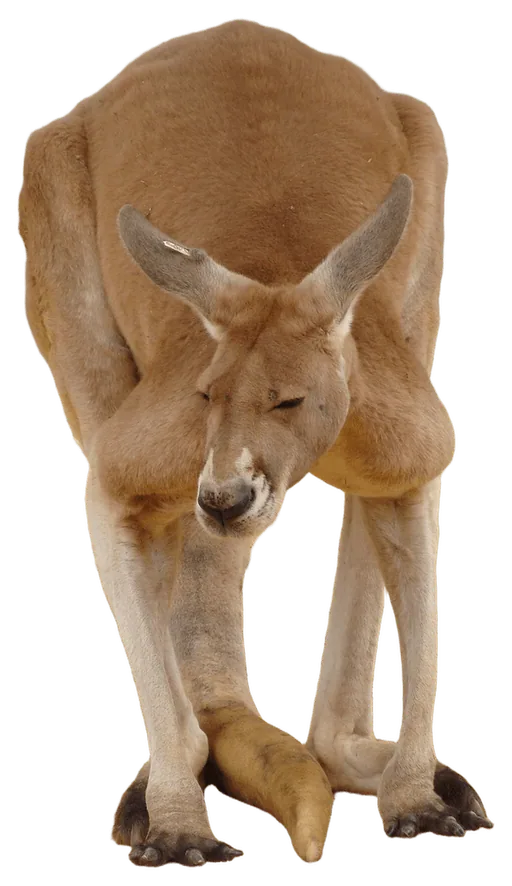
 L vs KangarooWins · 57% · Toss-up
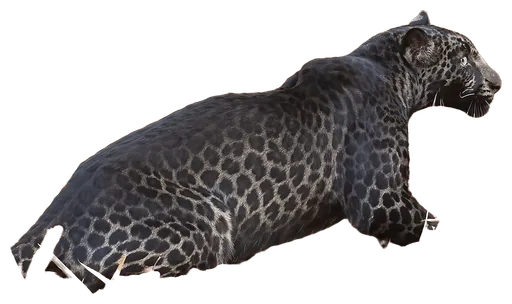
 W vs Black PantherWins · 57% · Toss-up
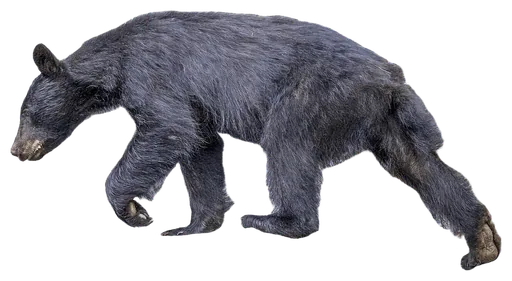
 W vs Black BearWins · 54% · Toss-up
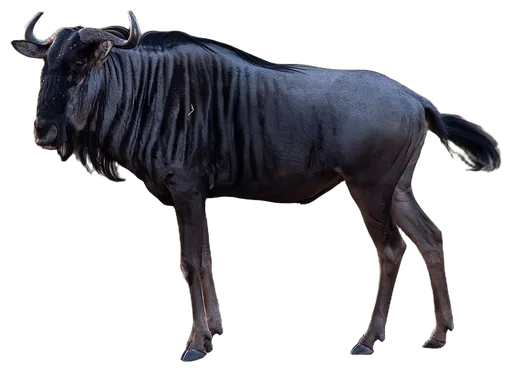
 W vs WildebeestDraw · 50-50 · Dead even
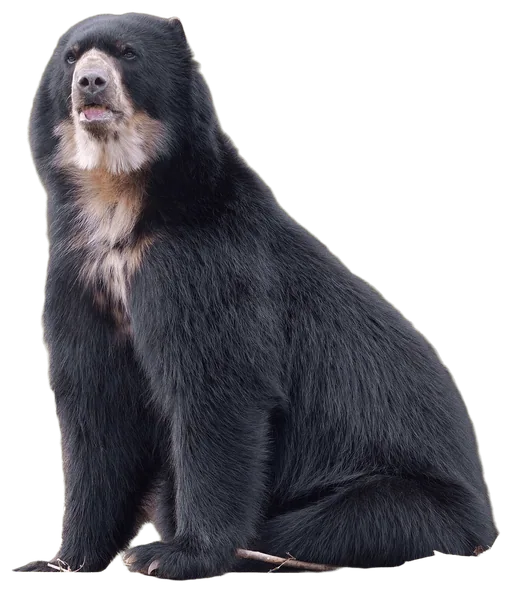
 D vs Spectacled BearWins · 53% · Toss-up
 W
Sable Antelope battle analysis
The sable antelope is a useful ABS example of why weapon quality and body size must be scored separately. A 235 kg bull is not remotely rhinoceros-scale, yet its horn system is disproportionately formidable in practical reach. Peer-reviewed comparative work puts representative male horns near 1.22 m, and upper-end zoological records extend much farther. That gives the bull a dangerous engagement envelope without requiring inflated Raw Power.
Its fighting style is also more specialized than a generic 'ramming herbivore.' Bulls use the horns in ritualized contests and can kneel during close engagement. Against predators, the same hardware lets a sable turn and make the final approach hazardous. The tradeoff is that this is active defense. There is no shell or massive dermal armor if an attacker gets around the weapon arc.
Ecologically, sable are woodland-savanna grazers whose movements track forage and water. GPS studies show meaningful seasonal movement changes, but not the transcontinental endurance seen in reindeer or the extreme sustained-speed physiology of pronghorn. The resulting ABS profile is therefore a strong horned mid-large herbivore: high Attack for its size class, good Agility, useful Stamina, moderate Defense, and no invented bite PSI or unsupported sprint record.
Habitat & range
Sable occupy savanna woodland and grassland mosaics across eastern and southern Africa, strongly associated with grassy woodland systems such as miombo. Genomic research describes multiple geographically coherent populations. The historical range has contracted and fragmented in parts of Africa.
Diet & hunting
They are primarily grazers, taking grasses and some herbs/foliage. Seasonal forage and water availability influence movement. Mineral use, including salt-lick visitation, is reported in species syntheses. Their ecological role combines grazing with serving as prey for large African carnivores.
Social life
Sable are gregarious. Female herds contain young and multiple females, while young/nonbreeding males can form bachelor groups. Mature breeding bulls become territorial and attempt to control high-quality areas used by female groups. This social organization creates strong male-male selection on horns and fighting performance.
Conservation
The global species has been assessed as Least Concern in the widely used IUCN assessment cited by current species syntheses, but status is uneven. Genomic conservation literature emphasizes range loss and fragmentation, while the giant sable population is far more threatened than common southern/eastern populations. A 2025 South African regional assessment lists sable as Vulnerable regionally, illustrating why global and regional status must not be conflated.
Quick answers
How strong is a Sable Antelope?
On the Animal Battle Stats scale, the Sable Antelope has an attack rating of 62 and a power index of 59.6 out of 100, which ranks it #76 of 344 animals and puts it in B tier (Strong). Its strongest stat is agility (72).
How much does a Sable Antelope weigh?
A typical adult Sable Antelope weighs about 235 kg (518 lb). Rated specimen: Use a healthy prime adult male because males are the primary territorial fighters, are heavier, and carry markedly larger horns.
How fast is a Sable Antelope?
There is no reliable measured top speed for the Sable Antelope, so we do not publish one. Its agility rating, which covers acceleration, reflexes and evasion, is 72 out of 100.
What does a Sable Antelope eat?
They are primarily grazers, taking grasses and some herbs/foliage. Seasonal forage and water availability influence movement. Mineral use, including salt-lick visitation, is reported in species syntheses. Their ecological role combines grazing with serving as prey for large African carnivores.
Is the Sable Antelope endangered?
No. The Sable Antelope is listed as Least Concern. The global species has been assessed as Least Concern in the widely used IUCN assessment cited by current species syntheses, but status is uneven. Genomic conservation literature emphasizes range loss and fragmentation, while the giant sable population is far more threatened than common southern/eastern populations. A 2025 South African regional assessment lists sable as Vulnerable regionally, ill
What animals can beat a Sable Antelope?
Among its closest rivals, the Fighting Bull (55%), the Takin (51%) would be favored against the Sable Antelope. It would be favored against the Bighorn Sheep, the Kangaroo, the Black Panther, the Black Bear, the Spectacled Bear. It is dead even with the Wildebeest: a draw.
Researched 2026-09-27. Ratings are editorial judgments built from these sources; measurements describe a healthy adult male.
- SeaWorld / United Parks & Resorts, Sable Antelopetaxonomy, ~235 kg male, ~220 kg female, sex dimorphism, height, diet, ~18 y upper lifespan
- African Wildlife Foundation, Sable220-238 kg, 116-142 cm, wild lifespan to 16, woodland habitat
- Tidière et al. 2017, Journal of Evolutionary Biologymale body mass 235 kg and male horn length 122 cm comparative anchor
- Lubout et al. 2019, South African Journal of Animal Science1,713 horn-length records, sex effects, mature female horns ~40% shorter
- Horn growth characteristics, SA Journal of Animal Science 2022sex-specific horn growth through 50 months
- Rahimi & Owen-Smith 2007, South African Journal of Wildlife ResearchGPS/GSM herd movement, home ranges, dry-season water journeys and nocturnal shift
- Gooley et al. 2020, Evolutionary Applicationsgenomic population structure, gregarious herds, bachelor males, conservation fragmentation
- Animal Diversity Web, Hippotragus nigerbehavior, social structure, longevity, conservation background
- Endangered Wildlife Trust 2025 regional assessmentSouth African regional Vulnerable status and subpopulation context
- Wikimedia Commons, Charles J. Sharp adult maleexact adult male image, 5184x3648, CC BY-SA 4.0, provenance
Photo: “Sable antelope (Hippotragus niger) adult male.jpg” by Charles J. Sharp, CC BY-SA 4.0, background removed and cropped. Original
Suggest a correction