

Rosy-faced Lovebird
Agapornis roseicollis
 #297 of 344
  Desert Fighter Least Concern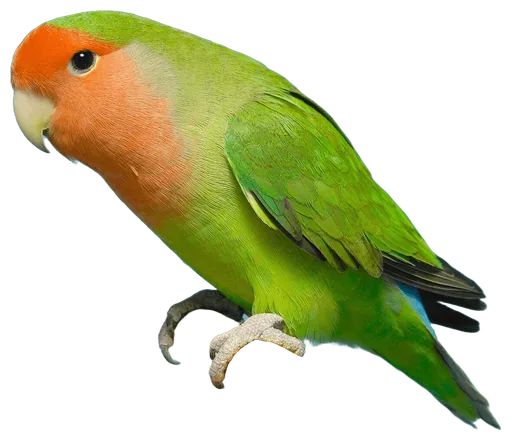
 Fight
FightPhoto: Johann Alexi · CC BY-SA 4.0
The Rosy-faced Lovebird is a 55 g parrot from the dry south-west of Africa, a fast, acrobatic flier that can even swing along branches using only its beak. It bites hard for its size and flocks gang up to mob predators, but in an absolute fight it is one of the smallest and most fragile animals on the roster.
 Attack8
  Defense8
  Agility85
  Stamina56
  Intelligence74
  Special57
 Detailed ratings
Research-backed ratings on one 0–100 scale for all 344 animals (updated 2026-09-28). How ratings work
Special abilities
Ability 1Mobbing SquadronLovebirds confront a predator by standing tall, squawking, flapping and advancing, and if it does not retreat, large groups attack it together.
 Ability 2Beakiation
A lovebird can travel hanging beneath a thin branch using only its beak, which carries about 1.5 times its body weight with each swing, and it can climb vertical walls with feet and beak.
Unique traits
 TraitRump-Feather Nest Hauler
The female cuts strips of bark and plant material, tucks them into her rump feathers and flies them back to the nest.
TraitWater-Tied Desert ParrotIt lives in dry woodland and semi-desert of south-west Africa but must drink several times a day, so flocks gather in hundreds at pools.
How it fights
Weapons
- The bill is the only weapon. Six live lovebirds bit with up to about 18 N, which is strong for a 55 g bird; lovebirds, grey parrots and monk parakeets all bite harder than expected for their size compared with other birds (Dickinson et al. 2022). In captivity lovebirds can be aggressive, bond to one individual, may not get on with other people or pets, and should not be kept with smaller birds (Wikipedia). In absolute terms the bite is a pinch that can draw blood from a finger, not a threat to anything large.
 Struggles vs
- About 55 g in absolute mass.
- Tied to water sources; must drink several times a day.
- No armor.
- Bite far too weak to injure large animals.
- Weight
- 55 g1.9 oz
- Height
- No reliable measurement
- Length
- 15 cm5.9 in
- Top speed
- 58 km/h36 mph
- Bite force
- No reliable measurement
- Lifespan
- 15 years
- Home biome
- Desert
- Lifestyle
- Social
Rated specimen: Healthy mature adult female, 0.055 kg, 15.0 cm total length.
Fun facts
- Female lovebirds tuck strips of bark into their rump feathers and fly them back to the nest.
- A lovebird can swing along under a branch using only its beak, a gait scientists named "beakiation".
- Six lovebirds tested on a force plate bit with up to about 18 N, far more than most birds their size.
- Feral lovebirds in Phoenix, Arizona have been seen cooling off on air-conditioner vents.
- Lovebirds often sleep in the giant communal nests of sociable weavers.
- In a mobbing attack, a whole group of lovebirds will fly at a predator that refuses to leave.
Closest rivals by power. Tap one for the full breakdown, or pick any opponent.
vs ToucanWins · 51% · Toss-up  W vs BudgerigarLoses · 51% · Toss-up
  L vs CockatielLoses · 52% · Toss-up
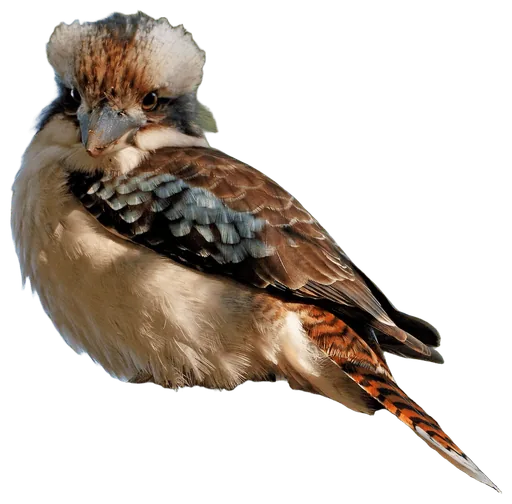
  L vs KookaburraLoses · 52% · Toss-up
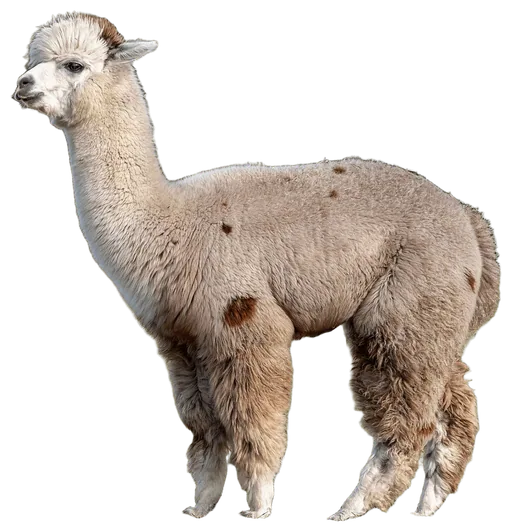
  L vs AlpacaWins · 50% · Toss-up
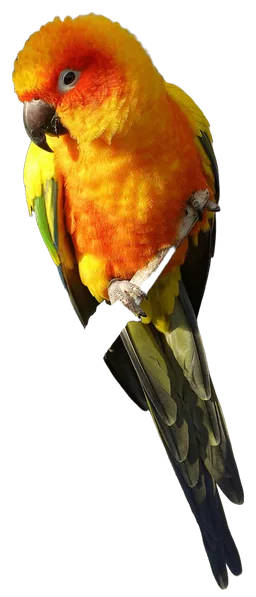
  W vs Sun ConureLoses · 53% · Toss-up
  L vs KoalaWins · 50% · Toss-up
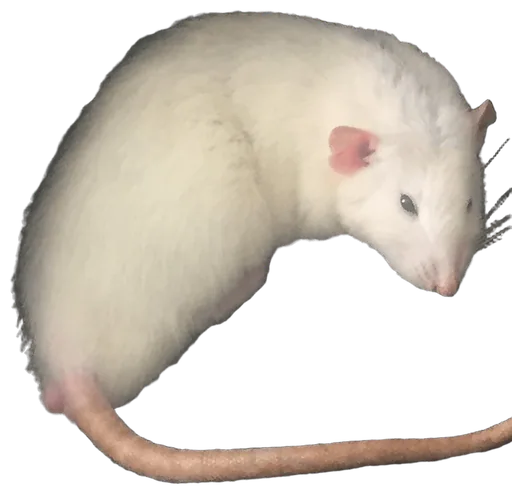
  W vs Fancy RatLoses · 51% · Toss-up
  L
L  Pick any opponent
 Rosy-faced Lovebird battle analysis
The rosy-faced lovebird is a small green parrot with a pink face and a blue rump that lives in the dry woodland and semi-desert of Namibia, Angola and South Africa. It must drink several times a day, so flocks gather in hundreds around pools and rivers, then scatter to feed on grass seeds and acacia pods. At night lovebirds sleep in rock crevices or inside the giant thatched nests built by sociable weavers.
For its size it is physically impressive. Force-plate tests show it bites harder than expected for a bird of 55 g, and biomechanics studies found it can climb walls with feet and beak and even move hand-over-hand beneath a thin branch using only its beak, taking about one and a half times its body weight on the bill with each swing. It is also bold: when a predator threatens, lovebirds squawk, flap and advance, and whole groups will attack a predator that refuses to leave.
In an absolute matchup, though, it weighs about as much as a large egg. Its bite can hurt a finger but cannot harm a large animal, and it has no armor. Its best weapons are speed, agility and the courage of its flock.
Habitat & range
The rosy-faced lovebird lives in dry, open country in south-western Africa, from south-western Angola across most of Namibia to the lower Orange River valley in north-western South Africa and around Lake Ngami in Botswana. It uses dry woodland, sub-desert steppe, savanna with sparse trees, and wooded belts along rivers and canyons, up to about 1,500–1,600 m, always near permanent water (WPT; ADW). Feral birds live in Phoenix and Tucson, Arizona, where they have been seen perching on air-conditioner vents in extreme heat.
Diet & hunting
It eats mainly seeds, especially of grasses, Albizia and Acacia, plus buds, leaves and flowers, and will take maize, sunflower and millet crops. Seeds are picked from plants or the ground and husked rapidly with tongue and bill (ADW; WPT). At night lovebirds roost in the nests of white-browed sparrow-weavers and sociable weavers.
Social life
Very social. Groups of 5–20 are typical, with gatherings of 100 or several hundred where grass seeds ripen or at water. Pairs bond strongly and huddle together in cold weather.
Conservation
The species is listed as Least Concern by the IUCN. Heavy trapping for the cage-bird trade caused historical declines in southern Angola, but new water points and buildings have helped it spread in other areas, including towards Lake Ngami (WPT; Wikipedia).
Quick answers
How strong is a Rosy-faced Lovebird?
On the Animal Battle Stats scale, the Rosy-faced Lovebird has an attack rating of 8 and a power index of 36.6 out of 100, which ranks it #297 of 344 animals and puts it in D tier (Underdog). Its strongest stat is agility (85).
How much does a Rosy-faced Lovebird weigh?
A typical adult Rosy-faced Lovebird weighs about 55 g (1.9 oz). Rated specimen: healthy mature adult female, 0.055 kg, 15.0 cm total length.
How fast is a Rosy-faced Lovebird?
The Rosy-faced Lovebird's top speed is about 58 km/h (36 mph). Its agility rating is 85 out of 100.
What does a Rosy-faced Lovebird eat?
It eats mainly seeds, especially of grasses, Albizia and Acacia, plus buds, leaves and flowers, and will take maize, sunflower and millet crops. Seeds are picked from plants or the ground and husked rapidly with tongue and bill (ADW; WPT). At night lovebirds roost in the nests of white-browed sparrow-weavers and sociable weavers.
Is the Rosy-faced Lovebird endangered?
No. The Rosy-faced Lovebird is listed as Least Concern. The species is listed as Least Concern by the IUCN. Heavy trapping for the cage-bird trade caused historical declines in southern Angola, but new water points and buildings have helped it spread in other areas, including towards Lake Ngami (WPT; Wikipedia).
What animals can beat a Rosy-faced Lovebird?
Among its closest rivals, the Budgerigar (51%), the Cockatiel (52%), the Kookaburra (52%), the Sun Conure (53%), the Fancy Rat (51%) would be favored against the Rosy-faced Lovebird. It would be favored against the Toucan, the Alpaca, the Koala.
Researched 2026-09-28. Ratings are editorial judgments built from these sources; measurements describe a healthy adult female.
- Animal Diversity Web, Agapornis roseicollismass, length, dimorphism, flight speed, lifespan, climbing, mobbing, diet, drinking, breeding
- World Parrot Trust encyclopedia, Rosy-faced Lovebirdsize, mass, longevity, status, range, habitat, diet, flocks, breeding, nest material
- Wikipedia, Rosy-faced lovebirdrange, feral populations, conservation, aviculture
- Dickinson, Young and Granatosky 2022, Journal of Zoologybite force
- Harrison et al. 2025, Journal of Anatomybite-force value
- Dickinson et al. 2022, Journal of Experimental Biologygrip and pull forces
- Dickinson, Young and Granatosky 2024, Royal Society Open Sciencebeakiation
- Wang et al. 2024, bioRxiv preprintintelligence
- AnAge, Rosy-faced lovebirdlongevity, adult weight
- Wikimedia Commons, rosy-faced lovebirdimage candidate
Photo: “Agapornis roseicollis - Rosenköpfchen - Wildfarbig - Deutscher Kanarien- und Vogelzüchterbund (DKB) - Vogelbund - Johann Alexi.jpg” by Johann Alexi, CC BY-SA 4.0, background removed and cropped. Original
Suggest a correction