
Ring-tailed Lemur
Lemur cattaC tier · Capable131st of 163 mammals
Size & speed

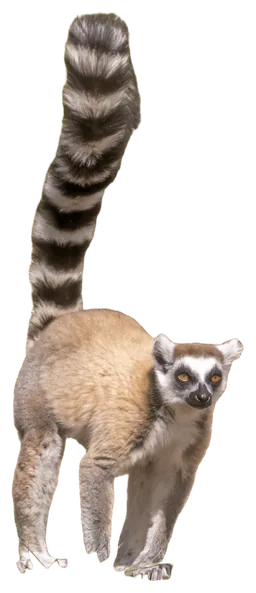
- Weight
- 2.5 kg6 lb
- Length
- 1.03 m3.4 ft
As heavy as 13 smartphones
Heavier than 29% of animalsAbout 3.4 rulers long
Bigger than 47% of animalsA highly social, ground-using Madagascar primate whose real battle strengths are agility, grasping mobility, social cognition and extraordinary scent communication. Its canines can injure similarly sized rivals, but at roughly 2.5 kg its absolute attack and durability remain low across the full ABS roster.
Detailed ratings
Research-backed ratings on one 0–100 scale for all 344 animals (updated 2026-09-27). How ratings work


Card No. 239 of 344. Every animal on Animal Battle Stats has one: its power, tier and archetype on the front; its six battle stats, abilities and signature move on the back.
Special abilities
Adult males deliberately load the tail with wrist/chest gland secretions and wave it toward rivals. It can cause counter-display, withdrawal or escalation, giving a genuine conspecific contest effect without pretending the odor is toxic.
Grasping feet, opposable hallux, quadrupedal ground competence, climbing and coordinated jumping let the lemur switch between terrestrial and arboreal escape routes rapidly.
Unique traits
Females dominate males within troops, an unusual primate social system that shapes access, conflict and reproductive competition.
The conspicuous non-prehensile ringed tail functions in balance, group cohesion and visual/olfactory signaling rather than as a grasping fifth limb.
How it fights
Weapons
- The practical weapons are the jaws/canines, grasping hands and feet, and whole-body grappling. Upper canines can slash during serious fights. At only ~2.5 kg, however, absolute damage is low across a roster containing large carnivores and megafauna. Male contests often stop at threat, scent display or chasing rather than requiring damaging contact.
- Weight
- 2.5 kg6 lb
- Height
- No reliable measurement
- Length
- 1.03 m3.4 ft
- Top speed
- No reliable measurement
- Bite force
- No reliable measurement
- Lifespan
- 16 years
- Home biome
- Forest
- Lifestyle
- Social
Rated specimen: Use a healthy prime adult male for ABS.
Fun facts
- It is the most terrestrial of the living lemurs despite retaining strong climbing ability.
- The striped tail is longer than the head-body length and is not prehensile.
- Males can hold ritualized stink fights in which the tail becomes a scent-delivery display structure.
- Troops may travel as much as about 6 km in a day while searching for food.
- Experimental ring-tailed lemurs showed stronger spontaneous transitive-inference performance than less-social mongoose lemurs.
- Females dominate males socially, even though a modern growth analysis found modest male-biased adult mass in its sample.
Closest rivals by power. Tap one for the full breakdown, or pick any opponent.
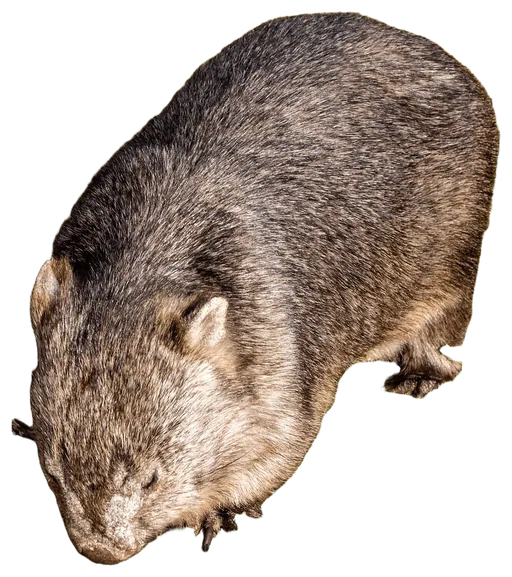
vs AardvarkLoses · 68% · Slight edge 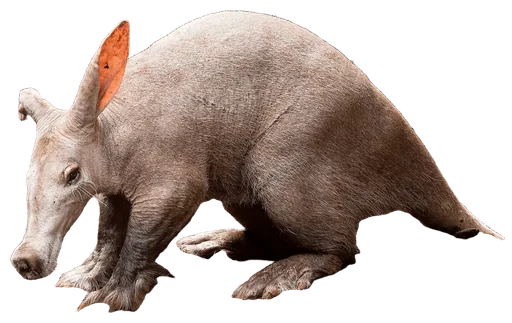 L vs WombatLoses · 64% · Slight edge
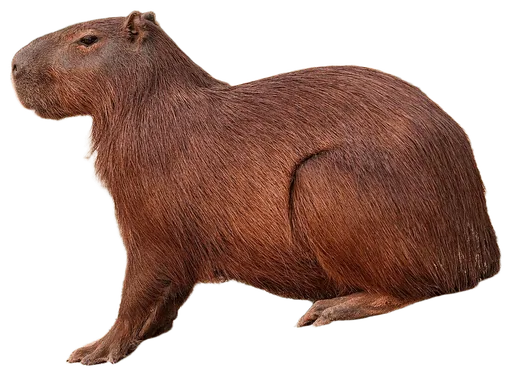
 L vs CapybaraLoses · 66% · Slight edge
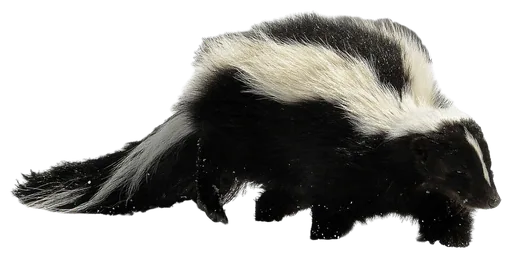
 L vs SkunkLoses · 55% · Toss-up
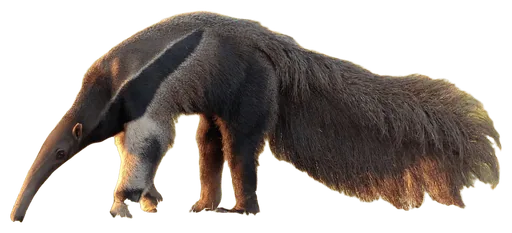
 L vs AnteaterLoses · 67% · Slight edge
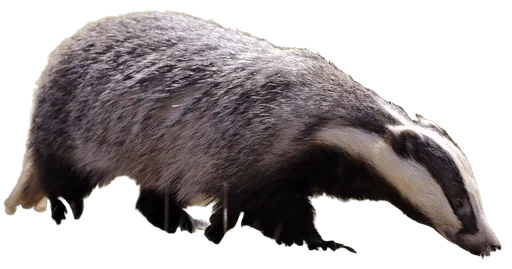
 L vs BadgerLoses · 61% · Slight edge
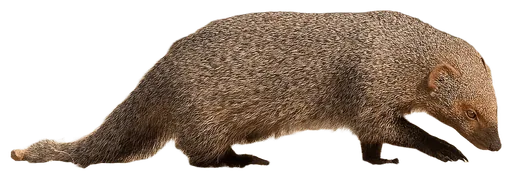
 L vs MongooseWins · 58% · Slight edge
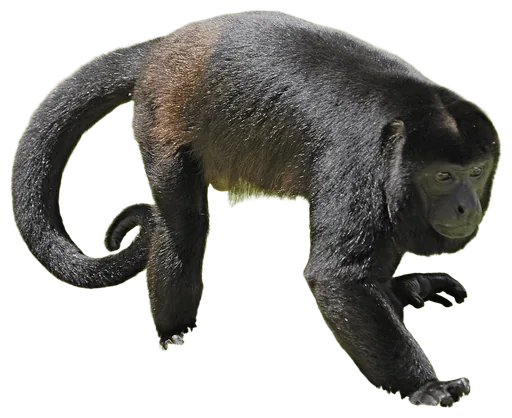
 W vs Howler MonkeyLoses · 54% · Toss-up
 L
Ring-tailed Lemur battle analysis
The ring-tailed lemur is not a miniature ape bruiser. Its combat biology is built around avoiding bad contact, reading social situations and controlling position. On the ground it moves confidently on all fours with its striped tail held conspicuously; in complex terrain it can climb, grasp and jump to turn a flat pursuit into a three-dimensional escape problem. When conflict is unavoidable, canines and grappling provide a real but small-scale weapon set.
Its most distinctive competitive system is chemical. Male scent structures are integrated into ritualized contests in which secretions are applied to the tail and presented toward rivals. This can settle competition without a damaging fight, although jump-fighting and biting show that escalation is possible. Cognitively, experimental transitive reasoning and complex troop hierarchies justify a high Intelligence rating relative to most similarly sized mammals. None of these traits erase the central ABS fact: a 2.5 kg lemur remains physically fragile beside foxes, large monkeys, carnivores and megafauna.
Habitat & range
Endemic to southern and southwestern Madagascar, the species occupies dry deciduous forest, gallery forest, spiny bush/scrub, rocky areas and some montane/humid habitats. IUCN notes a broad but fragmented range with often-low densities.
Diet & hunting
Opportunistic omnivorous/frugivorous feeding includes fruit, leaves, flowers, herbs, insects and occasional small vertebrates. Seasonal availability strongly changes diet.
Social life
Troops commonly contain multiple males and females and may range from about 3 to 25 individuals. Females remain in natal groups while males disperse around sexual maturity and can change groups repeatedly. Smithsonian places male group change around maturity at roughly three years. Reproduction is seasonal, producing young after a roughly five-month gestation in common accounts.
Conservation
The species is Endangered. IUCN's 2020 lemur assessment reported a suspected decline of at least 50% over three generations, driven by habitat destruction/fragmentation and hunting pressure. It is common in captivity but that does not offset loss of wild populations.
Quick answers
How strong is a Ring-tailed Lemur?
On the Animal Battle Stats scale, the Ring-tailed Lemur has an attack rating of 22 and a power index of 44.1 out of 100, which ranks it #239 of 344 animals and puts it in C tier (Capable). Its strongest stat is agility (81).
How much does a Ring-tailed Lemur weigh?
A typical adult Ring-tailed Lemur weighs about 2.5 kg (6 lb). Rated specimen: Use a healthy prime adult male for ABS.
How fast is a Ring-tailed Lemur?
There is no reliable measured top speed for the Ring-tailed Lemur, so we do not publish one. Its agility rating, which covers acceleration, reflexes and evasion, is 81 out of 100.
What does a Ring-tailed Lemur eat?
Opportunistic omnivorous/frugivorous feeding includes fruit, leaves, flowers, herbs, insects and occasional small vertebrates. Seasonal availability strongly changes diet.
Is the Ring-tailed Lemur endangered?
The Ring-tailed Lemur's conservation status is Endangered. The species is Endangered. IUCN's 2020 lemur assessment reported a suspected decline of at least 50% over three generations, driven by habitat destruction/fragmentation and hunting pressure. It is common in captivity but that does not offset loss of wild populations.
What animals can beat a Ring-tailed Lemur?
Among its closest rivals, the Aardvark (68%), the Wombat (64%), the Capybara (66%), the Skunk (55%), the Anteater (67%), the Badger (61%), the Howler Monkey (54%) would be favored against the Ring-tailed Lemur. It would be favored against the Mongoose.
Researched 2026-09-27. Ratings are editorial judgments built from these sources; measurements describe a healthy adult male.
- Animal Diversity Web, Lemur catta~2.2 kg mass, 39-46 cm body, 56-63 cm tail, habitat, behavior
- Wisconsin Primate Info Netwild/captive mass, terrestriality, lifespan, stink/jump fights, scent marking
- Tennenhouse et al., Journal of Evolutionary Biologysignificant ~10.7% male-biased adult body mass in study sample
- MacLean et al., Animal Behaviour / PubMedtransitive inference/social cognition
- Hylander et al. / comparative jaw mechanicsestimated 56.51 N posterior bite force
- Comparative cranio-masticatory study (2026)gracile skull, unfused symphysis associated with lower bite production
- Comparative jumping biomechanicscoordinated jumping biomechanics in L. catta
- Smithsonian National Zoodiet, 3-25 social groups, male dispersal, daily travel up to 6 km
- IUCN 2020 lemur updateEndangered status, habitat breadth, >=50% suspected three-generation decline
- Wikimedia Commons, Charles J. Sharpimage provenance, exact species, 1916x2872, CC BY-SA 4.0
Photo: “Ring-tailed lemur (Lemur catta) Vakona.jpg” by Charles J. Sharp, CC BY-SA 4.0, background removed and cropped. Original
Suggest a correction