
Reticulated Python
Malayopython reticulatusB tier · Strong7th of 39 reptiles
Size & speed

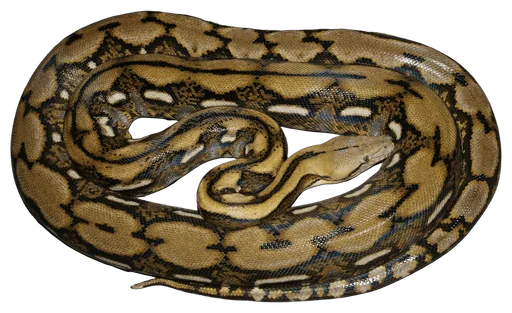
- Weight
- 50 kg110 lb
- Length
- 5 m16.4 ft
About as heavy as a person
Heavier than 63% of animals2.9× a person's height
Bigger than 94% of animalsThe reticulated python is a giant Southeast Asian ambush constrictor built around one decisive sequence: seize, wrap and compress. A large adult female combines exceptional reach, powerful whole-body coils, recurved anchoring teeth and heat-sensitive labial pits. Its offense becomes formidable after secure contact, but lack of armor, ectothermic physiology and vulnerability of the head and spine keep it below megafaunal bruisers on an absolute roster scale.
Detailed ratings
Research-backed ratings on one 0–100 scale for all 344 animals (updated 2026-09-27). How ratings work


Card No. 83 of 344. Every animal on Animal Battle Stats has one: its power, tier and archetype on the front; its six battle stats, abilities and signature move on the back.
Special abilities
The anchoring bite enables multiple trunk loops to apply diameter-scaled circumferential pressure; direct experiments on P. reticulatus show larger snakes generate higher peak constriction pressure.
Heat-sensitive labial pits add thermal target information to chemical and mechanical sensing, improving warm-prey localization in darkness and close ambush conditions.
Unique traits
Strong female-biased sexual size dimorphism places mature females in the species' largest and most powerful combat class.
Exceptional body length gives reach and encirclement capacity without megafaunal mass, creating a distinctive long-bodied grappling profile.
How it fights
Weapons
- The reticulated python is a nonvenomous constrictor. A successful attack begins with rapid close contact, typically an anchoring bite, followed by trunk loops around the target. Direct measurements demonstrate that larger-diameter reticulated pythons generate greater peak constriction pressure. Once multiple coils are securely established around the torso or neck of a manageable opponent, circulatory function can be compromised rapidly and escape becomes progressively harder.
Struggles vs
- No rigid armor.
- Contact-dependent offense.
- Critical vulnerability of head and upper spine.
- A failed bite-and-wrap exposes a long body to counterattack.
- Ectothermic output is temperature-sensitive.
- Weight
- 50 kg110 lb
- Height
- No reliable measurement
- Length
- 5 m16.4 ft
- Top speed
- No reliable measurement
- Bite force
- No reliable measurement
- Lifespan
- 20 years
- Home biome
- Jungle
- Lifestyle
- Social
Rated specimen: Healthy prime adult female, because females attain materially larger adult body sizes and are the stronger fighting sex for an absolute-combat roster.
Fun facts
- Reticulated pythons are among the longest living snakes, but longest does not mean heaviest.
- In a 1,070-snake field study, females reached much larger maximum size than males.
- Their prey spectrum changes markedly as they grow, shifting from rats toward larger mammals.
- Direct experiments show constriction pressure rises with snake diameter.
- Constriction can disrupt circulation very rapidly, so the mechanism is more sophisticated than simply "squeezing the air out."
- Their labial pits detect infrared/thermal cues from warm targets.
Closest rivals by power. Tap one for the full breakdown, or pick any opponent.
vs PythonDraw · 50-50 · Dead even 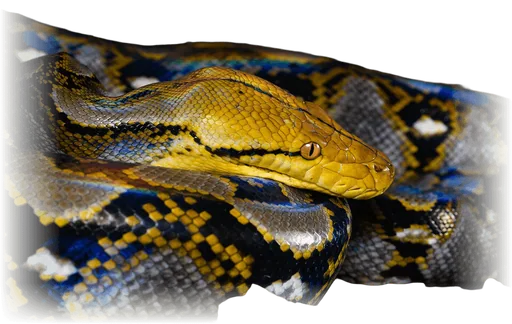 D vs Komodo DragonLoses · 52% · Toss-up
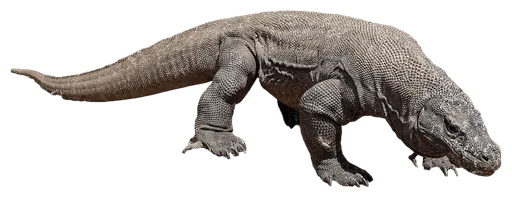 L vs Leatherback Sea TurtleLoses · 63% · Slight edge
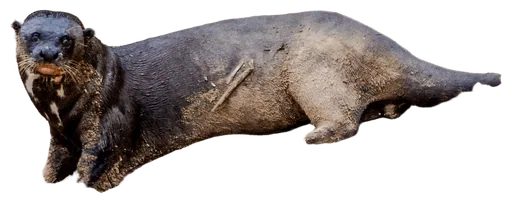
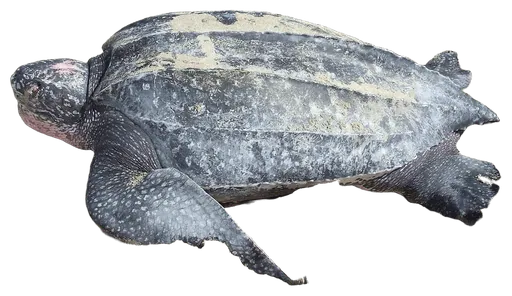 L vs Giant OtterWins · 53% · Toss-up
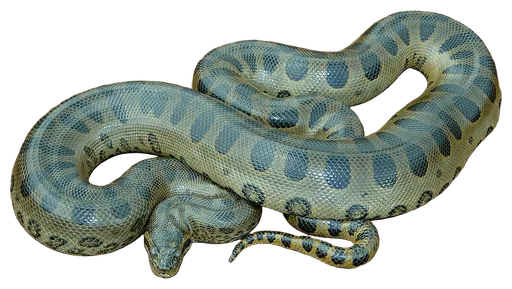
 W vs Green AnacondaWins · 53% · Toss-up
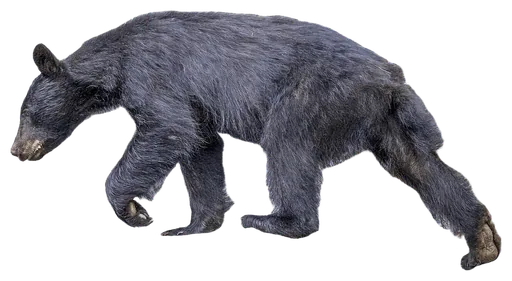
 W vs Black BearLoses · 56% · Toss-up
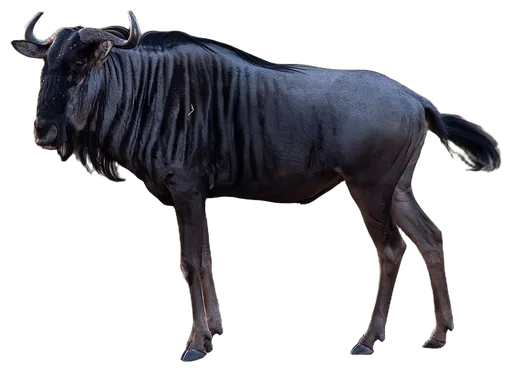
 L vs WildebeestLoses · 60% · Slight edge
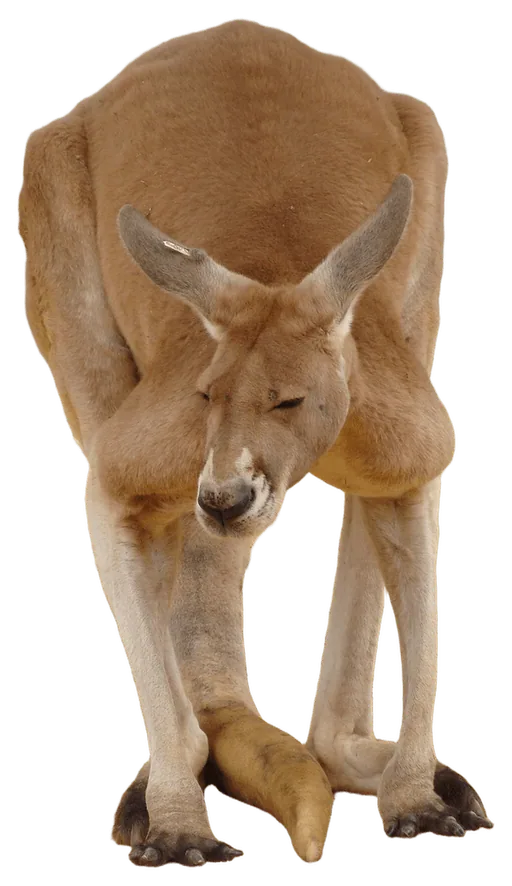
 L vs KangarooLoses · 54% · Toss-up
 L
Reticulated Python battle analysis
A reticulated python does not win by chasing an opponent across open ground or trading repeated strikes. Its body is the weapon. The snake's sensory systems help it identify a target at close range, the jaws establish the first anchor, and the trunk converts contact into control. Each successful loop changes the geometry of the fight by restricting the opponent's movement and allowing pressure to be maintained over a large surface.
That specialization produces a sharp matchup curve. Against prey it can wrap effectively, especially in vegetation, water margins or structural clutter, one successful initiation can be decisive. Against an armored opponent, a much larger animal, or a mobile attacker that can repeatedly damage the head and spine without being caught, the same elongated body becomes a liability. Its extraordinary fasting tolerance also should not be confused with endless combat stamina. The reticulated python is best modeled as a powerful contact grappler with unusual sensory assistance, not as a generic high-stat giant reptile.
Habitat & range
Reticulated pythons occur across South and Southeast Asian tropical systems, including mainland and island populations. They occupy forests, river margins, wetlands, mangroves, agricultural mosaics and human-modified landscapes. Water is important in much of the range, but the species is not restricted to aquatic habitat.
Diet & hunting
They are carnivorous predators whose prey spectrum changes strongly with size. Southern-Sumatran field data show smaller snakes feeding heavily on rats, while snakes around 3 to 4 m and above increasingly take larger mammals. Recorded categories include pangolins, porcupines, monkeys, wild pigs and mouse deer. Exploitation of commensal rodents helps explain persistence near agriculture and settlements.
Social life
Primarily solitary. There is no evidence for cooperative hunting that should affect an individual battle rating.
Conservation
The species is widespread and heavily involved in Southeast Asian skin and meat trade systems. Harvest studies provide unusually large morphological datasets, but those datasets can contain capture and market-selection biases. Conservation/trade management should therefore be kept separate from claims about a universal adult size.
Quick answers
How strong is a Reticulated Python?
On the Animal Battle Stats scale, the Reticulated Python has an attack rating of 72 and a power index of 58.8 out of 100, which ranks it #83 of 344 animals and puts it in B tier (Strong). Its strongest stat is special (82).
How much does a Reticulated Python weigh?
A typical adult Reticulated Python weighs about 50 kg (110 lb). Rated specimen: healthy prime adult female, because females attain materially larger adult body sizes and are the stronger fighting sex for an absolute-combat roster.
How fast is a Reticulated Python?
There is no reliable measured top speed for the Reticulated Python, so we do not publish one. Its agility rating, which covers acceleration, reflexes and evasion, is 52 out of 100.
What does a Reticulated Python eat?
They are carnivorous predators whose prey spectrum changes strongly with size. Southern-Sumatran field data show smaller snakes feeding heavily on rats, while snakes around 3 to 4 m and above increasingly take larger mammals. Recorded categories include pangolins, porcupines, monkeys, wild pigs and mouse deer. Exploitation of commensal rodents helps explain persistence near agriculture and settlements.
What animals can beat a Reticulated Python?
Among its closest rivals, the Komodo Dragon (52%), the Leatherback Sea Turtle (63%), the Black Bear (56%), the Wildebeest (60%), the Kangaroo (54%) would be favored against the Reticulated Python. It would be favored against the Giant Otter, the Green Anaconda. It is dead even with the Python: a draw.
Researched 2026-09-27. Ratings are editorial judgments built from these sources; measurements describe a healthy adult female.
- Shine, Harlow, Keogh & Boeadi, Functional Ecology1,070 snakes; 1-75 kg; strong female-biased size; maxima ~20 kg male / 75 kg female and ~5 m / 7 m; ontogenetic prey shifts
- PERHILITAN / management synthesis, Chapter II: The reticulated pythonRange-wide management synthesis; sexual dimorphism; >10,000-snake sample summary; ecology and foraging
- Boback et al., Journal of Experimental BiologyDirect constriction pressure 8.27-53.77 kPa; pressure increases with diameter; circulatory mechanism
- USGS Open-File Report 2009-1202Female maturation/maximum size larger; adult females reported ~42% longer on average in one study; sampling caveats
- Reptile DatabaseCurrent taxonomic usage, synonyms, subspecies listing
- World Species compilationAdult-weight compilation and longevity maximum near 29 y
- Wikimedia Commons, Reticulated python MP1Exact species, female, age 2 y, length 3 m, 3504x2336, public domain
- Rob Valentic FlickrExplicit wild adult female exact species on Pulau Tioman
Photo: “Reticulated python MP1.JPG” by BurmesePython at English Wikipedia, Public domain, background removed and cropped. Original
Suggest a correction