
Red-tailed Hawk
Buteo jamaicensisB tier · Strong12th of 55 birds
Size & speed

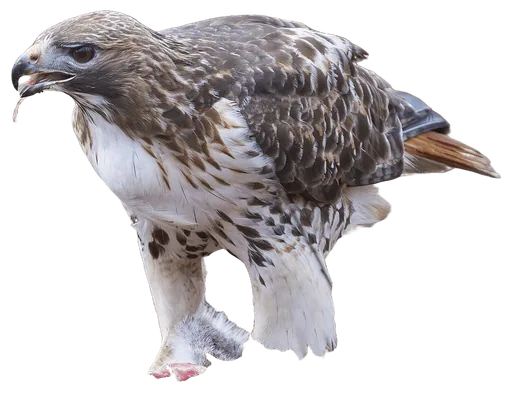
- Weight
- 1.2 kg3 lb
- Length
- 58 cm22.8 in
As heavy as 6 smartphones
Heavier than 22% of animalsAbout 1.9 rulers long
Bigger than 28% of animalsA broad-winged North American raptor that combines acute visual targeting, controlled aerial positioning and powerful talons. The Red-tailed Hawk is devastating to small terrestrial prey but remains a lightweight fighter whose defense depends much more on staying airborne than absorbing damage.
Detailed ratings
Research-backed ratings on one 0–100 scale for all 344 animals (updated 2026-09-27). How ratings work


Card No. 151 of 344. Every animal on Animal Battle Stats has one: its power, tier and archetype on the front; its six battle stats, abilities and signature move on the back.
Special abilities
Long-range raptor vision paired with elevated perches and soaring lets the hawk detect and track small terrestrial prey before committing to attack.
A controlled aerial descent with legs extended converts altitude and surprise into a two-footed gripping strike using sharp talons and the enlarged hallux.
Unique traits
Broad rounded wings and a short broad tail favor stable soaring, braking and low-speed attack placement rather than falcon-style maximum-speed pursuit.
Extraordinary geographic, habitat and prey breadth lets the species switch among rodents, birds and reptiles and exploit human-modified landscapes.
How it fights
Weapons
- The primary weapons are the feet. Red-tailed Hawks descend onto prey with legs extended, seize it with sharp curved talons, and use the enlarged hallux claw to oppose the forward toes. The beak is important for tearing and processing prey after capture but should not be modeled as the main killing system. Their broad wings support controlled approach and braking rather than the extreme high-speed stoop of a peregrine.
- The prey record demonstrates practical weapon effectiveness. ADW reports that roughly 80–85% of diet can consist of small rodents and that eastern cottontail-sized mammals are taken. The U.S. Forest Service review describes prey up to jackrabbit size as potential prey and lists squirrels, prairie dogs, rabbits, pheasants and grouse among recorded items. A 2022 urban diet study recorded 1,348 prey items across 28 species, with 86% mammals, 10% birds and 4% reptiles.
- Weight
- 1.2 kg3 lb
- Height
- No reliable measurement
- Length
- 58 cm22.8 in
- Top speed
- No reliable measurement
- Bite force
- No reliable measurement
- Lifespan
- 20 years
- Home biome
- Mountains
- Lifestyle
- Social
Rated specimen: Healthy prime adult female, represented at 1.2 kg, 58.0 cm total length, and about 125 cm wingspan.
Fun facts
- Females can be roughly a quarter larger than males.
- The familiar red tail is an adult feature; immatures have a differently patterned brown tail.
- A wild banded individual reached 30 years 8 months, according to the USGS Bird Banding Laboratory.
- Red-tailed Hawks sometimes lock talons during aerial courtship.
- They readily hunt from utility poles and other human-made perches.
- Cornell's long-running campus pair has repeatedly raised young on a human structure in Ithaca, illustrating its tolerance of urban settings.
Closest rivals by power. Tap one for the full breakdown, or pick any opponent.
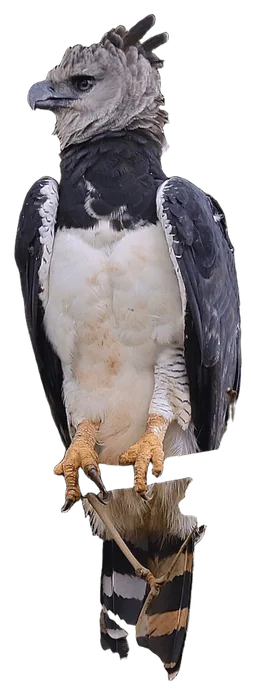
vs Wedge-tailed EagleLoses · 57% · Toss-up 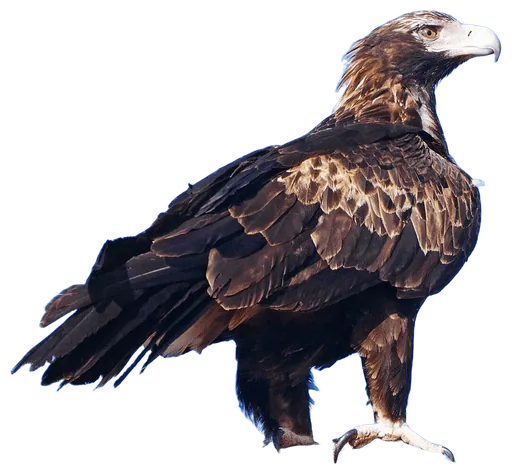 L vs Harpy EagleLoses · 61% · Slight edge
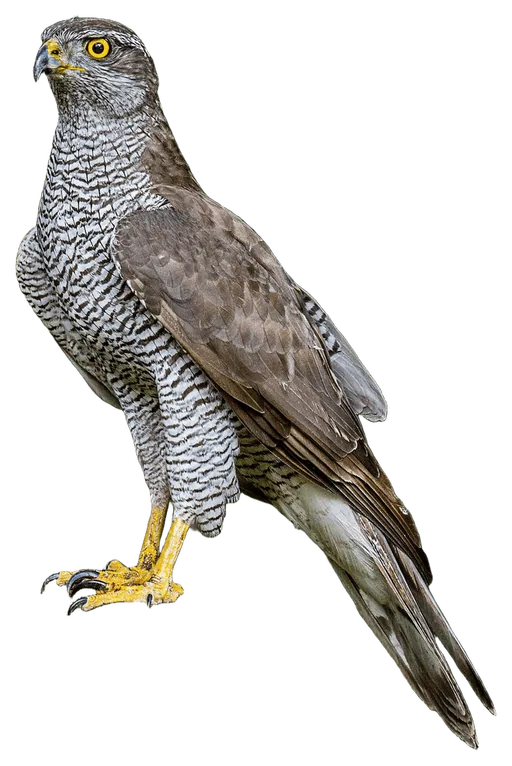
 L vs Northern GoshawkDraw · 50-50 · Dead even
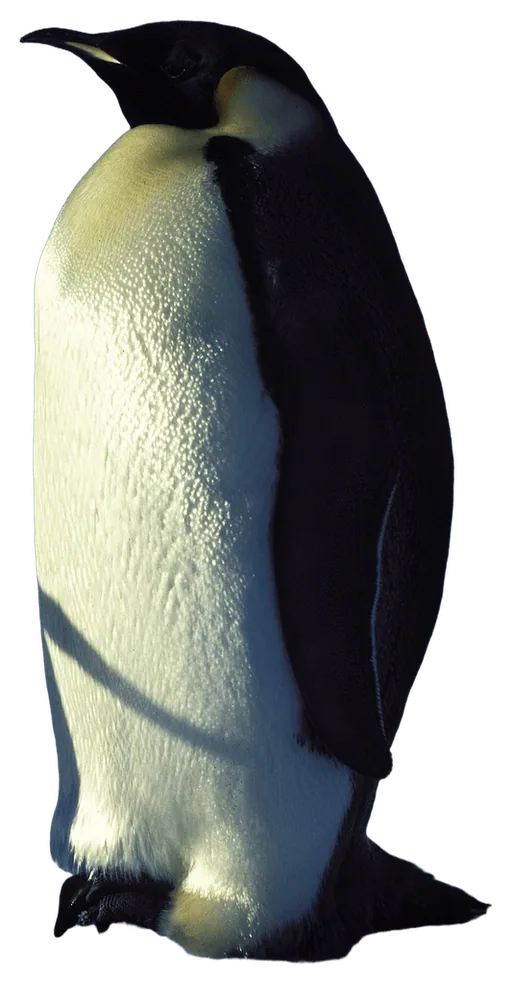
 D vs Emperor PenguinLoses · 70% · Clear edge
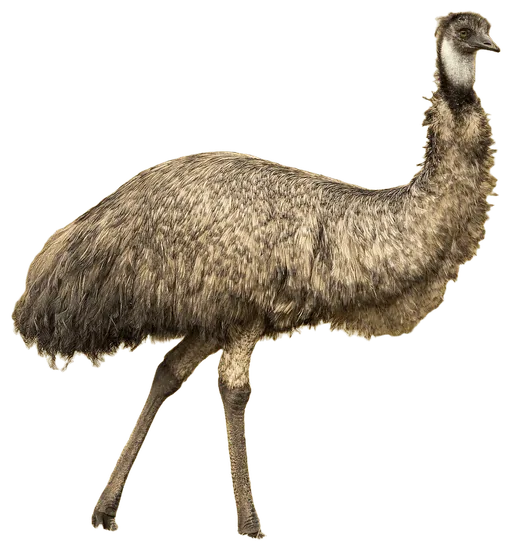
 L vs EmuLoses · 70% · Clear edge
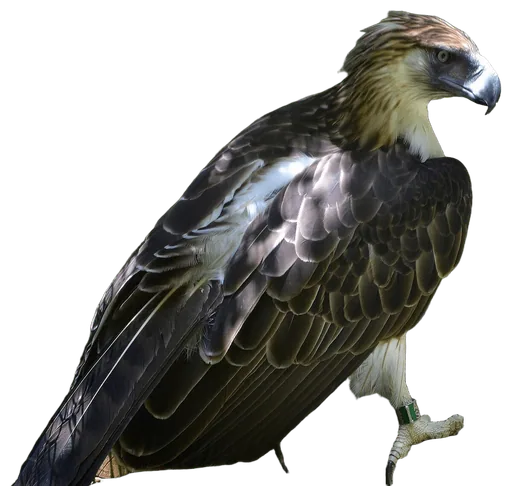
 L vs Philippine EagleLoses · 58% · Slight edge
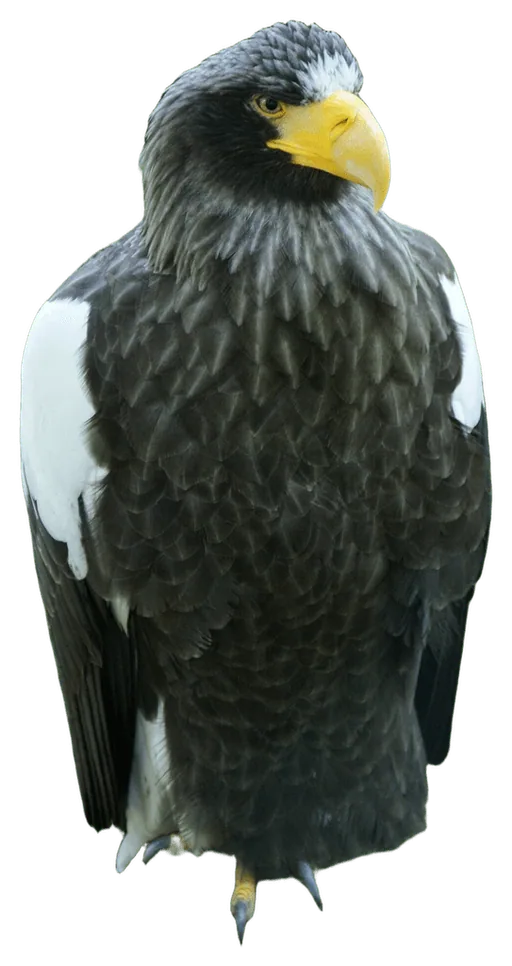
 L vs Steller's Sea EagleLoses · 60% · Slight edge
 L vs Golden EagleLoses · 60% · Slight edge
 L
Red-tailed Hawk battle analysis
The Red-tailed Hawk is a patient aerial ambush predator rather than a pure speed specialist. It often wins the information battle first, watching from a pole, tree or soaring circle until movement exposes prey. Its broad wings then trade extreme falcon-like velocity for control: the bird can descend deliberately, extend both feet and place its talons onto a target with the enlarged rear claw helping close the grip. That combination lets a roughly kilogram-scale bird routinely kill small mammals and take prey as substantial as rabbits. The same anatomy has strict limits on an absolute roster. There is no shell, thick hide or large body mass behind the attack. If a much larger opponent survives the first contact and catches the hawk, the physical matchup deteriorates quickly. The correct ABS profile is therefore asymmetric: low-to-moderate absolute damage and durability, but exceptional agility, senses and positional control.
Habitat & range
Red-tailed Hawks occupy much of North America and extend through parts of Central America and the Caribbean. They are especially associated with open country, fields, roadsides, woodland edges and landscapes combining high perches with exposed hunting ground. Some northern populations migrate while many southern populations are resident.
Diet & hunting
They are generalist vertebrate predators. Mammals dominate many populations, especially rodents, but birds and reptiles can be important. USGS comparative work found both Red-tailed Hawks and Great Horned Owls to be generalists, with Red-tailed Hawks taking significantly more reptiles and having significantly greater mean prey mass in the datasets analyzed.
Social life
Adults are usually encountered singly or in territorial pairs rather than hunting cooperatively. Pair bonds organize breeding and territorial defense. Sociality therefore does not multiply the canonical individual's battle power.
Conservation
The Red-tailed Hawk is one of the most familiar North American raptors and does well in agricultural, suburban and roadside mosaics where hunting perches are abundant. Human infrastructure can provide perches and nest sites but also exposes hawks to vehicle strikes, electrocution and other anthropogenic hazards.
Quick answers
How strong is a Red-tailed Hawk?
On the Animal Battle Stats scale, the Red-tailed Hawk has an attack rating of 35 and a power index of 52.3 out of 100, which ranks it #151 of 344 animals and puts it in B tier (Strong). Its strongest stat is agility (90).
How much does a Red-tailed Hawk weigh?
A typical adult Red-tailed Hawk weighs about 1.2 kg (3 lb). Rated specimen: healthy prime adult female, represented at 1.2 kg, 58.0 cm total length, and about 125 cm wingspan.
How fast is a Red-tailed Hawk?
There is no reliable measured top speed for the Red-tailed Hawk, so we do not publish one. Its agility rating, which covers acceleration, reflexes and evasion, is 90 out of 100.
What does a Red-tailed Hawk eat?
They are generalist vertebrate predators. Mammals dominate many populations, especially rodents, but birds and reptiles can be important. USGS comparative work found both Red-tailed Hawks and Great Horned Owls to be generalists, with Red-tailed Hawks taking significantly more reptiles and having significantly greater mean prey mass in the datasets analyzed.
What animals can beat a Red-tailed Hawk?
Among its closest rivals, the Wedge-tailed Eagle (57%), the Harpy Eagle (61%), the Emperor Penguin (70%), the Emu (70%), the Philippine Eagle (58%), the Steller's Sea Eagle (60%), the Golden Eagle (60%) would be favored against the Red-tailed Hawk. It would be favored against none of them. It is dead even with the Northern Goshawk: a draw.
Researched 2026-09-27. Ratings are editorial judgments built from these sources; measurements describe a healthy adult female.
- sex-specific mass, length, wingspan, flight stylefemale 900–1460 g, 50–65 cm; wingspan 114–133 cm; broad wings and controlled dive
- dimorphism, behavior, diet, senses, habitatfemales ~25% larger; keen vision; rodents dominate diet; territorial behavior
- maximum documented longevity30 years 8 months
- sex morphometricsDNA sexing paired with mass, wing, tail, hallux, culmen and tarsus measurements
- diet breadth1,348 prey items, 28 species; 86% mammals, 10% birds, 4% reptiles
- prey breadth and habitat synthesismammals primary; prey records include rabbits, squirrels, prairie dogs, birds and reptiles
- comparative dietgeneralist predator; greater mean prey mass than Great Horned Owl in analyzed datasets
- reproduction, aggression1–5 eggs, 28–35 d incubation, 42–46 d nestling; territorial aggression
- image taxon, age, sex, reuseexact species; female, three years old; 3314×2836; CC BY 3.0
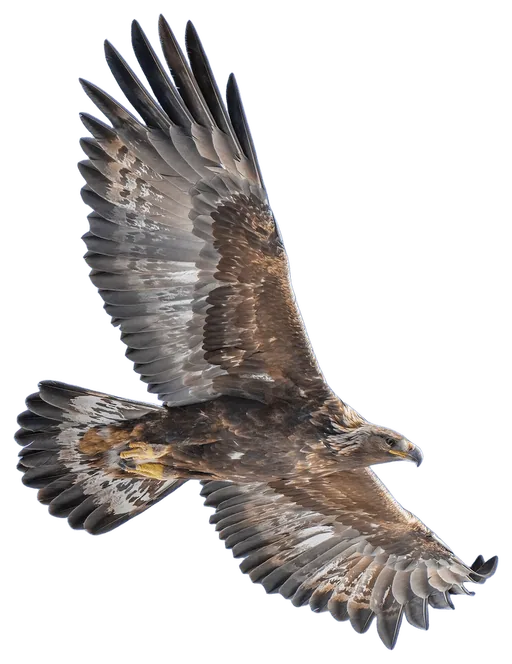
Photo: “20250101 red tailed hawk hockanum river linear trail PD209981.jpg” by Paul Danese, CC BY-SA 4.0, background removed and cropped. Original
Suggest a correction