
Red Panda
Ailurus fulgensC tier · Capable137th of 163 mammals
Size & speed

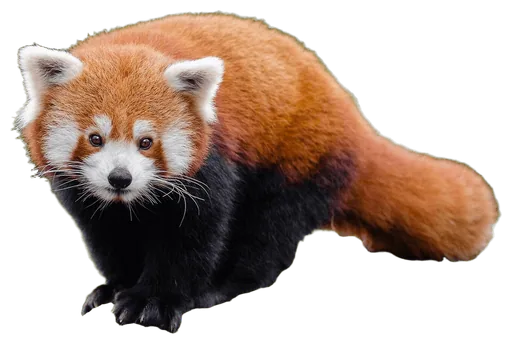
- Weight
- 5 kg11 lb
- Length
- 1.02 m3.3 ft
About as heavy as a house cat
Heavier than 37% of animalsAbout 3.4 rulers long
Bigger than 47% of animalsA small Himalayan bamboo specialist with claws, a false thumb and exceptional branch control, the red panda wins position rather than power. Its bite and claws are modest on the full ABS scale, but secure gripping, head-first descent and stability-focused arboreal gait make it difficult to catch in its native forest canopy.
Detailed ratings
Research-backed ratings on one 0–100 scale for all 344 animals (updated 2026-09-27). How ratings work


Card No. 256 of 344. Every animal on Animal Battle Stats has one: its power, tier and archetype on the front; its six battle stats, abilities and signature move on the back.
Special abilities
The enlarged radial sesamoid works with the forepaw to improve grasping. Anatomical work links the system to thin-branch climbing and bamboo manipulation, giving unusually secure object/substrate control for a small carnivoran.
Red pandas alter stride timing, support number and duty factor on arboreal substrates, experimentally demonstrating a stability-first locomotor strategy for narrow and potentially oscillating branches.
Unique traits
Flexible limb/ankle control and curved claws allow controlled head-first tree descent, a useful three-dimensional escape behavior.
A member of Carnivora has become an extreme bamboo specialist while retaining a comparatively simple carnivoran digestive tract, forcing high intake and shaping its energy budget.
How it fights
Weapons
- The red panda's practical weapons are its carnivoran teeth/jaws and curved claws. The jaws can bite and the forepaws can grip/scratch, but a 5 kg bamboo specialist has neither the killing apparatus nor the absolute force of a similarly sized dedicated predatory mustelid/felid. Claws are especially valuable for purchase on bark and for defensive contact.
- The enlarged radial sesamoid, the famous false thumb, is not a stabbing weapon. Peer-reviewed dissection/CT work shows that it contributes to grasping, with anatomy consistent with thin-branch climbing and later bamboo manipulation. ABS therefore treats it as control/dexterity, not Attack inflation.
- Weight
- 5 kg11 lb
- Height
- No reliable measurement
- Length
- 1.02 m3.3 ft
- Top speed
- No reliable measurement
- Bite force
- No reliable measurement
- Lifespan
- 10 years
- Home biome
- Mountains
- Lifestyle
- Mostly solitary
Rated specimen: Healthy prime adult 5.0 kg Himalayan red panda.
Fun facts
- The red panda's 'thumb' is not a true digit. It is an enlarged wrist bone, the radial sesamoid.
- Giant pandas and red pandas both have a false-thumb system, even though they belong to different families.
- Red pandas can descend trees head-first.
- Their bamboo digestion is inefficient enough that they must process large amounts of forage.
- Their long tail can approach three-quarters of head-body length.
- Modern population genomics supports separating Himalayan and Chinese red pandas into distinct species.
Closest rivals by power. Tap one for the full breakdown, or pick any opponent.
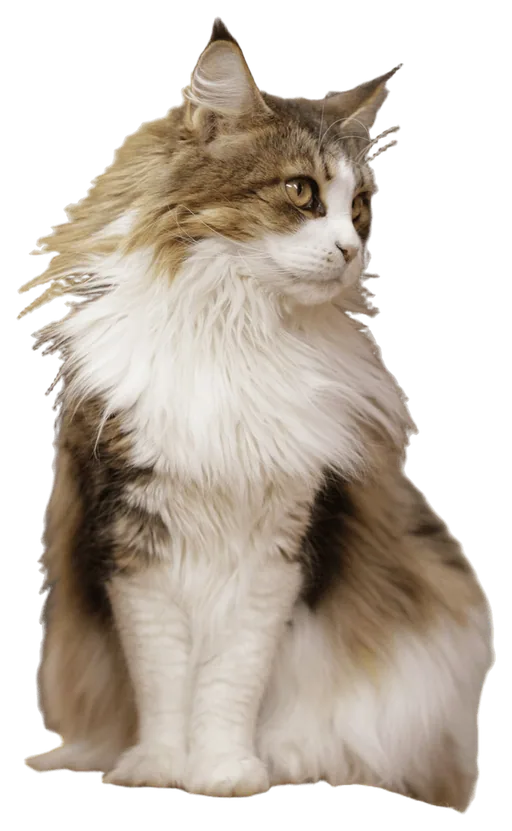
vs Fennec FoxWins · 57% · Toss-up 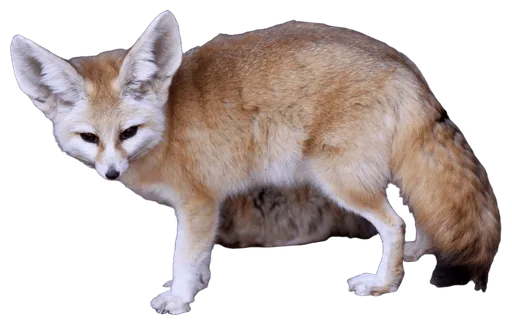 W vs Maine CoonLoses · 52% · Toss-up
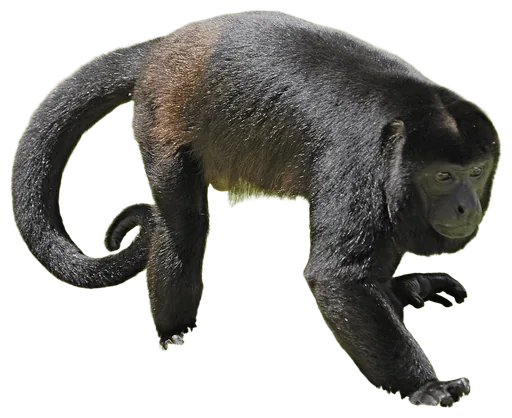
 L vs Howler MonkeyLoses · 52% · Toss-up
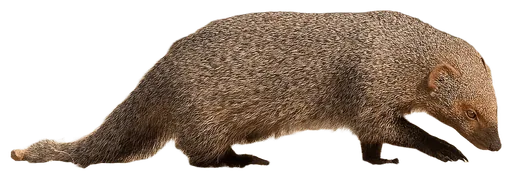
 L vs MongooseWins · 60% · Slight edge
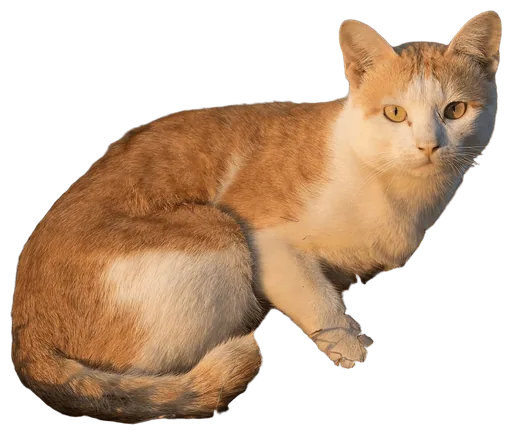
 W vs House CatWins · 51% · Toss-up
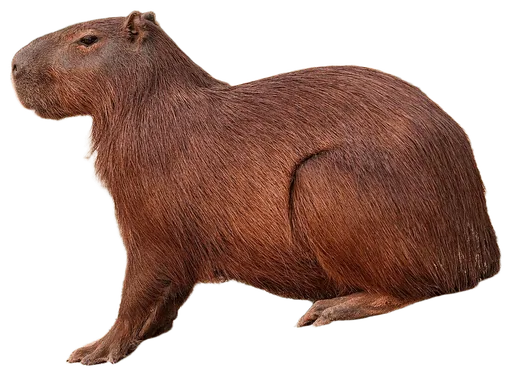
 W vs CapybaraLoses · 65% · Slight edge
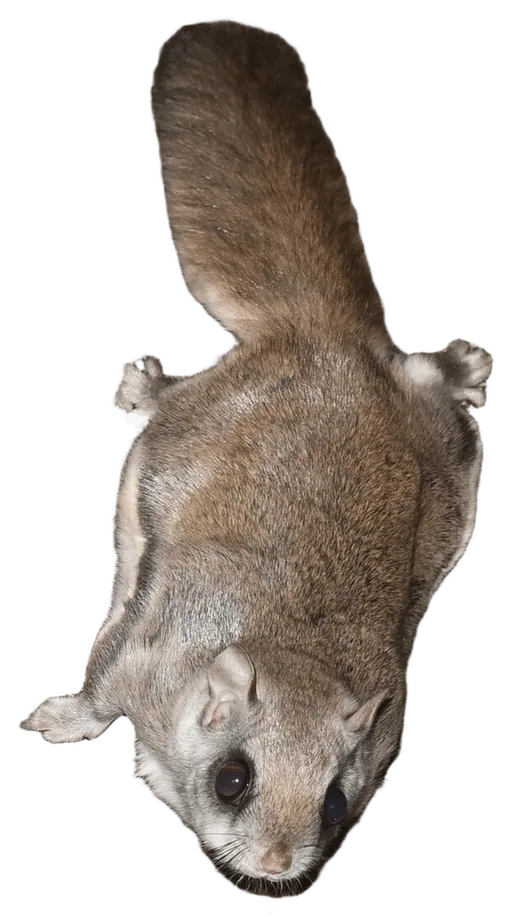
 L vs Flying SquirrelWins · 70% · Clear edge
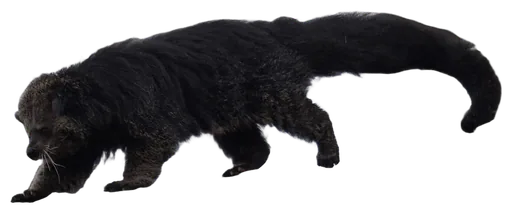
 W vs BinturongLoses · 55% · Toss-up
 L
Red Panda battle analysis
The red panda is a useful calibration case because its appearance and climbing skill can tempt two opposite errors: underrating it as harmless or overrating its agility as physical combat power. At roughly five kilograms, it has limited absolute force. Its teeth and claws matter against similarly small opponents, but they do not belong in the same attack tier as medium carnivores. Its strongest battle-relevant biology is positional. The hand carries an enlarged radial sesamoid that improves grip, the claws secure bark, the tail stabilizes movement, and gait experiments show that the animal actively changes how long and how many limbs support the body on arboreal substrates. In a tree this package gives it options that a terrestrial opponent may simply lack.
Its dietary specialization also explains why Stamina should not be inferred from constant feeding. Bamboo is poorly digested, so long feeding periods partly reflect low energy yield rather than exceptional aerobic output. The result is a profile with low Attack and direct Defense, high Agility, moderate Stamina/Intelligence and a strong but not extreme Special score.
Habitat & range
Himalayan red pandas occupy cool, high-elevation temperate forests with dense bamboo understory. Smithsonian places the broader red-panda complex from Nepal/India/Bhutan east through northern Myanmar and southwestern China; under the two-species interpretation, A. fulgens is the Himalayan form and the Chinese form is A. styani.
Diet & hunting
Bamboo leaves and shoots dominate the diet. Seasonal bamboo quality strongly affects digestible energy. The animal spends substantial time feeding because it extracts relatively little energy from fibrous bamboo. Other plant material and occasional animal foods can supplement the diet, but they do not convert it into an active predator.
Social life
Adults are generally solitary. Scent marking and quiet vocalizations help maintain spacing and reproductive communication. Smithsonian notes squeals, twitters and huff-quacks among its subtle vocal repertoire.
Conservation
Red pandas are threatened by habitat loss/degradation, fragmentation, human disturbance and poaching. Smithsonian currently describes red pandas as Endangered and notes major recent decline. Taxonomic splitting matters for conservation because the Himalayan population has lower genomic diversity and higher genetic load than the Chinese population in the 2020 genomic analysis.
Quick answers
How strong is a Red Panda?
On the Animal Battle Stats scale, the Red Panda has an attack rating of 24 and a power index of 42.7 out of 100, which ranks it #256 of 344 animals and puts it in C tier (Capable). Its strongest stat is agility (77).
How much does a Red Panda weigh?
A typical adult Red Panda weighs about 5 kg (11 lb). Rated specimen: healthy prime adult 5.0 kg Himalayan red panda.
How fast is a Red Panda?
There is no reliable measured top speed for the Red Panda, so we do not publish one. Its agility rating, which covers acceleration, reflexes and evasion, is 77 out of 100.
What does a Red Panda eat?
Bamboo leaves and shoots dominate the diet. Seasonal bamboo quality strongly affects digestible energy. The animal spends substantial time feeding because it extracts relatively little energy from fibrous bamboo. Other plant material and occasional animal foods can supplement the diet, but they do not convert it into an active predator.
Is the Red Panda endangered?
The Red Panda's conservation status is Endangered. Red pandas are threatened by habitat loss/degradation, fragmentation, human disturbance and poaching. Smithsonian currently describes red pandas as Endangered and notes major recent decline. Taxonomic splitting matters for conservation because the Himalayan population has lower genomic diversity and higher genetic load than the Chinese population in the 2020 genomic analysis.
What animals can beat a Red Panda?
Among its closest rivals, the Maine Coon (52%), the Howler Monkey (52%), the Capybara (65%), the Binturong (55%) would be favored against the Red Panda. It would be favored against the Fennec Fox, the Mongoose, the House Cat, the Flying Squirrel.
Researched 2026-09-27. Ratings are editorial judgments built from these sources; measurements describe a healthy adult male.
- Smithsonian National Zoo, Red pandasize, range, habitat, lifespan, reproduction, conservation
- Animal Diversity Web, Ailurus fulgensmass, length, dimorphism, lifespan, locomotion
- Plocek et al. 2023, Journal of Experimental Zoologygait mechanics
- Antón et al. 2006, Journal of Anatomyfalse-thumb anatomy
- Wei et al. 2000, Zoo Biologybamboo energetics
- Fei et al. 2017, metabolic ratemetabolism
- Hu et al. 2020 / Chinese Academy of Sciences summarytaxonomy/genomics
- Wikimedia Commons, Red Panda full body 2024image provenance
- ADW image ailurus2alternate adult image
Photo: “Red Panda (25193861686).jpg” by Mathias Appel, CC0, background removed and cropped. Original
Suggest a correction