
Red-Eyed Tree Frog
Agalychnis callidryasF tier · Snack2nd of 6 amphibians
Size & speed
- Weight
- 14 g0.5 oz
- Length
- 7 cm2.8 in
As heavy as 14 paperclips
Heavier than 5% of animalsAbout 0.8 credit cards long
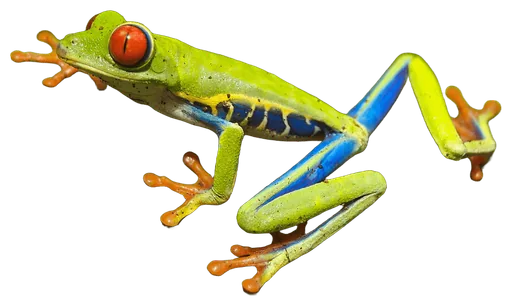
Bigger than 4% of animalsThe red-eyed tree frog is a tiny nocturnal canopy specialist whose battle identity is almost entirely positional. A robust adult female weighs only about 14 grams, so its bite and raw power sit near the roster floor, but adhesive toe discs, rapid jumping and precise branch control produce excellent agility. Green camouflage and a sudden flash of red, blue and orange help it evade predators rather than withstand them.
Detailed ratings
Research-backed ratings on one 0–100 scale for all 344 animals (updated 2026-09-27). How ratings work


Card No. 318 of 344. Every animal on Animal Battle Stats has one: its power, tier and archetype on the front; its six battle stats, abilities and signature move on the back.
Special abilities
Expanded toe discs and arboreal limb control let the frog cling to leaves and branches, maintain unconventional angles and escape vertically where many terrestrial opponents cannot follow.
A resting frog conceals much of its bright coloration, then sudden movement exposes red eyes, blue/yellow flanks and orange feet; this deimatic contrast can interrupt a predator's visual attack long enough for escape.
Unique traits
Females are materially larger than males, so the canonical combat specimen is female even though males perform more reproductive wrestling and calling contests.
Embryos can distinguish vibration patterns associated with snake attacks and hatch early to escape, a remarkable life-history trait that is documented here but deliberately not counted as an adult combat power.
How it fights
Weapons
- This is a tiny insectivore. Hunting is close-range and visually guided: it approaches or waits for small arthropods, then captures them with a rapid mouth/tongue strike. Against roster animals substantially larger than itself, its jaws and limbs produce negligible absolute damage. The female's larger body increases reach and force slightly relative to males but does not change the full-roster scaling problem.
Struggles vs
- Dry, hot or exposed environments where water loss becomes dangerous.
- Flat open ground that removes the value of arboreal grip and concealment.
- Large opponents able to kill with one strike, bite, stomp or crush.
- Armored or chemically defended prey that cannot be safely swallowed.
- Cold conditions that suppress ectothermic performance.
- Weight
- 14 g0.5 oz
- Height
- No reliable measurement
- Length
- 7 cm2.8 in
- Top speed
- No reliable measurement
- Bite force
- No reliable measurement
- Lifespan
- 5 years
- Home biome
- Jungle
- Lifestyle
- Social
Rated specimen: Healthy prime adult female, 0.014 kg and 7.0 cm snout-vent length (SVL).
Fun facts
- Females are substantially larger than males, reaching roughly 7-7.7 cm in well-supported field-guide accounts.
- The frog is brightly colored but not poisonous.
- Geographic populations differ in flank coloration and body size, and experimental females have shown preference for local males.
- Embryos can use vibration patterns to decide whether to hatch early during a snake attack.
- Eggs are laid above water rather than directly in it; hatchlings fall into the pond after hatching.
- The iconic red eyes can be hidden during rest as the frog compresses its body and tucks brightly colored limbs close to the torso.
Closest rivals by power. Tap one for the full breakdown, or pick any opponent.
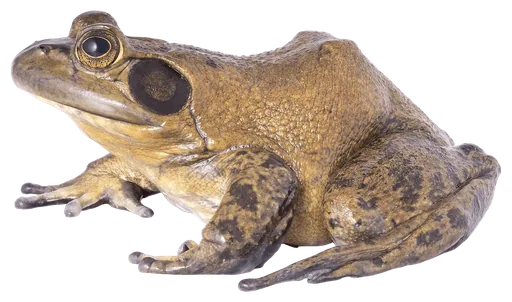
vs HellbenderLoses · 72% · Clear edge 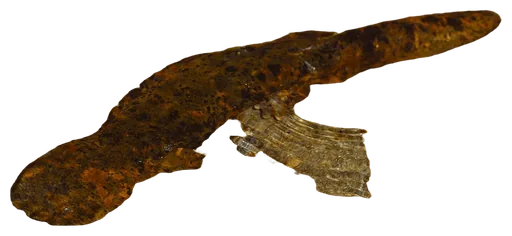 L vs BullfrogLoses · 68% · Slight edge
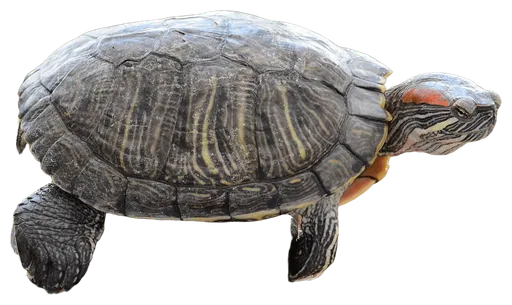
 L vs Red-eared SliderLoses · 75% · Clear edge
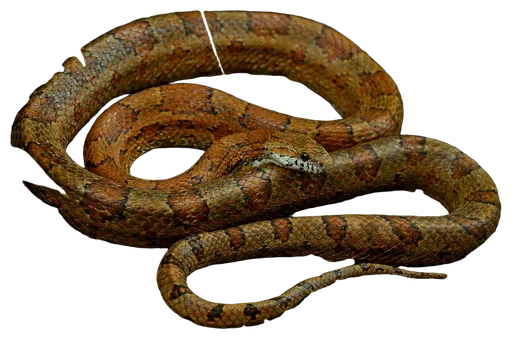
 L vs Corn SnakeLoses · 70% · Clear edge
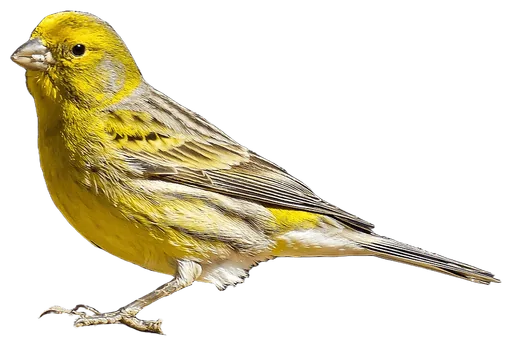
 L vs CanaryLoses · 53% · Toss-up
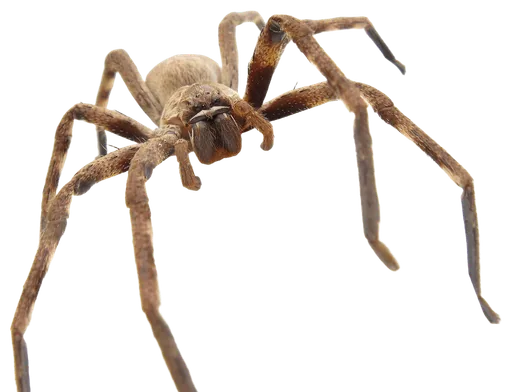
 L vs Huntsman SpiderLoses · 65% · Slight edge
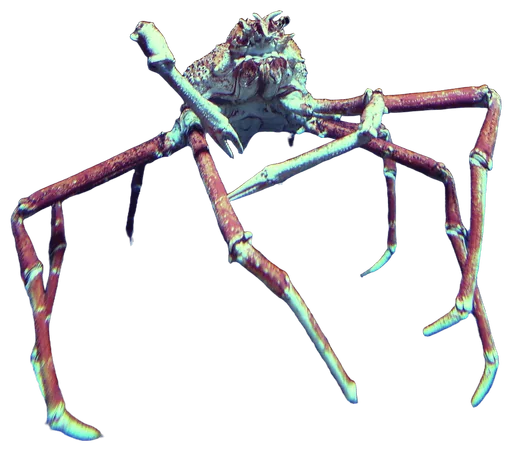
 L vs Japanese Spider CrabLoses · 82% · Clear edge
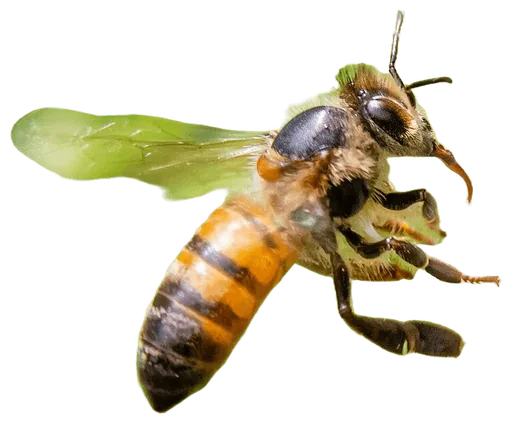
 L vs Africanized Honey BeeWins · 78% · Clear edge
 W
Red-Eyed Tree Frog battle analysis
The red-eyed tree frog is an important anti-inflation test for ABS. Its locomotor design is spectacular at its own scale: long limbs bridge gaps in vegetation, expanded toe discs maintain purchase on smooth leaves, and a tiny body can reverse direction or disappear into clutter quickly. Those facts justify a high Agility score. They do not justify high Raw Power, Attack or physical Defense. At fourteen grams, the canonical female can be catastrophically injured by opponents that barely notice her mechanically.
Its best defensive sequence begins before contact. During daylight rest the frog presents mostly green surfaces and hides the brighter parts of its body. If discovered, sudden exposure of red eyes, blue-and-yellow flanks and orange feet can startle a visual predator while the frog jumps away. That is a real matchup-changing mechanism, but it buys time rather than absorbing damage.
The species' most famous behavioral research actually concerns its embryos. Developing frogs can read vibrations through an egg clutch and hatch early during a snake attack. That is extraordinary sensory decision-making for an embryo, but the canonical ABS fighter is an adult. Treating embryo escape-hatching as adult Intelligence would be double-counting a different life stage, so this report records it as a unique biological trait while keeping adult cognition conservative.
Habitat & range
The species occupies humid lowland and premontane forests from southern Mexico through Central America into northwestern/northern Colombia, generally near ponds or slow/still water needed for reproduction. ADW reports occurrence from sea level to about 1,250 m, while recent Colombian work records the broader species near similar low-to-mid elevations. Adults are primarily arboreal and nocturnal.
Diet & hunting
Adults are insectivores that consume small arthropods such as moths, flies, crickets and other insects. They are both predators and prey in rainforest food webs. Their reliance on humid vegetation and breeding water links terrestrial canopy/understory ecology with aquatic tadpole development.
Social life
Adults are not cooperative hunters. Breeding occurs mainly in the rainy season. Males call and compete around breeding sites; females select mates and pairs enter amplexus. Eggs are deposited in gelatinous clutches on vegetation overhanging water. A 2024 biomechanical study measured A. callidryas clutches averaging about 40 eggs in its sample, consistent with ADW's approximately 40-egg average. After several days, hatchlings drop into water and continue development as tadpoles.
Conservation
Current conservation references list A. callidryas as Least Concern, but the population trend has been reported as decreasing. Habitat alteration, disease and collection/trade remain relevant concerns. CITES trade documentation lists A. callidryas in Appendix II, reflecting regulation of international trade rather than an Endangered status.
Quick answers
How strong is a Red-Eyed Tree Frog?
On the Animal Battle Stats scale, the Red-Eyed Tree Frog has an attack rating of 3 and a power index of 31.3 out of 100, which ranks it #318 of 344 animals and puts it in F tier (Snack). Its strongest stat is agility (85).
How much does a Red-Eyed Tree Frog weigh?
A typical adult Red-Eyed Tree Frog weighs about 14 g (0.5 oz). Rated specimen: healthy prime adult female, 0.014 kg and 7.0 cm snout-vent length (SVL).
How fast is a Red-Eyed Tree Frog?
There is no reliable measured top speed for the Red-Eyed Tree Frog, so we do not publish one. Its agility rating, which covers acceleration, reflexes and evasion, is 85 out of 100.
What does a Red-Eyed Tree Frog eat?
Adults are insectivores that consume small arthropods such as moths, flies, crickets and other insects. They are both predators and prey in rainforest food webs. Their reliance on humid vegetation and breeding water links terrestrial canopy/understory ecology with aquatic tadpole development.
Is the Red-Eyed Tree Frog endangered?
No. The Red-Eyed Tree Frog is listed as Least Concern. Current conservation references list A. callidryas as Least Concern, but the population trend has been reported as decreasing. Habitat alteration, disease and collection/trade remain relevant concerns. CITES trade documentation lists A. callidryas in Appendix II, reflecting regulation of international trade rather than an Endangered status.
What animals can beat a Red-Eyed Tree Frog?
Among its closest rivals, the Hellbender (72%), the Bullfrog (68%), the Red-eared Slider (75%), the Corn Snake (70%), the Canary (53%), the Huntsman Spider (65%), the Japanese Spider Crab (82%) would be favored against the Red-Eyed Tree Frog. It would be favored against the Africanized Honey Bee.
Researched 2026-09-27. Ratings are editorial judgments built from these sources; measurements describe a healthy adult female.
- Animal Diversity Web, Agalychnis callidryassize, mass, female-biased size, habitat, nocturnality, reproduction, lifespan
- Davis field guide account, University of Edinburgh-hosted PDFadult sex-specific size, morphology
- AmphibiaWeb account mirrored by EOLactivity, arboreality, breeding ecology, abundance
- Jacobs 2016, Biological Journal of the Linnean Societypopulation variation and mate choice
- Warkentin, Caldwell & McDaniel 2006, J Exp Biolembryo risk sensing
- Caldwell et al. 2009, J Exp Biolvibration-cued hatching
- 2024 Integrative Organismal Biologyclutch biomechanics and escape success
- 2024 clutch tableclutch dimensions/count
- CITES amphibian trade summaryconservation/trade context
- World Land Trust species accountcurrent status/family
- Henry Vilas Zoolifespan, size, conservation
- Commons/Brian Gratwicke full-body candidateimage provenance
- John P Clare Flickr adult femaleadult/sex image alternative
Photo: “Red eyed tree frog edit2.jpg” by Careyjamesbalboa (Carey James Balboa), Public domain, background removed and cropped. Original
Suggest a correction