
Rattlesnake
Crotalus atroxB tier · Strong14th of 39 reptiles
Size & speed

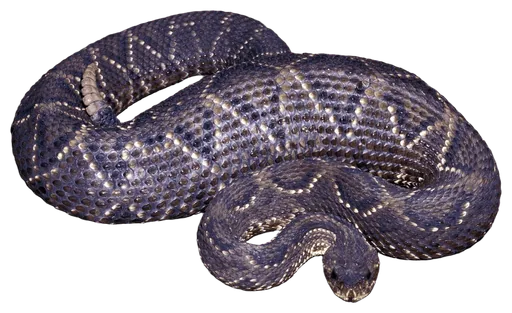
- Weight
- 2.5 kg6 lb
- Length
- 1.2 m3.9 ft
As heavy as 13 smartphones
Heavier than 29% of animalsAbout 4 rulers long
Bigger than 53% of animalsA heavy-bodied North American pit viper whose battle value comes from delivery rather than brute force. The western diamondback combines an explosive close-range strike, hinged venom fangs, infrared-sensitive facial pits, cryptic ambush behavior and a rattle that can prevent contact entirely. Its low mass and lack of armor keep physical ratings modest, but its specialist toolkit makes any unprotected close-range opponent treat one clean bite as a major threat.
Detailed ratings
Research-backed ratings on one 0–100 scale for all 344 animals (updated 2026-09-27). How ratings work


Card No. 117 of 344. Every animal on Animal Battle Stats has one: its power, tier and archetype on the front; its six battle stats, abilities and signature move on the back.
Special abilities
Hinged hollow fangs and an actively controlled venom-expulsion system deliver a medically significant venom payload into tissue, allowing a brief close-range bite to produce effects that continue after disengagement.
Paired loreal pits detect directional thermal radiation, improving close-range localization of warm targets and supporting thermal decision-making even when ordinary visual information is poor.
Unique traits
Interlocking tail segments generate a rapid acoustic warning display that can deter threats before physical contact and telegraph a coiled defensive state.
Rival males elevate and entwine their forebodies in ritualized pushing contests, a distinctive fighting behavior consistent with the species' male-biased adult size dimorphism.
How it fights
Weapons
- The western diamondback combines paired hinged hollow fangs with large venom glands and a specialized expulsion system. Experimental work by Young and Kardong on C. atrox showed that venom flow is not a fixed pump output: compressor-gland contraction explained only part of flow variation, while fang-sheath displacement during a normal strike strongly increased venom flow. This makes the weapon a coordinated mechanical delivery system rather than merely a toxic mouth.
- Venom is medically significant and can cause extensive local tissue injury, coagulopathy/hemorrhagic effects and systemic illness. Venom composition and delivered dose vary, so a single internet LD50 or venom-yield number should not be treated as a guaranteed combat dose. An older peer-reviewed Toxicon paper specifically measured electrically stimulated venom yield in C. atrox, confirming that yield is an experimentally studied variable, but this report does not convert extraction yield into a fixed bite dose.
- Weight
- 2.5 kg6 lb
- Height
- 10 cm3.9 in
- Length
- 1.2 m3.9 ft
- Top speed
- No reliable measurement
- Bite force
- No reliable measurement
- Lifespan
- 20 years
- Home biome
- Desert
- Lifestyle
- Social
Rated specimen: Healthy prime adult male, 2.5 kg, 120.0 cm total length.
Fun facts
- Blocking the facial pits experimentally impairs thermal-radiation-guided thermoregulatory choices.
- High-speed studies show a western diamondback strike can accelerate at well over 160 m/s².
- The rattle is made of keratinous segments associated with successive sheds, but segments can break off, so segment count is not a reliable age counter.
- Adult males are larger than females, and the degree of size dimorphism varies geographically.
- Male fights are often wrestling contests rather than fang-and-venom exchanges.
Closest rivals by power. Tap one for the full breakdown, or pick any opponent.
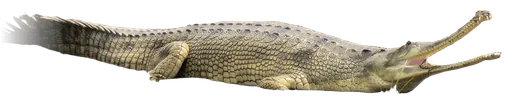
vs Black MambaWins · 52% · Toss-up 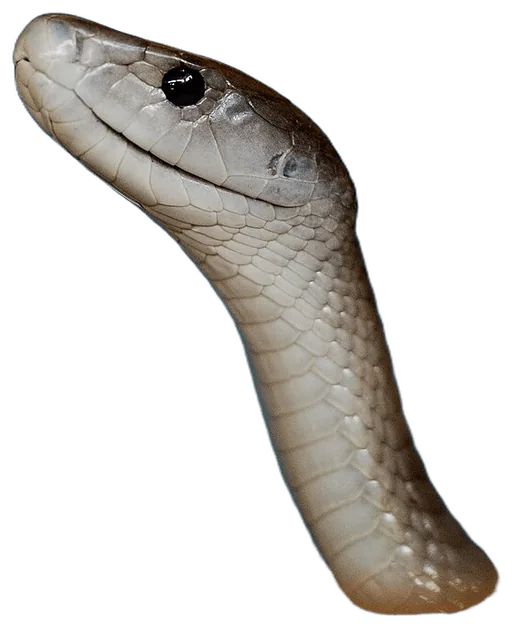 W vs GharialLoses · 74% · Clear edge
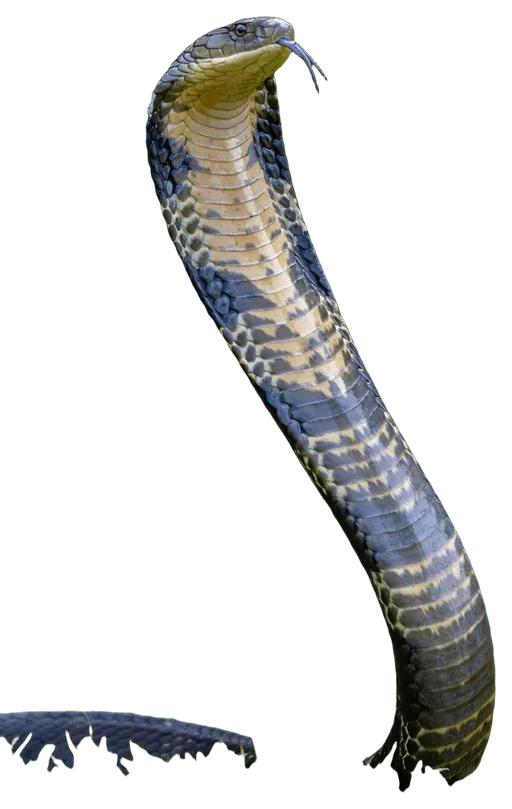
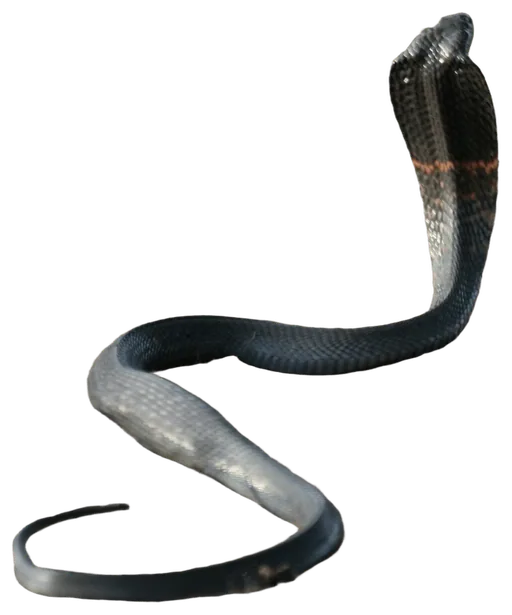
 L vs King CobraLoses · 59% · Slight edge
 L vs Black-necked Spitting CobraWins · 55% · Toss-up
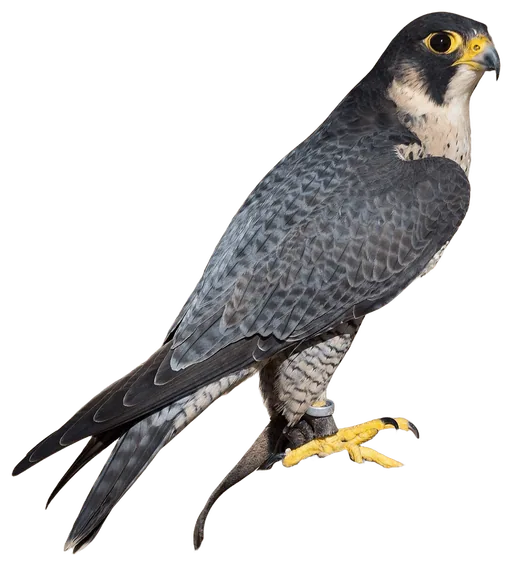
 W vs Peregrine FalconWins · 55% · Toss-up
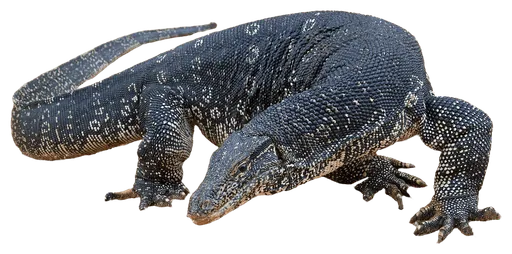
 W vs Monitor LizardLoses · 60% · Slight edge
 L vs Moray EelLoses · 63% · Slight edge
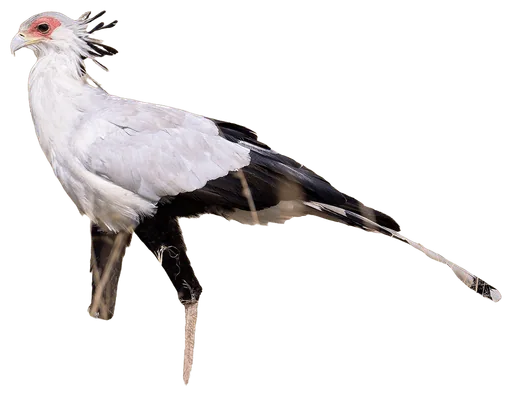
 L vs Secretary BirdLoses · 53% · Toss-up
 L
Rattlesnake battle analysis
The western diamondback is a strong example of why ABS cannot be reduced to body mass. At roughly a few kilograms, it has little chance of overpowering a wolf, bear or large hoofed mammal mechanically. Its body instead acts as a compact launch-and-delivery platform. The snake waits, aligns, accelerates the head over a short distance, rotates long hinged fangs into position and couples penetration to venom flow. It can then disengage rather than remain attached to a dangerous target.
Its defensive system is layered. Pattern and stillness can prevent detection. The rattle can prevent a fight. Coiling shortens the launch geometry and protects the head while preserving strike reach. Thermal pits and chemosensation help resolve target location. If contact occurs, venom changes the consequences of even a brief bite. Those layers justify very high Special and strong Weaponry, but they do not become fake armor, fake raw power or fake locomotor speed. A mongoose-like specialist, a heavily armored opponent or a much larger animal able to disable the snake before venom takes effect exposes the system's limits.
Habitat & range
Western diamondbacks occupy much of the southwestern United States and northern Mexico, using desert, semi-desert, grassland, scrub, rocky slopes and other dry open habitats. Retreat sites include rock crevices and mammal burrows. Population body size is not uniform: USGS-supported research across ten Arizona populations found larger adults in cooler and wetter environments.
Diet & hunting
They are ambush predators focused heavily on small mammals, with birds and reptiles also taken. By consuming rodents they function as important mesopredators in arid and semi-arid food webs. Prey can be struck and released, reducing the danger of grappling a struggling mammal.
Social life
Adults are primarily solitary outside reproductive and seasonal aggregation contexts. Males engage in ritual combat. The species is viviparous. ADW reports average sexual maturity around three years and an average litter around 14 young, though reproduction varies with female size and condition. Seasonal denning can aggregate individuals in colder parts of the range.
Conservation
The species is widespread and generally assessed as Least Concern, but local populations face road mortality, habitat conversion, persecution and rattlesnake roundups. It is medically important to people because bites can be severe. Human safety should rely on distance and professional wildlife handling, not attempts to provoke or move the animal by hand.
Quick answers
How strong is a Rattlesnake?
On the Animal Battle Stats scale, the Rattlesnake has an attack rating of 58 and a power index of 54.5 out of 100, which ranks it #117 of 344 animals and puts it in B tier (Strong). Its strongest stat is special (94).
How much does a Rattlesnake weigh?
A typical adult Rattlesnake weighs about 2.5 kg (6 lb). Rated specimen: healthy prime adult male, 2.5 kg, 120.0 cm total length.
How fast is a Rattlesnake?
There is no reliable measured top speed for the Rattlesnake, so we do not publish one. Its agility rating, which covers acceleration, reflexes and evasion, is 72 out of 100.
What does a Rattlesnake eat?
They are ambush predators focused heavily on small mammals, with birds and reptiles also taken. By consuming rodents they function as important mesopredators in arid and semi-arid food webs. Prey can be struck and released, reducing the danger of grappling a struggling mammal.
Is the Rattlesnake endangered?
No. The Rattlesnake is listed as Least Concern. The species is widespread and generally assessed as Least Concern, but local populations face road mortality, habitat conversion, persecution and rattlesnake roundups. It is medically important to people because bites can be severe. Human safety should rely on distance and professional wildlife handling, not attempts to provoke or move the animal by hand.
What animals can beat a Rattlesnake?
Among its closest rivals, the Gharial (74%), the King Cobra (59%), the Monitor Lizard (60%), the Moray Eel (63%), the Secretary Bird (53%) would be favored against the Rattlesnake. It would be favored against the Black Mamba, the Black-necked Spitting Cobra, the Peregrine Falcon.
Researched 2026-09-27. Ratings are editorial judgments built from these sources; measurements describe a healthy adult male.
- doi.org
- usgs.gov
- animaldiversity.org
- nature.com
- onlinelibrary.wiley.com
- doi.org)90118-3
- pubmed.ncbi.nlm.nih.gov
- pubmed.ncbi.nlm.nih.gov
- commons.wikimedia.org).jpg
- animaldiversity.org
Photo: “Crotalus durissus3 Atibaia SP OAVM.jpg” by Otavio A Marques, CC BY 4.0, background removed and cropped. Original
Suggest a correction