
Raccoon
Procyon lotorC tier · Capable117th of 163 mammals
Size & speed

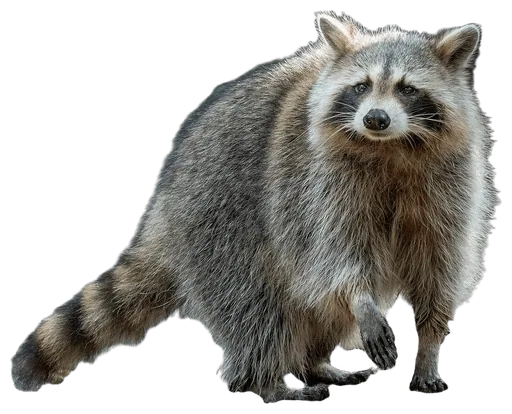
- Weight
- 6.5 kg14 lb
- Length
- 88 cm34.6 in
- Top speed
- 24 km/h15 mph
As heavy as 1.4 house cats
Heavier than 40% of animalsAbout 2.9 rulers long
Bigger than 40% of animalsAbout as fast as a person running
Faster than 23% of animalsThe raccoon is a 6.5 kg generalist built less around brute force than dexterity, climbing and behavioral flexibility. Its bite and claws are modest on the full ABS scale, but sensitive five-digit forepaws, strong three-dimensional mobility and experimentally demonstrated problem solving make it unusually versatile in complex terrain.
Detailed ratings
Research-backed ratings on one 0–100 scale for all 344 animals (updated 2026-09-27). How ratings work


Card No. 209 of 344. Every animal on Animal Battle Stats has one: its power, tier and archetype on the front; its six battle stats, abilities and signature move on the back.
Special abilities
Highly sensitive five-digit forepaws combine mechanoreception with manipulation, letting the raccoon probe, grip, pry and exploit complex objects or terrain.
Strong climbing, den use and flexible ground-to-tree movement let the raccoon rapidly convert vertical structure into refuge or positional advantage.
Unique traits
Controlled and wild puzzle studies show multiple solution discovery, learning and behaviorally flexible problem solving.
Northern raccoons can accumulate large autumn fat reserves and remain dormant for extended winter periods without true hibernation.
How it fights
Weapons
- The main close-range weapons are the jaws and teeth. Foreclaws add scratching, gripping and positional control, but the hands are more important for manipulation and climbing than as dedicated killing weapons. Against small prey, raccoons can seize, bite and handle with both forepaws. Against a similar-sized aggressor, the compact body, bite and clawing create a credible defensive package.
Struggles vs
- Open ground: removes its strongest escape route and exposes mediocre pursuit speed.
- Deep prolonged swimming: fur is not specialized like an otter's; ADW notes swimming adds water weight.
- Heavyweight matchup: 6.5 kg body mass and lack of armor impose a hard ceiling.
- Weight
- 6.5 kg14 lb
- Height
- 27 cm10.6 in
- Length
- 88 cm34.6 in
- Top speed
- 24 km/h15 mph
- Bite force
- No reliable measurement
- Lifespan
- 5 years
- Home biome
- Forest
- Lifestyle
- Mostly solitary, nocturnal
Rated specimen: Healthy prime adult male, 6.5 kg, approximately 88.0 cm total length, about 27.0 cm shoulder height.
Fun facts
- A raccoon's front feet have five long digits and unusually specialized tactile pads.
- Peer-reviewed experiments show raccoons can discover more than one solution to the same novel foraging problem.
- Wild raccoons have also solved experimental puzzle boxes, not just captive animals.
- Northern free-ranging males can gain several kilograms of seasonal mass before winter.
- They can climb, swim and forage on the ground, giving them unusually broad locomotor options for a medium-small mammal.
- They do not truly hibernate, even where they spend long winter periods dormant.
Closest rivals by power. Tap one for the full breakdown, or pick any opponent.
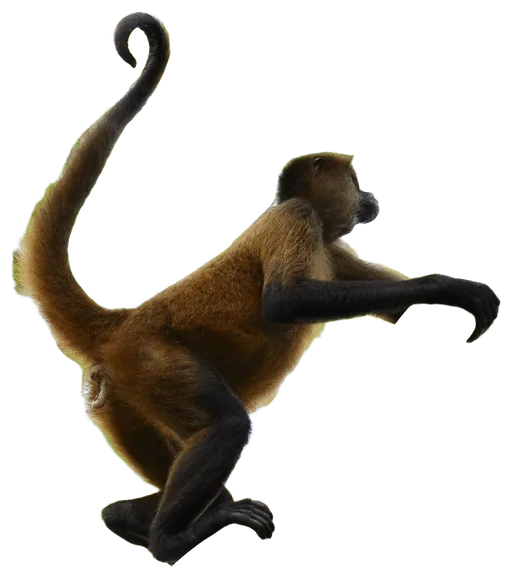
vs Naked Mole RatWins · 75% · Clear edge 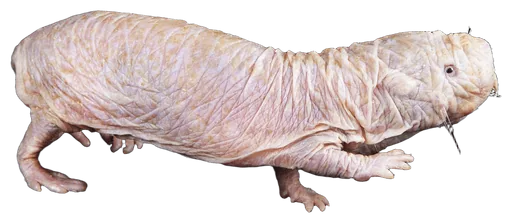 W vs Spider MonkeyLoses · 51% · Toss-up
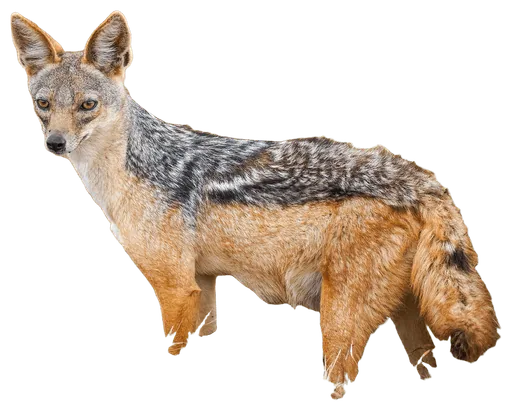
 L vs JackalLoses · 51% · Toss-up
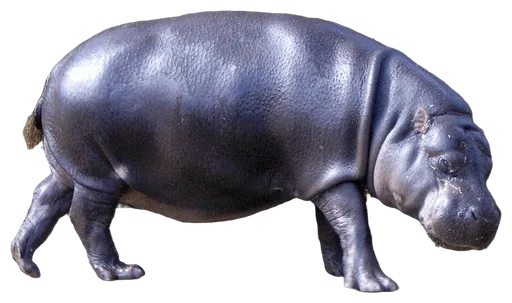
 L vs Pygmy HippopotamusLoses · 71% · Clear edge
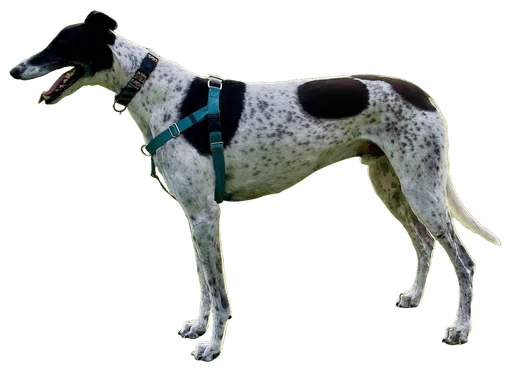
 L vs GreyhoundLoses · 58% · Slight edge
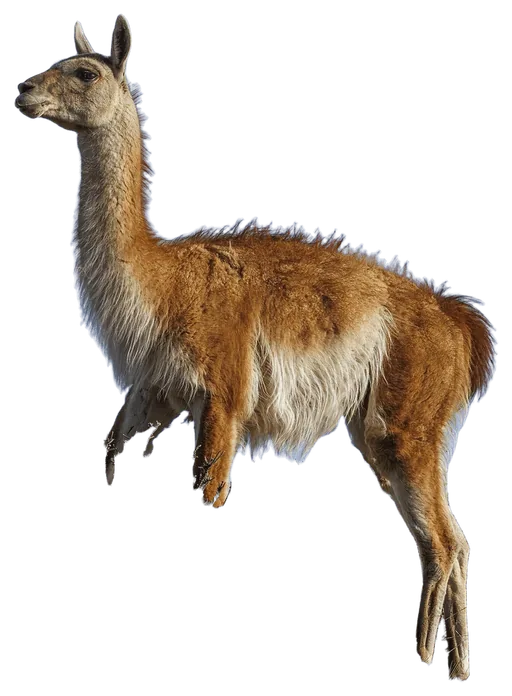
 L vs GuanacoLoses · 68% · Slight edge
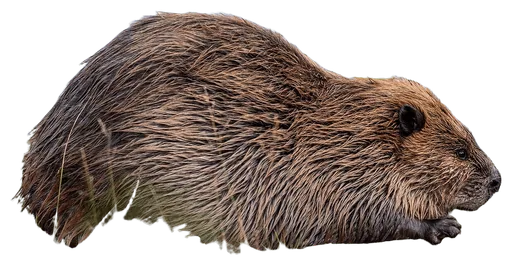
 L vs BeaverLoses · 60% · Slight edge
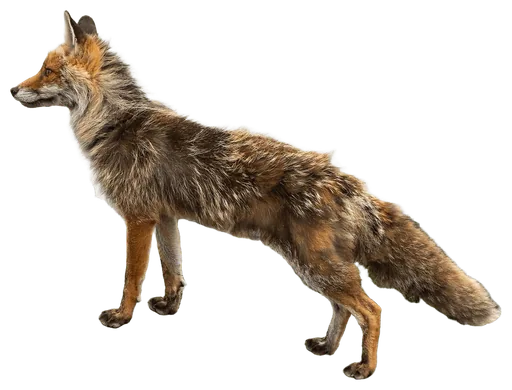
 L vs Red FoxLoses · 53% · Toss-up
 L
Raccoon battle analysis
The raccoon's reputation for cleverness has stronger empirical support than many animal stereotypes. Multi-access puzzle experiments show repeated innovation and learning, and field experiments with wild raccoons show that successful individuals can discover multiple solution types. That cognition combines with a tactile system that is genuinely specialized: histological work on the digital pads describes sensory equipment suited to fine mechanoreception.
In a fight, however, intelligence does not erase physics. A representative adult male weighs only about 6.5 kg. Its carnivoran jaw, canines and claws can injure a similar-sized opponent, but it lacks the specialized killing anatomy of a cat or mustelid and has no armor. Attack and Defense therefore remain low on the absolute roster scale.
The raccoon's best matchup advantage is positional flexibility. It can walk, climb, manipulate, den in narrow cavities and swim. A tree, log pile, building or riparian bank gives it options a purely terrestrial opponent may not have. That is why Agility, Intelligence and Special outrank Attack. On open ground against a larger dedicated predator, most of those advantages collapse and the raccoon becomes a small, unarmored mammal with modest speed.
Habitat & range
Deciduous/mixed forest, hardwood bottomland, riparian corridors, wetlands, marshes, agricultural mosaics, suburbs and cities. Tree cavities are classic dens, but raccoons readily use burrows, rock cavities, culverts, attics and other structures.
Native broadly across North and Central America from southern Canada through much of the United States and Mexico into Central America. Introduced populations are established in parts of Europe and Asia.
Diet & hunting
Omnivorous and opportunistic: fruit, nuts, seeds, grain, insects, crayfish, crabs, mollusks, fish, frogs, reptiles, eggs, small mammals, carrion and human-associated food.
Social life
Often described as primarily solitary, but social organization is more flexible than that shorthand suggests. Home ranges can overlap, mothers travel with young, adults aggregate at rich food sources, and male movement expands during breeding.
Conservation
The common raccoon is globally widespread and commonly treated as Least Concern in conservation syntheses. It is also invasive in several non-native regions. Local management is frequently driven by crop/property conflict and disease concerns rather than population scarcity.
Quick answers
How strong is a Raccoon?
On the Animal Battle Stats scale, the Raccoon has an attack rating of 30 and a power index of 47.9 out of 100, which ranks it #209 of 344 animals and puts it in C tier (Capable). Its strongest stat is intelligence (76).
How much does a Raccoon weigh?
A typical adult Raccoon weighs about 6.5 kg (14 lb). Rated specimen: healthy prime adult male, 6.5 kg, approximately 88.0 cm total length, about 27.0 cm shoulder height.
How fast is a Raccoon?
The Raccoon's top speed is about 24 km/h (15 mph). Its agility rating is 74 out of 100.
What does a Raccoon eat?
Omnivorous and opportunistic: fruit, nuts, seeds, grain, insects, crayfish, crabs, mollusks, fish, frogs, reptiles, eggs, small mammals, carrion and human-associated food.
Is the Raccoon endangered?
No. The Raccoon is listed as Least Concern. The common raccoon is globally widespread and commonly treated as Least Concern in conservation syntheses. It is also invasive in several non-native regions. Local management is frequently driven by crop/property conflict and disease concerns rather than population scarcity.
What animals can beat a Raccoon?
Among its closest rivals, the Spider Monkey (51%), the Jackal (51%), the Pygmy Hippopotamus (71%), the Greyhound (58%), the Guanaco (68%), the Beaver (60%), the Red Fox (53%) would be favored against the Raccoon. It would be favored against the Naked Mole Rat.
Researched 2026-09-27. Ratings are editorial judgments built from these sources; measurements describe a healthy adult male.
- Animal Diversity Web, Procyon lotormass, length, dimorphism, locomotion, senses, diet, lifespan
- Texas Tech, Mammals of Texasadult external measurements, range, habitat
- Mugaas & Seidensticker, Florida Museum Bulletingeographic body-mass variation
- Mugaas, Mahlke-Johnson & Seidensticker, metabolic studyseasonal mass and fasting physiology
- Asano et al. 2003, Hokkaido University / PubMeddimorphism, adulthood, seasonal mass
- Gorniak 1986, American Journal of Anatomy / PubMedjaw architecture
- Yasui et al. 2004digital-pad mechanoreception
- Stalheim-Smith 1989 / PubMedclimbing forelimb mechanics
- Daniels et al. 2019 / PubMedcognition
- Royal Society Proceedings B 2024wild cognition
- Lazure & Weladji 2024, Animal Behaviourwild problem solving
- US Forest Service FEISactivity, winter dormancy, lifespan, home range
- UF/IFAS Northern Raccoonadult morphology, diet, dens, predators, reproduction
- Wikimedia Commons, Procyon lotor (raccoon, procione)reusable image alternative
Photo: “Raccoon in Central Park (35264).jpg” by Rhododendrites, CC BY-SA 4.0, background removed and cropped. Original
Suggest a correction