
Python
Malayopython reticulatusB tier · Strong6th of 39 reptiles
Size & speed

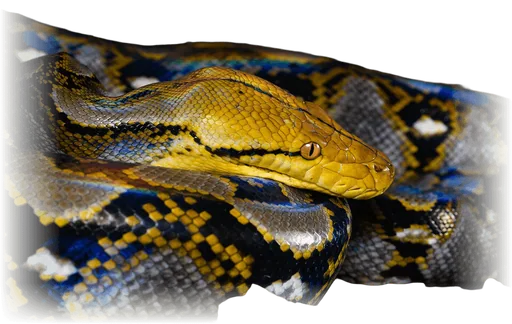
- Weight
- 50 kg110 lb
- Length
- 5 m16.4 ft
About as heavy as a person
Heavier than 63% of animals2.9× a person's height
Bigger than 94% of animalsThe reticulated python is a giant Southeast Asian constrictor built around one decisive sequence: detect, seize, wrap and compress. A large female combines five metres of flexible reach, powerful whole-body coils, recurved anchoring teeth and infrared-sensitive facial pits, but remains vulnerable to head trauma, armor and opponents too large or mobile to control.
Detailed ratings
Research-backed ratings on one 0–100 scale for all 344 animals (updated 2026-09-27). How ratings work


Card No. 82 of 344. Every animal on Animal Battle Stats has one: its power, tier and archetype on the front; its six battle stats, abilities and signature move on the back.
Special abilities
The bite anchors the target while multiple trunk loops apply diameter-scaled circumferential pressure; direct experiments on P. reticulatus confirm that larger snakes generate higher peak constriction pressure.
Maxillary, mandibular and mental pit organs feed thermal information through specialized trigeminal pathways, improving warm-target localization in low light and close ambush conditions.
Unique traits
Strong female-biased sexual size dimorphism means mature females occupy the species' largest and most powerful combat class.
The reticulated python achieves exceptional reach and encirclement length without the same bulk per metre as an equivalently heavy anaconda, producing a distinct long-bodied grappling profile.
How it fights
Weapons
- The reticulated python is a nonvenomous ambush constrictor. A successful attack typically begins with a rapid bite that anchors the prey, followed by loops of the trunk. Boback et al.'s direct P. reticulatus measurements show that larger-diameter snakes produce greater peak constriction pressures. Work on constrictors more generally demonstrates that constriction can rapidly disrupt circulation rather than simply "crush bones." For ABS, the practical consequence is a positional weapon: once multiple coils are securely established around the torso or neck of a manageable opponent, escape becomes progressively harder and cardiovascular function can be compromised.
Struggles vs
- No rigid armor.
- Offense is strongly dependent on establishing close contact.
- Head and upper spine are critical targets.
- A failed bite-and-wrap exposes a long body to counterattack.
- Ectothermic output is temperature-sensitive.
- Weight
- 50 kg110 lb
- Height
- No reliable measurement
- Length
- 5 m16.4 ft
- Top speed
- No reliable measurement
- Bite force
- No reliable measurement
- Lifespan
- 20 years
- Home biome
- Jungle
- Lifestyle
- Mostly solitary, nocturnal
Rated specimen: Healthy prime adult female, because females are materially larger than males and therefore represent the stronger fighting sex.
Fun facts
- It is the longest living snake species by credible maximum length, although the green anaconda is generally heavier-bodied.
- Shine et al.'s southern-Sumatran study examined 1,070 individuals, an unusually large field dataset for a giant snake.
- Females in that study reached much larger maxima than males, about 75 kg versus 20 kg.
- Reticulated-python pit organs have been mapped to specific trigeminal sensory neurons rather than merely inferred from appearance.
- Infrared-sensitive snake TRPA1 channels are among the most heat-sensitive vertebrate ion channels studied.
- Northern-Sumatran females averaged about 24.2 eggs per clutch in one harvest-based field study but reproduced only every 2-4 years.
Closest rivals by power. Tap one for the full breakdown, or pick any opponent.
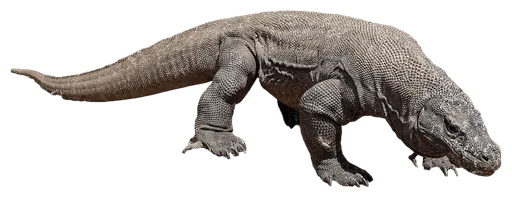
vs Reticulated PythonDraw · 50-50 · Dead even 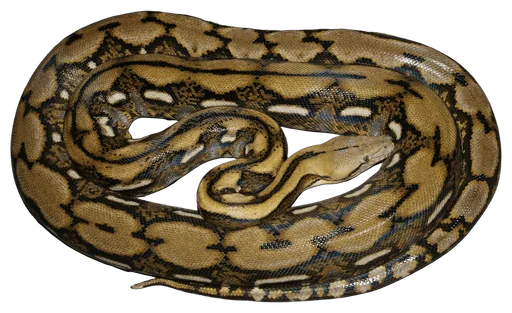 D vs Komodo DragonLoses · 52% · Toss-up
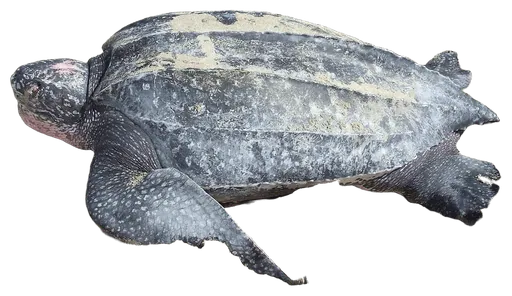
 L vs Leatherback Sea TurtleLoses · 63% · Slight edge
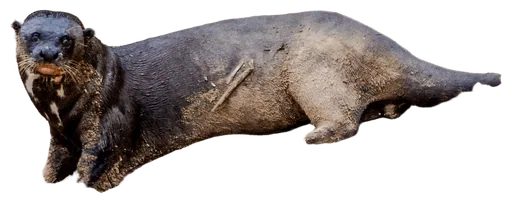
 L vs Giant OtterWins · 53% · Toss-up
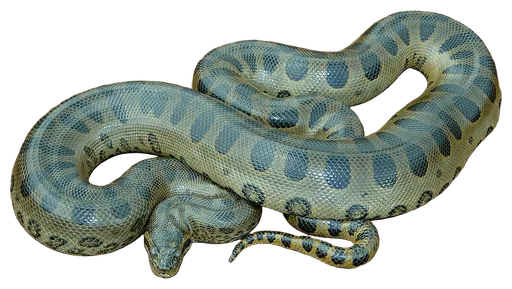
 W vs Green AnacondaWins · 53% · Toss-up
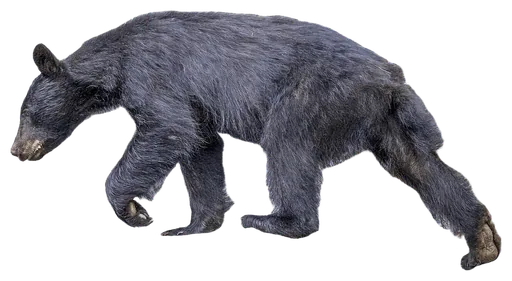
 W vs Black BearLoses · 56% · Toss-up
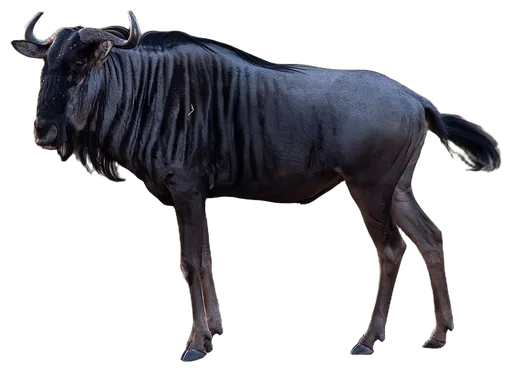
 L vs WildebeestLoses · 60% · Slight edge
 L vs KangarooLoses · 54% · Toss-up
 L
Python battle analysis
The Python roster entry resolves to the reticulated python, a species whose real combat biology is more interesting than the legacy 200-PSI placeholder suggests. Its jaws are not the main engine. They are the grappling hook. Once recurved teeth hold, the rest of the animal becomes the weapon. Direct experiments on reticulated pythons show that constriction pressure rises with body diameter, giving large females a mechanically credible path from contact to circulatory disruption.
The second half of the system is target acquisition. Reticulated pythons do not merely possess vague "heat vision." They carry arrays of facial pit organs whose sensory neurons and neural projections have been experimentally mapped. Those pits detect radiant warmth through specialized thermosensory machinery and complement chemical and mechanical cues. In darkness and dense cover, that package makes the snake much harder to evade at close range than vision alone would suggest.
ABS should still resist giant-snake exaggeration. A 50 kg female is formidable, but it is not armored, fast in open pursuit, or capable of controlling arbitrarily large opponents. Its best matchup is a target that enters striking range and lacks the tools to prevent a complete wrap. Its worst matchup is one that stays outside that range, crushes or tears the head, or is simply too massive for the coil system to dominate.
Habitat & range
The species occupies South and Southeast Asian lowlands across continental and insular systems, including forests, river margins, wetlands, mangroves, agricultural mosaics and settlements. It tolerates substantial habitat modification and is strongly associated with water in many parts of its range. Its island distribution and population structure are complex, so one mainland/Sumatran body-size template should not be treated as universal.
Diet & hunting
Reticulated pythons are carnivorous ambush predators. Southern-Sumatran field data show an ontogenetic shift from rats toward larger mammals as body size increases. Recorded larger-prey categories include pangolins, porcupines, monkeys, wild pigs and mouse deer. Their ability to exploit commensal rats helps explain success in agricultural and village landscapes.
Social life
Primarily solitary outside reproductive interactions. No cooperative hunting or coalition combat is known.
Conservation
The global species is treated as Least Concern, but it is heavily harvested for skins and other trade. CITES technical review material notes that available evidence supports population stability in studied areas while also documenting intense harvest in portions of Peninsular Malaysia. Least Concern does not mean harvest pressure is biologically irrelevant.
Quick answers
How strong is a Python?
On the Animal Battle Stats scale, the Python has an attack rating of 72 and a power index of 58.8 out of 100, which ranks it #82 of 344 animals and puts it in B tier (Strong). Its strongest stat is special (82).
How much does a Python weigh?
A typical adult Python weighs about 50 kg (110 lb). Rated specimen: healthy prime adult female, because females are materially larger than males and therefore represent the stronger fighting sex.
How fast is a Python?
There is no reliable measured top speed for the Python, so we do not publish one. Its agility rating, which covers acceleration, reflexes and evasion, is 52 out of 100.
What does a Python eat?
Reticulated pythons are carnivorous ambush predators. Southern-Sumatran field data show an ontogenetic shift from rats toward larger mammals as body size increases. Recorded larger-prey categories include pangolins, porcupines, monkeys, wild pigs and mouse deer. Their ability to exploit commensal rats helps explain success in agricultural and village landscapes.
Is the Python endangered?
No. The Python is listed as Least Concern. The global species is treated as Least Concern, but it is heavily harvested for skins and other trade. CITES technical review material notes that available evidence supports population stability in studied areas while also documenting intense harvest in portions of Peninsular Malaysia. Least Concern does not mean harvest pressure is biologically irrelevant.
What animals can beat a Python?
Among its closest rivals, the Komodo Dragon (52%), the Leatherback Sea Turtle (63%), the Black Bear (56%), the Wildebeest (60%), the Kangaroo (54%) would be favored against the Python. It would be favored against the Giant Otter, the Green Anaconda. It is dead even with the Reticulated Python: a draw.
Researched 2026-09-27. Ratings are editorial judgments built from these sources; measurements describe a healthy adult female.
- Shine, Harlow, Keogh & Boeadi, Functional Ecology1,070 southern-Sumatran snakes; female-biased size dimorphism; 75 vs 20 kg and 7 vs 5 m maxima; ontogenetic prey shifts; sex differences in feeding ecology
- Shine, Ambariyanto, Harlow & Mumpuni, Biological Conservation784 northern-Sumatran snakes; geographic maturity differences; larger females; mean clutch 24.2; >250 g eggs; reproduction every 2-4 years; flexible habitat/diet and harvest context
- Boback et al., Journal of Experimental BiologyDirect P. reticulatus constriction measurements; peak pressure scales positively with snake diameter and can exceed prey blood pressure
- Tan & Gopalakrishnakone, Neuroscience LettersReticulated-python infrared neurons innervating 5 maxillary, 6 mandibular and 4 mental pit organs
- Newman, Gruberg & Hartline, Journal of Comparative NeurologyDirect infrared trigemino-tectal pathway in P. reticulatus
- de Cock Buning et al., Cellular and Molecular NeurobiologyPit-organ neurons respond to infrared/warm and touch stimuli; receptor physiology
- Gracheva et al., NatureTRPA1 molecular mechanism for infrared detection in pit-bearing snakes, including python
- Animal Diversity WebBroad morphology, habitat, reproduction and dimorphism context
- CITES technical reviewLeast Concern/global status context, harvest intensity and population-stability evidence in Peninsular Malaysia
- Commons image, Kirkamon A. CabelloExact-species reusable 5446x3631 candidate and license
- Commons image, Tylwyth EldarExact species and explicit 23-year-old adult, 6000x4000, CC BY-SA 4.0
Photo: “Malayopython reticulatus, Reticulated python - Kaeng Krachan District, Phetchaburi Province (47924282891).jpg” by Rushenb, CC BY-SA 2.0, background removed and cropped. Original
Suggest a correction