
Puffin
Fratercula arcticaC tier · Capable28th of 55 birds
Size & speed
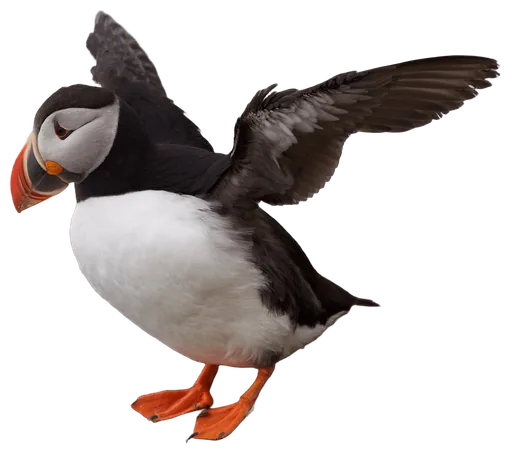
- Weight
- 500 g17.6 oz
- Length
- 29 cm11.4 in
As heavy as 2.5 smartphones
Heavier than 15% of animalsAbout 3.4 credit cards long
Bigger than 15% of animalsThe Atlantic Puffin is a half-kilogram dual-medium endurance specialist. Its bill is only a modest weapon, but the bird can fly rapidly for long distances, pursue fish tens of meters underwater with wing-powered strokes, and exploit ocean currents to reduce foraging costs. Its battle value comes from mobility and stamina rather than damage or armor.
Detailed ratings
Research-backed ratings on one 0–100 scale for all 344 animals (updated 2026-09-27). How ratings work


Card No. 213 of 344. Every animal on Animal Battle Stats has one: its power, tier and archetype on the front; its six battle stats, abilities and signature move on the back.
Special abilities
The same wing system powers both aerial flight and underwater pursuit; underwater kinematics show active thrust production during the stroke cycle.
Wild puffins can exploit tidal transport through feeding grounds, with energetic modeling indicating substantial savings versus repeated flight between prey patches.
Unique traits
The broad grooved bill and oral handling system allow multiple small fish to be retained crosswise while additional prey are captured.
A compact 0.5 kg bird can spend most of the nonbreeding period at sea and, in high-Arctic populations, cover many thousands of kilometers annually.
How it fights
Weapons
- Puffins are pursuit-diving fish eaters, not macropredators. The bill is precise enough to secure fish and can function as a close-range pecking/grappling implement. Males also defend nesting areas, but no evidence supports treating the bill like a raptor's hooked killing beak.
Struggles vs
- Only about half a kilogram in mass.
- No talons, venom, armor or high-force bite.
- Flight is energetically expensive relative to efficient soaring birds.
- Compact seabird build is optimized for dual-medium travel, not terrestrial fighting.
- Best defenses depend on access to air or water for escape.
- Weight
- 500 g17.6 oz
- Height
- No reliable measurement
- Length
- 29 cm11.4 in
- Top speed
- No reliable measurement
- Bite force
- No reliable measurement
- Lifespan
- 30 years
- Home biome
- Arctic
- Lifestyle
- Social
Rated specimen: Healthy prime adult male in breeding condition, approximately 0.50 kg, 29.0 cm body length, and 53.0 cm wingspan.
Fun facts
- Atlantic Puffins can dive to at least 60 m based on fishery-net records.
- High-Arctic Greenland birds tracked with geolocators traveled 7,000 to at least 13,700 km annually.
- The oldest Cornell-cited banded Atlantic Puffin reached 41 years.
- Underwater, the puffin does not merely paddle with its feet. Its wings generate thrust on both portions of the stroke cycle, including evidence of an active upstroke.
- Wild puffins have been documented using tidal currents as an energy-saving foraging strategy.
- Their colorful breeding bill becomes duller outside the breeding season as outer bill plates are shed.
Closest rivals by power. Tap one for the full breakdown, or pick any opponent.
vs Hyacinth MacawLoses · 56% · Toss-up 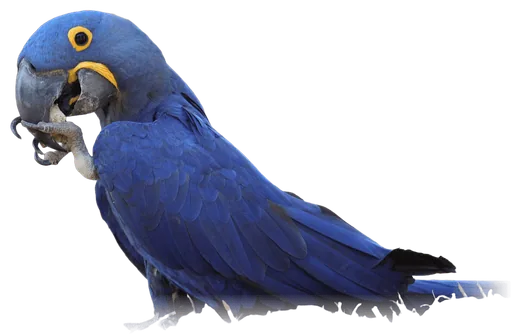 L vs MacawLoses · 54% · Toss-up
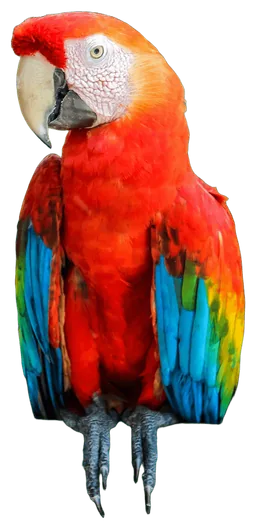 L vs GooseLoses · 60% · Slight edge
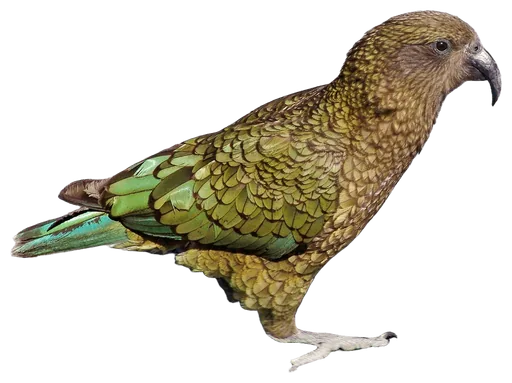
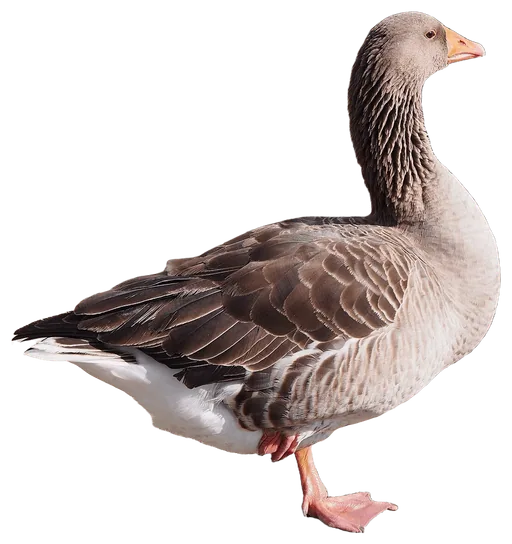 L vs KeaLoses · 52% · Toss-up
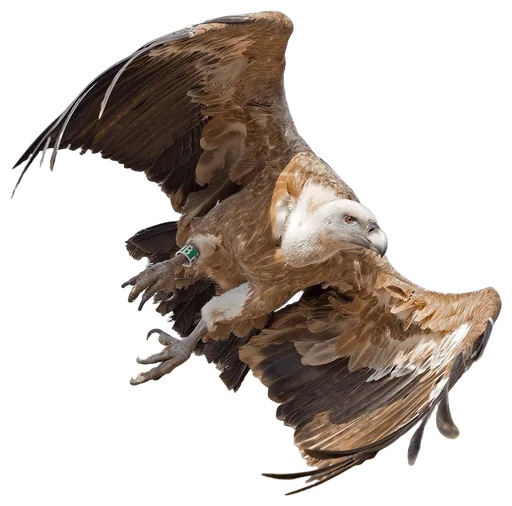
 L vs VultureLoses · 67% · Slight edge
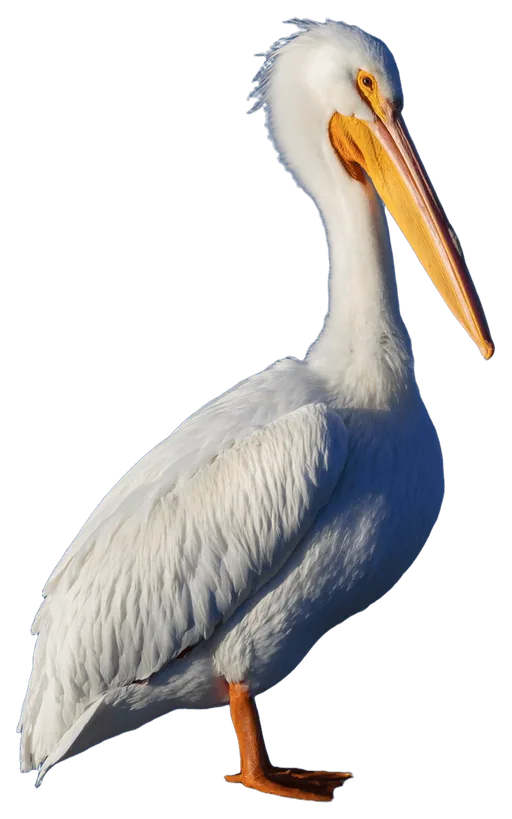
 L vs PelicanLoses · 67% · Slight edge
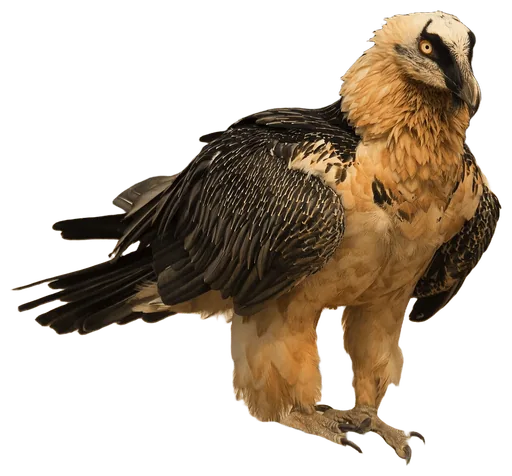
 L vs Bearded VultureLoses · 67% · Slight edge
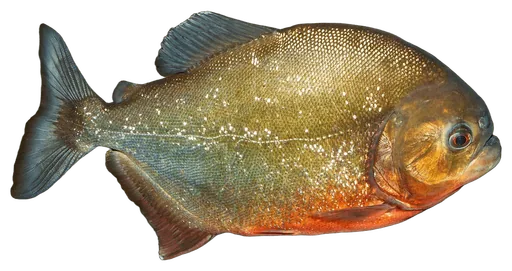
 L vs PiranhaLoses · 55% · Toss-up
 L
Puffin battle analysis
The puffin is easy to underestimate because its bright breeding bill makes it look ornamental. Mechanically, however, it is an unusual compromise that works remarkably well. The same short wings that beat continuously through the air are partly folded underwater and driven through a stroke cycle that produces thrust beneath the surface. Rather than becoming a mediocre flyer and mediocre swimmer, the Atlantic Puffin retains enough aerobic muscle capacity to commute over the ocean, repeatedly dive for fish and migrate thousands of kilometers.
That versatility matters far more to ABS than its direct weapons. A 500 g bird cannot trade damage with a fox, eagle or even many medium birds. Its bill can peck and grip, but it has no raptorial talons and no measured high-force bite. The correct normalization is therefore low Attack and Defense alongside high Agility, Stamina and a strong Special score.
The puffin's behavior adds another layer. Field tracking shows that some birds use tides as transport through prey fields rather than repeatedly paying the high energetic cost of flight. High-Arctic populations can cover extraordinary annual distances, and sensory work confirms functional aerial hearing despite their diving specialization. It is not a battlefield tactician in the human sense, but it is a highly tuned marine navigator whose best response to danger is usually to leave the opponent in the wrong medium.
Habitat & range
Atlantic Puffins breed on islands, rocky coasts, sea cliffs and burrow-capable turf around the North Atlantic. Their range extends from eastern North America and Greenland through Iceland and northern/western Europe. Outside breeding season they are strongly pelagic and may spend many months away from land.
Diet & hunting
The diet is dominated by small fish, with prey varying by colony and season. Puffins pursue prey underwater using their wings as hydrofoils and feet for steering. They are central-place foragers during breeding but range broadly at sea outside that period.
Social life
Breeding colonies can be dense. Pair bonds are monogamous, and both parents participate in reproduction and chick care. The species is much less social at sea in winter, when individuals can be widely dispersed.
Conservation
BirdLife identifies the Atlantic Puffin as Vulnerable globally, with long-term declines linked to prey changes, climate effects, invasive predators at colonies, fisheries/bycatch and other marine pressures. BirdLife's March 31, 2026 update also documented severe 2026 North Atlantic winter seabird mortality, including hundreds of puffins found dead in Cornwall after a large stranding event across western Europe. This recent event is conservation context, not a change to the canonical healthy-adult combat specimen.
Quick answers
How strong is a Puffin?
On the Animal Battle Stats scale, the Puffin has an attack rating of 19 and a power index of 47 out of 100, which ranks it #213 of 344 animals and puts it in C tier (Capable). Its strongest stat is stamina (87).
How much does a Puffin weigh?
A typical adult Puffin weighs about 500 g (17.6 oz). Rated specimen: healthy prime adult male in breeding condition, approximately 0.50 kg, 29.0 cm body length, and 53.0 cm wingspan.
How fast is a Puffin?
There is no reliable measured top speed for the Puffin, so we do not publish one. Its agility rating, which covers acceleration, reflexes and evasion, is 78 out of 100.
What does a Puffin eat?
The diet is dominated by small fish, with prey varying by colony and season. Puffins pursue prey underwater using their wings as hydrofoils and feet for steering. They are central-place foragers during breeding but range broadly at sea outside that period.
Is the Puffin endangered?
The Puffin's conservation status is Vulnerable. BirdLife identifies the Atlantic Puffin as Vulnerable globally, with long-term declines linked to prey changes, climate effects, invasive predators at colonies, fisheries/bycatch and other marine pressures. BirdLife's March 31, 2026 update also documented severe 2026 North Atlantic winter seabird mortality, including hundreds of puffins found dead in Cornwall after a large stranding event across w
What animals can beat a Puffin?
Among its closest rivals, the Hyacinth Macaw (56%), the Macaw (54%), the Goose (60%), the Kea (52%), the Vulture (67%), the Pelican (67%), the Bearded Vulture (67%), the Piranha (55%) would be favored against the Puffin. It would be favored against none of them.
Researched 2026-09-27. Ratings are editorial judgments built from these sources; measurements describe a healthy adult male.
- Cornell Lab, All About Birds, Atlantic Puffin IDmass, length, wingspan, flight style
- Cornell Lab, Atlantic Puffin Overviewmaturity, longevity, range
- Animal Diversity Web, Fratercula arcticadimorphism, breeding, foraging
- Piatt & Nettleship 1985, The Aukdive depth
- Johansson & Aldrin 2002, JEBunderwater mechanics
- Kovacs & Meyers 2000endurance physiology
- Mooney et al. 2020hearing
- Guilford et al. / tidal-drift studyforaging tactics
- Burnham et al. 2021migration/endurance
- BirdLife Atlantic Puffin profileconservation, dive context
- BirdLife 2026 mortality updatecurrent conservation context
- Commons / Charles J. Sharpimage provenance
Photo: “Puffin Latrabjarg Iceland.jpg” by Boaworm, CC BY 3.0, background removed and cropped. Original
Suggest a correction