
Praying Mantis
Tenodera sinensisD tier · Underdog12th of 30 bugs & spiders
Size & speed
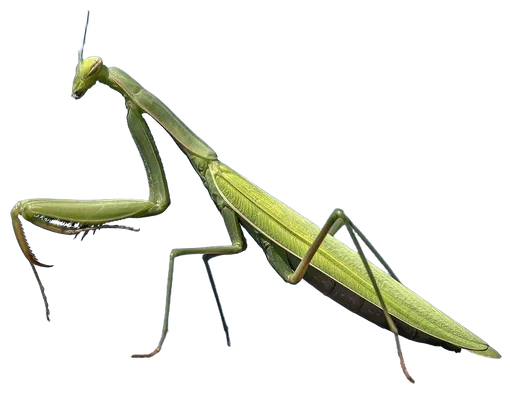
- Weight
- 6 g0.2 oz
- Length
- 10 cm3.9 in
As heavy as 6 paperclips
Heavier than 4% of animalsAbout 1.2 credit cards long
Bigger than 6% of animalsThe Chinese mantis is a large ambush mantis whose spined grasping forelegs, chewing mandibles and motion-based 3D vision make it formidable against tiny prey. Its combat system is exceptionally precise, but at only a few grams its absolute Attack and Defense remain near the bottom of the full ABS roster.
Detailed ratings
Research-backed ratings on one 0–100 scale for all 344 animals (updated 2026-09-27). How ratings work


Card No. 300 of 344. Every animal on Animal Battle Stats has one: its power, tier and archetype on the front; its six battle stats, abilities and signature move on the back.
Special abilities
Paired spined forelegs snap around prey and maintain multi-point restraint while the mandibles begin feeding; high-speed work supports a rapid, precisely coordinated muscular strike.
Mantis stereopsis is tuned to temporal change and moving targets, allowing robust depth judgments for prey inside the strike zone even when static visual detail is poor.
Unique traits
The mobile triangular head can rotate roughly 180 degrees, letting the mantis track targets while minimizing whole-body movement that could reveal its position.
Feeding state changes detection distance, pursuit and attention, while close opportunistic attacks persist after longer-range hunting motivation declines.
- Weight
- 6 g0.2 oz
- Height
- No reliable measurement
- Length
- 10 cm3.9 in
- Top speed
- No reliable measurement
- Bite force
- No reliable measurement
- Lifespan
- 0.4 years
- Home biome
- Forest
- Lifestyle
- Social
Rated specimen: Healthy prime adult female, 0.006 kg (6 g) and 10.0 cm body length.
Fun facts
- Mantises are the only insects demonstrated to possess stereoscopic vision.
- Their stereopsis relies strongly on changes over time rather than matching detailed static pictures the way humans do.
- Chinese-mantis hunting behavior changes measurably as the animal becomes satiated.
- Adult females are much heavier-bodied and effectively flightless, while males are slimmer and better fliers.
- A global review documented mantids killing and eating small birds, especially hummingbirds at feeders in North America.
- Chinese mantises can influence whole old-field arthropod communities, not merely individual prey.
Closest rivals by power. Tap one for the full breakdown, or pick any opponent.
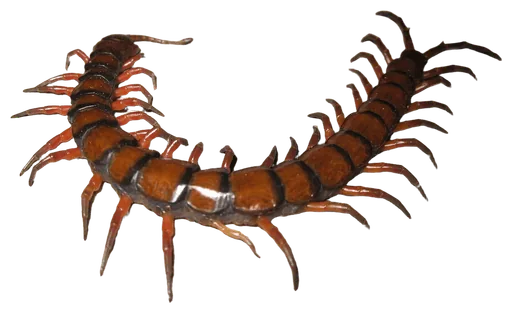
vs Brazilian Wandering SpiderWins · 51% · Toss-up 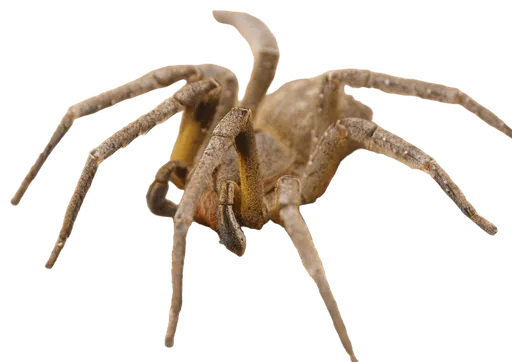 W vs Giant CentipedeLoses · 64% · Slight edge
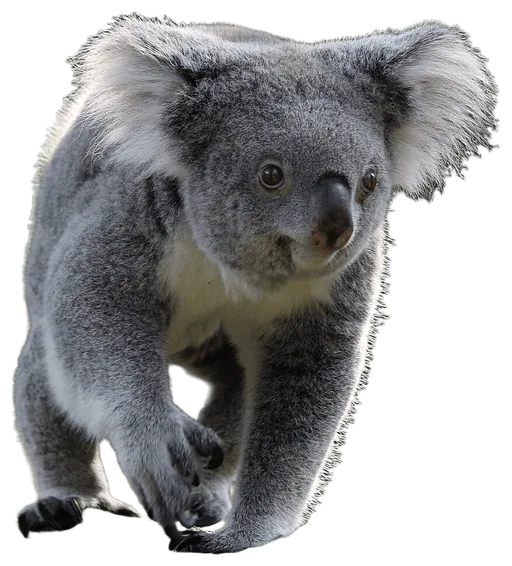
 L vs KoalaLoses · 85% · Decisive
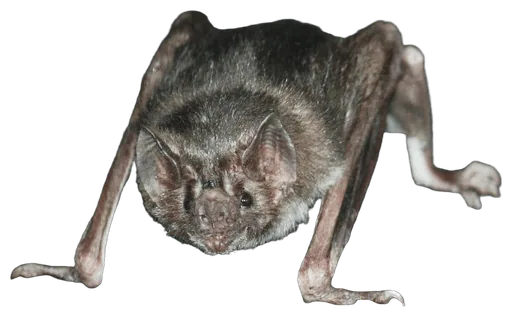
 L vs Vampire BatLoses · 60% · Slight edge
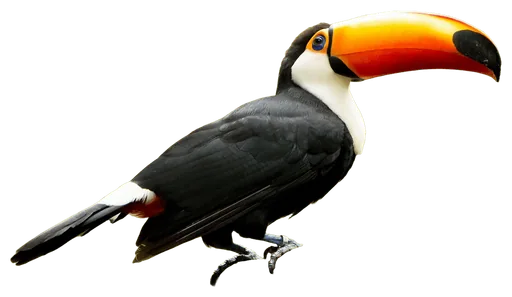
 L vs ToucanLoses · 74% · Clear edge
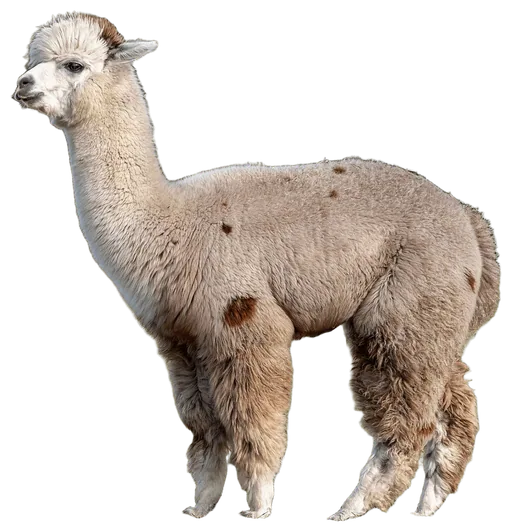
 L vs AlpacaLoses · 90% · Decisive
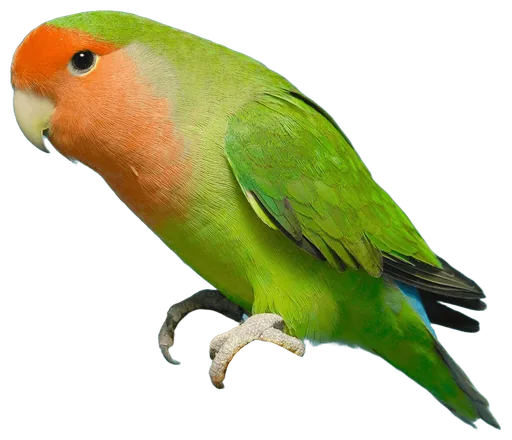
 L vs Rosy-faced LovebirdLoses · 63% · Slight edge
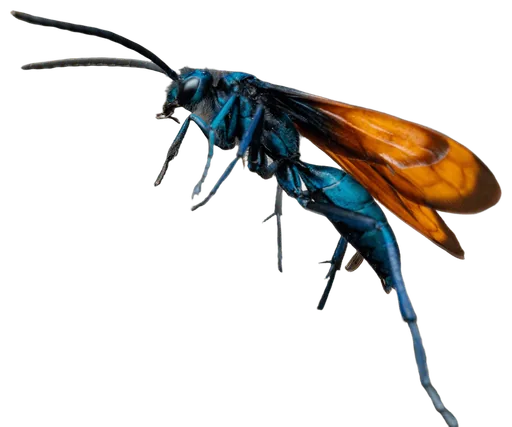
 L vs Tarantula HawkWins · 63% · Slight edge
 W
Praying Mantis battle analysis
The praying mantis is a classic test of ABS absolute scaling. At insect scale, Tenodera sinensis is a highly capable predator. It can remain nearly motionless, rotate its head toward a target, estimate strike distance stereoscopically and fire both raptorial forelegs into a moving animal. Once those spined limbs close, the prey is held against escape while the mandibles begin cutting. Rare vertebrate captures prove that the system can exceed ordinary insect prey size.
None of that turns a 6 g female into a miniature tiger. Its muscles, exoskeleton and weapons operate over centimeters and fractions of a newton-scale body. Against a mammal or large bird, the mantis cannot produce meaningful trauma and is itself extremely vulnerable to crushing. Attack therefore remains low despite impressive proportional feats.
The more defensible elite scores are Agility, Senses and Special. Mantis stereo vision is genuinely unusual, and experiments show that its visual system is tuned to movement in a way that supports rapid prey-distance judgments. T. sinensis also changes its pursuit strategy with satiety, demonstrating useful state-dependent behavioral control. These capabilities make the animal sophisticated without inflating Raw Power, Defense or Intelligence beyond the evidence.
Habitat & range
T. sinensis is native to East Asia and is now widespread in much of eastern and central North America. It occupies meadows, gardens, old fields, woodland edges and other vegetation-rich habitats that provide perches and abundant arthropod prey.
Diet & hunting
The Chinese mantis is a generalist predator. Field experiments show it can alter arthropod communities and even trigger trophic cascades by reducing herbivore abundance. Typical prey are insects and other arthropods; unusually large individuals can take small amphibians, reptiles and birds.
Social life
Adults are solitary predators rather than cooperative hunters. Eggs overwinter inside a protective ootheca and young emerge in spring. NC State reports roughly 50-600 eggs per ootheca; young molt six or seven times before adulthood. Cannibalism can occur among young and adults. In temperate North America adults die with cold weather after reproducing.
Conservation
The species is not a conservation-priority native animal in North America. It is introduced there and can consume native insects and hummingbirds, so describing it simply as a beneficial pest-control species is misleading. Humans also keep it in captivity and historically distributed mantis egg cases for garden biological control.
Quick answers
How strong is a Praying Mantis?
On the Animal Battle Stats scale, the Praying Mantis has an attack rating of 12 and a power index of 36.2 out of 100, which ranks it #300 of 344 animals and puts it in D tier (Underdog). Its strongest stat is special (84).
How much does a Praying Mantis weigh?
A typical adult Praying Mantis weighs about 6 g (0.2 oz). Rated specimen: healthy prime adult female, 0.006 kg (6 g) and 10.0 cm body length.
How fast is a Praying Mantis?
There is no reliable measured top speed for the Praying Mantis, so we do not publish one. Its agility rating, which covers acceleration, reflexes and evasion, is 80 out of 100.
What does a Praying Mantis eat?
The Chinese mantis is a generalist predator. Field experiments show it can alter arthropod communities and even trigger trophic cascades by reducing herbivore abundance. Typical prey are insects and other arthropods; unusually large individuals can take small amphibians, reptiles and birds.
What animals can beat a Praying Mantis?
Among its closest rivals, the Giant Centipede (64%), the Koala (85%), the Vampire Bat (60%), the Toucan (74%), the Alpaca (90%), the Rosy-faced Lovebird (63%) would be favored against the Praying Mantis. It would be favored against the Brazilian Wandering Spider, the Tarantula Hawk.
Researched 2026-09-27. Ratings are editorial judgments built from these sources; measurements describe a healthy adult female.
- NC State Extension, Chinese Praying MantidExact species, female ~4 3/8 in, male ~3 in, female flightlessness, 50-600 eggs, 6-7 molts
- Missouri Department of ConservationCurrent taxon usage, morphology, up to 5 in, head swivel
- University of Nebraska-Lincoln Beneficial Species ProfileAdult 65-85 mm, morphology
- Prete et al. / PubMed, predatory behavior and insulinSatiety reduces prey attention, detection range and pursuit; close attacks persist
- Nityananda et al., Current BiologyNovel motion-based stereopsis in praying mantises
- Rossoni et al., Journal of Insect Behavior 2025T. sinensis changes head/thorax saccades with target speed
- SICB, Biomechanics of the Praying Mantis Foreleg Strike0.746 m/s tarsus velocity, 60.7 m/s² acceleration, muscular-actuation interpretation
- Nyffeler, Maxwell & Remsen 2017147 bird-capture incidents across mantids, 78% killed/eaten, Tenodera implicated
- Moran & Hurd 1997, OecologiaT. sinensis generalist predation and old-field trophic cascade
- Wikimedia Commons, adult female imageExact species, adult female, 5184x3456, CC BY-SA 3.0
- Wikimedia Commons, Luc Viatour adult imageExact adult species, 3954x2438, reusable CC BY-SA/GFDL
Photo: “European praying mantis (Mantis religiosa) green female Dobruja.jpg” by Charles J. Sharp, CC BY-SA 4.0, background removed and cropped. Original
Suggest a correction