
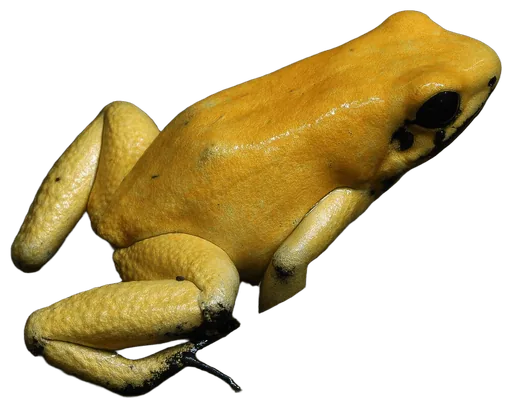
Poison Dart Frog
Phyllobates terribilisC tier · Capable1st of 6 amphibians
Size & speed
- Weight
- 6 g0.2 oz
- Length
- 5.2 cm2 in
As heavy as 6 paperclips
Heavier than 4% of animalsAbout 0.6 credit cards long
Bigger than 3% of animalsA tiny Colombian frog with almost no active physical offense but one of the roster's most extreme defensive specializations. A wild golden poison frog combines brilliant warning coloration, diet-sequestered batrachotoxin and toxin resistance, making it disastrous for many predators to bite or swallow despite its extreme physical fragility.
Detailed ratings
Research-backed ratings on one 0–100 scale for all 344 animals (updated 2026-09-27). How ratings work


Card No. 247 of 344. Every animal on Animal Battle Stats has one: its power, tier and archetype on the front; its six battle stats, abilities and signature move on the back.
Special abilities
A wild adult can carry an exceptionally potent suite of batrachotoxin-class alkaloids in its skin; contact or ingestion by a susceptible attacker can disrupt sodium-channel function with severe or lethal consequences.
Uniform brilliant adult coloration advertises the chemical defense before contact, allowing learned predators to abort attacks rather than forcing the frog to survive a bite first.
Unique traits
The wild chemical defense depends on sequestered dietary alkaloids; captive-bred frogs reared without the relevant natural prey can mature without detectable batrachotoxin.
The frog's own nerve and muscle systems show resistance to batrachotoxin, allowing it to carry a chemical load that is dangerous to many potential attackers.
How it fights
Weapons
- This animal is a poor active attacker. It cannot inject batrachotoxin, spit it, project it, or deliberately coat an opponent at range. Its tiny jaws and limbs have negligible absolute damage output. Toxicity becomes combat-relevant mainly when a predator mouths, bites, swallows, or otherwise contacts the skin secretion in a biologically effective way. Therefore the toxin drives Special and deterrent defense far more than Attack.
Struggles vs
- Dry or hot environments that rapidly threaten amphibian hydration and performance.
- Any opponent capable of killing at range or with one fast crushing strike before toxin exposure matters.
- Thick external armor or attack modes that avoid oral/mucosal contact.
- Captive-bred or long-term captive specimens can lose the wild toxin load, which is why the canonical fighter is explicitly wild.
- Tiny body mass means almost no absolute grappling, striking or trauma tolerance.
- Weight
- 6 g0.2 oz
- Height
- 2 cm0.8 in
- Length
- 5.2 cm2 in
- Top speed
- No reliable measurement
- Bite force
- No reliable measurement
- Lifespan
- 10 years
- Home biome
- Jungle
- Lifestyle
- Social
Rated specimen: Healthy prime wild adult female, 0.006 kg, 5.2 cm snout-vent length.
Fun facts
- P. terribilis was scientifically described only in 1978.
- It is among the largest dendrobatid frogs despite being only about five centimeters long.
- The original species work reported as much as roughly 1,900 micrograms of batrachotoxin-class toxins in one freshly caught frog.
- Captive-bred F1 frogs reared to maturity had no detectable batrachotoxin in the classic 1980 study.
- Juveniles are dark with stripes, then change to the much more uniform bright adult warning coloration.
- The frog is poisonous, not venomous: it has no specialized injection apparatus.
Closest rivals by power. Tap one for the full breakdown, or pick any opponent.
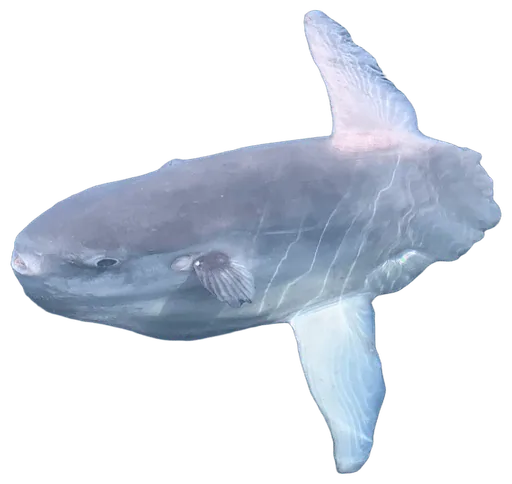
vs StorkLoses · 81% · Clear edge 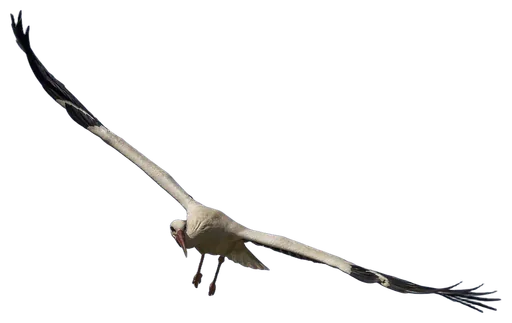 L vs Ocean SunfishLoses · 93% · Decisive
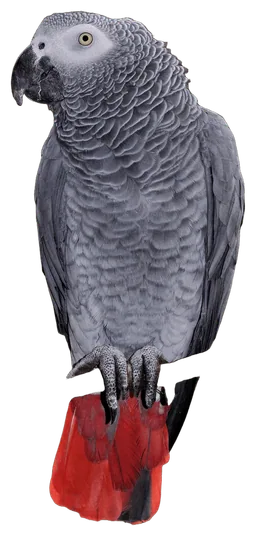
 L vs African Grey ParrotLoses · 73% · Clear edge
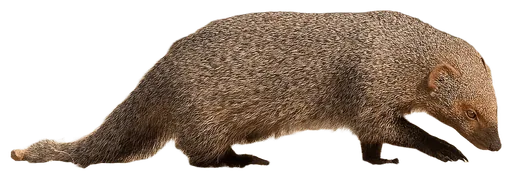
 L vs MongooseLoses · 76% · Clear edge
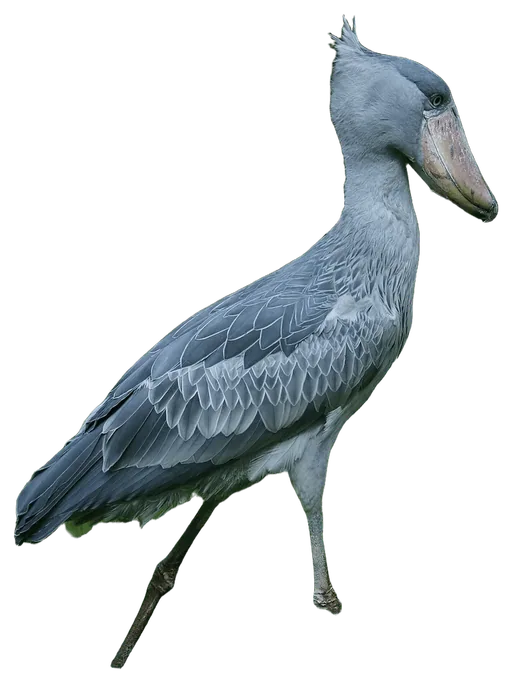
 L vs ShoebillLoses · 83% · Clear edge
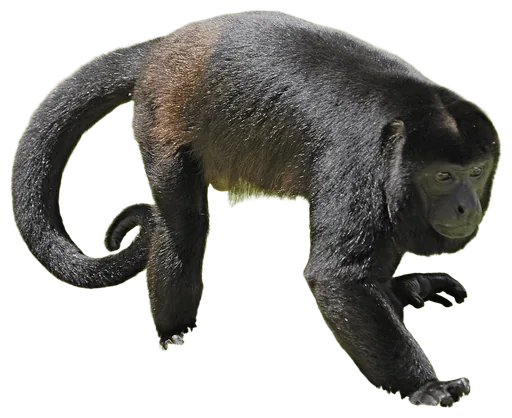
 L vs Howler MonkeyLoses · 83% · Clear edge
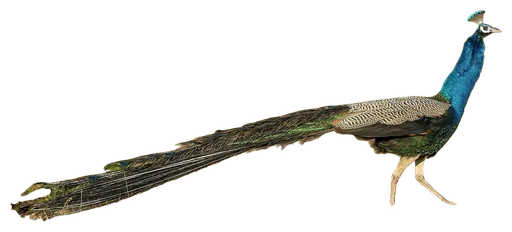
 L vs PeacockLoses · 82% · Clear edge
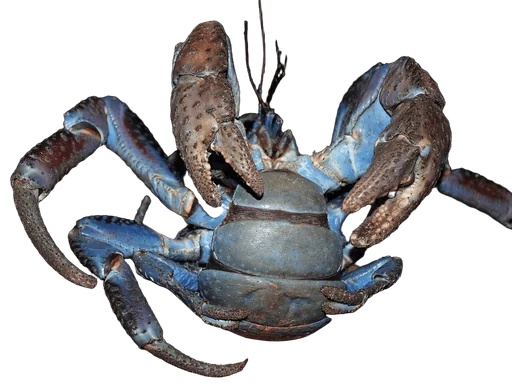
 L vs Coconut CrabLoses · 81% · Clear edge
 L
Poison Dart Frog battle analysis
The golden poison frog is an important calibration case because a single spectacular mechanism can easily distort every other score. At roughly six grams it has essentially no absolute raw power, no armor and no meaningful ability to overpower even modest vertebrate opponents. Its jaws are not a serious weapon and it cannot inject or project its toxin. Attack therefore stays near the roster floor.
Its chemical defense is a different matter. Wild P. terribilis can carry extraordinary quantities of batrachotoxin-class alkaloids in the skin. The bright adult coloration advertises that danger before contact, while physiological resistance lets the frog safely carry compounds that interfere with sodium-channel function in susceptible attackers. This combination deserves near-ceiling Special even though the same animal remains mechanically fragile.
The distinction between a wild and captive specimen is crucial. Classic experimental work found toxin levels declining in captivity and no detectable batrachotoxin in captive-reared F1 adults. ABS therefore specifies a healthy wild adult female as the canonical specimen. This preserves the real biology instead of granting every captive golden poison frog an arsenal it may not possess.
Habitat & range
The golden poison frog is endemic to a very restricted humid lowland rainforest region on Colombia's Pacific side. Zoo Liberec places the species mainly around 100-200 m elevation and in primary rainforest; ADW likewise describes a narrow Pacific Colombian range associated with extremely wet lowland forest.
Diet & hunting
Adults are diurnal insectivores feeding on ants, termites, beetles and other small invertebrates captured with a rapid adhesive-tongue strike. Dietary specialization is directly tied to chemical defense because poison frogs sequester defensive alkaloids from arthropod prey.
Social life
The species is generally terrestrial and not densely aggregated in the wild. Captive observations show relatively low aggression compared with some other poison frogs, although same-sex chasing and wrestling occur. Clutches are small, roughly 8-20 eggs depending on source. Males participate in transporting developing young/tadpoles to water. Sexual maturity is reported by ADW at roughly 12-18 months.
Conservation
The species is Endangered in current conservation references and has a decreasing population trend. Its tiny range makes habitat loss particularly consequential. Reported pressures include deforestation, agriculture, logging, mining/pollution and illegal-crop-related habitat disturbance. Conservation status should be periodically rechecked against the current IUCN assessment before production migration.
Quick answers
How strong is a Poison Dart Frog?
On the Animal Battle Stats scale, the Poison Dart Frog has an attack rating of 6 and a power index of 43.2 out of 100, which ranks it #247 of 344 animals and puts it in C tier (Capable). Its strongest stat is special (99).
How much does a Poison Dart Frog weigh?
A typical adult Poison Dart Frog weighs about 6 g (0.2 oz). Rated specimen: healthy prime wild adult female, 0.006 kg, 5.2 cm snout-vent length.
How fast is a Poison Dart Frog?
There is no reliable measured top speed for the Poison Dart Frog, so we do not publish one. Its agility rating, which covers acceleration, reflexes and evasion, is 76 out of 100.
What does a Poison Dart Frog eat?
Adults are diurnal insectivores feeding on ants, termites, beetles and other small invertebrates captured with a rapid adhesive-tongue strike. Dietary specialization is directly tied to chemical defense because poison frogs sequester defensive alkaloids from arthropod prey.
Is the Poison Dart Frog endangered?
The Poison Dart Frog's conservation status is Endangered. The species is Endangered in current conservation references and has a decreasing population trend. Its tiny range makes habitat loss particularly consequential. Reported pressures include deforestation, agriculture, logging, mining/pollution and illegal-crop-related habitat disturbance. Conservation status should be periodically rechecked against the current IUCN assessment before production migr
What animals can beat a Poison Dart Frog?
Among its closest rivals, the Stork (81%), the Ocean Sunfish (93%), the African Grey Parrot (73%), the Mongoose (76%), the Shoebill (83%), the Howler Monkey (83%), the Peacock (82%), the Coconut Crab (81%) would be favored against the Poison Dart Frog. It would be favored against none of them.
Researched 2026-09-27. Ratings are editorial judgments built from these sources; measurements describe a healthy adult female.
- Myers, Daly & Malkin 1978, AMNH species description (EPA HERO record)species identity, ~47 mm SVL, up to ~1900 µg toxins, Emberá dart use, life-history context
- Daly et al. 1980, Scienceexceptionally high batrachotoxin, decline in captivity, F1 captive-reared adults lacked detectable BTX, self-resistance
- Darst et al. 2005, American Naturalistdietary sequestration/diet-toxicity relationship across Dendrobatidae
- Dumbacher et al. 2004, PNAS/PubMedChoresine beetles contain batrachotoxins and are plausible dietary source group
- Animal Diversity Web47-55 mm adult size, female-biased size, behavior, diet, reproduction, communication, toxicity overview
- Zoo Liberec4-5.5 cm, 4-6 g, primary rainforest, 100-200 m, diet, clutch size
- Mill Mountain Zoo1.5-2 in, females longer, 6-10 y wild / up to 20 y captive, diet and development
- National Geographic10 y average wild lifespan, Endangered/decreasing, general species context
- World Land TrustEndangered status, restricted Colombia range, color variation, ~5 cm size
- U.S. Fish & Wildlife Serviceexact current taxon confirmation
- Commons, Holger Krisp photoexact-species real photo, 3000x2158, CC BY 3.0, visually complete silhouette
- Flickr, John P. Clareexplicitly adult captive-bred exact species
Photo: “Schrecklicher Pfeilgiftfrosch Phyllobates terribilis.jpg” by Holger Krisp, CC BY 3.0, background removed and cropped. Original
Suggest a correction