
Platypus
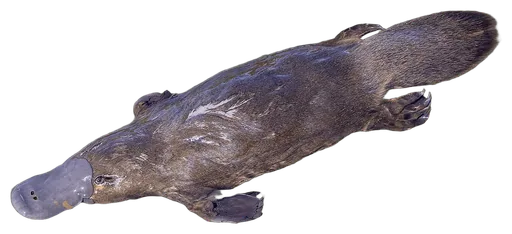
Ornithorhynchus anatinusC tier · Capable95th of 163 mammals
Size & speed

- Weight
- 1.7 kg4 lb
- Length
- 50 cm19.7 in
As heavy as 8.5 smartphones
Heavier than 26% of animalsAbout 1.7 rulers long
Bigger than 23% of animalsA small semiaquatic monotreme whose combat value comes from specialization rather than power. A mature male combines venomous ankle spurs with an electroreceptive bill, exceptional underwater sensing and repeated aerobic diving, but remains physically fragile and low-powered on the absolute roster scale.
Detailed ratings
Research-backed ratings on one 0–100 scale for all 344 animals (updated 2026-09-27). How ratings work


Card No. 167 of 344. Every animal on Animal Battle Stats has one: its power, tier and archetype on the front; its six battle stats, abilities and signature move on the back.
Special abilities
The mature male drives a roughly 12 mm ankle spur connected to a seasonal venom gland; envenomation can cause immediate extreme pain and prolonged hyperalgesia.
Electroreceptors and mechanoreceptors in the bill detect prey-generated electrical/mechanical signals while the eyes, ears and nostrils are closed underwater.
Unique traits
An egg-laying mammal whose male retains a functional venom-delivery system, a rare combination among living mammals.
Webbed forefeet provide propulsion while hind feet act chiefly as rudders, producing a distinctive aquatic control system despite a comparatively awkward terrestrial gait.
How it fights
Weapons
- The platypus is not built for pursuit killing. Its serious weapon is the male hind-leg spur system. Effective delivery requires close contact and positioning the hindquarters/ankle against an opponent. The spur punctures and introduces venom from the crural gland. This creates a potentially fight-changing pain response in susceptible mammals even though the animal itself weighs under two kilograms.
- The delivery constraint matters. A venomous spur is not equivalent to a forward-facing fang. Against a fast attacker that controls the head/torso, or against thick armor, landing a useful ankle strike may be difficult. Attack therefore remains modest in absolute roster terms while Special is high.
Struggles vs
- Dry open ground, where its sprawling terrestrial gait sacrifices speed and maneuverability.
- Large opponents that can absorb or avoid a small ankle-spur strike.
- Thick armor or scales that reduce reliable spur penetration.
- Opponents able to seize the torso before the hind-leg weapon can be positioned.
- Small body mass means low absolute raw power and poor tolerance of major trauma.
- Weight
- 1.7 kg4 lb
- Height
- No reliable measurement
- Length
- 50 cm19.7 in
- Top speed
- No reliable measurement
- Bite force
- No reliable measurement
- Lifespan
- 12.5 years
- Home biome
- Wetlands
- Lifestyle
- Mostly solitary, nocturnal
Rated specimen: Healthy prime mature male, 1.7 kg, 50.0 cm total length.
Fun facts
- Platypuses and echidnas are the only living monotremes, mammals that lay eggs.
- A directly examined healthy wild male at Taronga weighed 1.64 kg and measured about 50 cm.
- A field study recorded up to 1,600 dives in one foraging trip.
- Most recorded dives in that study were only 18-40 seconds, showing that high dive frequency, not extreme breath-hold duration, defines normal foraging.
- Platypuses close their eyes, ears and nostrils underwater and can locate prey through electrical signals detected by the bill.
- Adult platypuses do not use conventional teeth; horny grinding pads process food.
Closest rivals by power. Tap one for the full breakdown, or pick any opponent.
vs FossaLoses · 59% · Slight edge 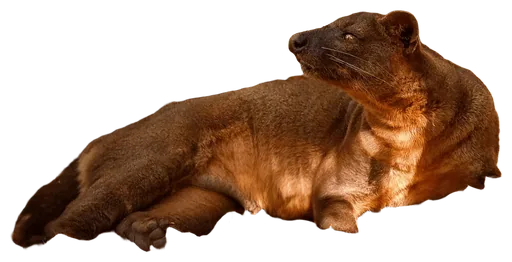 L vs CheetahLoses · 68% · Slight edge
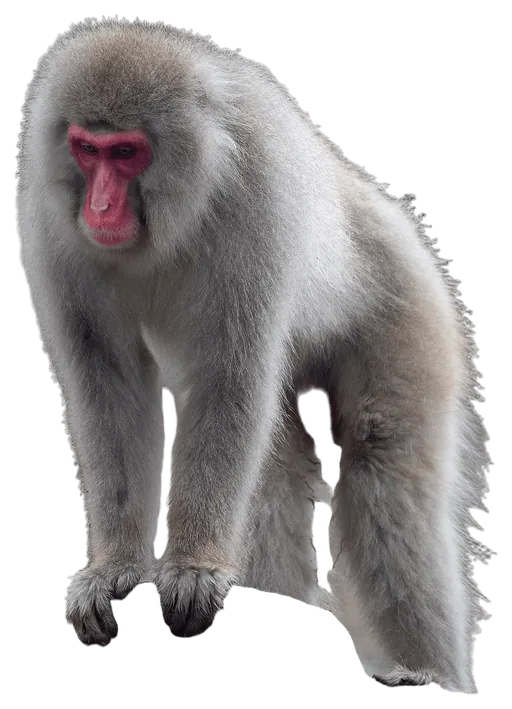
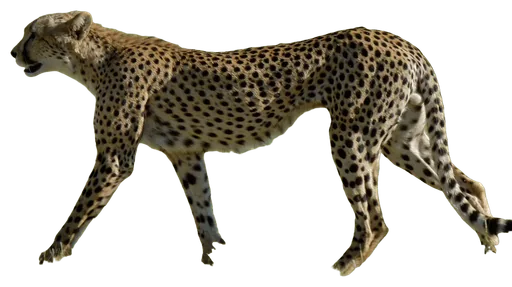 L vs Japanese MacaqueLoses · 61% · Slight edge
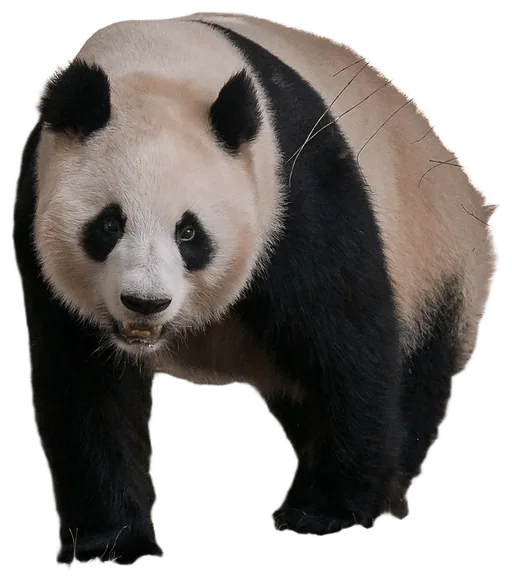
 L vs Giant PandaLoses · 73% · Clear edge
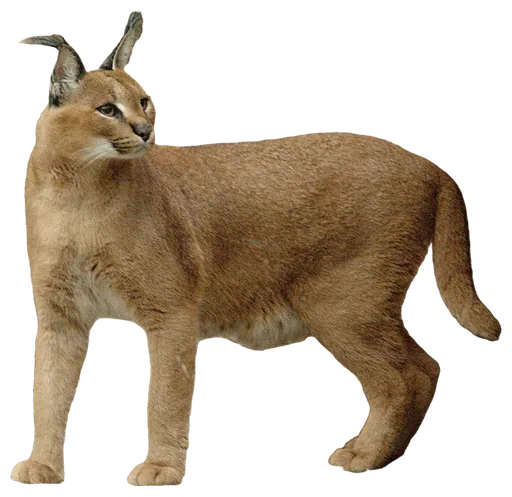
 L vs CaracalLoses · 63% · Slight edge
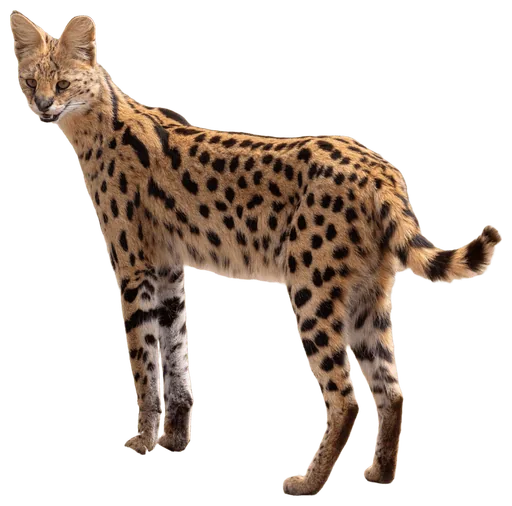
 L vs ServalLoses · 62% · Slight edge
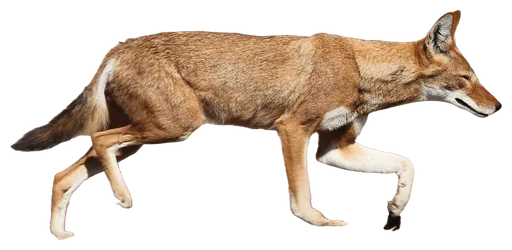
 L vs Ethiopian WolfLoses · 62% · Slight edge
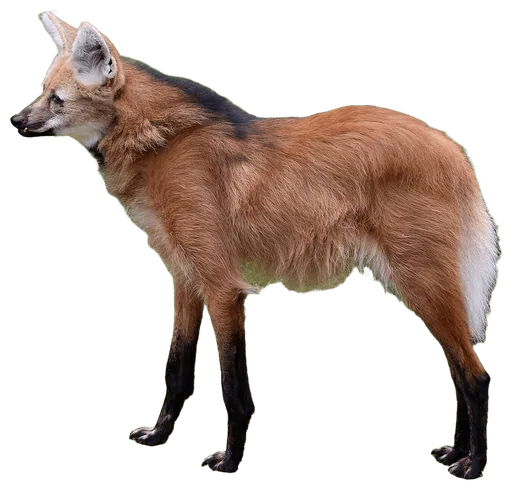
 L vs Maned WolfLoses · 64% · Slight edge
 L
Platypus battle analysis
The platypus is a calibration test for ABS because it is easy to overrate. Its biology is extraordinary, but its body is only around 1.7 kg. It cannot trade raw force with a wolf, large raptor or monitor lizard simply because it is venomous. Its Attack stays modest because the dangerous weapon is a short ankle spur that must make close contact from an awkward rear-leg position.
What makes the animal formidable within its size class is the quality of its specialization. The mature male can deliver venom capable of producing extreme and prolonged pain. In water, meanwhile, the platypus deliberately closes the sensory openings that many mammals depend on and substitutes a bill packed with electroreceptive and mechanosensory inputs. This lets it forage in darkness and turbid water where visual opponents lose information.
Its stamina is likewise unusual in context. Platypuses are not extreme single-dive specialists, but field data show hundreds to more than a thousand short dives with brief surface recovery across a foraging trip. The result is a fighter that is elusive and sensory-dominant in shallow freshwater, yet severely disadvantaged on dry ground or against opponents whose size, reach or armor prevents reliable spur delivery.
Habitat & range
Platypuses occupy freshwater rivers, streams, lakes and connected waterways of eastern Australia and Tasmania, with some occurrence in South Australia. They require suitable banks for burrows and productive aquatic habitat for prey.
Diet & hunting
They are carnivorous bottom-foragers feeding mainly on aquatic invertebrates including insect larvae, worms, shrimp/crustaceans, beetles, snails and freshwater mollusks, with other small aquatic prey taken opportunistically. Food is gathered into cheek pouches and processed at the surface with keratinized grinding pads.
Social life
Generally solitary, although multiple individuals can share a waterway. Males become particularly territorial/competitive in the breeding season. Sociality is therefore not used to inflate individual battle power.
Conservation
The IUCN status remains Near Threatened in current conservation references. Australian state status is uneven: endangered in South Australia and vulnerable in Victoria, while federal and NSW listing debates continue. Major pressures include habitat degradation/fragmentation, dams and altered flow, drought, bushfire, pollution, entanglement and climate-driven water stress.
Quick answers
How strong is a Platypus?
On the Animal Battle Stats scale, the Platypus has an attack rating of 31 and a power index of 50.9 out of 100, which ranks it #167 of 344 animals and puts it in C tier (Capable). Its strongest stat is special (94).
How much does a Platypus weigh?
A typical adult Platypus weighs about 1.7 kg (4 lb). Rated specimen: healthy prime mature male, 1.7 kg, 50.0 cm total length.
How fast is a Platypus?
There is no reliable measured top speed for the Platypus, so we do not publish one. Its agility rating, which covers acceleration, reflexes and evasion, is 80 out of 100.
What does a Platypus eat?
They are carnivorous bottom-foragers feeding mainly on aquatic invertebrates including insect larvae, worms, shrimp/crustaceans, beetles, snails and freshwater mollusks, with other small aquatic prey taken opportunistically. Food is gathered into cheek pouches and processed at the surface with keratinized grinding pads.
Is the Platypus endangered?
The Platypus's conservation status is Near Threatened. The IUCN status remains Near Threatened in current conservation references. Australian state status is uneven: endangered in South Australia and vulnerable in Victoria, while federal and NSW listing debates continue. Major pressures include habitat degradation/fragmentation, dams and altered flow, drought, bushfire, pollution, entanglement and climate-driven water stress.
What animals can beat a Platypus?
Among its closest rivals, the Fossa (59%), the Cheetah (68%), the Japanese Macaque (61%), the Giant Panda (73%), the Caracal (63%), the Serval (62%), the Ethiopian Wolf (62%), the Maned Wolf (64%) would be favored against the Platypus. It would be favored against none of them.
Researched 2026-09-27. Ratings are editorial judgments built from these sources; measurements describe a healthy adult male.
- Australian Museum, Platypussex-specific length/mass ranges, geographic variation, locomotion, fur, tail, claws, male 12 mm spur, venom effects
- Taronga Zoo, Platypusmale/female maximum masses, adult length range, wild lifespan, breeding, diet/range
- Taronga Wildlife Hospitaldirectly examined healthy male, 1.64 kg and ~50 cm; male spur/venom; diet
- Gregory et al., Nature (1987)direct electrophysiological evidence for bill electroreceptors
- Gregory et al., Journal of Physiology (1988)receptive fields and responses to weak electrical pulses; prey-signal mechanism
- Bethge et al. (2003), PubMed31.3 s mean dive, 10.1 s surface, 1.28 m mean/8.77 m max depth, up to 1600 dives, ~75 dives/h, ~40 s ADL
- de Plater et al., Journal of Neurophysiology (2001)venom action on nociceptors, immediate excruciating pain and prolonged hyperalgesia
- Torres et al./platypus venom peptide workdefensin-like venom peptides and unusual peptide chemistry
- Bush Heritage Australianocturnal 10-12 h foraging, diet, state/IUCN conservation context
- ABC, 27 Apr 2026current IUCN Near Threatened context and Australian listing debate
- Wikimedia Commons, Charles J. Sharpexact species, 4000x4000 real photo, CC BY-SA 4.0, Quality Image, visually complete silhouette
- Current ABS schemacanonical factual fields and 12 current substats
Photo: “Duck-billed platypus (Ornithorhynchus anatinus) Scottsdale 3.jpg” by Charles J. Sharp, CC BY-SA 4.0, background removed and cropped. Original
Suggest a correction