

Philippine Eagle
Pithecophaga jefferyi
 #132 of 273
  Jungle Sky Hunter Critically Endangered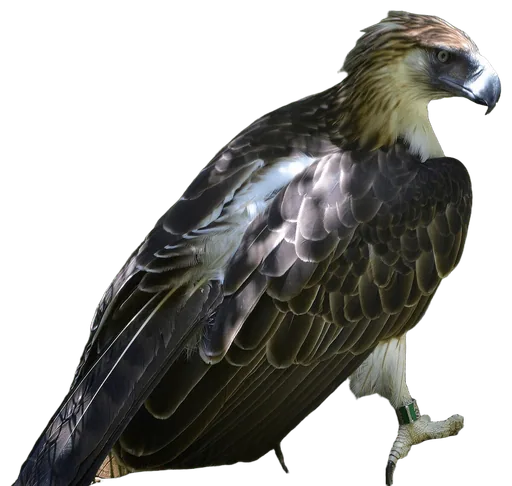
 Fight
FightPhoto: shankar s. · CC BY 2.0
The Philippine Eagle is a critically endangered forest giant of the Philippines: about 6 kg in the canonical female, roughly a metre long, with a 2 m wingspan and a massive arched bill. It still-hunts flying lemurs, civets and monkeys from canopy perches, and pairs sometimes attack monkey troops together. Its forest ambush is formidable, but low absolute mass and no armor leave it far below large mammals in power and defense.
 Attack42
  Defense20
  Agility87
  Stamina63
  Intelligence67
  Special74
 Detailed ratings
Research-backed ratings on one 0–100 scale for all 273 animals (updated 2026-09-28). How ratings work
Special abilities
Ability 1Tag-Team Troop AmbushPairs are reported to hunt monkey troops together, one eagle drawing attention from a nearby perch while the partner strikes from behind. In a matchup this adds a distraction-and-flank pattern that single raptors lack.
 Ability 2Canopy Still-Hunt
The eagle sits motionless near the canopy, then works down through the tree layers by gliding from perch to perch before a sudden talon strike. This keeps the first-contact advantage with the eagle.
Unique traits
 TraitColugo Specialist
On Mindanao the Philippine flying lemur makes up more than half of identified prey in nest studies, a narrow prey specialization unusual among large eagles.
TraitGreat Arched BillA very deep, strongly curved bill, among the most massive of any eagle, used to tear apart prey the feet have secured.
How it fights
Weapons
- The feet and talons do the killing, and the deep, arched bill tears apart prey once it is secured. Prey records show the practical reach of this weapon system: Philippine flying lemurs (colugos), Asian palm civets, macaques, flying squirrels, fruit bats, rats, hornbills and owls, snakes and monitor lizards. A five-pair Mindanao study (1999–2007) found flying lemurs made up 54.2% of identifiable prey, with at least 14 prey taxa recorded and arboreal mammals the most important prey group. Some summaries put flying lemurs as high as 90% of the diet in parts of Mindanao.
- These prey show a raptor able to kill medium arboreal mammals in the canopy, but on the absolute roster a 6 kg eagle still has modest total force. Its prey-killing power is recorded mostly in Weaponry and Attack, not Raw Power.
 Struggles vs
- Low absolute body mass compared with medium and large mammals.
- No armor; hollow-boned avian body vulnerable to crushing or grappling.
- Very dependent on intact forest structure.
- Loses most of its advantage if grounded or forced into close contact with a larger terrestrial animal.
- Weight
- 6 kg13 lb
- Height
- No reliable measurement
- Length
- 1 m3.3 ft
- Top speed
- No reliable measurement
- Bite force
- No reliable measurement
- Lifespan
- 30 years
- Home biome
- Jungle
- Lifestyle
- Mostly solitary
Rated specimen: Healthy mature adult female, 6.0 kg, 100.0 cm total length and roughly 2 m wingspan.
Fun facts
- Although known as the "monkey-eating eagle", its main prey in Mindanao nest studies is the Philippine flying lemur, at 54.2% of identified prey items.
- It is the national bird of the Philippines.
- The Peregrine Fund calls it the largest eagle alive by length and wing surface area.
- Satellite-tracked adults on Mindanao had a median home range of about 68 km².
- Parents share care of a single brood for about 20 months, so pairs breed only about every two years.
- Pairs have been reported hunting monkeys as a team, one bird distracting while the other strikes.
Closest rivals by power. Tap one for the full breakdown, or pick any opponent.
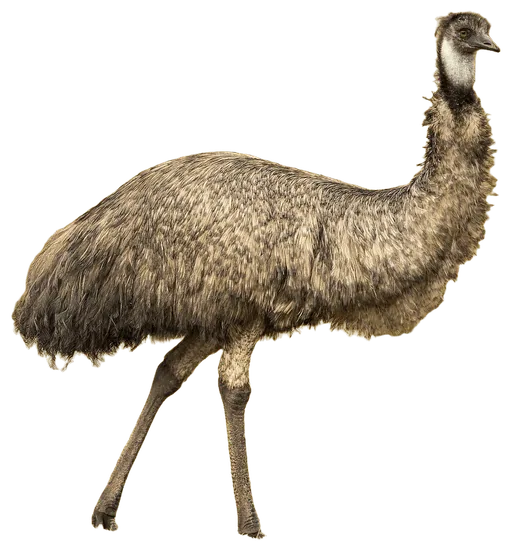
vs Steller's Sea EagleWins · 50% · Toss-up 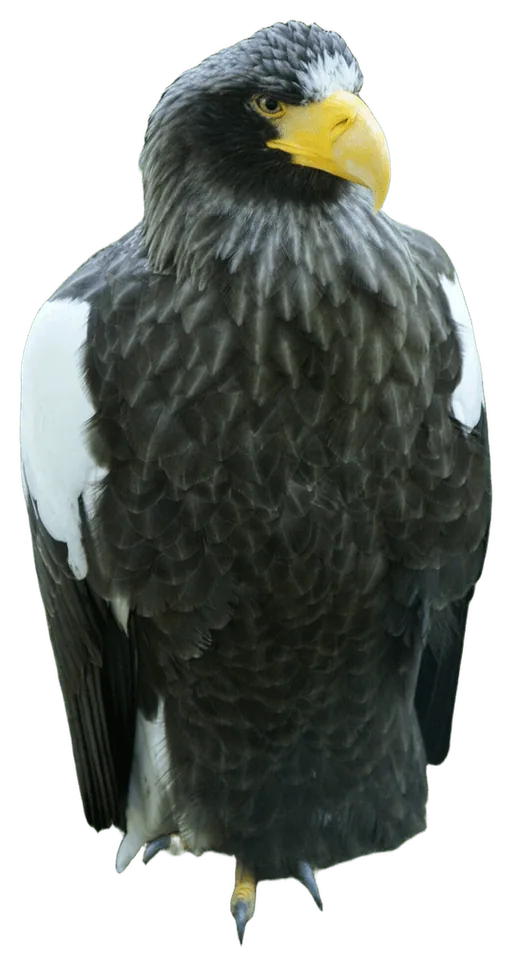 W vs EmuLoses · 50% · Toss-up
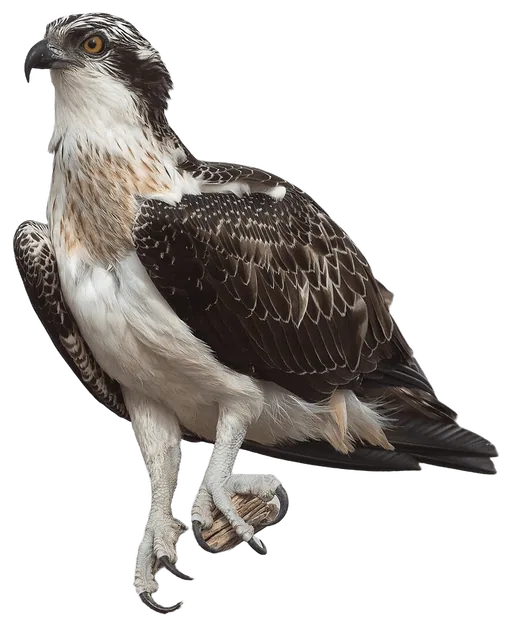
  L vs OspreyWins · 51% · Toss-up
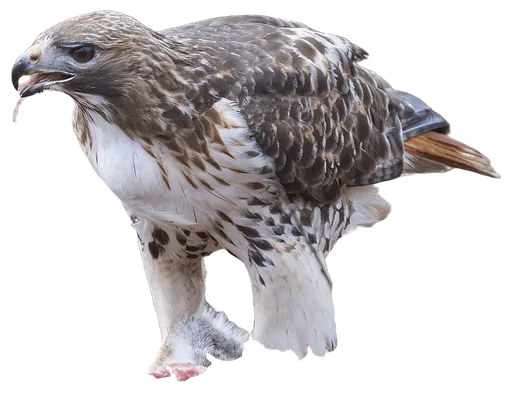
  W vs Red-tailed HawkLoses · 51% · Toss-up
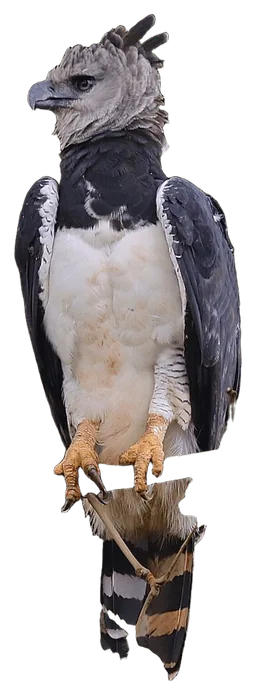
  L vs Harpy EagleLoses · 51% · Toss-up
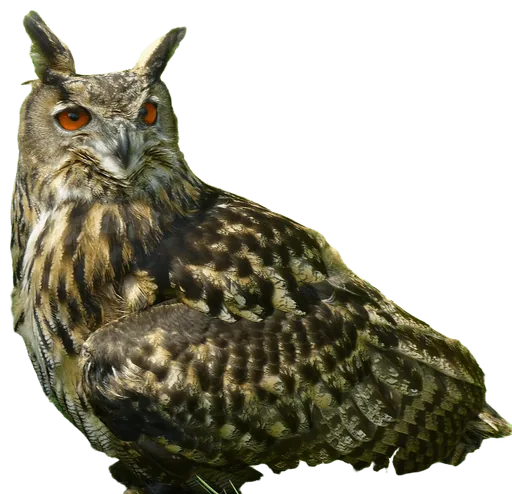
  L vs Eurasian Eagle-OwlWins · 52% · Toss-up
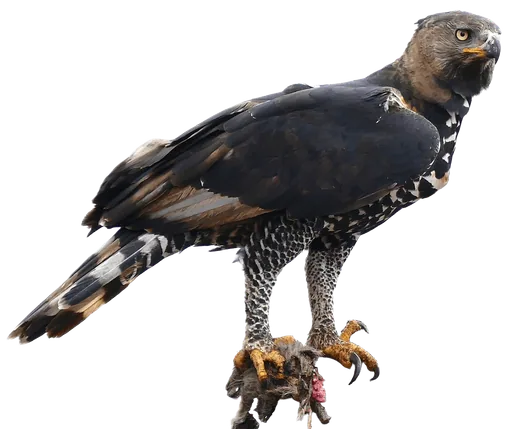
  W vs Crowned EagleWins · 52% · Toss-up
  W vs Emperor PenguinLoses · 52% · Toss-up
  L
L  Pick any opponent
 Philippine Eagle battle analysis
The Philippine Eagle is built for one of the hardest hunting problems in the tropics: finding and seizing gliding and climbing mammals in tall, dense dipterocarp forest. It sits almost motionless near the canopy for long periods, then works down through the layers of the forest from perch to perch. When a flying lemur, civet or macaque is found, the feet make the kill and the massive, deep bill finishes the job.
That toolkit is excellent on its own ground. Reported pair hunting on monkey troops, one eagle drawing attention while the other strikes from behind, adds coordination that most raptors lack. Wide forest home ranges, measured by satellite telemetry at a median of around 68 km², show a predator that covers a lot of ground patiently, not in long chases.
On the absolute roster, though, a 6 kg eagle stays a 6 kg eagle. It cannot match the grappling strength, mass or durability of medium and large mammals, and once grounded or pinned it has little protection. Its best matchups are ones where it chooses the moment and angle of contact in forest; open ground, armor, large body size and heavy grappling reverse the result.
Habitat & range
The Philippine Eagle lives only in the Philippines, on Luzon, Samar, Leyte and Mindanao. It lives mainly in remnant primary dipterocarp forest but also uses second-growth and gallery forest. A 2023 habitat model identified about 2.86 million hectares of suitable forest across its range, with Mindanao holding the largest share of breeding pairs.
Diet & hunting
The eagle is the top avian predator of Philippine forests. On Mindanao the Philippine flying lemur is the main prey, supplemented by palm civets, macaques, flying and tree squirrels, fruit bats, rats, snakes, monitor lizards and birds including hornbills and owls. On Luzon, where flying lemurs are absent, macaques and giant cloud rats are reported as principal prey. As a top predator with large space needs it is treated as an umbrella species for Philippine forest conservation.
Social life
Adults live as monogamous territorial pairs, reportedly mating for life unless a partner dies. Telemetry shows a median home range around 68 km² per adult. Hunting is usually solitary, with reported cooperative hunting by pairs on monkey troops.
Conservation
The species is Critically Endangered. A 2023 population estimate based on habitat modelling and telemetry-measured territory size gives about 392 breeding pairs (about 784 mature individuals), higher than earlier estimates of 340 pairs (2018) and 88–221 pairs (1989). The main threats are deforestation and loss of nesting sites, accidental capture in traps set for wild pigs, and shooting, including retaliatory killing after attacks on domestic animals. The Philippine Eagle Foundation runs captive breeding, rescue, rehabilitation and release work.
Quick answers
How strong is a Philippine Eagle?
On the Animal Battle Stats scale, the Philippine Eagle has an attack rating of 42 and a power index of 51.6 out of 100, which ranks it #132 of 273 animals and puts it in C tier (Capable). Its strongest stat is agility (87).
How much does a Philippine Eagle weigh?
A typical adult Philippine Eagle weighs about 6 kg (13 lb). Rated specimen: healthy mature adult female, 6.0 kg, 100.0 cm total length and roughly 2 m wingspan.
How fast is a Philippine Eagle?
There is no reliable measured top speed for the Philippine Eagle, so we do not publish one. Its agility rating, which covers acceleration, reflexes and evasion, is 87 out of 100.
What does a Philippine Eagle eat?
The eagle is the top avian predator of Philippine forests. On Mindanao the Philippine flying lemur is the main prey, supplemented by palm civets, macaques, flying and tree squirrels, fruit bats, rats, snakes, monitor lizards and birds including hornbills and owls. On Luzon, where flying lemurs are absent, macaques and giant cloud rats are reported as principal prey. As a top predator with large space needs it is treated as an umbrella species for Philippine forest conservation.
Is the Philippine Eagle endangered?
The Philippine Eagle's conservation status is Critically Endangered. The species is Critically Endangered. A 2023 population estimate based on habitat modelling and telemetry-measured territory size gives about 392 breeding pairs (about 784 mature individuals), higher than earlier estimates of 340 pairs (2018) and 88–221 pairs (1989). The main threats are deforestation and loss of nesting sites, accidental capture in traps set for wild pigs, and shooting, including
What animals can beat a Philippine Eagle?
Among its closest rivals, the Emu (50%), the Red-tailed Hawk (51%), the Harpy Eagle (51%), the Emperor Penguin (52%) would be favored against the Philippine Eagle. It would be favored against the Steller's Sea Eagle, the Osprey, the Eurasian Eagle-Owl, the Crowned Eagle.
Researched 2026-09-28. Ratings are editorial judgments built from these sources; measurements describe a healthy adult female.
- Animal Diversity Web, Pithecophaga jefferyirange, habitat, identity
- The Peregrine Fund, Philippine Eaglemass, length, wingspan, population, habitat
- Sutton et al. 2023, Animal Conservationpopulation estimate
- Sutton et al., space-time home range (bioRxiv preprint; published in Ibis 2024)home range, endurance
- Sutton et al., space-time home range (bioRxiv preprint; published in Ibis 2024)https://www.biorxiv.org/content/10.1101/2022.05.19.492630v1.full
- Ibañez et al., Mindanao breeding biology, diet and longevitydiet, breeding success, conflict
- BirdLife DataZone factsheetstatus, population
- EDGE of Existence, Philippine Eaglediet, breeding cycle
- Whitley Award, conserving the Philippine Eagle on Mindanaothreats
- Mongabay, 2023 population estimate reportpopulation distribution
- Journal of Raptor Research conservation letter on deforestationthreats
- Philippine Eagle Foundationconservation program, species overview
- Wikipedia, Philippine eaglesex-specific averages, hunting methods, cooperative hunting, captive longevity
- Commons, Philippine Eagle photoimage candidate
Photo: “Philippine eagle Pithecophaga jefferyi.jpg” by shankar s., CC BY 2.0, background removed and cropped. Original
Suggest a correction