
Peregrine Falcon
Falco peregrinusB tier · Strong4th of 55 birds
Size & speed

- Weight
- 1 kg2 lb
- Length
- 47 cm18.5 in
- Top speed
- 184 km/h114 mph
As heavy as 5 smartphones
Heavier than 19% of animalsAbout 1.6 rulers long
Bigger than 22% of animals4.1× Usain Bolt's top speed
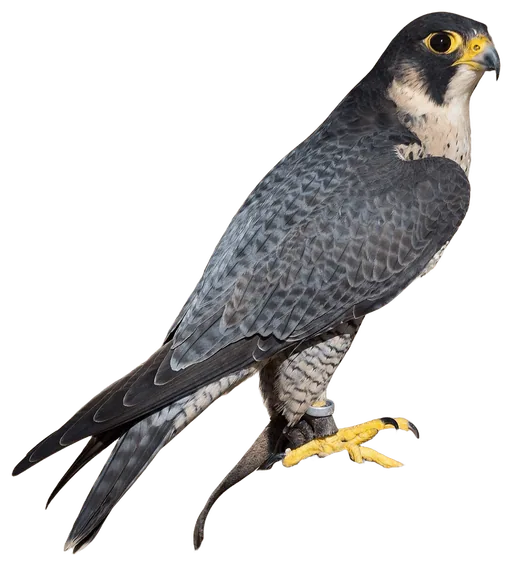
The fastest animal on the siteThe peregrine falcon is a one-kilogram aerial interceptor whose real advantage is not raw strength but the combination of a controlled high-speed stoop, elite maneuverability, fast visual processing and taloned precision. It dominates bird-sized aerial matchups while remaining physically fragile against much larger opponents.
Detailed ratings
Research-backed ratings on one 0–100 scale for all 344 animals (updated 2026-09-27). How ratings work


Card No. 116 of 344. Every animal on Animal Battle Stats has one: its power, tier and archetype on the front; its six battle stats, abilities and signature move on the back.
Special abilities
Converts altitude and aerodynamic streamlining into an instrumented high-speed dive, allowing rapid closure on airborne prey before it can reposition.
Experimentally measured visual temporal resolution up to 129 Hz in bright conditions helps the falcon process fast motion during aerial pursuit.
Unique traits
Females are markedly larger and heavier than males, making the female the stronger representative combat specimen.
Morphology and hunting behavior are tightly centered on intercepting other birds in flight rather than overpowering prey on the ground.
How it fights
Weapons
- The peregrine is a small absolute-mass predator with an unusually effective delivery system. It attacks birds in flight from above, converting altitude into speed, then uses the feet/talons to strike, seize or destabilize prey. A hooked beak finishes or processes captured prey. The Forest Service review documents prey usually in the 50-500 g range, although larger birds can be attacked.
- The stoop is not an unrealistic kinetic projectile. The falcon must acquire altitude, align on a moving target, control closing speed and survive the maneuver itself. Its 1 kg mass places a firm ceiling on absolute damage against large mammals and megafauna even though its speed is exceptional.
Struggles vs
- Very low absolute mass and no armor.
- Talons and beak require close contact after the approach.
- Extreme stoop speed requires altitude and geometry.
- Fragile flight structures are battle-critical.
- Cannot translate famous speed directly into sustained force against very large targets.
- Weight
- 1 kg2 lb
- Height
- No reliable measurement
- Length
- 47 cm18.5 in
- Top speed
- 184 km/h114 mph
- Bite force
- No reliable measurement
- Lifespan
- 13 years
- Home biome
- Mountains
- Lifestyle
- Mostly solitary
Rated specimen: Healthy prime mature female, 1.0 kg, 47.0 cm body length, approximately 105.0 cm wingspan.
Fun facts
- The name peregrinus is associated with wandering, fitting the extreme migrations of northern populations.
- Females can be roughly 40-50% heavier than males in the Canadian synthesis.
- Experimental work measured visual temporal resolution up to 129 Hz in bright light.
- The famous stoop is a gravity-assisted hunting dive, not ordinary level-flight speed.
- Peregrines routinely hunt birds in midair but can also pursue prey in level flight or make low surprise approaches.
- Cities can function as artificial cliff systems for nesting peregrines.
Closest rivals by power. Tap one for the full breakdown, or pick any opponent.
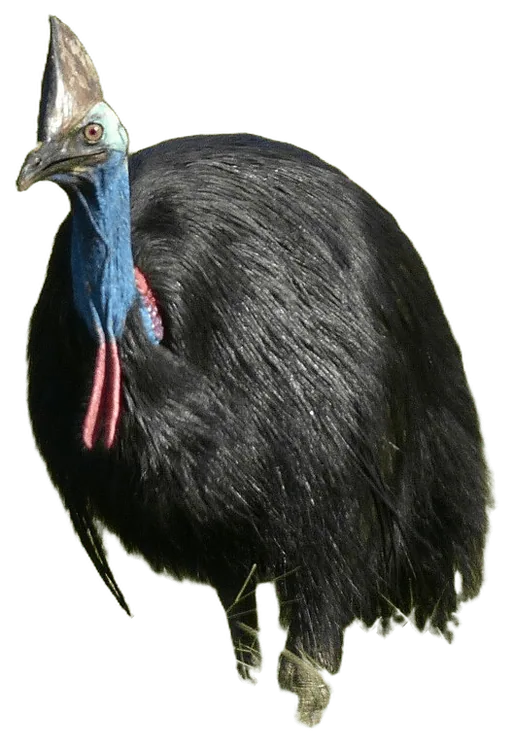
vs Secretary BirdLoses · 59% · Slight edge 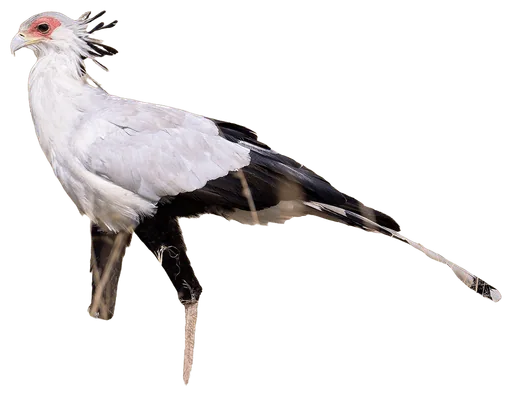 L vs CassowaryLoses · 73% · Clear edge
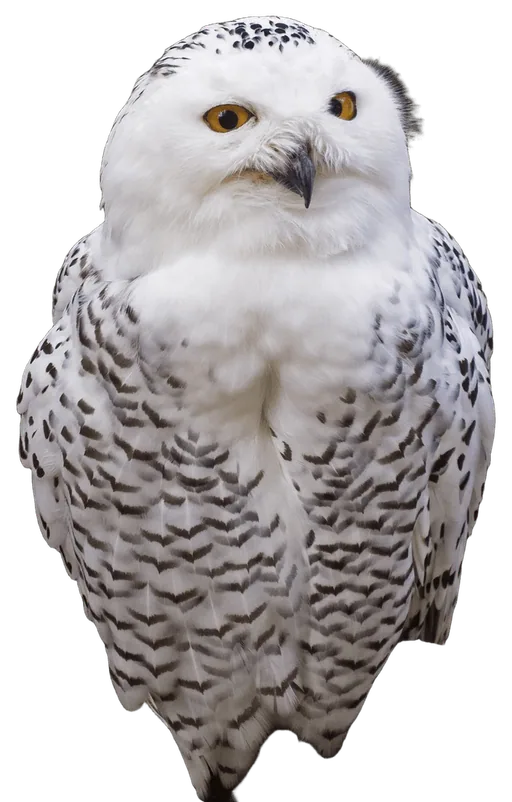
 L vs Snowy OwlLoses · 54% · Toss-up
 L vs GyrfalconLoses · 52% · Toss-up
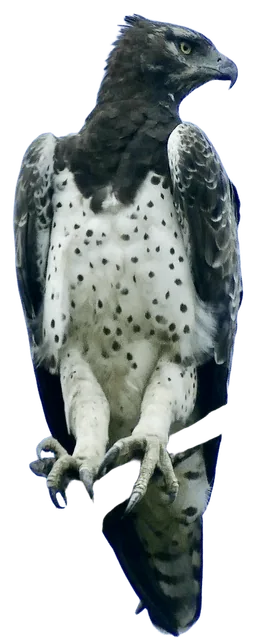
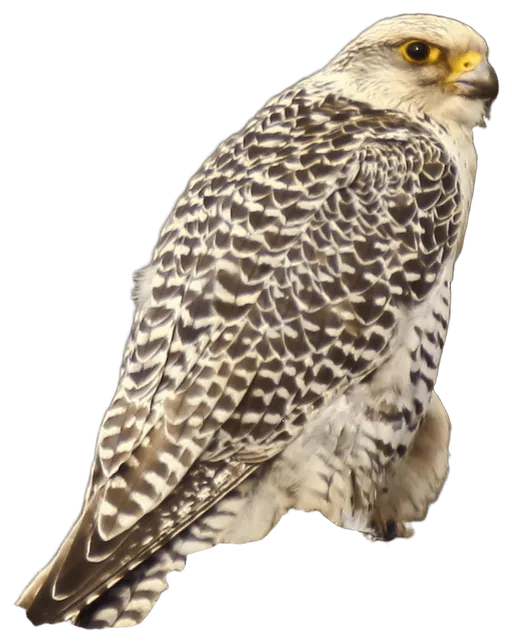 L vs Martial EagleLoses · 57% · Toss-up
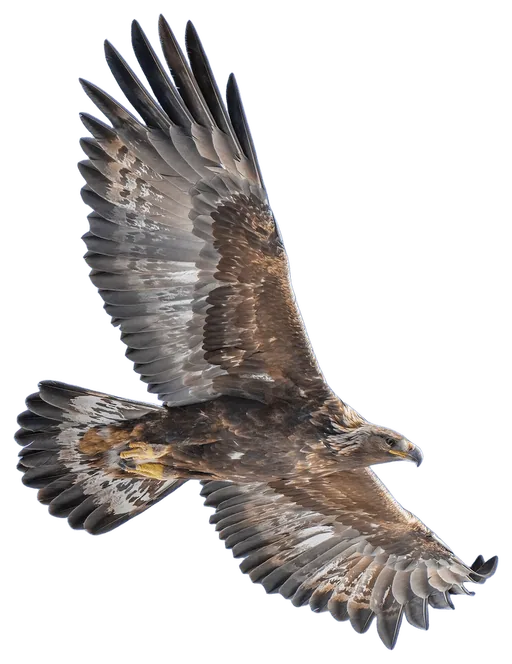
 L vs Golden EagleLoses · 57% · Toss-up
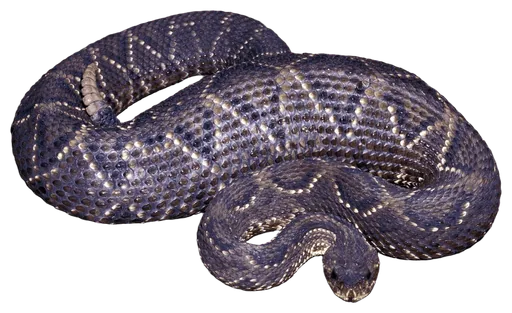
 L vs RattlesnakeLoses · 55% · Toss-up
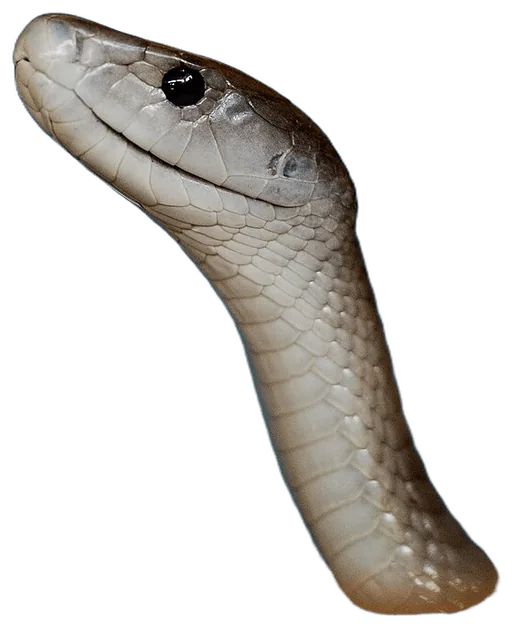
 L vs Black MambaLoses · 53% · Toss-up
 L
Peregrine Falcon battle analysis
The peregrine is a useful test of ABS's absolute-scale discipline. Pound for pound it is spectacular, but a mature female still weighs only about one kilogram. Its Raw Power, Defense and absolute Attack therefore stay low compared with wolves, great apes or megafauna. What makes the animal dangerous is delivery. It can establish altitude, visually track a moving target, fold into a steep dive and close at speeds directly measured around 51 m/s in natural stoops.
That maneuver works because the rest of the system is equally specialized. Long pointed wings minimize drag at speed. Tail and wing adjustments preserve control. The feet carry curved talons suited to seizing and striking prey, and the hooked bill finishes the job. Experimental vision research adds unusually strong evidence for sensory specialization: peregrines resolved rapid flicker up to 129 Hz under bright conditions, fitting a predator that must make decisions while both hunter and prey are moving quickly.
The weaknesses are equally important. Speed does not make a one-kilogram bird a high-force megafaunal attacker. A stoop needs vertical room and cannot be repeated continuously at peak speed. Feathers are not armor, and damaged wings can remove the falcon's decisive advantage. The result is an intentionally polarized ABS profile: extraordinary Speed, Agility, Senses and Special, but modest absolute Attack and very low physical Defense.
Habitat & range
Peregrines occur on every continent except Antarctica. They occupy cliffs, coasts, tundra, mountains, wetlands, deserts and cities, provided suitable prey and elevated nesting/perching sites are available. Urban skyscrapers and bridges can substitute for natural cliffs.
Diet & hunting
Birds dominate the diet, especially pigeons/doves, shorebirds, waterfowl and passerines. The Forest Service synthesis reports at least 429 North American bird species recorded as prey by 2002 and notes worldwide avian prey diversity may exceed 2,000 species. Bats and other small vertebrates supplement the diet.
Social life
Outside breeding, peregrines are largely solitary and territorial. Breeding pairs cooperate in reproduction and territory defense, but a single ABS combatant should not receive pack-style power bonuses.
Conservation
The peregrine became a flagship pesticide-recovery species after organochlorine contamination caused severe declines and eggshell thinning. North American recovery followed DDT restrictions, protection and captive-breeding/reintroduction programs. Globally the species is currently assessed as Least Concern.
Quick answers
How strong is a Peregrine Falcon?
On the Animal Battle Stats scale, the Peregrine Falcon has an attack rating of 34 and a power index of 54.5 out of 100, which ranks it #116 of 344 animals and puts it in B tier (Strong). Its strongest stat is agility (96).
How much does a Peregrine Falcon weigh?
A typical adult Peregrine Falcon weighs about 1 kg (2 lb). Rated specimen: Healthy prime mature female, 1.0 kg, 47.0 cm body length, approximately 105.0 cm wingspan.
How fast is a Peregrine Falcon?
The Peregrine Falcon's top speed is about 184 km/h (114 mph). Its agility rating is 96 out of 100.
What does a Peregrine Falcon eat?
Birds dominate the diet, especially pigeons/doves, shorebirds, waterfowl and passerines. The Forest Service synthesis reports at least 429 North American bird species recorded as prey by 2002 and notes worldwide avian prey diversity may exceed 2,000 species. Bats and other small vertebrates supplement the diet.
Is the Peregrine Falcon endangered?
No. The Peregrine Falcon is listed as Least Concern. The peregrine became a flagship pesticide-recovery species after organochlorine contamination caused severe declines and eggshell thinning. North American recovery followed DDT restrictions, protection and captive-breeding/reintroduction programs. Globally the species is currently assessed as Least Concern.
What animals can beat a Peregrine Falcon?
Among its closest rivals, the Secretary Bird (59%), the Cassowary (73%), the Snowy Owl (54%), the Gyrfalcon (52%), the Martial Eagle (57%), the Golden Eagle (57%), the Rattlesnake (55%), the Black Mamba (53%) would be favored against the Peregrine Falcon. It would be favored against none of them.
Researched 2026-09-27. Ratings are editorial judgments built from these sources; measurements describe a healthy adult female.
- Environment and Climate Change Canada, COSEWIC 2017Dimorphism, female/male size
- Cornell Lab, All About BirdsMeasurements, adult ID, hunting
- Animal Diversity WebLongevity, behavior, diet
- U.S. Forest Service FEISDiet, prey scale, hunting ecology
- Audubon Field GuideHunting modes, territory
- Potier et al. 2019, Journal of Experimental Biology, via Lund UniversityVision
- Kestenholz / Swiss radar work, contemporary reportNatural stoop speed
- Wikimedia Commons / USFWSImage provenance
- Wikimedia Commons, Dhairya DixitAdult-female image comparator
Photo: “Falco peregrinus - 01.jpg” by Carlos Delgado, CC BY-SA 4.0, background removed and cropped. Original
Suggest a correction