
Pelican
Pelecanus erythrorhynchosC tier · Capable25th of 55 birds
Size & speed

- Weight
- 6.9 kg15 lb
- Length
- 1.55 m5.1 ft
As heavy as 1.5 house cats
Heavier than 41% of animalsAbout as long as a person is tall
Bigger than 64% of animalsThe American White Pelican is a roughly 7 kg soaring waterbird armed more with reach and mobility than raw violence. Its giant bill and expandable pouch excel at scooping fish, often through coordinated group corralling, while a near-3 m wingspan supports efficient migration and escape. In a direct fight it is less dangerous than a similar-sized raptor because it lacks killing talons and a crushing bite, but around open water and air its endurance, swimming and enormous flight surface make it difficult to contain.
Detailed ratings
Research-backed ratings on one 0–100 scale for all 344 animals (updated 2026-09-27). How ratings work


Card No. 204 of 344. Every animal on Animal Battle Stats has one: its power, tier and archetype on the front; its six battle stats, abilities and signature move on the back.
Special abilities
Groups coordinate on the water to herd fish toward shallow areas before scooping them, a grounded example of social positioning that can concentrate mobile prey.
Very broad wings exploit rising air to sustain long-distance travel with reduced flapping cost, supporting exceptional movement endurance and aerial disengagement.
Unique traits
The long bill and extensible throat pouch act as a large temporary capture net; water is drained before prey is swallowed rather than stored indefinitely.
Breeding adults grow a distinctive temporary keratinous plate on the upper bill and shed it after the breeding period.
How it fights
Weapons
- The long bill is the primary contact tool. It can jab, clamp, shove, scoop and strike at close range, and ADW specifically records breeding birds jabbing neighboring pelicans and other waterbirds while defending tiny nest territories. The breeding-season bill plate is real keratin but should not be treated as a horn built for high-energy stabbing. Webbed feet can kick or push but are principally locomotor.
- Weight
- 6.9 kg15 lb
- Height
- No reliable measurement
- Length
- 1.55 m5.1 ft
- Top speed
- No reliable measurement
- Bite force
- No reliable measurement
- Lifespan
- 14 years
- Home biome
- Wetlands
- Lifestyle
- Social
Rated specimen: Healthy prime mature male, 6.9 kg, approximately 155 cm total length, with a roughly 2.7 m wingspan and approximately 34 cm culmen.
Fun facts
- One of North America's largest flying birds, with wingspans approaching 2.9 m in Cornell measurements.
- Unlike Brown Pelicans, it normally catches fish from the surface instead of plunge-diving.
- The conspicuous breeding bill plate is temporary and is shed after breeding.
- The oldest wild individual reported by ADW reached 26.4 years.
- Satellite-tracked birds have used summer home ranges measured in the thousands of square kilometers.
- Its throat pouch is a capture tool, not a permanent food-storage bag.
Closest rivals by power. Tap one for the full breakdown, or pick any opponent.
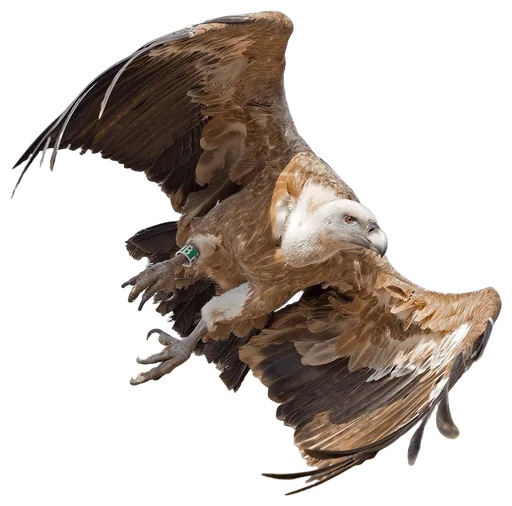
vs Bearded VultureDraw · 50-50 · Dead even 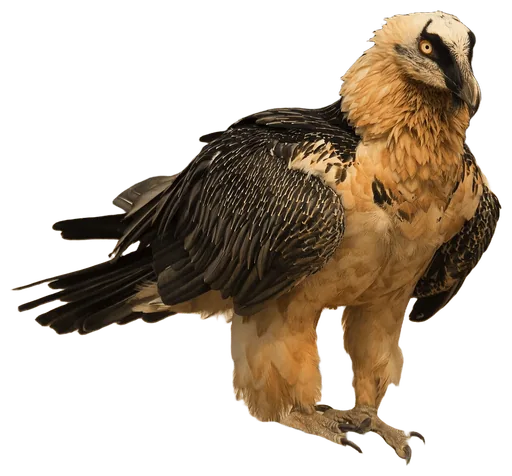 D vs VultureDraw · 50-50 · Dead even
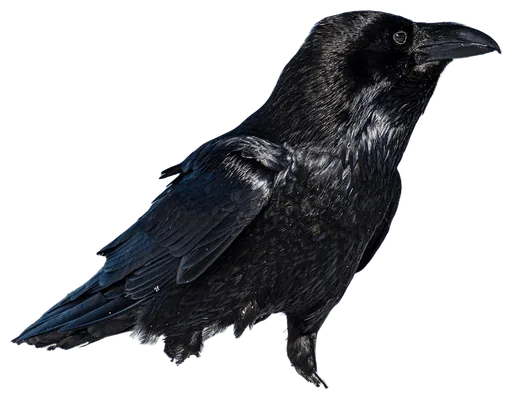
 D vs RavenWins · 59% · Slight edge
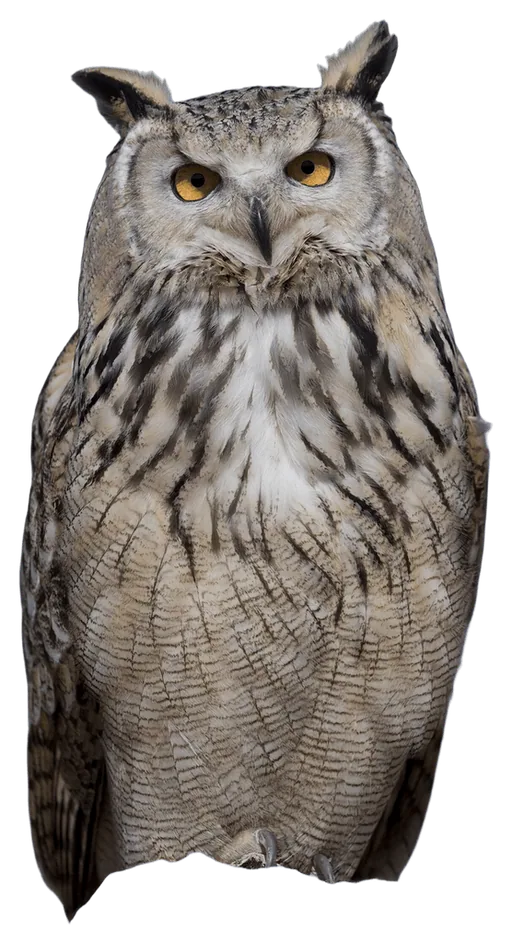
 W vs Great Horned OwlWins · 57% · Toss-up
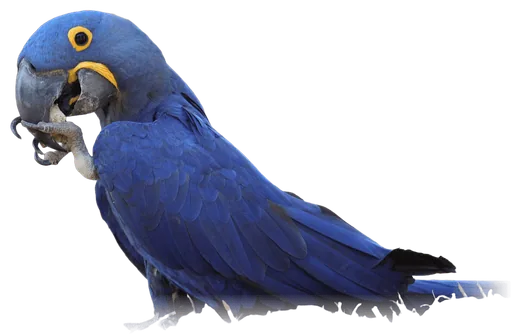
 W vs Hyacinth MacawWins · 61% · Slight edge
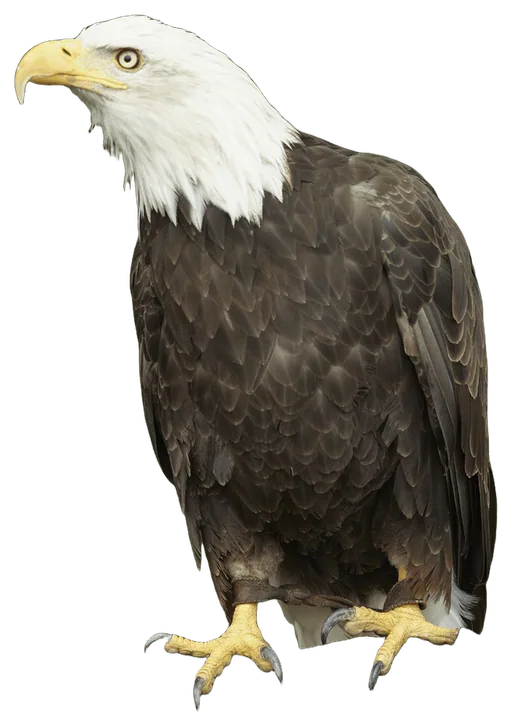
 W vs Bald EagleDraw · 50-50 · Dead even
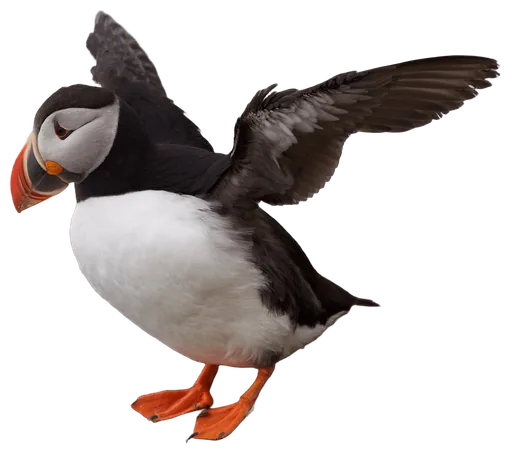
 D vs PuffinWins · 67% · Slight edge
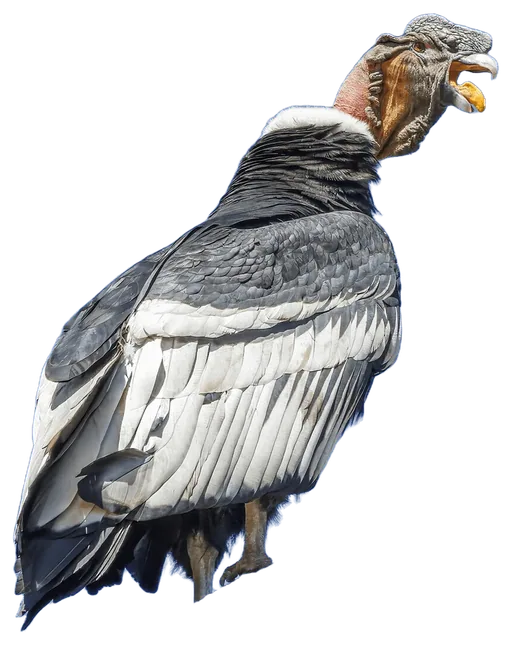
 W vs CondorLoses · 55% · Toss-up
 L
Pelican battle analysis
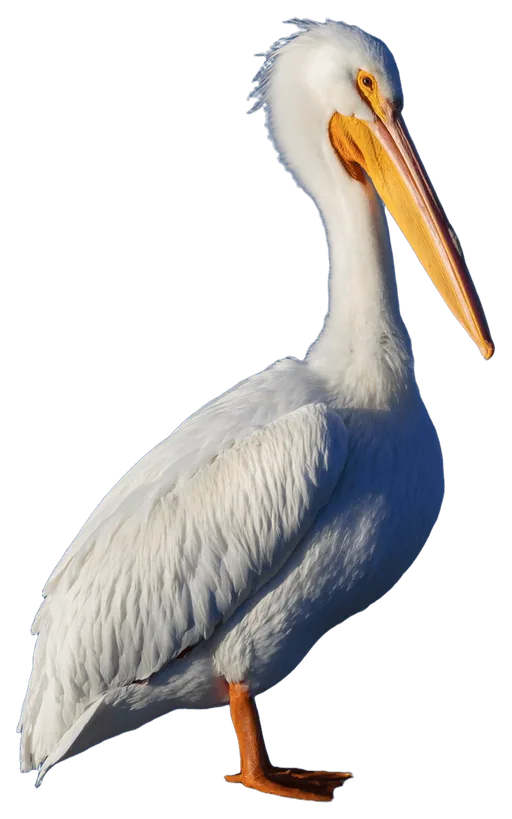
A standing American White Pelican looks almost oversized for flight: a deep-bodied white bird, an extraordinarily long orange bill and a wing system spanning roughly the width of a small room. Yet its biology is built around efficient movement rather than brute-force combat. On water it uses webbed feet and buoyant anatomy to cruise through shallows, sometimes joining other pelicans to compress schools of fish into a catchable corridor. The bill then functions as a long-handled scoop, with the elastic pouch expanding around prey and water before drainage and swallowing.
That same body becomes far more elegant once airborne. Broad wings allow the pelican to climb on thermals and cover long distances with comparatively little flapping. Telemetry confirms that adult movement space can be enormous. In ABS terms, this makes Stamina and mobility much more important than the visual intimidation of the bill might suggest.
The bill is still relevant in conflict. Breeding birds defend crowded nest spaces by jabbing neighbors, and its reach is substantial. But the weapon should not be confused with a raptor's hooked beak and talons. The pelican lacks a high-force killing bite, heavy armor, or a grappling foot weapon. If a terrestrial carnivore gets hold of it before takeoff, the apparent size advantage collapses quickly. Its best battle strategy is therefore positional: maintain water or air access, use reach to discourage close approach, and disengage rather than trade trauma.
Habitat & range
Breeds mainly on isolated islands in shallow inland lakes, rivers and marshes across western and central Canada and the United States. Winters chiefly on southern coasts, bays, estuaries and warm inland waters into Mexico and Central America. Some Gulf and Mexican populations are resident.
Diet & hunting
Primarily fish, with crayfish, salamanders and other aquatic prey also taken. Surface feeding distinguishes it from the plunge-diving Brown Pelican. Colonies can be very large and breeding birds may commute long distances between nest and feeding water.
Social life
Highly gregarious: roosts, nests, migrates and often forages in groups. ADW reports colonies around 1,000 nests and large migratory formations. Nest territories themselves are small and defended aggressively enough for repeated jabbing interactions.
Conservation
IUCN status is Least Concern. Audubon and state agencies describe major historical recovery/increase, but nesting colonies remain sensitive to human disturbance, habitat degradation, water-level changes, disease and fishing-related hazards.
Quick answers
How strong is a Pelican?
On the Animal Battle Stats scale, the Pelican has an attack rating of 28 and a power index of 48.4 out of 100, which ranks it #204 of 344 animals and puts it in C tier (Capable). Its strongest stat is stamina (84).
How much does a Pelican weigh?
A typical adult Pelican weighs about 6.9 kg (15 lb). Rated specimen: healthy prime mature male, 6.9 kg, approximately 155 cm total length, with a roughly 2.7 m wingspan and approximately 34 cm culmen.
How fast is a Pelican?
There is no reliable measured top speed for the Pelican, so we do not publish one. Its agility rating, which covers acceleration, reflexes and evasion, is 72 out of 100.
What does a Pelican eat?
Primarily fish, with crayfish, salamanders and other aquatic prey also taken. Surface feeding distinguishes it from the plunge-diving Brown Pelican. Colonies can be very large and breeding birds may commute long distances between nest and feeding water.
Is the Pelican endangered?
No. The Pelican is listed as Least Concern. IUCN status is Least Concern. Audubon and state agencies describe major historical recovery/increase, but nesting colonies remain sensitive to human disturbance, habitat degradation, water-level changes, disease and fishing-related hazards.
What animals can beat a Pelican?
Among its closest rivals, the Condor (55%) would be favored against the Pelican. It would be favored against the Raven, the Great Horned Owl, the Hyacinth Macaw, the Puffin. It is dead even with the Bearded Vulture, the Vulture, the Bald Eagle: a draw.
Researched 2026-09-27. Ratings are editorial judgments built from these sources; measurements describe a healthy adult male.
Photo: “Pelecanus erythrorhynchos at Las Gallinas Wildlife Ponds.jpg” by Frank Schulenburg, CC BY-SA 3.0, background removed and cropped. Original
Suggest a correction