
Peacock
Pavo cristatusC tier · Capable40th of 55 birds
Size & speed

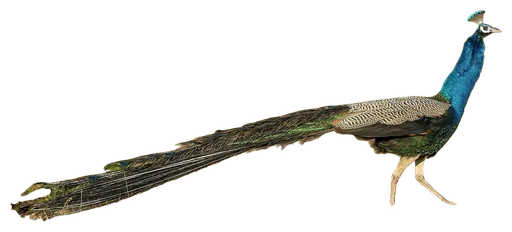
- Weight
- 5 kg11 lb
- Length
- 2.2 m7.2 ft
About as heavy as a house cat
Heavier than 37% of animalsAbout as long as a person is tall
Bigger than 76% of animalsThe Indian Peacock is a 5 kg territorial male galliform whose spectacular 2.2 m breeding silhouette hides a practical close-range toolkit: strong legs, roughly 2.5 cm spurs, sharp vigilance and explosive short flight. Its absolute Attack and Defense remain low beside mammalian predators and raptors, but its agility, signaling biology and practiced male rivalry make it much more than a decorative bird.
Detailed ratings
Research-backed ratings on one 0–100 scale for all 344 animals (updated 2026-09-27). How ratings work


Card No. 252 of 344. Every animal on Animal Battle Stats has one: its power, tier and archetype on the front; its six battle stats, abilities and signature move on the back.
Special abilities
A mature male uses the approximately 2.5 cm rear-leg spurs and strong feet during breeding-season rival conflict, adding a puncturing weapon to kicks and scratches.
Despite the enormous train, experimental work found no detectable meaningful loss of take-off center-of-mass power after train removal; the peacock can use short explosive flight to break terrestrial contact and reach elevated refuge.
Unique traits
Peacocks vibrate tail/train feathers around 25.6 Hz during display, using feather resonance to generate a multimodal visual-mechanical signal. It is a signaling trait, not a fictional sonic attack.
Mature males establish and defend display territories; field work links longer tarsi and trains with central lek position and more agonistic interactions.
How it fights
Weapons
- The male's best direct weapons are the feet and breeding spurs. A roughly 2.5 cm spur can puncture during close male-male conflict. Long, strong legs also allow scratching and kicking. The bill adds pecking but is not comparable with raptor talons or a carnivore's jaws.
Struggles vs
- Forced close quarters against a larger predator.
- Open arenas without escape cover or elevated roosts.
- Sustained aerial contests against true aerial specialists.
- Wet/heavy conditions that reduce feather and terrestrial locomotor advantages.
- Weight
- 5 kg11 lb
- Height
- 1.1 m3.6 ft
- Length
- 2.2 m7.2 ft
- Top speed
- No reliable measurement
- Bite force
- No reliable measurement
- Lifespan
- 18 years
- Home biome
- Forest
- Lifestyle
- Social
Rated specimen: Healthy prime fully mature breeding-plumage male, 5.0 kg, 220.0 cm total length including train, approximately 110.0 cm body length before the ornamental train, with a 1.4-1.6 m wingspan.
Fun facts
- The famous peacock “tail” display is mostly elongated upper-tail coverts, not the true tail feathers.
- A biomechanics experiment found the train was about 6.9% of body mass but did not detect a meaningful decrease in take-off power after the train was removed.
- Train-rattling averages about 25.6 vibrations per second, with feather resonance helping generate the display signal.
- Male train feathers are molted and regrown seasonally.
- Both sexes can possess spurs, although breeding males use them in competition.
- Chicks are precocial and can move soon after hatching.
Closest rivals by power. Tap one for the full breakdown, or pick any opponent.
vs HummingbirdWins · 84% · Clear edge 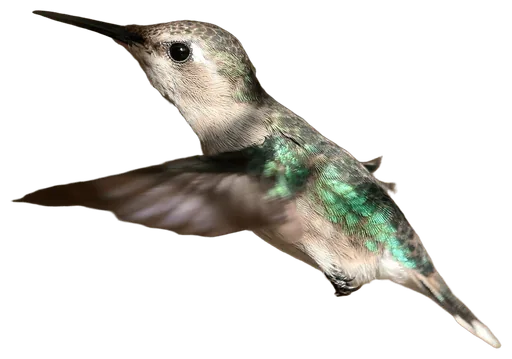 W vs ShoebillLoses · 51% · Toss-up
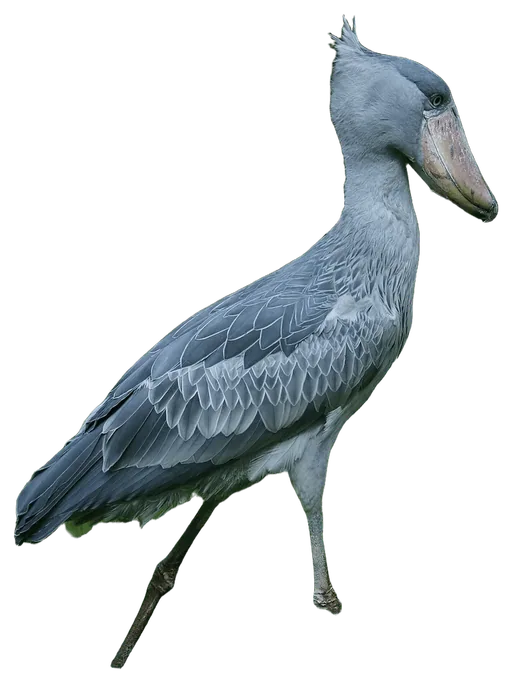 L vs StorkWins · 52% · Toss-up
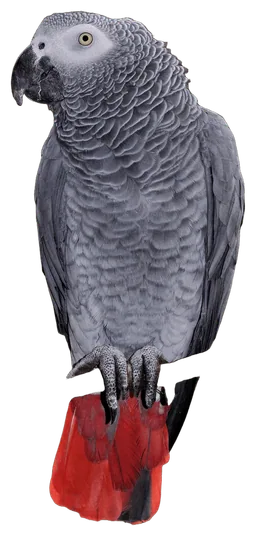
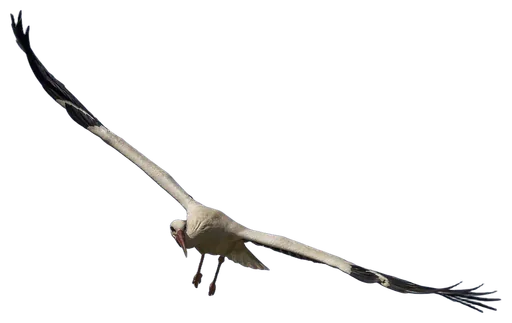 W vs African Grey ParrotWins · 64% · Slight edge
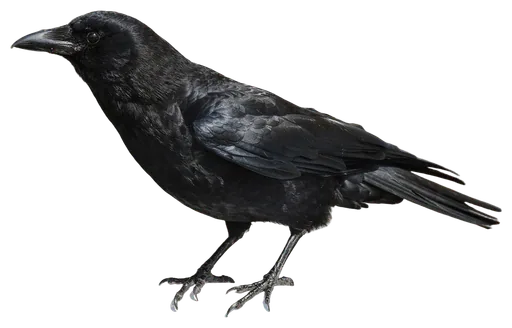
 W vs CrowWins · 64% · Slight edge
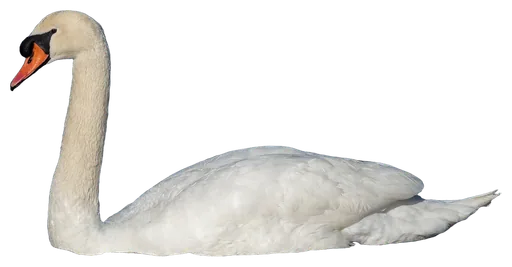
 W vs SwanLoses · 56% · Toss-up
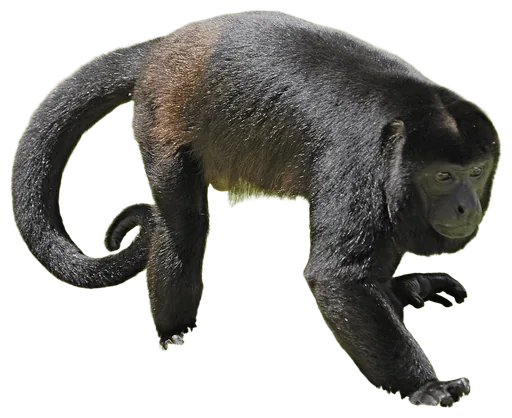
 L vs Howler MonkeyLoses · 52% · Toss-up
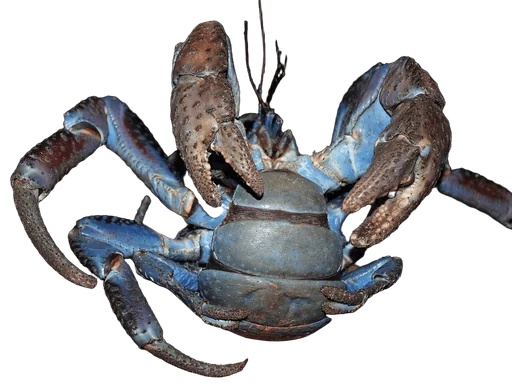
 L vs Coconut CrabWins · 53% · Toss-up
 W
Peacock battle analysis
A peacock looks oversized because of feathers rather than fighting mass. That distinction is central to fair ABS scaling. The canonical male weighs only about 5 kg even though his breeding-plumage length can exceed two meters. The train cannot be converted into Raw Power, Defense or reach as though it were muscle or bone. The damaging system is concentrated at the legs: strong terrestrial feet and breeding spurs used in rival conflict. The bill is useful but secondary.
The species is nevertheless a capable escape artist. It spends much of its life on the ground, scanning and foraging, then can launch into short flight to reach trees. Experimental biomechanics show why the visual bulk should not automatically imply clumsiness: removing the train did not produce a detectable meaningful improvement in measured take-off power. A mature male therefore deserves good maneuverability, but not raptor-like aerial control or a fabricated high sprint speed.
Behavior adds another layer. Free-ranging males establish display territories and experience agonistic intrusions, and recent work suggests display can occur in male-male or territorial contexts as well as courtship. The train's resonance and eyespots remain signals, not weapons. In an ABS matchup the peacock succeeds by seeing danger early, moving quickly, kicking or spurring at close range, and escaping contact when terrain allows. If a larger predator forces prolonged grappling, its low mass and lack of armor become decisive weaknesses.
Habitat & range
Native to the Indian subcontinent and adjacent South Asia, Indian peafowl use deciduous woodland, forest edges, scrub, cultivated land and human-modified landscapes, commonly near water. Introduced and feral populations occur widely outside the native range.
Diet & hunting
Omnivorous and opportunistic. Plant foods include seeds, grain, fruit, berries and shoots; animal foods include insects, worms and small vertebrates. Habitat-use research in Gujarat found foraging occupied the largest share of observed activity, followed by resting. This ecological flexibility helps explain success in agricultural and urban-edge landscapes.
Social life
Social organization changes with season. Breeding males establish display areas and interact agonistically with rivals while females visit potential mates. Outside breeding, males and females can form small same-sex groups. They roost in trees, reducing exposure to terrestrial predators at night.
Conservation
Cornell's current species account cites BirdLife/IUCN 2025 as Least Concern, with an extremely large range and increasing global population trend. Local pressures can still include hunting, pesticide poisoning, habitat change and human conflict.
Quick answers
How strong is a Peacock?
On the Animal Battle Stats scale, the Peacock has an attack rating of 29 and a power index of 42.9 out of 100, which ranks it #252 of 344 animals and puts it in C tier (Capable). Its strongest stat is agility (70).
How much does a Peacock weigh?
A typical adult Peacock weighs about 5 kg (11 lb). Rated specimen: healthy prime fully mature breeding-plumage male, 5.0 kg, 220.0 cm total length including train, approximately 110.0 cm body length before the ornamental train, with a 1.4-1.6 m wingspan.
How fast is a Peacock?
There is no reliable measured top speed for the Peacock, so we do not publish one. Its agility rating, which covers acceleration, reflexes and evasion, is 70 out of 100.
What does a Peacock eat?
Omnivorous and opportunistic. Plant foods include seeds, grain, fruit, berries and shoots; animal foods include insects, worms and small vertebrates. Habitat-use research in Gujarat found foraging occupied the largest share of observed activity, followed by resting. This ecological flexibility helps explain success in agricultural and urban-edge landscapes.
Is the Peacock endangered?
No. The Peacock is listed as Least Concern. Cornell's current species account cites BirdLife/IUCN 2025 as Least Concern, with an extremely large range and increasing global population trend. Local pressures can still include hunting, pesticide poisoning, habitat change and human conflict.
What animals can beat a Peacock?
Among its closest rivals, the Shoebill (51%), the Swan (56%), the Howler Monkey (52%) would be favored against the Peacock. It would be favored against the Hummingbird, the Stork, the African Grey Parrot, the Crow, the Coconut Crab.
Researched 2026-09-27. Ratings are editorial judgments built from these sources; measurements describe a healthy adult male.
- Animal Diversity Web, Pavo cristatusmass, length, wingspan, spurs, train, dimorphism, lifespan, breeding, behavior
- Zoo Lubin, Indian Peafowlsex-specific mass and length
- Perth Zoo, Indian Peafowlmale body/train, mass, habitat, flight
- Maryland Zoo, Indian Peafowllifespan, diet, broad size
- Askew 2014, Journal of Experimental Biologytrain biomechanics / take-off
- Loyau et al. 2005, Ethologymale competition / lek traits
- Paranjpe et al. 2023display context / territoriality
- Dakin et al. / biomechanics of display, 2016train-rattling mechanism
- Yorzinski et al. 2015vigilance
- Munjpara et al. 2020, Indian Foresterhabitat/activity
- Singh & Lata 2025/2026diet flexibility
- Cornell / BirdLife-IUCN 2025conservation
- Commons, Shiv's fotografiaimage provenance
- Flickr, Abarilturadult-male image verification
Photo: “099 Indian peafowl in Jim Corbett National Park Photo by Giles Laurent.jpg” by Giles Laurent, CC BY-SA 4.0, background removed and cropped. Original
Suggest a correction