
Oryx
Oryx gazellaA tier · Elite28th of 163 mammals
Size & speed

- Weight
- 230 kg507 lb
- Length
- 1.9 m6.2 ft
- Top speed
- 56 km/h35 mph
As heavy as 3.3 people
Heavier than 81% of animalsAbout as long as a person is tall
Bigger than 70% of animalsFaster than Usain Bolt (44.7 km/h)
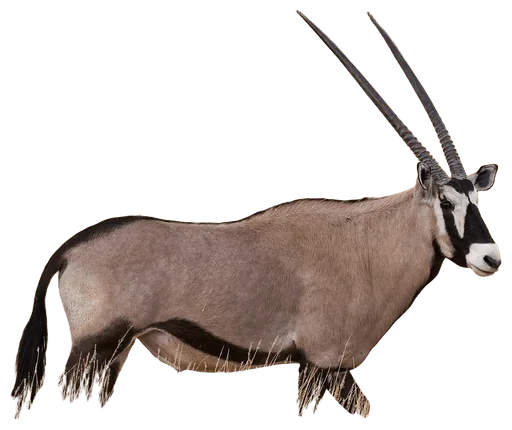
Faster than 69% of animalsThe gemsbok is a 230 kg desert antelope built around reach, speed and endurance. A territorial bull controls nearly meter-long spear-like horns with fencing and jabbing movements, while desert-hardy physiology lets it range far from surface water and tolerate severe heat. It is dangerous at standoff range but lacks true armor and loses much of its advantage if a stronger grappler gets inside the horns.
Detailed ratings
Research-backed ratings on one 0–100 scale for all 344 animals (updated 2026-09-27). How ratings work


Card No. 48 of 344. Every animal on Animal Battle Stats has one: its power, tier and archetype on the front; its six battle stats, abilities and signature move on the back.
Special abilities
Paired long, nearly straight horns give a territorial bull a broad standoff zone for fencing and puncturing jabs, with field evidence linking horn quality to contest success.
Flexible body-temperature rhythms, shade/activity shifts and low dependence on surface water allow useful performance in heat and aridity that would constrain many similarly sized mammals.
Unique traits
Field data link more symmetric horns with better condition and more wins in aggressive interactions, making horn form an unusually well-studied quality signal.
Free-ranging gemsbok are often found more than 20 km from potential surface water and obtain substantial moisture from forage, enabling wide use of arid habitat.
How it fights
Weapons
- The paired horns are the primary weapon. Their long, narrow geometry gives exceptional reach for a 230 kg herbivore and can deliver fencing contacts and sidelong jabs. Hooves and body mass are secondary weapons, but the evidence base is much stronger for horn use than for quantified kicking force.
Struggles vs
- No true armor or thick megafaunal hide.
- Horns are long enough to become awkward at grappling distance.
- Primary anti-predator strategy is still escape, not sustained close combat.
- Much heavier opponents can overwhelm its mass advantage.
- Heat tolerance delays rather than abolishes thermal limits.
- Weight
- 230 kg507 lb
- Height
- 1.23 m4 ft
- Length
- 1.9 m6.2 ft
- Top speed
- 56 km/h35 mph
- Bite force
- No reliable measurement
- Lifespan
- 18 years
- Home biome
- Desert
- Lifestyle
- Social
Rated specimen: Healthy prime mature territorial male, 230.0 kg, 123.0 cm shoulder height, 190.0 cm body length.
Fun facts
- Both males and females carry formidable horns.
- A peer-reviewed field study found horn symmetry predicted success in aggressive interactions.
- Gemsbok can allow body temperature to fluctuate substantially, reducing the immediate need for evaporative cooling.
- Free-ranging Botswana gemsbok were frequently recorded more than 20 km from potential surface water.
- They can dig deeply for roots/tubers and obtain water from desert melons.
- Their young are initially plain brown and develop the characteristic black-and-white pattern later.
Closest rivals by power. Tap one for the full breakdown, or pick any opponent.
vs CamelLoses · 56% · Toss-up  L vs Snow LeopardWins · 58% · Slight edge
 W vs Musk OxLoses · 51% · Toss-up
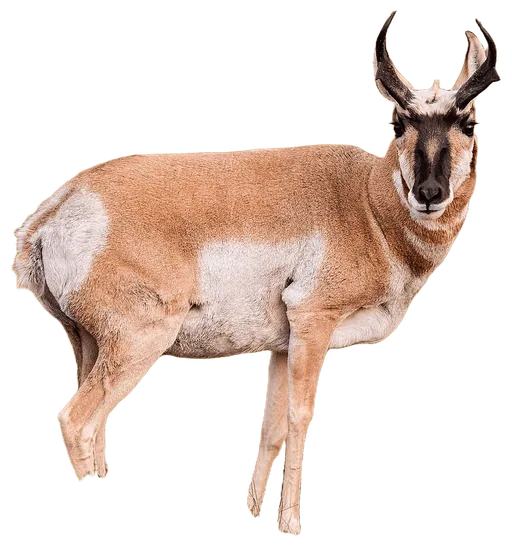
 L vs PronghornWins · 60% · Slight edge
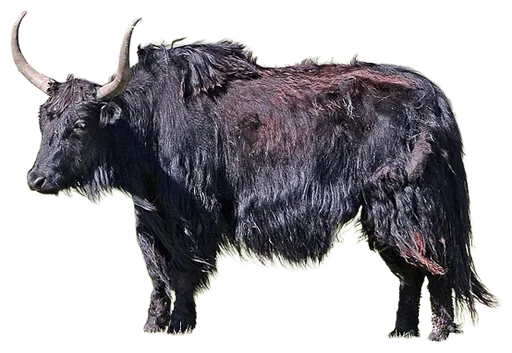
 W vs YakLoses · 52% · Toss-up
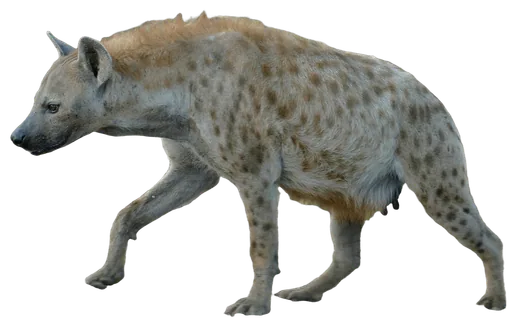
 L vs HyenaWins · 55% · Toss-up
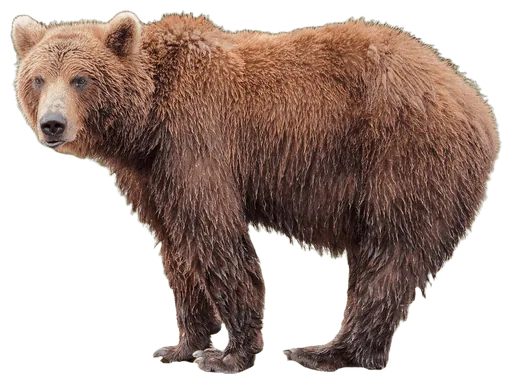
 W vs Grizzly BearLoses · 52% · Toss-up
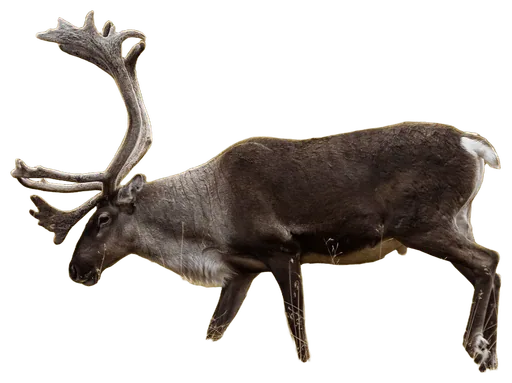
 L vs ReindeerWins · 54% · Toss-up
 W
Oryx battle analysis
A gemsbok bull is best understood as a mobile spear platform rather than a generic large antelope. Its offense starts before an opponent reaches the body: paired, nearly straight horns project far beyond the face, and real social contests use controlled fencing and lateral jabs. The animal behind those horns is not lightweight. At roughly 230 kg, a prime bull has enough neck and shoulder mass to make contact consequential while retaining the cursorial build needed to flee major predators.
Its second defining system is physiological rather than mechanical. In the Kalahari, surface water can be remote and heat can make midday activity expensive. Biologger work shows gemsbok alter activity timing, seek favorable microclimates and permit broad body-temperature rhythms while ranging much farther from water than water-dependent wildebeest. That makes Stamina and Special genuinely high without pretending the animal can run forever. Recent persistence-hunting observations are a useful corrective: prolonged pursuit can still push an oryx into dangerous hyperthermia.
In a battle model, geometry matters. In open ground against a smaller attacker, the bull can run, pivot and maintain a long horn barrier. At grappling distance, in thick cover, or against much heavier megafauna, those same horns become harder to deploy and the absence of armor becomes decisive. Its strongest profile is therefore not raw power but the combination of reach, speed and harsh-environment persistence.
Habitat & range
Native gemsbok occupy arid and semi-arid southern African landscapes, including Kalahari/Namib systems, open grasslands, stony plains, dunes and bush savanna. Introduced populations occur in the southwestern United States and Mexico; White Sands NPS documents the New Mexico introduction. Open habitat is preferred over dense tree cover.
Diet & hunting
Primarily grazers, gemsbok switch toward browse when grass is scarce. They dig for roots, bulbs and tubers and eat water-rich wild melons/cucumbers. Stable-isotope synthesis cited in the Mammalian Species account puts grasses around 81% of diet, while other feeding accounts describe roughly 90% under favorable grazing conditions. This variation is ecological, not a contradiction requiring one fixed percentage.
Social life
Group structure is flexible. ADW reports average groups around 14 with larger aggregations during rain/migration, while institutional accounts report herds into the hundreds. Nursery, bachelor and mixed groups occur. Many adult males are solitary territorial holders; dominant males and females occupy distinct leadership roles in groups.
Conservation
ADW and contemporary institutional sources list gemsbok as Least Concern. Local pressures include hunting, livestock competition, habitat change and climate stress. Conversely, introduced populations can themselves create ecological-management problems, as documented at White Sands.
Quick answers
How strong is an Oryx?
On the Animal Battle Stats scale, the Oryx has an attack rating of 60 and a power index of 63.5 out of 100, which ranks it #48 of 344 animals and puts it in A tier (Elite). Its strongest stat is stamina (82).
How much does an Oryx weigh?
A typical adult Oryx weighs about 230 kg (507 lb). Rated specimen: healthy prime mature territorial male, 230.0 kg, 123.0 cm shoulder height, 190.0 cm body length.
How fast is an Oryx?
The Oryx's top speed is about 56 km/h (35 mph). Its agility rating is 66 out of 100.
What does an Oryx eat?
Primarily grazers, gemsbok switch toward browse when grass is scarce. They dig for roots, bulbs and tubers and eat water-rich wild melons/cucumbers. Stable-isotope synthesis cited in the Mammalian Species account puts grasses around 81% of diet, while other feeding accounts describe roughly 90% under favorable grazing conditions. This variation is ecological, not a contradiction requiring one fixed percentage.
Is the Oryx endangered?
No. The Oryx is listed as Least Concern. ADW and contemporary institutional sources list gemsbok as Least Concern. Local pressures include hunting, livestock competition, habitat change and climate stress. Conversely, introduced populations can themselves create ecological-management problems, as documented at White Sands.
What animals can beat an Oryx?
Among its closest rivals, the Camel (56%), the Musk Ox (51%), the Yak (52%), the Grizzly Bear (52%) would be favored against the Oryx. It would be favored against the Snow Leopard, the Pronghorn, the Hyena, the Reindeer.
Researched 2026-09-27. Ratings are editorial judgments built from these sources; measurements describe a healthy adult male.
- Animal Diversity Web, Oryx gazellaTaxonomy, 180-240 kg males, 115-125 cm shoulder, 180-195 cm length, 60-150 cm horns, dimorphism, reproduction, behavior, diet, predators, 18 y wild lifespan, thermoregulation
- African Wildlife Foundation, Oryx180-240 kg, 115-125 cm shoulder, up to 20 y wild, diet, dry-plains ecology, herd scale
- White Sands National Park, African OryxIntroduced New Mexico population, ~204 kg average, 1.2 m shoulder, ~86 cm average horns
- Buffalo Zoo, Gemsbok56 km/h maximum, senses, habitat/water independence, rainy-season herds
- Boyers et al., Conservation Physiology 2019Free-ranging activity, shade use, >20 km from potential water, body-temperature rhythms
- Møller et al., Behavioral Ecology 1996Horn symmetry, condition, aggressive wins, territorial-male association
- Handbook of the Mammals of the World species account archived on ZenodoOpen arid habitat, grass-dominant diet, digging for underground foods, breeding behavior
- Hora et al., Journal of Human Evolution 2025 summaryPersistence pursuits, healthy oryx caught after 2 h, oryx hyperthermia around 44 C
- Wikimedia Commons, Charles J. Sharp male gemsbokExact-species male photo, Etosha provenance, CC BY-SA 4.0, 5466x3644
Photo: “110 Male Gemsbok in the Kalahari Desert of Namibia Photo by Giles Laurent.jpg” by Giles Laurent, CC BY-SA 4.0, background removed and cropped. Original
Suggest a correction