
Orca
Orcinus orcaS tier · Apex1st of 51 sea creatures
Size & speed

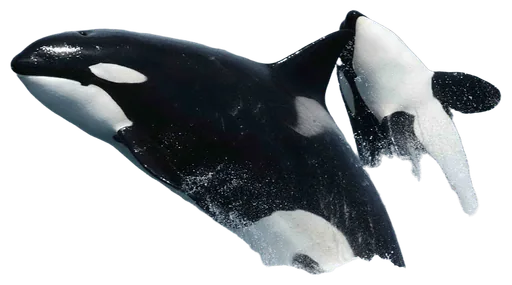
- Weight
- 5 t5.5 US tons
- Length
- 6.5 m21.3 ft
- Top speed
- 56 km/h35 mph
As heavy as 3.3 cars
Heavier than 98% of animals3.7× a person's height
Bigger than 97% of animalsFaster than Usain Bolt (44.7 km/h)
Faster than 69% of animalsA multi-tonne apex dolphin combining huge jaws and swimming power with precision biosonar, extreme behavioral flexibility and some of the most sophisticated socially learned hunting tactics known in nonhuman predators.
Detailed ratings
Research-backed ratings on one 0–100 scale for all 344 animals (updated 2026-09-27). How ratings work


Card No. 1 of 344. Every animal on Animal Battle Stats has one: its power, tier and archetype on the front; its six battle stats, abilities and signature move on the back.
Special abilities
Broadband echolocation can detect prey at 100+ m in studied resident whales, discriminate targets and transition to rapid close-range buzzes during capture.
Grounded in Antarctic pack-ice killer whales that synchronously generate waves to dislodge seals from ice, demonstrating deliberate environmental manipulation and team timing.
Unique traits
Distinct populations socially transmit prey preferences, vocal dialects and specialized hunting traditions rather than relying on one fixed species-wide strategy.
The largest dolphin combines cetacean streamlining with a mature male body around several tonnes and a dorsal fin that can approach 1.8 m.
How it fights
Weapons
- The primary weapon is a huge, muscular head-and-jaw system carrying interlocking conical teeth designed to seize and tear rather than chew. At multi-tonne body mass, bites can be paired with ramming, shaking, dragging, drowning, tail/body impacts and cooperative restraint. Confirmed prey spans fish, pinnipeds, cetaceans, sharks and other marine vertebrates. A 2025 genetic study confirmed killer-whale DNA in the major bite area of a 4.7 m white shark carcass whose liver and other organs were missing, supporting genuine predation on very large dangerous prey without requiring a fictional PSI number.
- Weight
- 5 t5.5 US tons
- Height
- No reliable measurement
- Length
- 6.5 m21.3 ft
- Top speed
- 56 km/h35 mph
- Bite force
- No reliable measurement
- Lifespan
- 50 years
- Home biome
- Ocean
- Lifestyle
- Social
Rated specimen: Healthy prime fully mature adult male, 5,000.0 kg and 650.0 cm long.
Fun facts
- The orca is the largest living member of the dolphin family.
- Mature male dorsal fins can reach about 1.8 m.
- Resident killer-whale echolocation can detect prey at 100 m or more in studied contexts.
- Antarctic pack-ice whales have been documented repeatedly making waves to wash seals from ice floes.
- Killer-whale groups possess socially learned vocal dialects.
- Genetic evidence has confirmed killer-whale predation on a 4.7 m white shark in Australia.
Closest rivals by power. Tap one for the full breakdown, or pick any opponent.
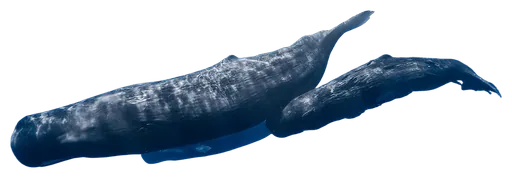
vs MegalodonLoses · 59% · Slight edge 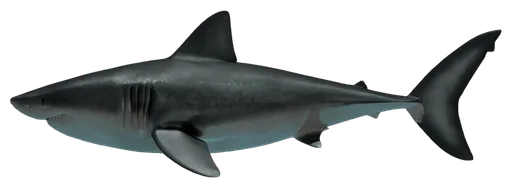 L vs Sperm WhaleLoses · 54% · Toss-up
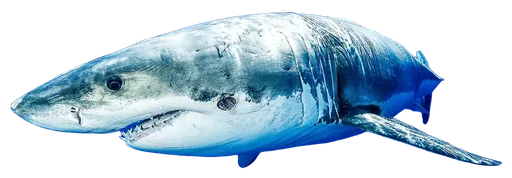
 L vs Great White SharkWins · 72% · Clear edge
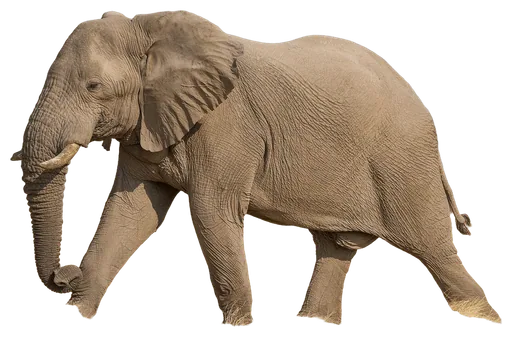
 W vs African ElephantWins · 61% · Slight edge
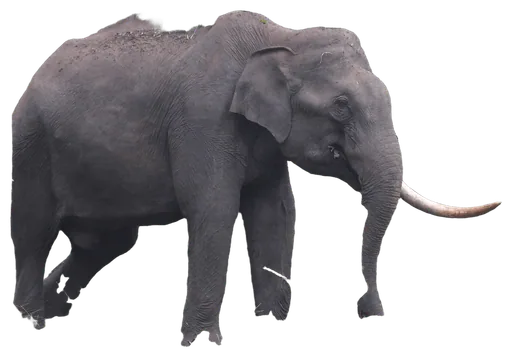
 W vs Asian ElephantWins · 65% · Slight edge
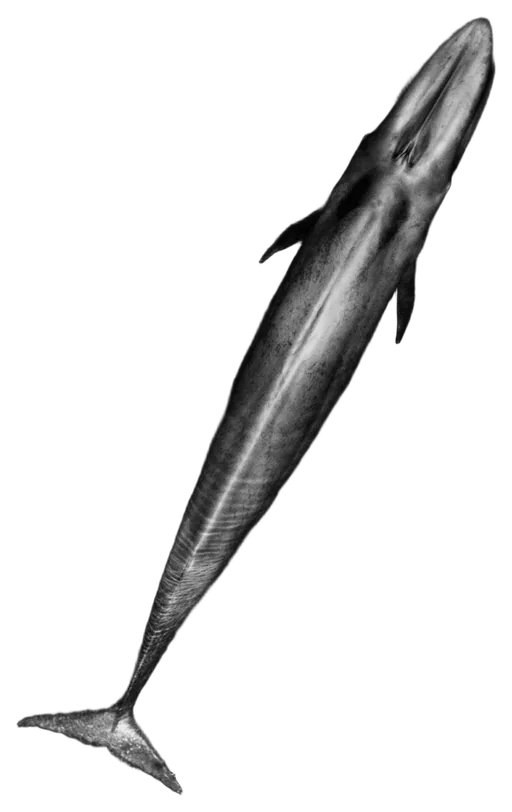
 W vs Blue WhaleWins · 51% · Toss-up
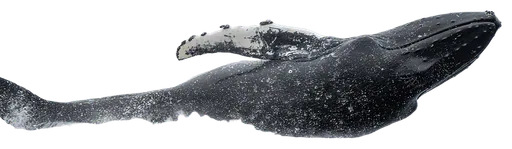
 W vs Humpback WhaleWins · 59% · Slight edge
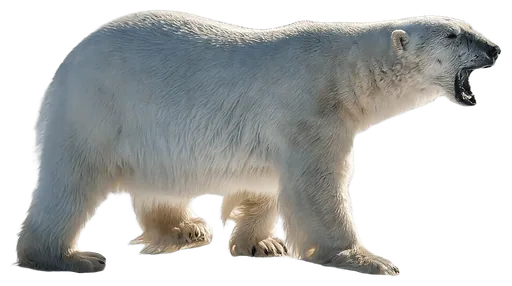
 W vs Polar BearWins · 80% · Clear edge
 W
Orca battle analysis
An orca's danger is not reducible to size. A prime male carries several tonnes of streamlined muscle and a mouth of large conical teeth, yet its defining advantage is control: control of position, acoustic information, prey movement and, in social hunts, the behavior of teammates. Fish-eating populations can acoustically search for and discriminate prey, while other populations suppress sound around marine mammals. Pack-ice hunters manufacture waves; other groups strand intentionally or specialize on sharks and cetaceans. This diversity is why the profile separates universal anatomy from population-specific culture. A solitary male should not receive the force of an entire pod, but he still brings elite aquatic mobility, massive physical power, sophisticated perception and a learned tactical repertoire.
Habitat & range
Cosmopolitan across the world's oceans, from polar waters to tropical seas, occupying coastal and offshore habitats. Local ecotypes differ substantially in range use and ecology.
Diet & hunting
A top marine predator with population-specific diets including salmon and other fish, seals and sea lions, cetaceans, sharks, rays, cephalopods, birds and reptiles. Diet specialization matters: fish-eating residents and mammal-eating Bigg's killer whales differ in acoustic behavior and social ecology.
Social life
Many populations center on stable matrilineal social units. Vocal dialects are socially learned. Males become sexually mature around the early teen years but continue morphological maturation afterward. Male longevity is shorter than female longevity; Canadian assessments estimate roughly 29-31 years average life expectancy for males surviving infancy in well-studied resident populations and about 40-60 years maximum longevity.
Conservation
Species-level assessments are complicated by distinct populations/ecotypes. NOAA lists Southern Resident killer whales as endangered under the U.S. ESA and identifies prey limitation, contaminants, vessel/noise disturbance, entanglement and oil spills among threats.
Quick answers
How strong is an Orca?
On the Animal Battle Stats scale, the Orca has an attack rating of 94 and a power index of 87.9 out of 100, which ranks it #1 of 344 animals and puts it in S tier (Apex). Its strongest stat is intelligence (99).
How much does an Orca weigh?
A typical adult Orca weighs about 5 t (5.5 US tons). Rated specimen: healthy prime fully mature adult male, 5,000.0 kg and 650.0 cm long.
How fast is an Orca?
The Orca's top speed is about 56 km/h (35 mph). Its agility rating is 84 out of 100.
What does an Orca eat?
A top marine predator with population-specific diets including salmon and other fish, seals and sea lions, cetaceans, sharks, rays, cephalopods, birds and reptiles. Diet specialization matters: fish-eating residents and mammal-eating Bigg's killer whales differ in acoustic behavior and social ecology.
Is the Orca endangered?
The Orca's conservation status is Endangered. Species-level assessments are complicated by distinct populations/ecotypes. NOAA lists Southern Resident killer whales as endangered under the U.S. ESA and identifies prey limitation, contaminants, vessel/noise disturbance, entanglement and oil spills among threats.
What animals can beat an Orca?
Among its closest rivals, the Megalodon (59%), the Sperm Whale (54%) would be favored against the Orca. It would be favored against the Great White Shark, the African Elephant, the Asian Elephant, the Blue Whale, the Humpback Whale, the Polar Bear.
Researched 2026-09-27. Ratings are editorial judgments built from these sources; measurements describe a healthy adult male.
- 1. NOAA Fisheries, Killer Whaletaxonomy, global conservation context, maximum size/lifespan summary. High confidence; maxima are not representative canonical values.
- 2. U.S. Fish & Wildlife Service, Orcamaximum male size and >56 km/h speed. Moderate-high institutional confidence; speed is agency summary rather than instrumented trial.
- 3. Aquarium of the Pacific, Orcamale 5.8-6.7 m / 3,628-5,442 kg, 1.8 m dorsal fin, 40-56 teeth, ~7.6 cm tooth length, vision/echolocation. High institutional confidence for representative morphology.
- 4. Animal Diversity Web, *Orcinus orca*alternate synthesis with 8 m / 7,200 kg average male, distribution and ecology. Moderate-high; demonstrates source/population conflict.
- 5. COSEWIC 2023 killer-whale assessmentresident male life expectancy ~31 y in growth period and 40-50 y longevity; population-dependent. High confidence.
- 6. Canada recovery strategymale average ~29 y and maximum 50-60 y. High confidence for resident populations.
- 7. Smithsonian NMNH Orca tooth castsindividual teeth 10 x 3 x 2 cm. High confidence for those specimens, not necessarily population mean.
- 8. Wright et al. 2021, Marine Mammal Sciencebiosonar use during pursuit/capture, rapid buzzes, prey handling; review material notes 100+ m detection and fine discrimination. High confidence, fish-eating residents.
- 9. Pitman & Durban 2012, Marine Mammal Sciencepack-ice cooperative wave washing, prey selection and attack success. High confidence, Antarctic type B context only.
- 10. Rice et al. 2022, Frontiers in Marine Sciencetagged offshore whales, dives to 479.5 m and 12.3 min. High confidence for tagged animals.
- 11. Stewart et al. 2026, Marine Mammal Science4,002 km tagged movement and dives to 528 m in Pacific Mexico. High confidence, three tagged whales; do not universalize exact values.
- 12. Filatova et al. 2015, Animal Behavioursocially learned group-specific vocal dialects and modeling of dialect change. High confidence for dialect phenomenon.
- 13. Reeves et al. 2025, Ecology and Evolutiongenetic confirmation of killer-whale predation on a 4.7 m white shark. High confidence for the documented event.
- 14. Commons USFWS male photo; original https://upload.wikimedia.org/wikipedia/commons/a/a2/Male_killer_whale_orcinus_orca.jpg - public domain, explicit male, but body is submerged and unsuitable for strict cutout.
- 14. Commons USFWS male photo - https://commons.wikimedia.org/wiki/File:Male_killer_whale_orcinus_orca.jpg ; originalpublic domain, explicit male, but body is submerged and unsuitable for strict cutout.
Photo: “Killerwhales jumping.jpg” by Robert Pittman, Public domain, background removed and cropped. Original
Suggest a correction