
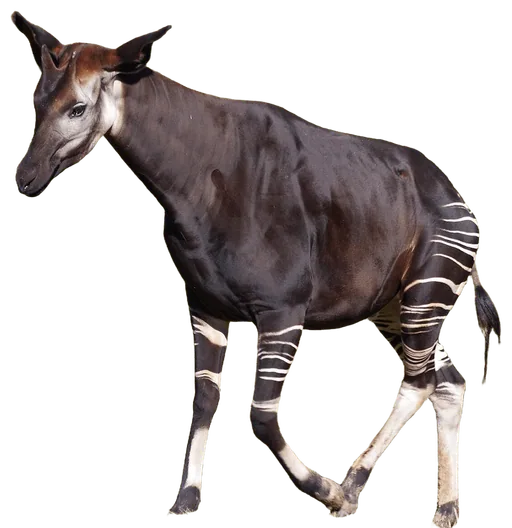
Okapi
Okapia johnstoniB tier · Strong76th of 163 mammals
Size & speed

- Weight
- 275 kg606 lb
- Length
- 2.5 m8.2 ft
As heavy as 3.9 people
Heavier than 84% of animals1.4× a person's height
Bigger than 79% of animalsThe okapi is a 275 kg forest giraffid whose combat value comes from long-legged kicking power, a sturdy body, acute hearing and male territorial head strikes. It is less heavily armed than elk or large bovids, but dense-rainforest camouflage and exceptional mobile ears make it difficult to surprise in its home terrain.
Detailed ratings
Research-backed ratings on one 0–100 scale for all 344 animals (updated 2026-09-27). How ratings work


Card No. 122 of 344. Every animal on Animal Battle Stats has one: its power, tier and archetype on the front; its six battle stats, abilities and signature move on the back.
Special abilities
Very large independently mobile ears improve directional detection in visually obstructed forest, helping the okapi detect threats before contact.
Mature males use the head in aggressive encounters; short bony skin-covered ossicones add a hard contact structure to close-range territorial clashes.
Unique traits
A compact giraffid body combines long legs, elevated browsing reach and dense-forest mobility without the extreme height of a giraffe.
Contrasting leg and rump striping breaks up the body outline in dappled rainforest vegetation, supporting concealment rather than armor.
How it fights
Weapons
- The okapi is not a dedicated fighter like a bovid with large horns. Its practical offense comes from a heavy ungulate body, long legs and hooves, close-range shoving, and male head strikes involving the skull and short ossicones. EAZA guidance confirms headbanging as real aggressive behavior during introductions. Ossicones add a hard contact point but are short and less dangerous than long horns or antlers.
- Weight
- 275 kg606 lb
- Height
- 1.5 m4.9 ft
- Length
- 2.5 m8.2 ft
- Top speed
- No reliable measurement
- Bite force
- No reliable measurement
- Lifespan
- 17 years
- Home biome
- Jungle
- Lifestyle
- Mostly solitary, nocturnal
Rated specimen: Healthy prime mature male, 275.0 kg, about 150.0 cm shoulder height and 250.0 cm body length.
Fun facts
- The okapi is a giraffid, not a type of zebra, despite its striped legs.
- Females are generally larger than males, while males alone normally develop prominent ossicones.
- The ears can rotate independently.
- The tongue is prehensile and can be used to groom the face and ears.
- Calves can delay their first defecation for weeks, apparently reducing scent near hiding sites.
- Adult males can use home ranges spanning roughly 10 km and may travel about 4 km in a day.
Closest rivals by power. Tap one for the full breakdown, or pick any opponent.
vs Proboscis MonkeyWins · 64% · Slight edge 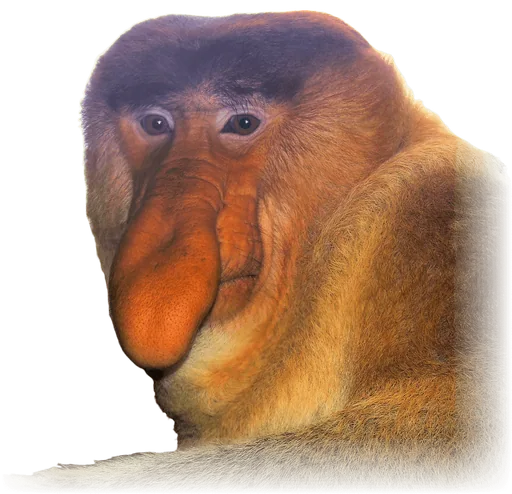 W vs MandrillWins · 62% · Slight edge
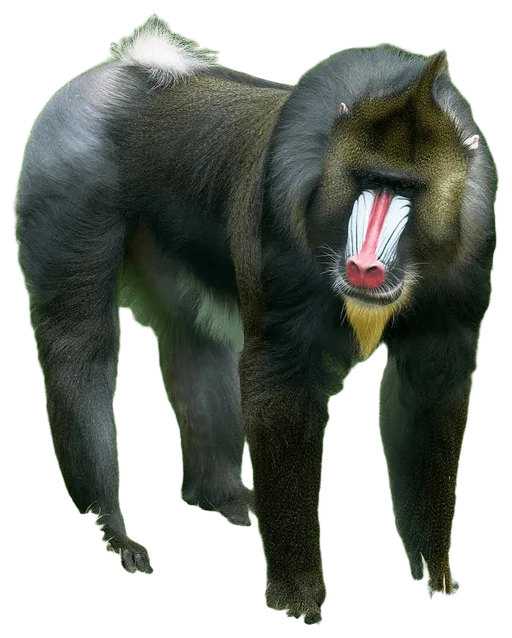 W vs Tibetan MastiffWins · 59% · Slight edge
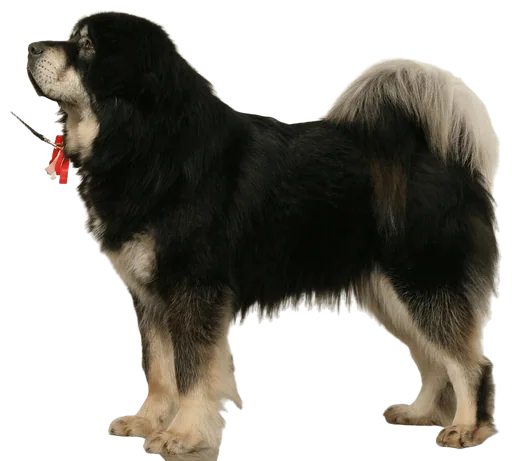 W vs Caucasian Shepherd DogWins · 59% · Slight edge
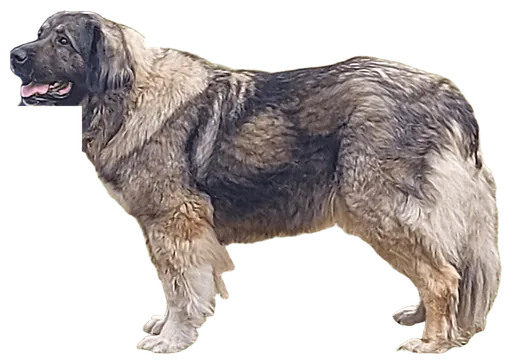 W vs KangalWins · 60% · Slight edge
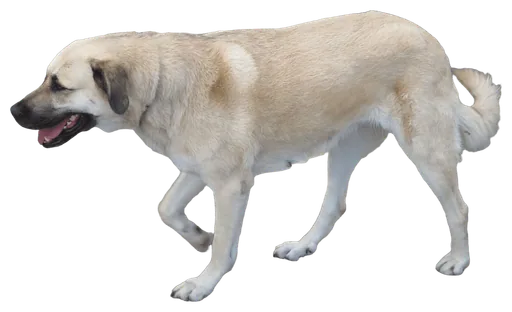 W vs Belgian MalinoisWins · 63% · Slight edge
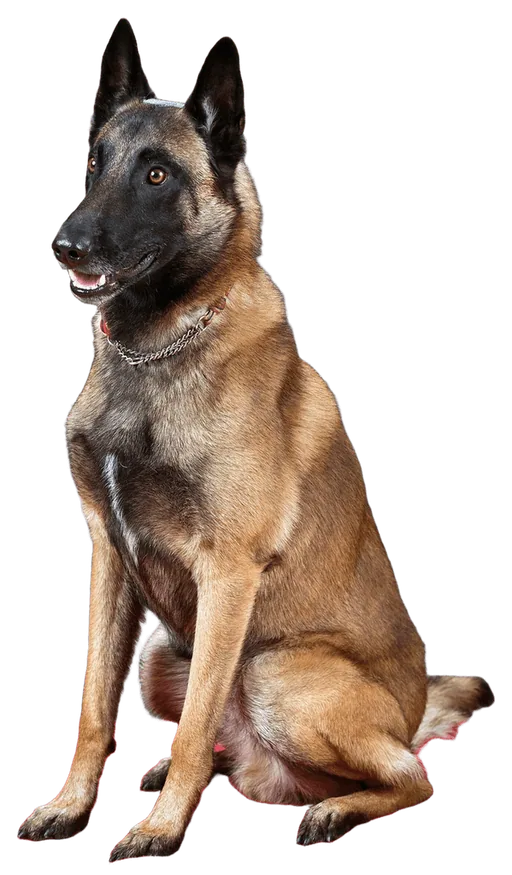 W vs Striped HyenaWins · 62% · Slight edge
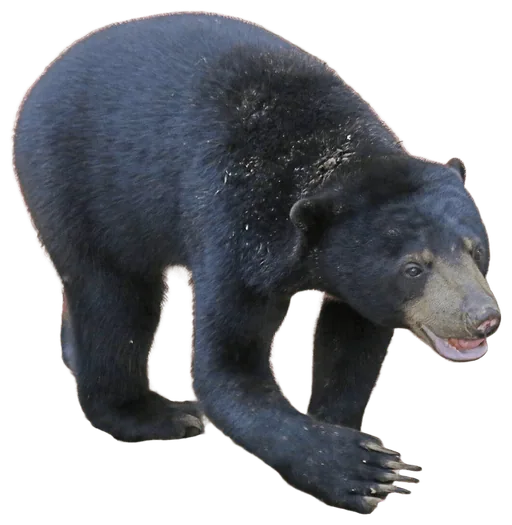
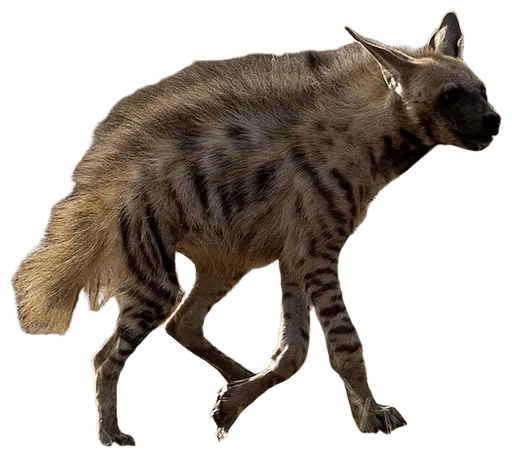 W vs Sun BearWins · 60% · Slight edge
 W
Okapi battle analysis
The okapi is built for survival in closed forest rather than open-ground dominance. Its dark body disappears into shadow while striped limbs fragment the outline among shafts of light and vegetation. Huge mobile ears continuously sample a habitat where visibility is short, and established trail networks let a solitary animal move efficiently through dense cover.
A mature male is still a formidable physical object. At roughly 275 kg it can shove, kick and use its head in territorial clashes. EAZA husbandry guidance is particularly useful because it confirms headbanging as genuine aggressive behavior rather than an inferred giraffid analogy. Yet the short ossicones do not provide the reach or penetrating geometry of an antelope's long horns, and the okapi lacks armor. Its battle profile therefore stays below a similarly sized elk in Attack while preserving meaningful absolute power.
The species' best defense is to detect and avoid danger before a clean engagement. Leopards remain natural predators, demonstrating the limits of body mass and concealment once a large cat achieves good contact. ABS ratings consequently separate a strong sensory/forest toolkit from raw durability and weaponry.
Habitat & range
Okapis are endemic to central and northeastern Democratic Republic of the Congo. IUCN's conservation strategy identifies them as a tropical-rainforest endemic; zoo and specialist sources emphasize dense lowland/closed-canopy forest.
Diet & hunting
A selective browser eating leaves, twigs, buds, fruits, ferns and fungi. San Diego Zoo reports about 18-29 kg of food per day and notes clay consumption, likely for minerals. The long dark prehensile tongue strips foliage and also assists grooming.
Social life
Predominantly solitary. Females associate with dependent calves. Adult males maintain larger ranges and attempt to exclude other males, while allowing females to pass through.
Conservation
The okapi is Endangered. IUCN and major zoo conservation programs identify habitat loss, poaching/bushmeat hunting, illegal mining, human settlement and armed insecurity in the DRC as major threats. Exact wild abundance remains difficult to estimate.
Quick answers
How strong is an Okapi?
On the Animal Battle Stats scale, the Okapi has an attack rating of 53 and a power index of 54.1 out of 100, which ranks it #122 of 344 animals and puts it in B tier (Strong). Its strongest stat is stamina (67).
How much does an Okapi weigh?
A typical adult Okapi weighs about 275 kg (606 lb). Rated specimen: healthy prime mature male, 275.0 kg, about 150.0 cm shoulder height and 250.0 cm body length.
How fast is an Okapi?
There is no reliable measured top speed for the Okapi, so we do not publish one. Its agility rating, which covers acceleration, reflexes and evasion, is 61 out of 100.
What does an Okapi eat?
A selective browser eating leaves, twigs, buds, fruits, ferns and fungi. San Diego Zoo reports about 18-29 kg of food per day and notes clay consumption, likely for minerals. The long dark prehensile tongue strips foliage and also assists grooming.
Is the Okapi endangered?
The Okapi's conservation status is Endangered. The okapi is Endangered. IUCN and major zoo conservation programs identify habitat loss, poaching/bushmeat hunting, illegal mining, human settlement and armed insecurity in the DRC as major threats. Exact wild abundance remains difficult to estimate.
What animals can beat an Okapi?
The Okapi is favored against all of its closest rivals, including the Proboscis Monkey, the Mandrill, the Tibetan Mastiff, the Caucasian Shepherd Dog, the Kangal, the Belgian Malinois, the Striped Hyena, the Sun Bear.
Researched 2026-09-27. Ratings are editorial judgments built from these sources; measurements describe a healthy adult male.
- San Diego Zoo Wildlife Alliance, Okapisex-specific mass, height, lifespan, activity, home range, diet, senses
- Animal Diversity Web, Okapia johnstonitaxonomy, mass, dimorphism, morphology
- EAZA Okapi Best Practice Guidelinesaggression, introductions, dominance
- Chester Zoo, Okapiossicones, height, lifespan, ecology
- National Geographic, Okapilength, predator, conservation
- IUCN, Okapi conservation strategyrange/conservation
- Wikimedia Commons, Denver Zoo maleimage provenance
Photo: “Saint-Aignan (Loir-et-Cher). Okapi.jpg” by Daniel Jolivet, CC BY 2.0, background removed and cropped. Original
Suggest a correction