
Octopus
Enteroctopus dofleiniB tier · Strong21st of 51 sea creatures
Size & speed

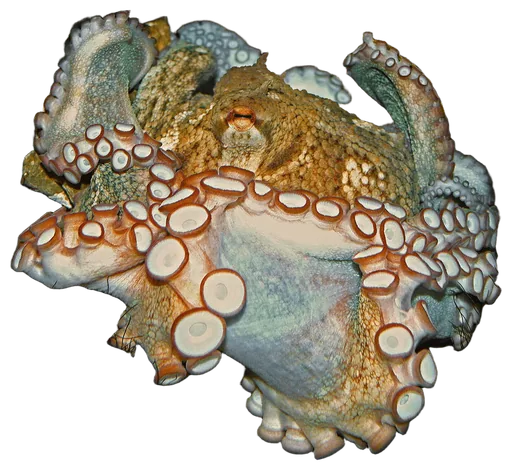
- Weight
- 30 kg66 lb
- Length
- 2.5 m8.2 ft
As heavy as 6.7 house cats
Heavier than 58% of animals1.4× a person's height
Bigger than 79% of animalsThe Giant Pacific Octopus is a 30 kg aquatic grappling specialist built around control rather than collision. Eight chemosensory arms restrain prey for a beak and toxic saliva, while elite camouflage, deformability, ink and jet propulsion make it extraordinarily difficult to corner in rocky water. Its soft body limits direct durability, but its intelligence and special toolkit rank among the roster's strongest.
Detailed ratings
Research-backed ratings on one 0–100 scale for all 344 animals (updated 2026-09-27). How ratings work


Card No. 58 of 344. Every animal on Animal Battle Stats has one: its power, tier and archetype on the front; its six battle stats, abilities and signature move on the back.
Special abilities
Chromatophores plus active skin-texture control rapidly alter appearance, reducing detection and improving ambush/disengagement in structured habitat.
Eight muscular, chemosensory sucker-lined arms can envelop, probe and restrain prey while routing it toward the beak, combining sensing and control in the same appendages.
Unique traits
Experimentally switches among pulling, chipping and drilling depending on prey-shell resistance instead of relying on one fixed feeding technique.
Almost the entire body is deformable, allowing use of narrow refuges constrained primarily by the rigid beak rather than a skeleton.
How it fights
Weapons
- The giant Pacific octopus is a close-control predator. It can envelop prey with eight muscular arms and inter-arm webbing, establish many sucker contacts, pull or restrain prey, and bring the beak/radula to a controlled target. Hard-shelled prey are not handled with one fixed tactic: experiments show pulling, chipping and drilling are selected according to resistance. Toxic saliva assists prey immobilization after access is gained.
- Weight
- 30 kg66 lb
- Height
- No reliable measurement
- Length
- 2.5 m8.2 ft
- Top speed
- No reliable measurement
- Bite force
- No reliable measurement
- Lifespan
- 5 years
- Home biome
- Ocean
- Lifestyle
- Mostly solitary, nocturnal
Rated specimen: Healthy mature male, 30.0 kg, about 250.0 cm total length.
Fun facts
- Experiments show giant Pacific octopuses change how they open bivalves when researchers alter shell resistance.
- In a controlled study, individuals learned to respond differently to two specific unfamiliar humans.
- Females can guard tens of thousands of eggs for months while not feeding.
- Suckers are sensory organs as well as gripping structures, combining touch and chemical detection.
- The species can use pulling, biting/chipping and drilling on hard prey.
- Bering Sea tagging found strong site fidelity, with about 80% of recaptures moving less than 2 km from the original tagging site over periods up to a year.
Closest rivals by power. Tap one for the full breakdown, or pick any opponent.
vs Whale SharkLoses · 81% · Clear edge 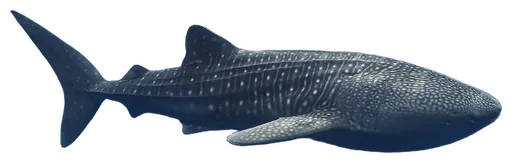 L vs SailfishLoses · 54% · Toss-up
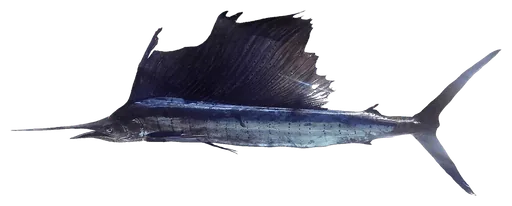 L vs Manta RayLoses · 72% · Clear edge
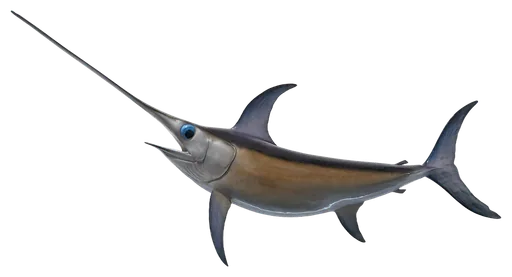
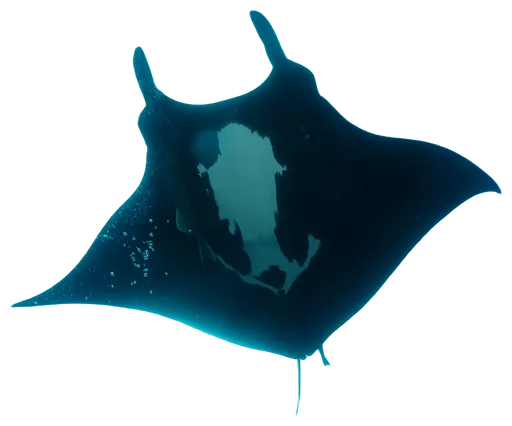 L vs SwordfishLoses · 62% · Slight edge
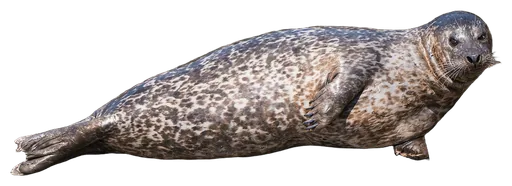
 L vs SealLoses · 59% · Slight edge
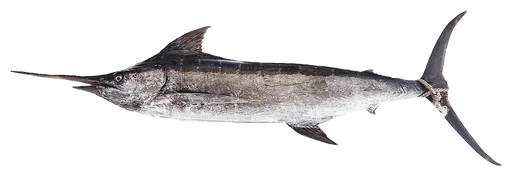
 L vs MarlinLoses · 64% · Slight edge
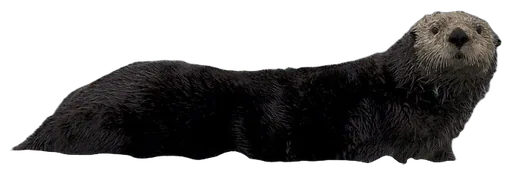
 L vs Sea OtterWins · 51% · Toss-up
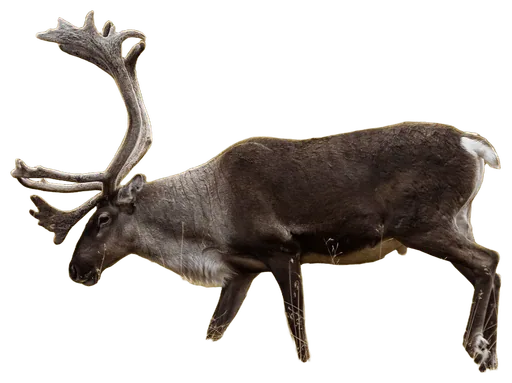
 W vs ReindeerLoses · 60% · Slight edge
 L
Octopus battle analysis
A giant Pacific octopus does not fight like a fish. Its body is a flexible control system spread across eight arms, each able to explore terrain, establish suction contacts and help manipulate an opponent. Against manageable prey, the goal is to turn a chaotic encounter into a controlled one: envelop, anchor, pull, and bring the vulnerable target toward the beak. Its prey-handling experiments are especially revealing because the animal changes technique when the mechanical problem changes.
The same architecture produces exceptional defense through avoidance. Color and skin texture can erase the outline against rock, a den can become a narrow refuge, ink can break visual tracking, and a forceful jet can create separation. None of that makes the animal armored. A large shark or marine mammal that lands a decisive bite still confronts soft tissue rather than shell or thick hide.
The ABS profile therefore separates intelligence and special biology from raw force. At 30 kg the animal belongs nowhere near megafauna in absolute power or durability, but very few roster animals combine this degree of close-control dexterity, camouflage, distributed sensing and experimentally demonstrated behavioral flexibility. In complex underwater terrain, that combination is legitimately elite.
Habitat & range
The species occupies the North Pacific rim, from southern California/Baja north through Alaska and the Aleutians and across to Russia, Japan and nearby western Pacific waters. It uses rocky shores, reefs, kelp and dens from shallow water to deep shelf habitat; Alaska SeaLife Center lists occurrence to about 1,000 m.
Diet & hunting
A generalist carnivore feeding on crustaceans, bivalves and other mollusks, fishes, squid and other octopuses. It is both a significant benthic predator and prey for larger fishes and marine mammals. NOAA assessments note that E. dofleini dominates much of the commercial octopus catch in Alaskan shelf waters.
Social life
Mostly solitary. Reproduction is semelparous. Females attach tens of thousands of eggs in protected dens, clean and aerate them for months without feeding, and die around the end of brooding; males also senesce after reproduction. Gulf of Alaska work estimates 50% maturity near 14 kg for both sexes and fecundity from 41,600 to 239,000 eggs in sampled females.
Conservation
The species is not treated as globally endangered in the institutional sources reviewed here, but abundance estimation is difficult. NOAA repeatedly characterizes North Pacific octopus stock knowledge as limited and manages multiple octopus species as assemblages in Alaska, so apparent broad distribution should not be mistaken for precise population certainty.
Quick answers
How strong is an Octopus?
On the Animal Battle Stats scale, the Octopus has an attack rating of 47 and a power index of 61.7 out of 100, which ranks it #58 of 344 animals and puts it in B tier (Strong). Its strongest stat is special (98).
How much does an Octopus weigh?
A typical adult Octopus weighs about 30 kg (66 lb). Rated specimen: healthy mature male, 30.0 kg, about 250.0 cm total length.
How fast is an Octopus?
There is no reliable measured top speed for the Octopus, so we do not publish one. Its agility rating, which covers acceleration, reflexes and evasion, is 94 out of 100.
What does an Octopus eat?
A generalist carnivore feeding on crustaceans, bivalves and other mollusks, fishes, squid and other octopuses. It is both a significant benthic predator and prey for larger fishes and marine mammals. NOAA assessments note that E. dofleini dominates much of the commercial octopus catch in Alaskan shelf waters.
Is the Octopus endangered?
The Octopus's conservation status is Endangered. The species is not treated as globally endangered in the institutional sources reviewed here, but abundance estimation is difficult. NOAA repeatedly characterizes North Pacific octopus stock knowledge as limited and manages multiple octopus species as assemblages in Alaska, so apparent broad distribution should not be mistaken for precise population certainty.
What animals can beat an Octopus?
Among its closest rivals, the Whale Shark (81%), the Sailfish (54%), the Manta Ray (72%), the Swordfish (62%), the Seal (59%), the Marlin (64%), the Reindeer (60%) would be favored against the Octopus. It would be favored against the Sea Otter.
Researched 2026-09-27. Ratings are editorial judgments built from these sources; measurements describe a healthy adult male.
- Alaska SeaLife Centersex-specific size, range, habitat, life history
- NOAA Fisheries, 2014 BSAI octopus assessmentfishery size structure, abundance context
- Conrath & Conners reproductive study summarymaturity, fecundity
- ADWlongevity, senses, behavior, predators
- Monterey Bay Aquariummorphology, prey processing, camouflage, ecology
- Anderson & Mather 2007, Journal of Comparative Psychologyprey handling, learning/tactics
- Anderson et al. 2010cognition
- Scheel et al./Marine Biology Research taggingmovement/site fidelity
- Commons/iNaturalist imageimage provenance
Photo: “Octopus vulgaris 03.jpg” by H. Zell, CC BY-SA 3.0, background removed and cropped. Original
Suggest a correction