
Ocelot
Leopardus pardalisB tier · Strong89th of 163 mammals
Size & speed

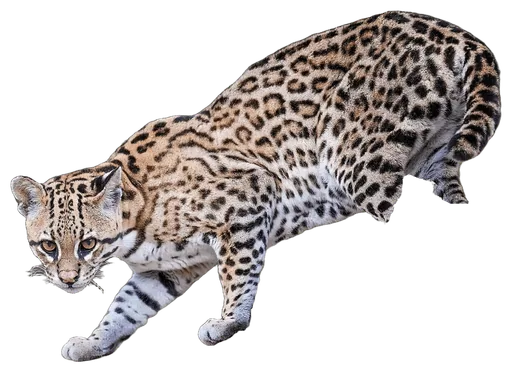
- Weight
- 13 kg29 lb
- Length
- 90 cm35.4 in
As heavy as 2.9 house cats
Heavier than 49% of animalsAbout 3 rulers long
Bigger than 41% of animalsA muscular 13 kg nocturnal ambush cat, the ocelot combines claws, canines, exceptional close maneuverability, camouflage and strong night senses. It is dangerous to similarly sized prey but remains far below large felids and megafauna in absolute attack and durability.
Detailed ratings
Research-backed ratings on one 0–100 scale for all 344 animals (updated 2026-09-27). How ratings work


Card No. 145 of 344. Every animal on Animal Battle Stats has one: its power, tier and archetype on the front; its six battle stats, abilities and signature move on the back.
Special abilities
Disruptive rosettes and habitat-matched pelage reduce visual detection in dense, broken-light vegetation, improving stalking and first-contact positioning.
Excellent climbing, jumping and semi-arboreal movement let the ocelot rapidly change vertical level for ambush, disengagement or refuge where suitable structure exists.
Unique traits
Relatively large paws, with broader forepaws than hind paws, support traction, prey control and close felid grappling.
Strongly nocturnal movement, acute binocular night vision and olfaction combine with long nightly activity to make darkness its best operating window.
How it fights
Weapons
- The ocelot is a compact ambush felid. It closes distance under cover, seizes with the forelimbs and claws, and uses the jaws for a killing bite. Its practical prey record matters more than unsupported bite-force numbers. Atlantic Forest scat work found mammals dominating the diet, with medium-sized 1-15 kg prey accounting for 84.9% of consumed items in that study and even evidence of larger prey such as brocket deer. Other populations can be dominated by much smaller rodents, showing real ecological plasticity rather than a fixed prey-size rule.
- Weight
- 13 kg29 lb
- Height
- 45 cm17.7 in
- Length
- 90 cm35.4 in
- Top speed
- No reliable measurement
- Bite force
- No reliable measurement
- Lifespan
- 10 years
- Home biome
- Jungle
- Lifestyle
- Social
Rated specimen: Healthy prime mature male, representative rather than record-sized, 13.0 kg, about 90.0 cm head-body length plus roughly 35 cm tail.
Fun facts
- Ocelot facial markings are individually distinctive enough to help identify individuals in field studies.
- Males routinely range farther than females, and modern South Texas telemetry shows male home ranges can expand during reproductive periods.
- The species is capable of climbing, jumping and swimming despite being primarily terrestrial.
- Camera-trap studies can recognize individual ocelots from coat patterns, enabling long-term activity and density estimates without capture.
- Diet is more flexible than the common "small rodent specialist" shorthand: some populations consume substantial medium-sized prey.
Closest rivals by power. Tap one for the full breakdown, or pick any opponent.
vs DingoLoses · 52% · Toss-up 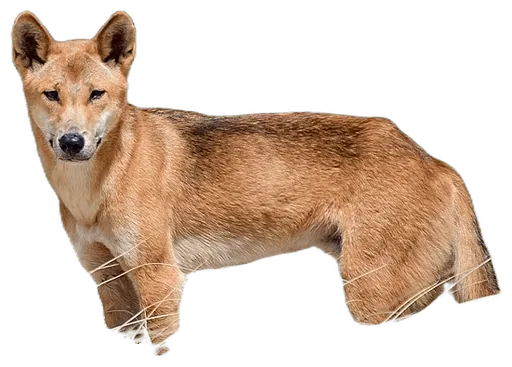 L vs ImpalaLoses · 60% · Slight edge
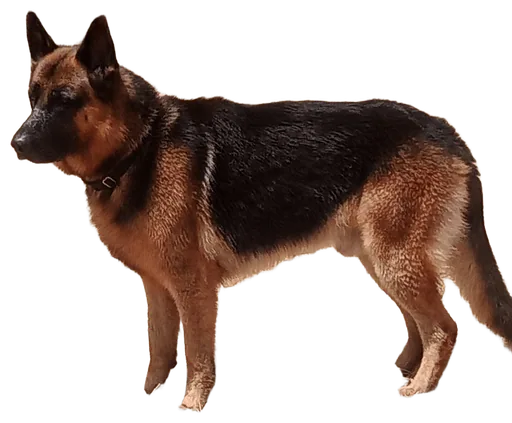
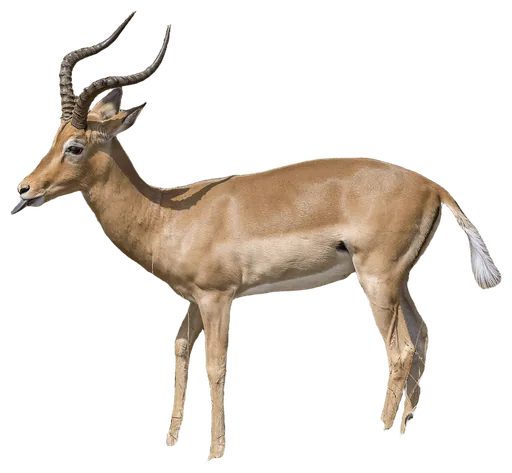 L vs German ShepherdLoses · 56% · Toss-up
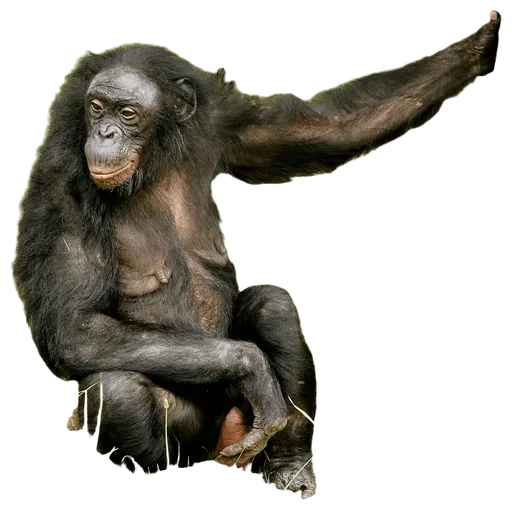
 L vs BonoboLoses · 58% · Slight edge
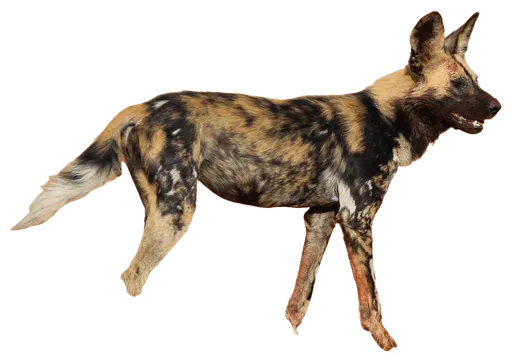
 L vs African Wild DogLoses · 55% · Toss-up
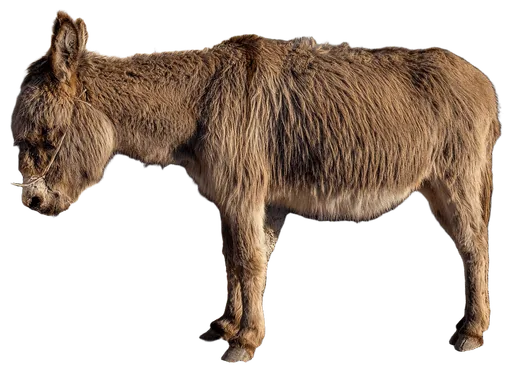
 L vs DonkeyLoses · 65% · Slight edge
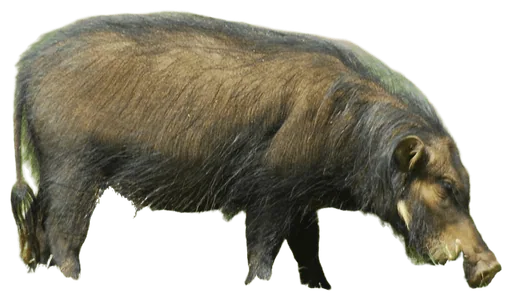
 L vs Giant Forest HogLoses · 67% · Slight edge
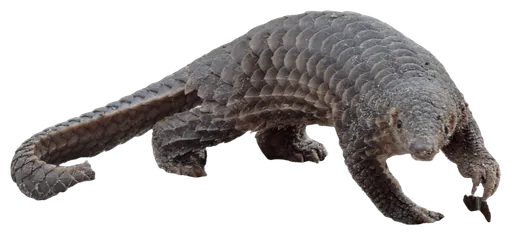
 L vs PangolinWins · 52% · Toss-up
 W
Ocelot battle analysis
The ocelot is built around getting the first clean contact rather than winning a prolonged frontal collision. A patterned coat breaks up its outline in dense vegetation while acute night vision and smell support prey detection after dark. Once close, it uses the classic small-felid package: acceleration, forepaw control, retractile claws and a killing bite. Its broad paws and climbing skill make trunks, branches, tangled vegetation and uneven ground part of its combat geometry.
That versatility should not be mistaken for heavyweight power. At roughly 13 kg, even a large representative male has limited absolute momentum, bite scale and trauma tolerance compared with jaguars, cougars, wolves or large ungulates. The most biologically faithful ABS profile therefore gives the ocelot elite agility and strong senses/tactics while keeping Attack and Defense much lower. Its winning matchups come from concealment, precision and control against smaller or similarly sized opponents, not from trading blows with animals many times its mass.
Habitat & range
Ocelots range from the southern United States through Mexico and Central America into much of South America. They occupy tropical rainforest, dry forest, thornscrub, savanna/grassland edges, marsh and other habitats, but dense vegetative cover is a recurring requirement. Amazon research emphasizes their broad habitat distribution while USFWS documents the tiny endangered U.S. population in south Texas.
Diet & hunting
The species is a generalist carnivore with strong mammalian emphasis. Diet changes geographically with prey availability and competitor context. Rodents can dominate many populations, while Atlantic Forest and Panama studies document substantial use of medium-sized mammals. Ocelots function as important mesopredators and can themselves be killed by jaguars.
Social life
Generally solitary and territorial, with polygynous mating. ADW reports gestation 79-85 days, typically 1-3 kittens, weaning around six weeks, independence around one year, and female sexual maturity around 18-22 months. Males may be physiologically mature earlier but average spermatogenic/territorial maturity is later; a histological study explicitly sampled four adult males.
Conservation
The species is globally widespread but locally threatened by habitat loss/fragmentation, road mortality, illegal trade and retaliatory killing. USFWS lists the ocelot as endangered in the United States and notes the historically tiny south-Texas population. A 2022 multi-site study found densities around 10-13 individuals/100 km² at three Colombian/Brazilian landscapes and emphasized the conservation value of private and unprotected habitat.
Quick answers
How strong is an Ocelot?
On the Animal Battle Stats scale, the Ocelot has an attack rating of 38 and a power index of 52.7 out of 100, which ranks it #145 of 344 animals and puts it in B tier (Strong). Its strongest stat is agility (88).
How much does an Ocelot weigh?
A typical adult Ocelot weighs about 13 kg (29 lb). Rated specimen: healthy prime mature male, representative rather than record-sized, 13.0 kg, about 90.0 cm head-body length plus roughly 35 cm tail.
How fast is an Ocelot?
There is no reliable measured top speed for the Ocelot, so we do not publish one. Its agility rating, which covers acceleration, reflexes and evasion, is 88 out of 100.
What does an Ocelot eat?
The species is a generalist carnivore with strong mammalian emphasis. Diet changes geographically with prey availability and competitor context. Rodents can dominate many populations, while Atlantic Forest and Panama studies document substantial use of medium-sized mammals. Ocelots function as important mesopredators and can themselves be killed by jaguars.
Is the Ocelot endangered?
The Ocelot's conservation status is Endangered. The species is globally widespread but locally threatened by habitat loss/fragmentation, road mortality, illegal trade and retaliatory killing. USFWS lists the ocelot as endangered in the United States and notes the historically tiny south-Texas population. A 2022 multi-site study found densities around 10-13 individuals/100 km² at three Colombian/Brazilian landscapes and emphasized the conservati
What animals can beat an Ocelot?
Among its closest rivals, the Dingo (52%), the Impala (60%), the German Shepherd (56%), the Bonobo (58%), the African Wild Dog (55%), the Donkey (65%), the Giant Forest Hog (67%) would be favored against the Ocelot. It would be favored against the Pangolin.
Researched 2026-09-27. Ratings are editorial judgments built from these sources; measurements describe a healthy adult male.
- Animal Diversity Web, Leopardus pardalis8.5-16 kg, 65-97 cm, male larger, wild lifespan 7-10 y, 21.5 y captive max, activity >12 h/day, 1.8-6.7 km travel, climbing/jumping/swimming, senses, reproduction, territoriality
- USFWS, The OcelotU.S. range/status, up to 35 lb, up to 4 ft including tail, endangered U.S. context
- Wang 2019, Ecology and Evolution6.6-18.6 kg literature range, distribution, nocturnal/crepuscular, semi-arboreal, excellent climbing, threats
- Smithsonian Tropical Research Institute metadata550-1000 mm body length, 9-14 kg average scale, 8-11 y lifespan, nocturnal hunting
- Leonard et al. 2020, PLOS ONE/PubMedStrong nocturnal activity; GPS/accelerometer movement comparison with bobcat
- Dos Santos et al., Atlantic Forest dietMammals 83.7%; medium 1-15 kg prey 84.9%; broad prey spectrum including deer signal
- Wang 2002 diet comparisonSmall mammals frequent; ocelots used reptiles more than compared small cats
- Moreno et al. 2006, Journal of Mammalogy recordPanama diet includes agoutis/sloths; prey size shifts with competitor context
- Behavioral Ecology 2024 jaguar-ocelot modelJaguar intraguild predation; modeled canopy refuge/forest structure affects coexistence
- Journal of Mammalogy 2016 activityNocturnal activity; 16 males/19 females identified over long camera-trap study
- Journal of Mammalogy 2022 density~10-13 ocelots/100 km² across three sites; conservation value of private/unprotected areas
- 2025 sex-specific home range studyMale/female home-range responses, 22 males/12 females
- Adult-male reproductive histologyFour adult males; confirms adult male reproductive sampling
- Commons/USFWS imageExact species, real photo, 3658x2400, public-domain USFWS provenance
Photo: “048 Ocelot in Encontro das Águas State Park Photo by Giles Laurent.jpg” by Giles Laurent, CC BY-SA 4.0, background removed and cropped. Original
Suggest a correction