
Narwhal
Monodon monocerosA tier · Elite13th of 51 sea creatures
Size & speed

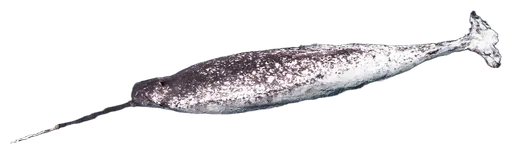
- Weight
- 1.2 t1.3 US tons
- Length
- 4.6 m15.1 ft
As heavy as 17 people
Heavier than 94% of animals2.6× a person's height
Bigger than 94% of animalsThe narwhal is a tonne-scale Arctic whale built for endurance beneath sea ice. Mature males carry an elongated sensory canine that can reach meters in length and functions strongly in sexual signaling, while echolocation and extreme diving ability make the species a deep-water specialist. Its tusk gives real reach, but ABS does not treat it as a guaranteed lethal spear because direct evidence favors status assessment over routine violent fencing.
Detailed ratings
Research-backed ratings on one 0–100 scale for all 344 animals (updated 2026-09-27). How ratings work


Card No. 34 of 344. Every animal on Animal Battle Stats has one: its power, tier and archetype on the front; its six battle stats, abilities and signature move on the back.
Special abilities
The erupted canine contains open dentinal pathways and neural tissue that experimentally responds to changes in water salinity, combining long physical reach with environmental sensing.
Endurance-oriented swimming, repeated deep dives, long breath holds, echolocation and lack of a dorsal fin let the narwhal operate beneath Arctic pack ice and at depths inaccessible to many opponents.
Unique traits
The male's extraordinarily elongated, counter-clockwise spiraled canine is a secondary sexual trait and status signal with plausible contest utility, but is not misrepresented as a routinely lethal spear.
The smooth back and low dorsal ridge reduce snagging/protrusion beneath ice and distinguish narwhal locomotor morphology from most open-water cetaceans.
How it fights
Weapons
- The obvious weapon is the male tusk, but its combat role must not be exaggerated. Morphometric evidence strongly supports a role in mate competition and male-male contest signaling, while NOAA emphasizes nonviolent status assessment and possible mate choice. The tusk can plausibly jab, rake or threaten at long reach, but routine lethal fencing is not established. The secondary offensive tool is the animal's roughly tonne-scale body, head and tail-driven momentum at close range.
- Weight
- 1.2 t1.3 US tons
- Height
- No reliable measurement
- Length
- 4.6 m15.1 ft
- Top speed
- No reliable measurement
- Bite force
- No reliable measurement
- Lifespan
- 100 years
- Home biome
- Arctic
- Lifestyle
- Social
Rated specimen: Healthy prime mature male, 1,200.0 kg, 460.0 cm body length, carrying one normally erupted left tusk.
Fun facts
- The tusk is an elongated canine tooth, not a horn.
- NOAA reports tusks up to about 3.0 m long and over 9 kg.
- Some males grow two tusks, while some females grow one.
- The tusk's sensory role is experimentally supported by heart-rate responses to changing salinity.
- A Greenland study estimated narwhal maximum lifespan expectancy near 100 years.
- Tag studies show repeated hundreds-of-meters-deep dives, with many 10-20 minute dives.
Closest rivals by power. Tap one for the full breakdown, or pick any opponent.
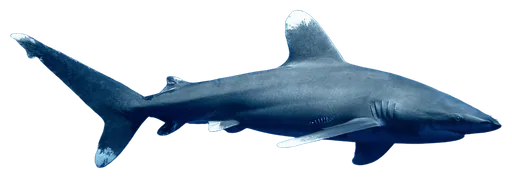
vs SawfishWins · 58% · Slight edge 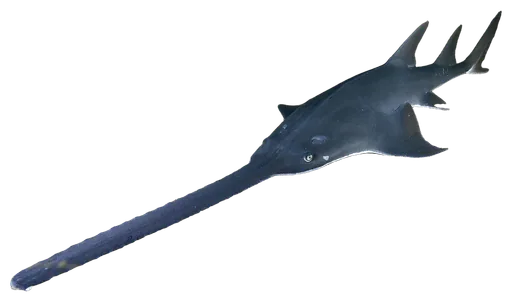 W vs Oceanic Whitetip SharkWins · 61% · Slight edge
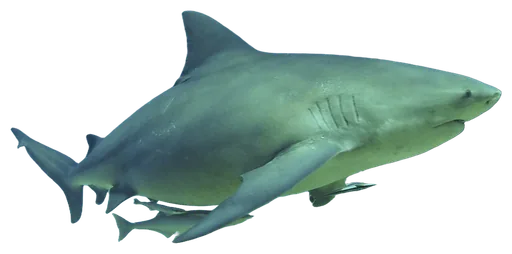
 W vs Bull SharkWins · 64% · Slight edge
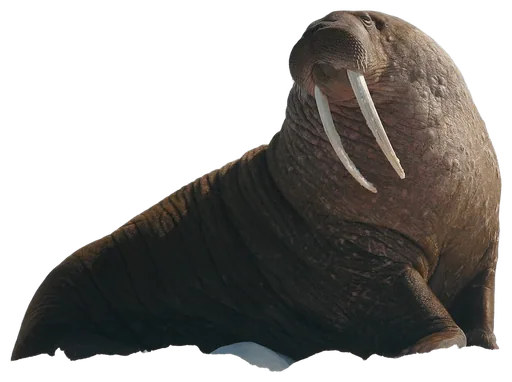
 W vs WalrusLoses · 51% · Toss-up
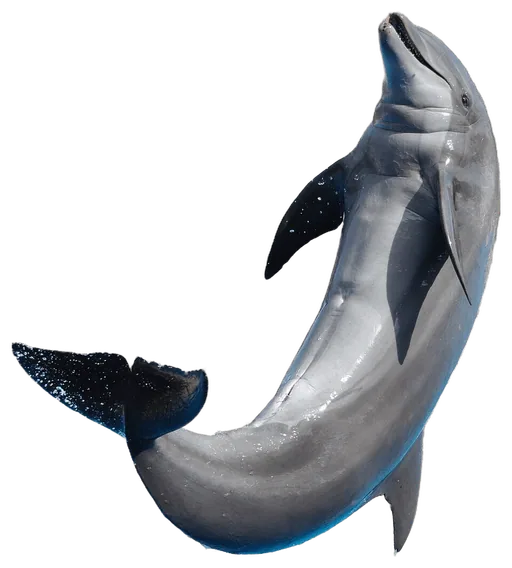
 L vs Bottlenose DolphinWins · 57% · Toss-up
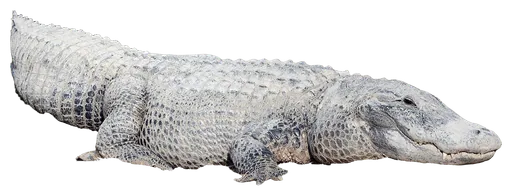
 W vs AlligatorWins · 60% · Slight edge
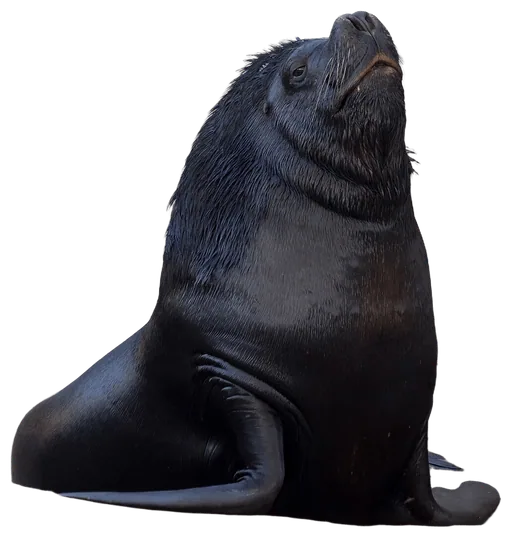
 W vs Sea LionWins · 60% · Slight edge
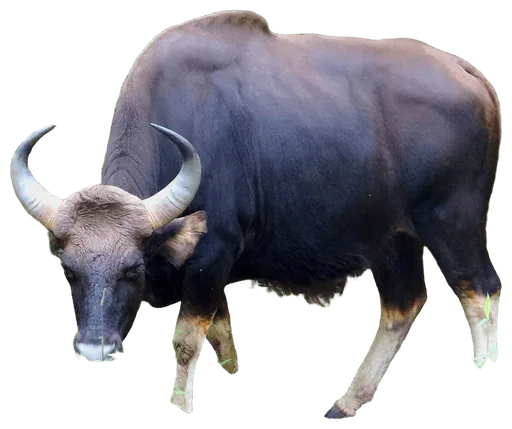
 W vs GaurWins · 51% · Toss-up
 W
Narwhal battle analysis
The narwhal's battle profile is easy to misread. Visually, the animal appears to be a whale carrying a lance. Biologically, the tusk is stranger and more nuanced: it is a living canine tooth permeated by dentinal pathways, connected to sensory nerves and closely tied to competition among males. Its length varies disproportionately among adult males, making it useful as a signal of status. That creates genuine matchup reach, but the strongest evidence does not support treating every adult male as a high-speed fencer.
The deeper specialization lies in the rest of the body. Narwhals are slow, efficient Arctic divers. Tag records show repeated descents hundreds of meters deep, prolonged dives and extensive use of echolocation as depth increases. Their locomotor musculature favors endurance rather than sprinting, and their smooth dorsal profile suits movement beneath ice. Against a surface-bound or poorly equipped aquatic opponent, depth, darkness and ice can become tactical terrain.
Defense comes mostly from size, physiology and habitat rather than armor. A 1.2-ton adult male can absorb or deter attacks that would overwhelm smaller animals, but killer whales remain dangerous enough to reorganize narwhal movement over sustained periods. That keeps Defense well below the heavily armored or much larger roster anchors.
The result is a specialist with strong but not apex Attack, moderate Agility, elite Stamina and a very high Special score. The tusk matters, but the combination of biosonar, breath-hold diving, ice specialization and sensory biology is what makes the narwhal truly unusual.
Habitat & range
Narwhals are high-Arctic specialists concentrated in the Atlantic Arctic, particularly the Canadian Arctic, Greenland and adjacent seas, with fewer records toward the Pacific Arctic. They migrate seasonally between winter pack-ice habitat and spring/summer coastal or inshore areas.
Diet & hunting
They feed on Arctic and polar cod, Greenland halibut/turbot, squid, shrimp and other benthic or pelagic prey. Winter feeding on Greenland halibut can be intense. Their ecological niche couples deep diving with sea-ice habitat and seasonal migration.
Social life
Typical pods contain about 2-10 animals, but summer aggregations can reach hundreds or thousands. Groups may segregate by age and sex. Sociality supports communication and information sharing but is not treated as a multiplier on one individual's physical stats.
Conservation
NOAA lists narwhals as protected under the U.S. Marine Mammal Protection Act and in CITES Appendix II. Important pressures include climate change, loss or alteration of sea ice, hunting, noise, pollution and ice entrapment. Indigenous Arctic communities have longstanding subsistence and cultural relationships with narwhals, including use of meat, mattak/blubber and tusks.
Quick answers
How strong is a Narwhal?
On the Animal Battle Stats scale, the Narwhal has an attack rating of 61 and a power index of 67.1 out of 100, which ranks it #34 of 344 animals and puts it in A tier (Elite). Its strongest stat is stamina (92).
How much does a Narwhal weigh?
A typical adult Narwhal weighs about 1.2 t (1.3 US tons). Rated specimen: healthy prime mature male, 1,200.0 kg, 460.0 cm body length, carrying one normally erupted left tusk.
How fast is a Narwhal?
There is no reliable measured top speed for the Narwhal, so we do not publish one. Its agility rating, which covers acceleration, reflexes and evasion, is 51 out of 100.
What does a Narwhal eat?
They feed on Arctic and polar cod, Greenland halibut/turbot, squid, shrimp and other benthic or pelagic prey. Winter feeding on Greenland halibut can be intense. Their ecological niche couples deep diving with sea-ice habitat and seasonal migration.
What animals can beat a Narwhal?
Among its closest rivals, the Walrus (51%) would be favored against the Narwhal. It would be favored against the Sawfish, the Oceanic Whitetip Shark, the Bull Shark, the Bottlenose Dolphin, the Alligator, the Sea Lion, the Gaur.
Researched 2026-09-27. Ratings are editorial judgments built from these sources; measurements describe a healthy adult male.
- NOAA Fisheries, Narwhaltaxonomy, adult maxima, tusk, diet, dive, range, reproduction, protection
- Garde et al., Journal of Mammalogy 2015adult length, dimorphism, maturity, longevity
- Graham et al., Biology Letters 2020tusk role in mate competition
- Nweeia et al., Anatomical Record 2014tusk sensory biology
- Nweeia et al., Anatomical Record 2012tooth identity
- Heide-Jørgensen et al., Frontiers Marine Science 2020diving, locomotion, endurance
- Heide-Jørgensen et al., Frontiers Marine Science 2021horizontal speed
- Marques et al., JASA 2024echolocation
- DFO Canada, Narwhal IFMPdiet, habitat, reproduction
- Breed et al., PNAS 2017predator response
- Smithsonian NMNH adult male tusk specimentusk dimension/adult sex
- Animal Diversity Webdiet/predators/background
Photo: “Нарвал в российской Арктике.jpg” by пресс-служба ПАО "Газпром нефть", CC BY-SA 4.0, background removed and cropped. Original
Suggest a correction