
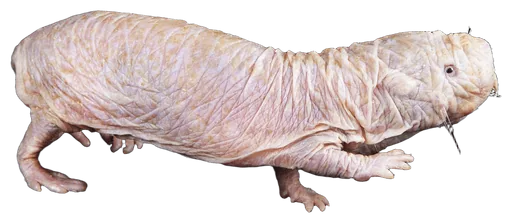
Naked Mole Rat
Heterocephalus glaberC tier · Capable115th of 163 mammals
Size & speed
- Weight
- 57 g2 oz
- Length
- 10 cm3.9 in
As heavy as 57 paperclips
Heavier than 8% of animalsAbout 1.2 credit cards long
Bigger than 6% of animalsThe naked mole-rat is a tiny East African eusocial burrower whose absolute fighting power is low but whose biology is extraordinary. Oversized jaw muscles drive external digging incisors, while specialized sensory hairs and tooth touch guide it through dark tunnels. Its standout advantage is physiological: it can survive extreme hypoxia, endure 18 minutes of laboratory anoxia through fructose-powered metabolism, and ignores some acid/capsaicin pain signals. In open combat it is mechanically fragile; in a cramped, oxygen-poor tunnel it is one of the roster's strangest specialists.
Detailed ratings
Research-backed ratings on one 0–100 scale for all 344 animals (updated 2026-09-27). How ratings work


Card No. 206 of 344. Every animal on Animal Battle Stats has one: its power, tier and archetype on the front; its six battle stats, abilities and signature move on the back.
Special abilities
Under total oxygen deprivation, naked mole-rat tissues can switch to fructose-driven anaerobic glycolysis; laboratory animals survived 18 minutes of anoxia without apparent injury. This can preserve function in suffocating environments that would rapidly incapacitate ordinary mammals.
Naked mole-rats show a selective absence of normal pain behavior to acid and capsaicin and lack acid sensitivity in relevant primary afferent nociceptors. This reduces impairment from specific chemical irritants but does not block mechanical injury or all pain.
Unique traits
Permanently external, independently maneuverable lower incisors combine digging, biting, object manipulation and unusually large somatosensory cortical representation.
Large non-breeding animals participate in cooperative tunnel maintenance and predator defense within one of the very few true eusocial mammalian systems.
How it fights
Weapons
- The primary weapons are the large, continuously growing incisors driven by disproportionately developed jaw musculature. They are used to excavate hard-packed soil, manipulate objects, establish dominance, and defend the colony. Direct testing demonstrates a remarkable bite for the animal's mass. Absolute damage remains tiny compared with medium or large vertebrates, but against similarly tiny opponents the incisors are a serious puncturing/cutting tool.
Struggles vs
- Open terrain removes most of the tunnel geometry advantage.
- Tiny mass and lack of armor make it mechanically fragile against larger animals.
- Poor vision is more costly in open environments.
- Unusual thermoregulation creates dependence on suitable ambient conditions and behavioral compensation.
- Weight
- 57 g2 oz
- Height
- No reliable measurement
- Length
- 10 cm3.9 in
- Top speed
- No reliable measurement
- Bite force
- No reliable measurement
- Lifespan
- 37 years
- Home biome
- Desert
- Lifestyle
- Social
Rated specimen: A healthy, fully grown large non-breeding subordinate / soldier-type adult, sex unspecified, approximately 57.0 g.
Fun facts
- Roughly one quarter of the animal's muscle mass is associated with jaw closure.
- It can move its lower incisors independently.
- Laboratory animals have survived 18 minutes with no oxygen and recovered without apparent injury.
- Naked mole-rats can travel both forward and backward through tunnels, useful when passages are too narrow to turn around.
- Their somatosensory cortex devotes an unusually large area to the incisors.
- They are the longest-lived known rodents, with individuals documented into their 30s.
Closest rivals by power. Tap one for the full breakdown, or pick any opponent.
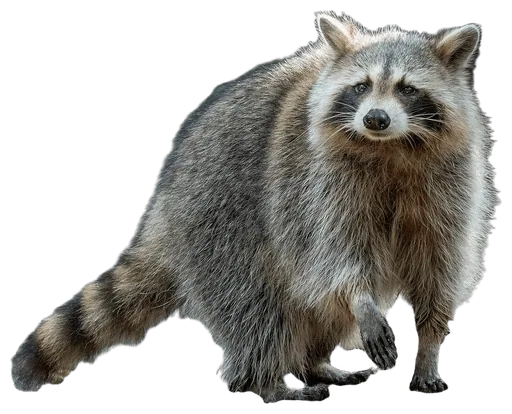
vs Spider MonkeyLoses · 76% · Clear edge 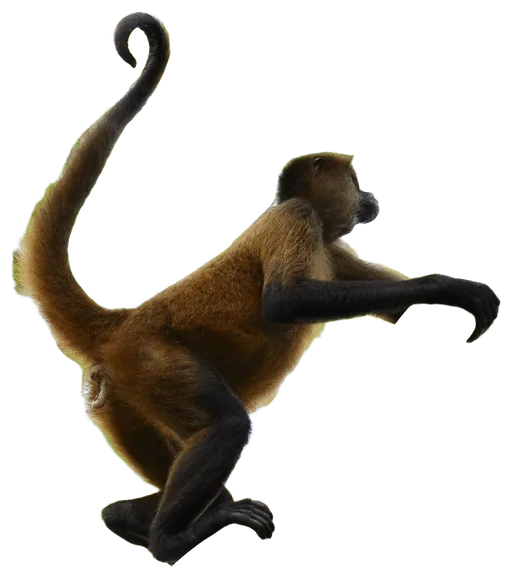 L vs RaccoonLoses · 75% · Clear edge
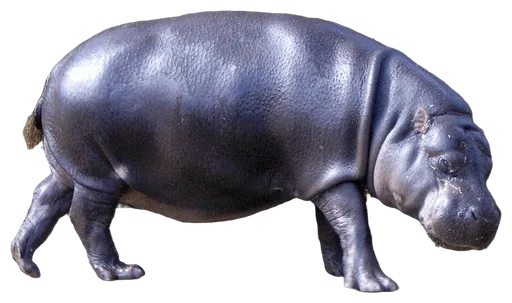
 L vs Pygmy HippopotamusLoses · 88% · Decisive
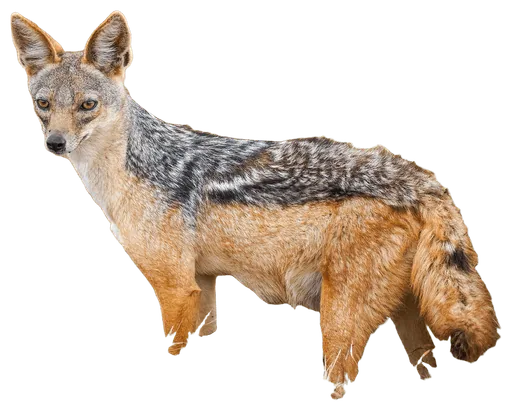
 L vs JackalLoses · 75% · Clear edge
 L vs GreyhoundLoses · 80% · Clear edge
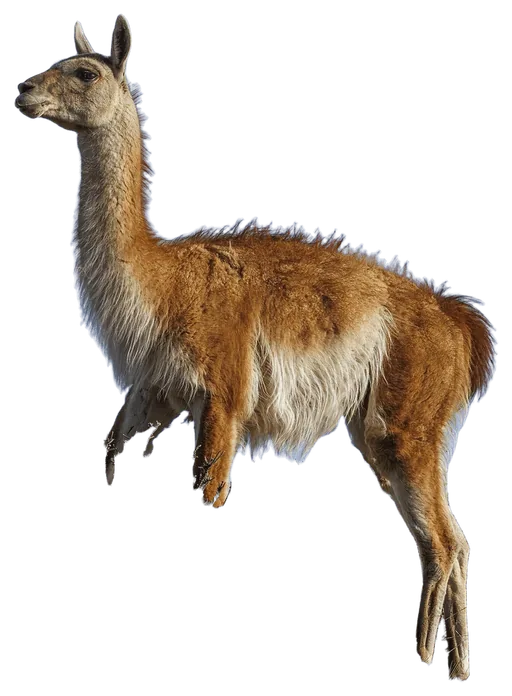
 L vs GuanacoLoses · 86% · Decisive
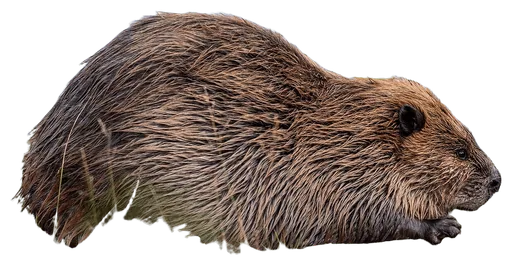
 L vs BeaverLoses · 81% · Clear edge
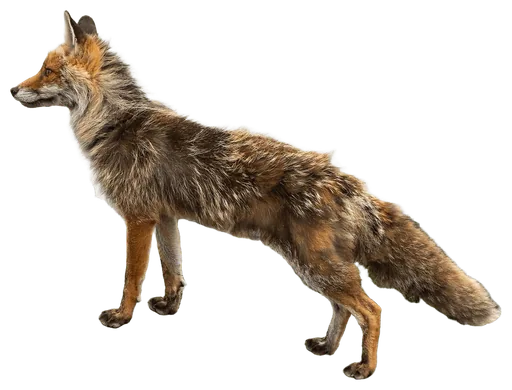
 L vs Red FoxLoses · 77% · Clear edge
 L
Naked Mole Rat battle analysis
A naked mole-rat is easy to underestimate if battle ability is judged only by size. At roughly the mass of a small handful of coins, it has almost no answer to the raw mechanics of a fox, mongoose or larger predator. Yet its head is built around an unusually serious tool. The incisors sit outside the lips, can be manipulated with surprising precision, and are powered by jaw musculature vastly overbuilt for an ordinary mouse-sized mammal. Direct experiments confirm that the bite is substantially stronger than body mass alone predicts.
Its real advantage is not conventional damage. Naked mole-rats live in long, crowded burrow systems where darkness, stale air and narrow geometry define the rules. Vision contributes little. Touch, vibration, smell and the incisors themselves help map the immediate world. The animal can reverse through a tunnel without turning, and a defender can confront an intruder where the passage limits the attacker's angles.
The physiology is more unusual still. When oxygen disappears completely, most mammals lose neural function within minutes. Naked mole-rats can suppress demand and redirect metabolism, using fructose to keep glycolysis running. Their pain system is also selectively altered so acid and capsaicin do not provoke the normal responses, likely useful in carbon-dioxide-rich burrows. These are not invulnerability feats. A bite, talon, crush or stomp still causes real tissue damage. The correct ABS interpretation is therefore a tiny animal with low Attack and Defense but exceptionally high Stamina and Special, plus strong tunnel-specific Agility and social Intelligence.
Habitat & range
Naked mole-rats occupy underground burrow networks in grassy, semi-arid parts of eastern Africa, including Ethiopia, Kenya, Djibouti and Somalia. Smithsonian reports tunnel diameters around 4 cm, depths reaching about 2 m, and colony systems totaling up to about 4 km of tunnel.
Diet & hunting
They are primarily subterranean herbivores specializing on roots and succulent tubers. A large tuber may support repeated feeding because animals can eat internal tissue while leaving the exterior sufficiently intact for continued plant survival. Gut microbes help process the cellulose-rich diet, and coprophagy improves nutrient recovery. They obtain their water from food rather than routinely drinking.
Social life
Colonies average roughly 70 but may reach nearly 300 animals. One queen breeds with a small number of males, while non-breeding animals forage, excavate, transport soil, care for young and defend the colony. This is true eusociality in a mammal, but individuals remain behaviorally flexible enough that reproductive status can change when colony structure changes.
Conservation
Smithsonian currently presents the species as Least Concern and notes no immediate major threat, although agricultural conflict and habitat fragmentation may matter locally. The species is well represented in zoological research colonies.
Quick answers
How strong is a Naked Mole Rat?
On the Animal Battle Stats scale, the Naked Mole Rat has an attack rating of 14 and a power index of 48 out of 100, which ranks it #206 of 344 animals and puts it in C tier (Capable). Its strongest stat is special (96).
How much does a Naked Mole Rat weigh?
A typical adult Naked Mole Rat weighs about 57 g (2 oz). Rated specimen: a healthy, fully grown large non-breeding subordinate / soldier-type adult, sex unspecified, approximately 57.0 g.
How fast is a Naked Mole Rat?
There is no reliable measured top speed for the Naked Mole Rat, so we do not publish one. Its agility rating, which covers acceleration, reflexes and evasion, is 72 out of 100.
What does a Naked Mole Rat eat?
They are primarily subterranean herbivores specializing on roots and succulent tubers. A large tuber may support repeated feeding because animals can eat internal tissue while leaving the exterior sufficiently intact for continued plant survival. Gut microbes help process the cellulose-rich diet, and coprophagy improves nutrient recovery. They obtain their water from food rather than routinely drinking.
Is the Naked Mole Rat endangered?
No. The Naked Mole Rat is listed as Least Concern. Smithsonian currently presents the species as Least Concern and notes no immediate major threat, although agricultural conflict and habitat fragmentation may matter locally. The species is well represented in zoological research colonies.
What animals can beat a Naked Mole Rat?
Among its closest rivals, the Spider Monkey (76%), the Raccoon (75%), the Pygmy Hippopotamus (88%), the Jackal (75%), the Greyhound (80%), the Guanaco (86%), the Beaver (81%), the Red Fox (77%) would be favored against the Naked Mole Rat. It would be favored against none of them.
Researched 2026-09-27. Ratings are editorial judgments built from these sources; measurements describe a healthy adult female.
- Smithsonian National Zoo, Naked mole-rattaxonomy, size, range, lifespan, senses, sociality, diet, burrows, jaws, reproduction, conservation
- San Diego Zoo, Naked mole-ratdimensions, maturity, jaw fact, locomotion
- Hart et al., Nature Communications 2024longevity, cardiometabolic/hypoxia traits
- Ruby, Smith & Buffenstein, eLife 2018longevity/aging
- Park et al., Science 2017 via MDCanoxia mechanism
- Ilacqua et al., Biology Letters 2017behavioral hypoxia/anoxia tolerance
- Browe et al., Anatomical Recordadult mass/morphology, pain/sensory context
- Henry et al., Frontiers 2019direct bite force, caste effects
- Park et al., PLoS/primary sensory work via PubMedpain biology
- Catania & Remple, somatosensory cortextactile hairs/incisor cortical specialization
- Animal Diversity Webdiet, predators, ecology
- Smithsonian Open Access image recordimage provenance
- Wikimedia Commons, Bernard Dupont photoimage alternative
Photo: “Naked Mole-rat (2011) by Mehgan Murphy. Original from Smithsonian's National Zoo. Digitally enhanced by rawpixel. (51128460864).jpg” by Rawpixel Ltd, CC BY 2.0, background removed and cropped. Original
Suggest a correction